The voice of America's literary rebellion: Allen Ginsberg turns 100
How the Beat poet changed American literature and paved the way for the counterculture of the 1960s
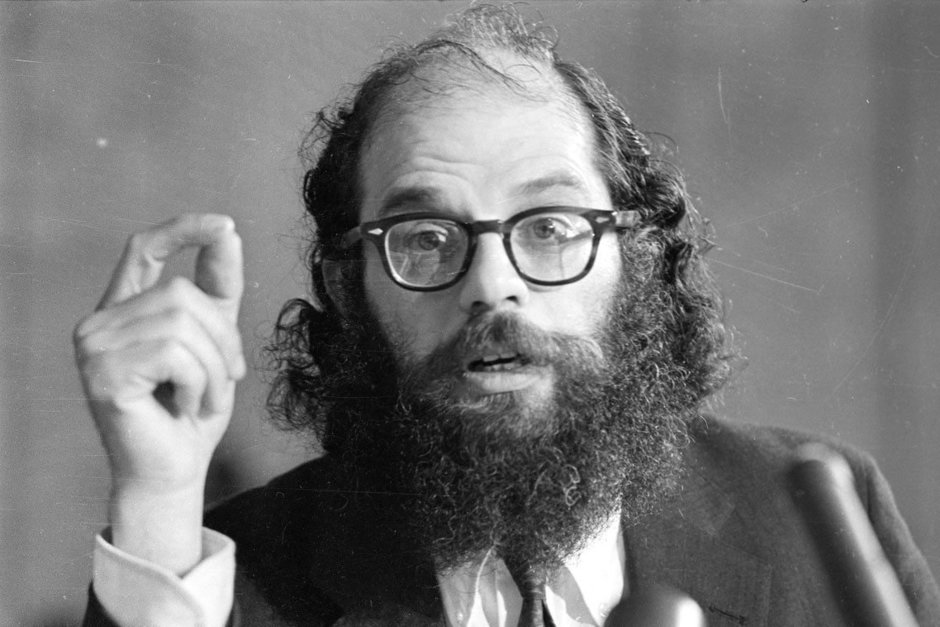
Today marks the centenary of the birth of Allen Ginsberg — a poet whose name became one of the symbols of 20th-century American counterculture. He is most often remembered as the author of the poem “Howl," which in 1956 brought the Beats from literary underground to the center of public controversy. However, Ginsberg's role was not limited to a single work. He not only wrote poetry but also connected people, ideas, and literary circles. Almost the entire history of the Beat Generation runs through his biography. The literary critic of Realnoe Vremya, Ekaterina Petrova, tells how Allen Ginsberg and his like-minded peers changed American culture.
A generation that refused to live by the rules
Allen Ginsberg was born in Newark and spent his childhood in the city of Paterson, New Jersey. His father, Louis Ginsberg, taught English and wrote poetry, while his mother, Naomi Ginsberg, was involved in the Communist Party USA and constantly spoke with her son about social injustice and workers' rights. The poet recalled that as a teenager, he sent politically charged letters to The New York Times and became interested in public life early on.
By the time Ginsberg entered Columbia University, America had already entered a new era. World War II had ended, the economy was growing rapidly, and millions of Americans were moving to the suburbs, building lives around work, family, and increasing consumption. The Cold War intensified the fear of any deviation from the norm. Corporations expanded their influence, politicians called for unity, and society increasingly demanded predictability and discipline. It was precisely this atmosphere that the Beats attacked. They saw signs of spiritual emptiness in prosperity, and a rejection of personal freedom in the pursuit of conformity.
The history of the movement began with a chain of acquaintances in the New York student environment. In 1943, Ginsberg met William Burroughs and Jack Kerouac at Columbia University. Soon, Lucien Carr, John Clellon Holmes, Neal Cassady, and Herbert Huncke joined this circle. It was Huncke who first used the word “beat” in colloquial speech. In his circle, it meant a person who was tired, knocked out of ordinary life, existing on the margins of society. Later, Kerouac picked up the word and made it the designation of an entire generation.
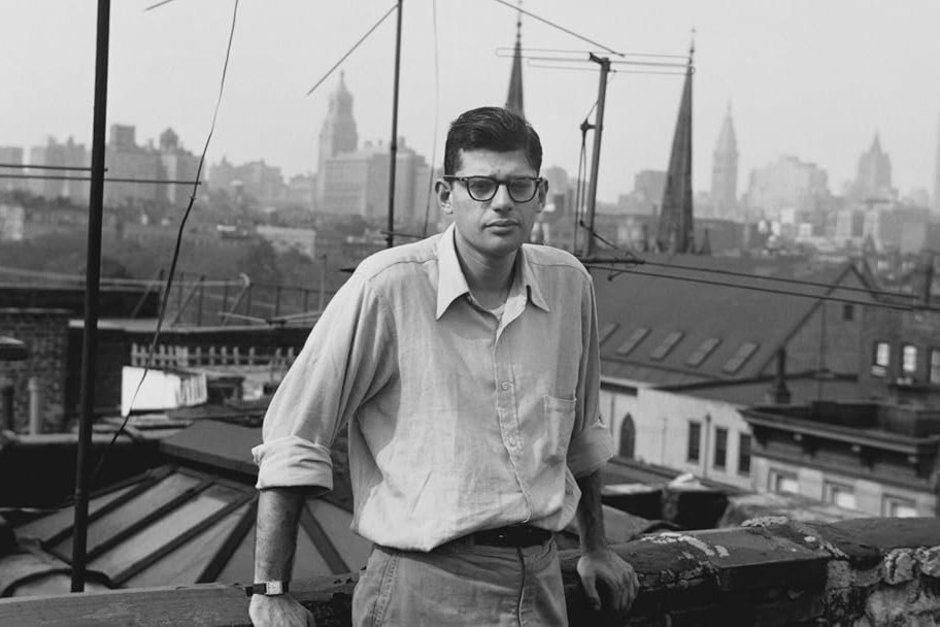
The future members of the Beat Generation were united by a common dissatisfaction with the cultural norms of post-war America. They argued about literature, sought new forms of writing, were interested in jazz, experimented with lifestyle, and tried to find a language that could convey a person's immediate experience. Carr and Ginsberg even discussed the need for a “new vision” for American literature — an alternative to the formal and conservative models that dominated the academic environment.
In those years, Ginsberg gradually turned into a figure who connected the disparate elements of the future movement. He closely followed the work of his friends, introduced people to each other, and constantly expanded his circle of communication. After graduating from university, Allen worked at various jobs, traveled extensively, and maintained contacts with the New York literary scene.
When the center of Beat activity began to shift to San Francisco in the mid-1950s, it was Ginsberg who turned out to be the person who connected the two main geographical points of the movement. In California, he met Kenneth Rexroth, Lawrence Ferlinghetti, Gary Snyder, Philip Whalen, and other participants of the San Francisco Renaissance. Allen's mentor, William Carlos Williams, even wrote him a letter of recommendation to Rexroth, which opened the doors to the local literary environment for Ginsberg.
A movement that would later be called the Beat Generation gradually grew out of this network of acquaintances. At the same time, the role of its participants varied markedly. Kerouac created the movement's main novel — “On the Road.” Burroughs turned literary experiment into radical artistic practice. Ginsberg took on a different function: he promoted his friends' texts, organized readings, supported publishing projects, and constantly communicated with journalists. Biographer Michael Schumacher notes that Kerouac remained a “reluctant spokesman” for the Beats, while Ginsberg consciously accepted the role of the most consistent and eloquent representative of the generation.
“Howl” that all of America heard
In the fall of 1955, a historic event for American literature took place in San Francisco. On the evening of October 7, a small art gallery on Fillmore Street gathered poets, artists, and regular visitors to the city's literary scene. This evening would later be considered the symbolic moment of the Beat Generation's birth.
The gallery was called The 6 Gallery. It was created by artists and poets as a networking space for exhibitions, readings, and experiments. Plays, poetry performances, and other events of the San Francisco avant-garde scene took place there. In the summer of 1955, artist Wally Hedrick proposed organizing a poetry evening. At first, Allen Ginsberg was not enthusiastic about the idea, but after working on a draft of the poem “Howl," he changed his mind and took charge of preparing the reading. He invited participants, drafted the invitation text, and announced the event as a reading by six poets at the Six Gallery.
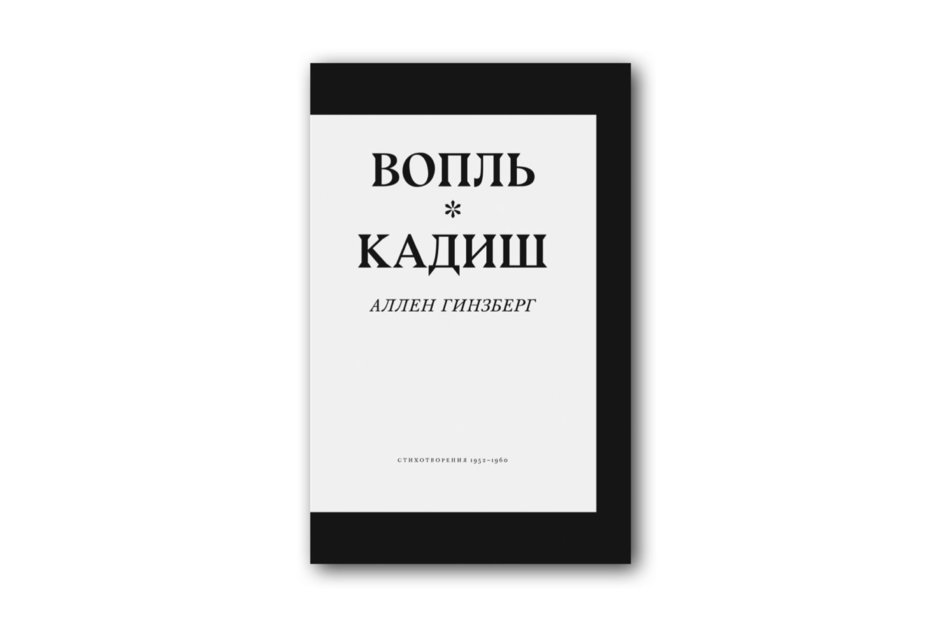
The evening began around eight o'clock. The role of host was taken by poet Kenneth Rexroth, whom the young authors considered an important figure in the San Francisco literary community. Philip Lamantia, Michael McClure, Philip Whalen, Allen Ginsberg, and Gary Snyder took the stage. There were about a hundred people in the audience. Among them were Jack Kerouac, Neal Cassady, and publisher Lawrence Ferlinghetti.
The announcement promised the audience “a remarkable gathering of angels gathered in one place. Wine, music, dancers, serious poetry, free satori.” Kerouac collected money for wine, brought large jugs of California Burgundy, and passed them around the hall. During the readings, he encouraged the performers with shouts of “Yes! Go! Go!”
For Ginsberg, this evening was his first public performance of “Howl.” The poem was still unfinished. He read only the first part of the text. It was that part that began with the line: “I saw the best minds of my generation destroyed by madness.” According to eyewitness accounts, his performance was the main event of the evening. Michael McClure wrote that after the reading, the audience simultaneously applauded and tried to comprehend what had happened, understanding that an important milestone in literature had been crossed. Within a few hours, Lawrence Ferlinghetti sent Ginsberg a telegram asking him to send the manuscript for publication.
However, it was not the San Francisco reading that brought the poem its real fame. A year later, the story of “Howl” extended far beyond the literary scene and turned into a national scandal. In the fall of 1956, City Lights published the collection “Howl and Other Poems.” The book became the fourth release of the Pocket Poets series, developed by Lawrence Ferlinghetti. For the edition, the poet added the second part of the poem and an “Author's Note," and also added other works to form a complete collection.
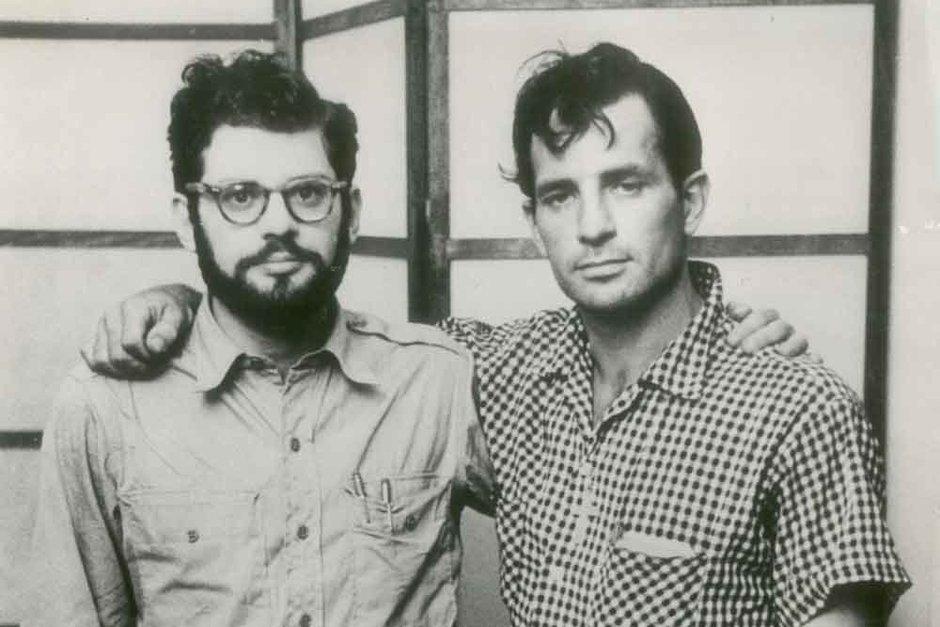
The central place in the book was occupied by “Howl," dedicated to Carl Solomon. In the poem, Ginsberg spoke of the people of his generation whom, in his opinion, society had driven to madness. He wrote about drug addiction, psychiatric hospitals, spiritual quests, and rejection of post-war American materialism. In the second part of the poem, Allen used the image of Moloch as a symbol of the force that suppresses man: conformism, militarism, bureaucracy, and the power of money.
The book attracted the attention of state authorities. In March 1957, customs detained 520 copies of the collection arriving from England. Officials deemed the text obscene. A few months later, the San Francisco police organized a test purchase of the book at the City Lights bookstore. After that, the authorities arrested the store's manager, Shig Murao, and then charged Ferlinghetti as the publisher of the collection. The reason for the conflict was explicit descriptions of sexuality, mentions of drugs, and coarse language. The authorities tried to prove that the book violated public morality.
Famous writers, critics, and literature professors came out in defense of the poem. Literary scholar Mark Schorer stated in court that Ginsberg uses the rhythms and vocabulary of everyday speech and therefore inevitably turns to language that many consider coarse. Writer Walter Van Tilburg Clark called the author an “honest poet” and emphasized his professional skill.
Judge Clayton Horn eventually dismissed the charges. He concluded that the poem has social significance and is not reducible to obscenity. The court's decision introduced the formulation of “social significance redeeming the controversial aspects of the work.” Horn also raised a fundamental question: can freedom of speech exist if the author is obliged to replace real words with harmless euphemisms?
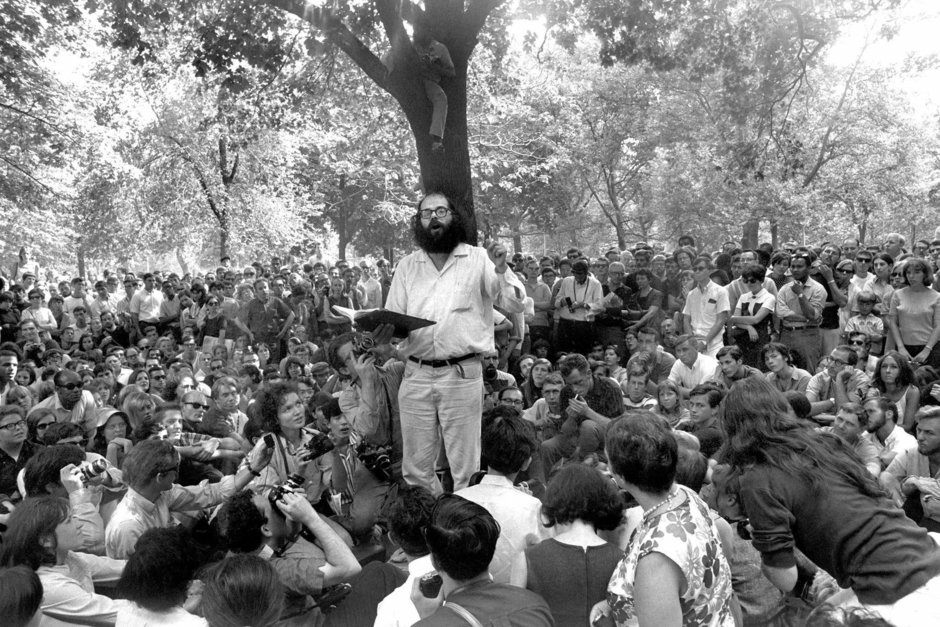
The victory in court changed not only Ginsberg's position. The decision created an important precedent for freedom of expression in American literature. Publishers gained more opportunities to publish complex and controversial texts. Critics and readers began to perceive Beat literature as a serious cultural phenomenon rather than a marginal experiment. According to researchers, it was the trial over “Howl” that turned the poem into a manifesto of the Beat Generation and opened the door to the publication of other works that might previously have faced censorship.
How Ginsberg changed America beyond literature
By the early 1960s, the story of the Beats ceased to be just a story of literature. Researchers often view the Beats as predecessors of the broader counterculture. They opposed social conformism, were interested in Buddhism and other Eastern traditions, advocated for sexual freedom, and criticized militarism. Later, many of these themes took center stage in the hippie movement and youth protests.
In the early 1960s, Allen Ginsberg traveled constantly, performed at universities and coffeehouses, participated in left-wing political initiatives, and studied Buddhism. His poems and public appearances made him one of the most visible figures of the American counterculture. Ginsberg became a link between the Beats of the 1950s and the youth movements of the following decade. He maintained relationships with Timothy Leary, Ken Kesey, Bob Dylan, and Hunter S. Thompson, and his name constantly appeared alongside the anti-war protests and cultural experiments of the era.
After a trip to India in 1962, he seriously took up meditation and the study of Buddhism. Later, he included mantras in his poetry readings and viewed Eastern practices as a way to explore consciousness. This interest was shared by many Beats who saw in Zen Buddhism and other Eastern teachings an alternative to the materialistic values of American society.
Allen Ginsberg opposed militarism, participated in anti-war actions, defended freedom of speech. In the poem “Wichita Vortex Sutra," written during the Vietnam War, Ginsberg proclaimed: “I raise my voice... I hereby declare the war is over.” This gesture had no literal political force, but it well demonstrated the poet's role in public life. Allen sought to use literature as a tool for public expression and cultural impact.
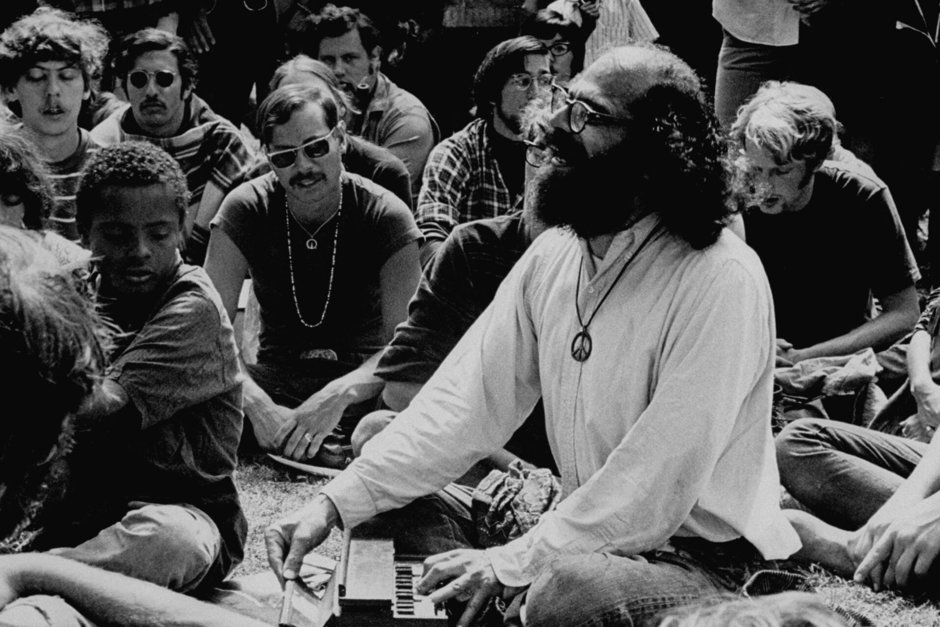
In the mid-1960s, Ginsberg actively participated in the countercultural movement and promoted the concept of “Flower Power," which opposed ideas of peace and nonviolent protest to aggression. In 1967, Allen helped organize the Human Be-In festival in San Francisco, which many historians consider one of the most important events of early hippie culture.
Ginsberg was friends with Bob Dylan for many years and participated in joint projects with him. Over the years, the poet performed with Patti Smith, The Clash, Phil Ochs, and other musicians. Composer Philip Glass created musical versions of fragments of “Howl” and “Wichita Vortex Sutra” together with the poet. It is no coincidence that one critic noted that “no voice reflects its era better than Ginsberg's voice," and the poet himself became “a bridge between the literary avant-garde and pop culture.”
American poet Anne Waldman emphasized that the longevity of Beat literature is explained not by its scandalous reputation, but by its work with language: new rhythms, colloquial speech, jazz intonations, and the rejection of familiar literary forms. In 1974, Ginsberg and Waldman, together with philosopher and composer John Cage and Diane di Prima, founded the Jack Kerouac School of Disembodied Poetics at the Naropa Institute, which became one of the main centers of alternative literary education in the United States. The Beats also helped broaden interest in authors previously ignored by the literary canon and paved the way for new directions in literature and journalism.
A hundred years after Allen Ginsberg's birth, many of the questions that concerned the Beats remain relevant. Debates about freedom of speech, the right to cultural dissent and independent art continue today. The poet himself saw one of the main tasks of his generation in the fight against censorship, militarism, and excessive social control.
Age restriction 18+
Ekaterina Petrova — literary critic for the online newspaper Realnoe Vremya, host of the Telegram channel «Булочки с маком».