Remote work harms mental health, adenovirus helps treat cancer, comet 3I/ATLAS not created by aliens
Interesting science news of the week
During the shift to remote work, due to increasing loneliness, people experience depressive episodes more often and turn to psychiatrists. An adenovirus-based drug stopped the development of pancreatic cancer in three patients. A person becomes convinced of a certain opinion after reading just five unidirectional posts on social media. The interstellar object 3I/ATLAS has a natural origin and contains no alien radio transmitters. Swedish scientists have created a weight-loss drug that does not act on appetite centers in the brain but forces muscles to burn fat directly.
Remote work harms mental health
The Research Department of the Federal Reserve Board (the US financial regulator) published an interesting article on how the mass shift to remote work affects people's mental health. The scientists focused on the present time, when the threat of coronavirus infection is gone, but remote work remains “inherited” from it as a convenient practice.
They studied data from five national surveys conducted in the US from 2011 to 2024 among 590,000 Americans. The years 2020 and 2021 were excluded from the sample to separate the long-term effect of remote work from the immediate stress during isolation.
The calculations showed: people employed in programming, marketing, and other fields that do not require mandatory presence at the workplace began spending, on average, 1.1 hours more per day alone than before over 13 years. Non-working time did not compensate for the lack of communication. On the contrary, people began meeting friends less often. As a result, the proportion of days spent in complete solitude increased by 72% compared to pre-pandemic times.
At the same time, the mental health of people in the “remote worker” group worsened compared to respondents in the control group. The frequency of depressive episodes increased by 22%, and people began seeing psychiatrists 4.6% more often. Remote workers started taking prescription antidepressants and anxiety-reducing medications more often than before.
The most severe consequences of remote work were for lonely people. Their mental state deteriorated twice as intensely as for the rest of the sample.

The conclusions are alarming: we see the advantages of remote work immediately. But the disadvantages have a cumulative effect; they can be unnoticed at first, but later lead to destructive health consequences.
Experimental adenovirus therapy for pancreatic cancer shows efficacy in three patients
Clinical trials for the treatment of pancreatic cancer are being conducted in the United States. This is one of the most dangerous oncological diseases. First, it reveals itself very late. Second, pancreatic cancer cells quickly and extensively mutate towards aggressive forms. Third, drugs penetrate poorly into the tumor because it has few blood vessels and a dense “shell” of normal cells. This makes pancreatic cancer particularly resistant to chemotherapy. Therefore, the main goal of scientists is to find a way to deliver the drug directly into the tumor.
To do this, they decided to use viruses — specifically, an adenovirus that needs to be genetically modified so that it does not touch healthy cells but attacks tumor cells. The University of Minnesota did just that: they “tuned” the adenovirus to react to a specific enzyme — cyclooxygenase-2. This enzyme is present in large quantities in tumor cells, serving as a kind of marker for the adenovirus's attack. The virus penetrates inside the cancer cell, destroys it, multiplies along the way, and infects subsequent parts of the tumor. The viral material is injected into the center of the tumor through a tube with an ultrasound sensor.
Three patients have participated in the clinical trials so far: one received the adenovirus in 2025, and two more in 2026. The scientists administered a small dose — only 10% of the dose they plan to use in the future. Since then, none of the patients have shown tumor growth or metastases. The researchers hope that if a higher dose is administered, it can not only stop tumor growth but also destroy its body. Furthermore, there is a possibility that the prolonged multiplication of the virus inside the cancerous tissue will also play a role.
Moreover, the American scientists also hope that the immune system will join the process, because when cancer cells break down, their contents are exposed, and the immune system may react to them. This means it will counteract the formation of metastases and “catch” those tumor cells that have spread through the bloodstream throughout the body. However, this effect has not yet been proven.
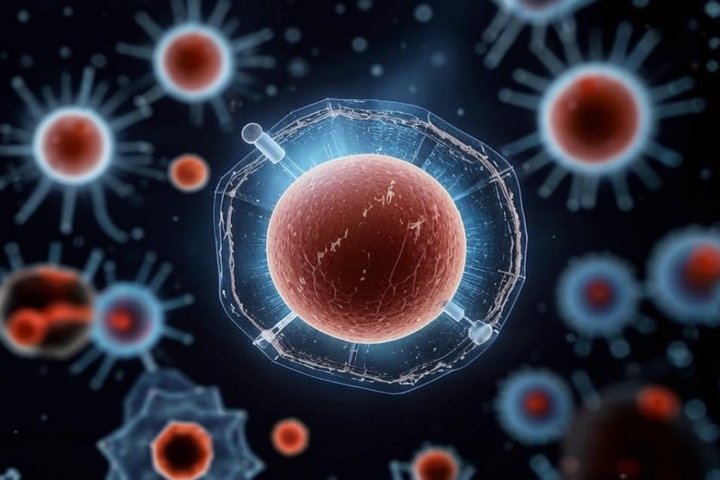
In the next stage of the experiment, 15 volunteers will participate — they will be administered higher doses of the drug.
You can convince a person of anything by publishing just 5 posts on social media
Scientists from Trinity College Dublin (Ireland) and NEOMA Business School (France) attempted to study how social media influences people's opinions and whether it is difficult to sway a person to a given point of view through social engineering. It turns out that manipulating our opinion is not a difficult task.
If you show a person five posts with the same opinion on a previously unfamiliar topic, they subconsciously accept that opinion. Further information they read will be perceived more readily if it declares the same opinion. Refuting information will be rejected. It makes no difference how truthful those first five posts were.
The experiment went as follows: 610 participants scrolled through a social media feed, and scientists studied how their opinions were formed. Until now, it was believed that a person first assesses whether the information is truthful and then draws a conclusion. But the experiment refuted this neat theory. The feed changes so quickly that a person simultaneously assesses credibility and forms an opinion in the first seconds of encountering the topic. What matters is not truthfulness, but how often the information is repeated and how coherently it is presented. And the more similar the posts we encounter are to each other, the more we believe what they say.
At some point, a “critical information point” is reached: after this threshold, the formed opinion begins to reinforce itself. We notice and trust subsequent posts with the same position, and we are more willing to share them ourselves. We perceive refuting information with skepticism, even if the truth lies precisely in it. This threshold is exactly five posts. Moreover, at this stage, a person practically cannot distinguish truth from lies. And by the time refutations appear, society is already beginning to believe the false statements.

In this regard, scientists warn network platform owners that no fight against fakes will be effective unless ranking algorithms are reconsidered.
Interstellar object 3I/ATLAS was not created by aliens
The Solar System guest — the interstellar object 3I/ATLAS — stirred many seekers of extraterrestrial intelligence. Scientists from different countries looked for evidence of its artificial origin, listing various signs of “unnatural” behavior. However, seven hours of continuous radio diagnostics have finally officially shown: the mysterious icy body formed on its own, without the involvement of aliens.
Recall that 3I/ATLAS was discovered in the summer of 2025, and it became only the third celestial body in the history of Earth-based astronomers' observations that formed outside the Solar System. Analysis of its orbit and tail indicated that it is a comet. Researchers tried to accurately verify whether it might be a probe from other star systems (similar to our Voyager, sent to other worlds).
Scientists took a narrowband radio signal, which natural objects cannot generate, as a sign of technological origin. But tracking it required special observation conditions that filtered out earthly noise. Now, a new observation scanned the interstellar visitor's path in the high-frequency range, taking into account its speed — for this purpose, the Allen Telescope Array in California was reprogrammed.

The result is inexorable: the comet has no radio transmitters whatsoever. So now Earth astronomers have closed the question of the origin of 3I/ATLAS.
New experimental weight-loss pill lacks semaglutide's side effects
At the Karolinska Institute and Stockholm University, Swedish scientists are developing a drug that will help patients fight excess weight but will not cause the side effects of semaglutide.
Recall that semaglutide-based drugs make the brain think that a person is already full. Thus, a person eats less and loses weight by consuming fewer calories. But along with fat, the patient loses muscle mass, which negatively affects their health. Many people using semaglutide complain of nausea and gastrointestinal problems.
The drug being developed by the Swedish scientists does not work on the brain but directly on skeletal muscles: it forces them to break down glucose more intensively. Thus, fat is burned directly. Such a molecule has been sought for a long time, but the problem with previous experiments was that the drug stimulated not only skeletal muscles but also the heart muscle. This leads to blood pressure spikes and strong heartbeats. The new drug presented by the Swedes does not cause this effect and does not affect the heart.

The Swedes' experiments on animals were successful: blood sugar levels decreased, fat tissue also decreased, and muscle tissue volume did not suffer. The first phase of clinical trials on humans proved the drug's safety — 48 healthy volunteers and 25 people with type 2 diabetes took it and did not complain of side effects. The second phase of trials lies ahead.