“Don't be surprised if you see something familiar in these Hungarian motifs and patterns”
Ethno-photos and ethno-fashion brought to Manezh
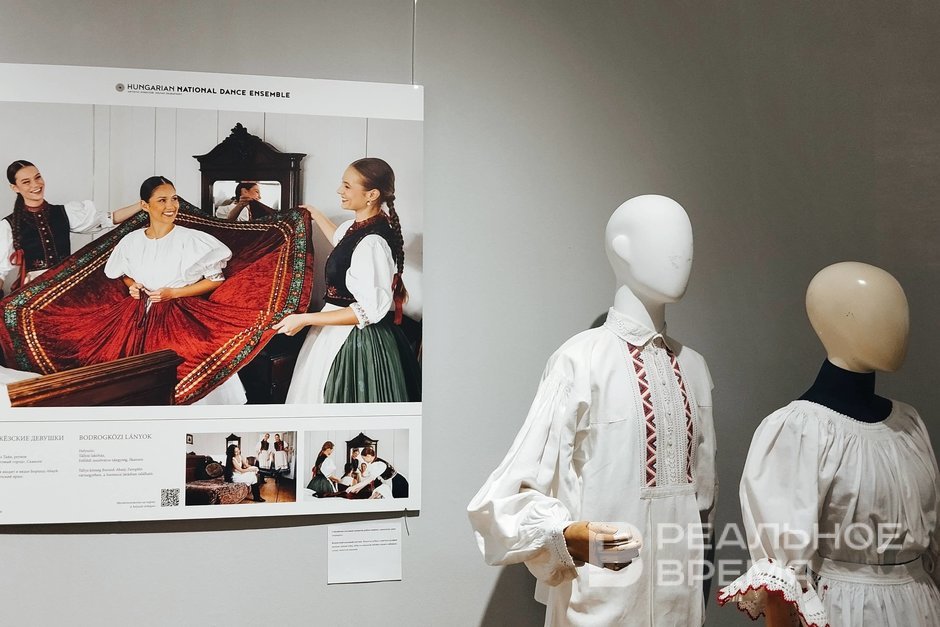
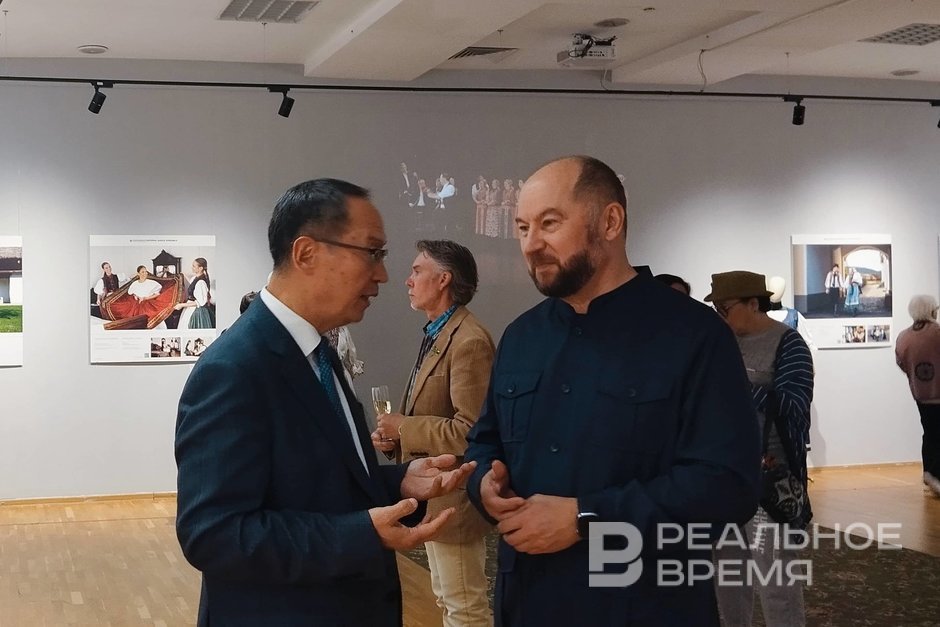
Contemporary ethno-costumes and photographs of members of a dance ensemble during celebrations were presented in the Manezh exhibition hall of the Kazan Kremlin at the exhibition “Hungary: Tradition and Modernity.” One of the authors, photographer Csilla Cseke, managed to arrive before the opening. And the Consul General of Hungary in Kazan, Sergey Szűcs, reminded that for his people, the lands of Tatarstan are in a sense native. And the head of the administration of the Rais of Tatarstan, Asgat Safarov, called the exhibition a dialogue between two peoples. For more details, see the material by Realnoe Vremya.
The Hungarians — they are our people!
— This exhibition is not just a historical and cultural event, but a dialogue between two peoples,— noted the head of the administration of the Rais of Tatarstan, Asgat Safarov. — Cooperation between Tatarstan and Hungary continues to develop successfully, including in the economic sphere. I'll give you one figure: trade turnover between us in 2025 exceeded $500 million.
The Consul General of Hungary in Kazan, Sergey Szucs, recalled that in distant times, at the beginning of the Middle Ages, before the Hungarian tribes arrived in the Carpathians, they lived on the territory where Tatarstan is now located. This is evidenced by many artifacts and excavations, which were carried out, among others, through joint efforts by Hungarian and Tatarstan archaeologists, pointed out Szucs, who studied at the history faculty of Moscow State University.
— Please don't be surprised if you see something familiar, something perhaps native, in these Hungarian motifs and patterns, because indeed, as Asgat Akhmetovich said, we are connected by long-standing historical ties,— declared Sergey Szucs.
According to him, the costume designer Irena Berzevics-Feher lives in the northeastern region of Hungary. The central focus of her work is the ethnic group called the “Paloc.” The most common theory among historians is that the Palocs descend from the Cumans, from the Kipchaks.
— Our people! — Safarov immediately added.
But there is another theory, the consul noted: their ancestors are Avars, Khazars, and there is also influence from Slavic times. Everyone, so to speak, can choose their favorite version. Very diplomatic.
Not just photos, but the birth of Hungarian culture
The exhibition “The Mystery of the Paloc Pattern” is also a presentation of the brand Palocviselet (“Paloc Costume”), created by Berzevics-Feher in 1984, which even received the Hungarian government's “Hungaricum” prize.
— In reality, they are traditional, but they are adapted to modernity so that most of them can be used in everyday life, — noted Daria Nikitina, coordinator of cultural projects at the Liszt Institute (Hungarian Cultural Center in Moscow). — They are light, made of natural fabrics, and they are beautiful.
The second half of the exhibition consists of photographs by Csilla Cseke, “Tradition in the Frame.” Essentially, she photographed people close to her — dancers from the Hungarian National Dance Ensemble, where she currently works as a marketing and communications manager.
Before that, she had already been heavily involved in photography, studied in the USA and Europe, worked for the Hungarian Telegraph Agency, and taught.
The photographs were taken in Szentendre, in an open-air museum near Budapest. In the last century, this idyllic town was flooded with artists, and to this day there are many galleries and museums here. The “Skanzen” ethnographic museum covers many hectares of land, on which more than 400 buildings from various regions of the country have been recreated.
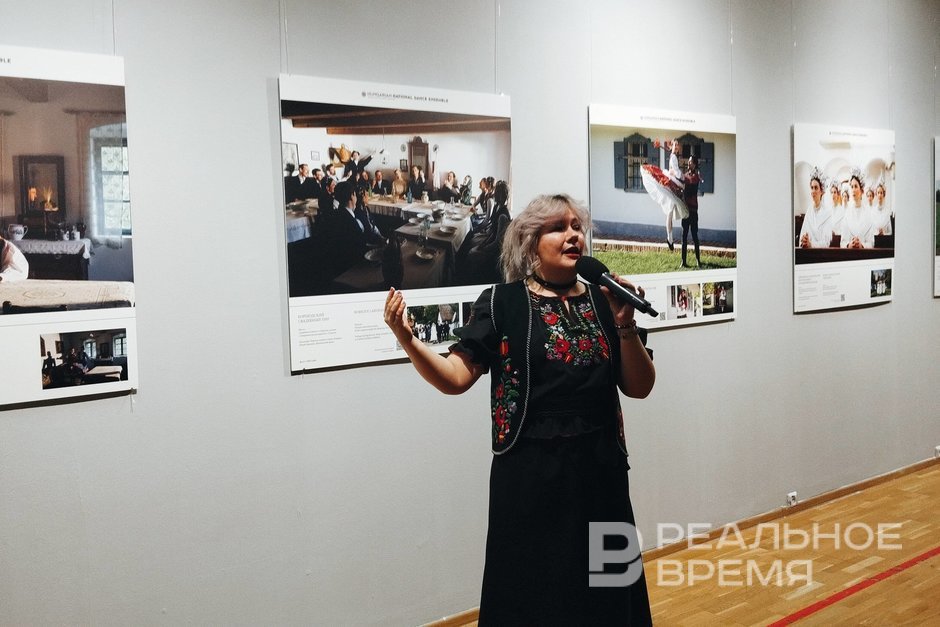
— As a photographer, I learned to notice small details, people's gestures, and capture beautiful moments, — noted Csilla Cseke. — That's basically how this exhibition came about. I wanted not just to take photos, but to show how Hungarian culture was born, for example, how we prepared for holidays.
Indeed, the photographs show sometimes mysterious, but very understandable events: here a girl meets her beloved, here a mother and daughter are cooking in the kitchen, here they are making a circle dance in a barn. And all of this is the diverse, colorful Hungary.
Let us add that the exhibition is open for only 10 days; you can visit it until June 15.