Children's “Faust”: on the centenary of James Kruss's birth
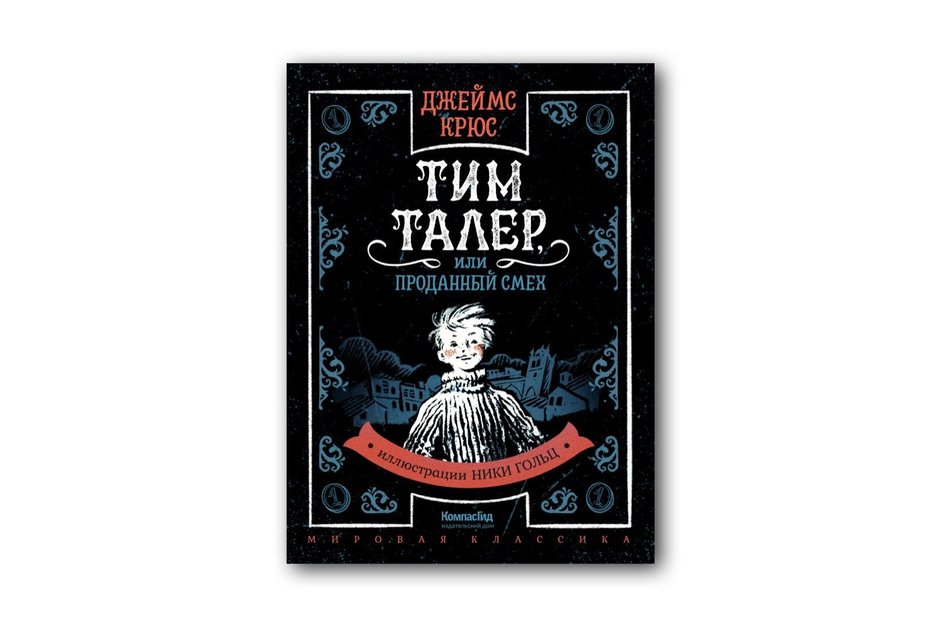
Book of the week — “Tim Thaler, or The Sold Laughter” by German writer James Kruss

Today would have been James Kruss's hundredth birthday. Germany is celebrating the anniversary with exhibitions, scientific conferences, family celebrations, theatrical productions, and new editions of his books. On Helgoland — the island where Kruss was born — a large celebratory program has been prepared, in Munich the renovated James-Kruss-Turm museum tower complex has opened, and the International Youth Library is holding a conference on his legacy. The literary critic of Realnoe Vremya, Ekaterina Petrova, tells us about the German writer and his most famous book — “Tim Thaler, or The Sold Laughter” — on which more than one generation of readers in Russia grew up.
A life between Helgoland and Gran Canaria
Many remember James Kruss primarily as a children's writer, the author of “My Great-Grandfather, the Heroes and I," “The Lighthouse on the Lobster Reefs," and “Tim Thaler, or The Sold Laughter.” However, behind the reputation of a kind storyteller hid an author interested in quite adult themes: money and power, freedom and dependence, home and exile, success and its price. This is precisely why the novel about a boy who sold his laughter has not lost its relevance more than sixty years after its first publication.
Kruss knew well what it meant to lose one's familiar world. He was born on May 31, 1926, on the small island of Helgoland in the North Sea. His father worked as an electrician, and his mother came from a family of lobster fishermen. At home, they spoke not German, but Halunder — the Helgoland dialect of North Frisian. The future writer mastered German only at school. He later explained his love of languages precisely by this early experience of bilingualism.
The island also gifted him with a vivid imagination. “On small islands, even the most modest talent for imagination develops to its extreme limits. And to color the grey monotony of place and time, people weave stories into their days," wrote Kruss. Helgoland became his inner point of reference. It is no coincidence that researchers and custodians of his legacy constantly note that the theme of the island runs through all of Kruss's work, even after he left his homeland forever.
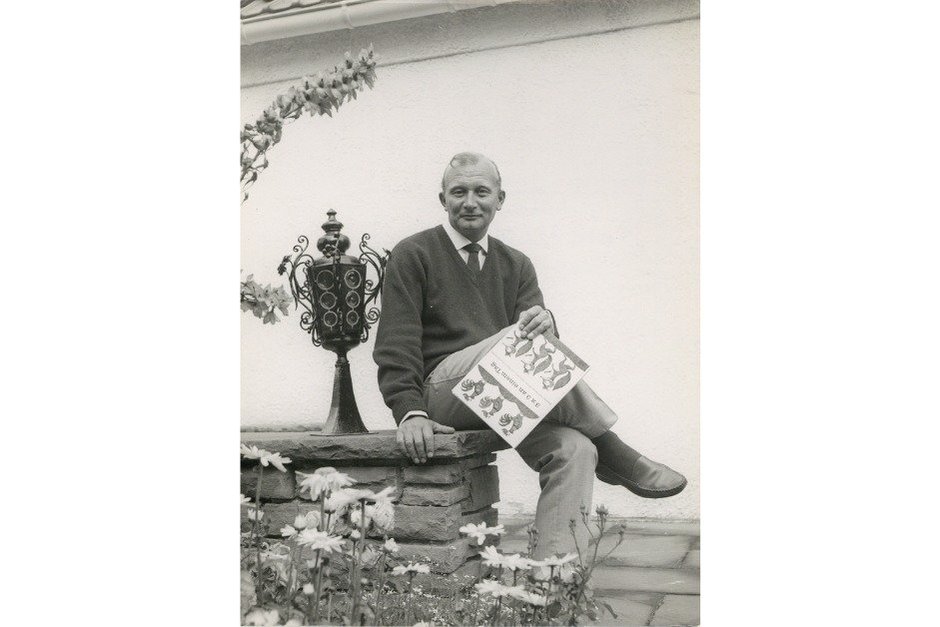
The war abruptly cut short James's childhood. In 1941, the authorities evacuated the children of Helgoland to the interior of Germany. Kruss ended up first in Thuringia, then in Saxony. After the war, he could no longer return home: the British military used the island as a bombing range. Thus, the theme of the lost home appeared in his biography. Later, it surfaced again and again in his books, where heroes set off on journeys, sought their place in the world, and tried to preserve the memory of the past.
Kruss then received a pedagogical education and passed his teaching exams, but did not go to work in a school. Instead, he turned to literature and journalism. In 1948, James founded the magazine Helgoland, which helped maintain contact between the island's residents, scattered across different regions of Germany. That same year, his first book, “The Golden Thread," was published. Even in these early years, Kruss wrote extensively and searched for his own voice.
The move to Munich in 1949 proved decisive. There, the young author met Erich Kästner. It was Kästner's support that helped him enter the literary scene and begin a career as a children's writer and radio playwright. In the early 1950s, Kruss wrote children's poetry for newspapers, created radio plays, and adapted other authors' works for radio. One such work was an audio version of Kästner's “The Animals' Conference.”
In 1956, the book “The Lighthouse on the Lobster Reefs” was published, followed by “My Great-Grandfather, the Heroes and I," and in 1960, Kruss received the German Prize for Children's Literature. Two years later, the novel “Tim Thaler, or The Sold Laughter” appeared — his most famous book.
At the same time, Kruss never limited himself to a single genre. He wrote novels, poetry, plays, stories, and texts for illustrated books. He worked in radio and television. In the 1960s, he hosted his own television programs, including “James's Animal World” and “Alphabet and Fantasy.” For him, literature remained a craft. His friend Dario Pérez recalled that if Kruss was working, he would write all day without a break, and then go for a walk by the sea.
The writer himself saw no contradiction between entertainment and serious discussion. Asked why he wrote for children, Kruss answered succinctly: “For pleasure!” But he immediately added that a child remains the most open and curious reader in the world, and writing for children means writing for future adults. Beneath the wordplay, humor, and fantasy in Kruss's books almost always lie moral questions, which are enthusiastically explored not only by children but also by adults.
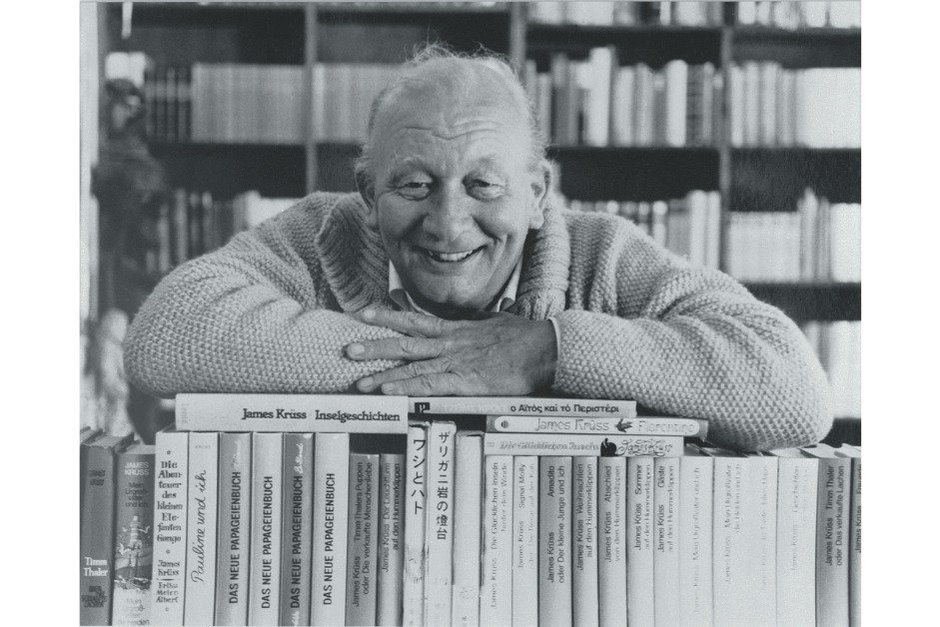
In 1968, the writer received the Hans Christian Andersen Award — the main international prize for children's literature. Kruss's books have been translated into more than thirty languages, and “Tim Thaler” has received several screen versions and become well-known far beyond Germany. By the time he received this award, Kruss had already begun a new chapter in his life. In 1966, he moved to the Spanish island of Gran Canaria, which he called his “island of happiness” and where he lived for more than thirty years. Here, public fame interested him less. Pérez recalled that fame never truly occupied Kruss. He was far more interested in books, travel, and work. “I have one great love in my life, and that is literature," the writer told his friend.
After James Kruss's death, his body was returned to his birthplace. In September 1997, the writer's ashes were committed to the sea near Helgoland. Thus ended the journey of a man who wrote about islands all his life and ultimately returned to his own island.
The price of luck
In 1962, James Kruss published the novel “Tim Thaler, or The Sold Laughter.” The book appeared in an era when German literature was increasingly turning to questions of power and human responsibility. Kruss used the form of an adventure and fantasy novel to talk about the problems of consumer society and the capitalist economy of the post-war decades. The novel enchanted readers and over time became the writer's most famous book.
The story does not begin with Tim himself, but with a meeting between the narrator and the already adult hero in a Leipzig printing house. The author emphasizes that this man “laughed so heartily and infectiously, like a ten-year-old boy.” For several evenings in a row, Tim tells the story of his childhood. At the center of this story is an orphan boy who lost his mother early, and then his father. After his father's death on a construction site, his life became even harder. His only consolation remained memories of Sunday trips to the racetrack and his extraordinary laughter. Kruss made this laughter the hero's most important trait. It distinguishes Tim from others and becomes a symbol of what cannot be measured with money.
But that is precisely what Baron Trech offers, suggesting a strange deal to the boy. If you read the Baron's surname backwards, you get the word “Devil.” Kruss consciously links his hero to the tradition of the Faustian bargain. The Baron offers the boy the ability to win any bet. In return, he demands Tim's laughter.
“I can endow you with the ability to win any bet! Any!... Got it?”
Tim agrees. Very soon, he gains money and success, but realizes that he has lost something much more important. As the plot develops, the book moves further and further away from a simple fairy tale about a miracle. Each new win shows that wealth does not bring Tim happiness. He fulfills long-held desires, helps his family out of poverty, but does not become freer. On the contrary, the deal binds him ever more strongly to the Baron. Even attempts to lose prove useless. Tim makes increasingly improbable bets, yet invariably wins. As a result, Kruss asks a simple question: can happiness be bought, and what does a person lose when trying to exchange inner freedom for external success?
It is no accident that the object of the deal was laughter. Kruss shows it as part of the personality. As long as Tim laughs, he remains himself. Deprived of laughter, he retains money and luck but loses the ability to fully experience joy. Already at the beginning of the book, the author notes that even those closest to him begin to perceive Tim differently. His wealth grows, but his relationships with those around him are destroyed. The search for lost laughter becomes a search for himself.
Through the figure of the Baron, the novel expands into a broader discussion of power and money. The Baron perceives capitalism as a kind of religion and seeks to control people through their desires. He declares:
“All of humanity is divided into two parts: into slaves and masters. In our time, they try to erase this boundary, but it is very dangerous. There must be people who think and give orders, and people who carry out these orders without thinking.”
In this logic, Tim's laughter is a valuable asset that can be used to influence others. Therefore, reading the book today, one can see in it not only a fairy tale but also a reflection on how power turns human qualities into commodities.

After the book's publication, Tim Thaler's story transcended literature. The 1979 television series occupies a special place. Channel ZDF broadcast it during the Christmas holidays as the first of its famous Christmas series. The project drew a multi-million audience and became a real television phenomenon. The main role was played by Thomas Ohrner, and the role of the Baron was embodied by Horst Frank. The series was later also shown by the BBC.
Soviet viewers became acquainted with this story thanks to the two-part musical television film “The Sold Laughter," which was released in 1981. The authors preserved the book's main conflict: Tim sells his laughter to Baron Trech and soon realizes that along with his laughter, he has lost the ability to face life's difficulties.
In the 21st century, the novel received another notable interpretation. In 2017, director Andreas Dresen released the film “Tim Thaler, or The Sold Laughter.” The director himself called Kruss's story “very timeless” and emphasized that its main message remains relevant: a person does not become happier simply because they become the richest in the world. In this new version, the themes of friendship and resistance to the power of money were strengthened. Symbolically, Thomas Ohrner — the actor who played Tim in the cult 1979 series — also appeared in the film. But this time, he appeared in a cameo role, playing the concierge.
Publisher: CompassGuide
Translation from German: Alexandra Isaeva
Number of pages: 352
Year: 2022
Age rating: 12+
Ekaterina Petrova — literary critic for the online newspaper Realnoe Vremya, host of the Telegram channel «Булочки с маком».