Before “Hamlet”
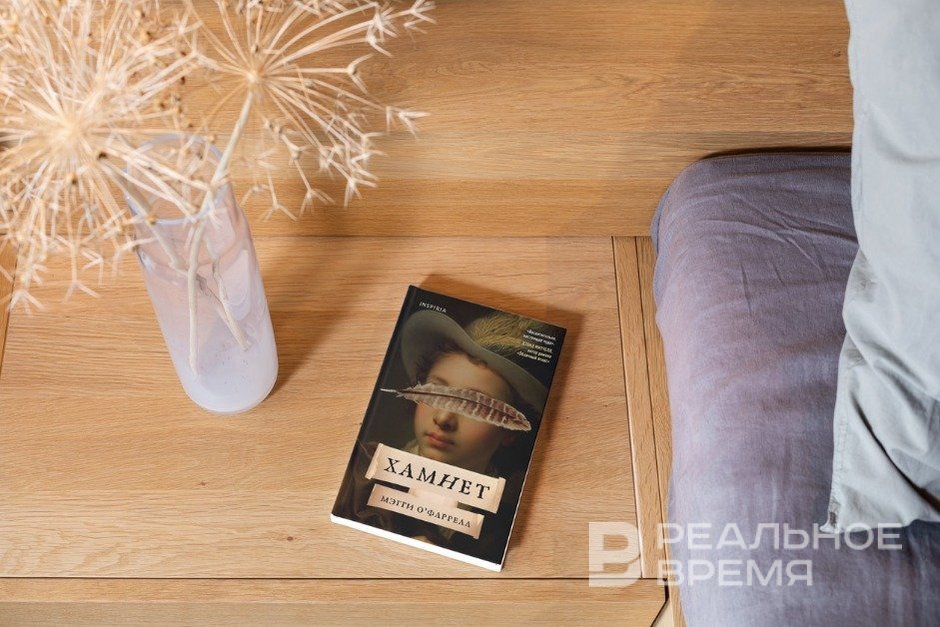
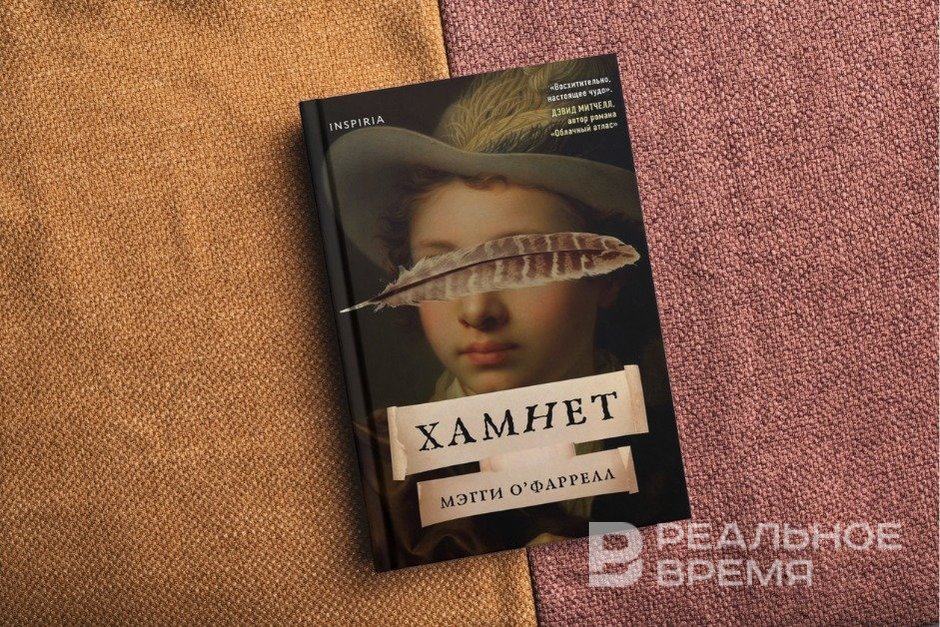
This week's book is “Hamnet” by Irish author Maggie O'Farrell.

This week, streaming services released a film adaptation of Maggie O'Farrell's novel “Hamnet” — a historical drama by Chloé Zhao about Shakespeare's family and the loss that, according to the author, gave rise to “Hamlet.” The book, which became an international bestseller, shifts the focus from the great playwright to his wife Agnes and the death of their eleven-year-old son during a plague epidemic. Literary critic Yekaterina Petrova of “Realnoe Vremya” explains why “Hamnet” is a novel-memorial to an underappreciated loss and how the book and film fundamentally differ while telling the same story.
“Bad text can be fixed, but a blank page cannot.”
Maggie O'Farrell was born on May 27, 1972, in Coleraine, Northern Ireland. Her father, originally from Dublin, was an academic economist. Soon after her birth, the family moved to Wales where her father was offered a university position. O'Farrell's childhood was split between Wales and Scotland due to frequent family moves.
At the age of eight, O'Farrell contracted a severe illness. In an interview with The Independent, she recalled: “When I was eight, I caught a mysterious virus with symptoms of cerebellar ataxia; doctors thought I would die or at best never walk again. I was paralyzed.” She missed over a year of schooling at Oldcastle Primary School in Bridgend (South Wales) and initially could not hold a pen or a book. According to the writer, her parents secured special accommodations for her at school, including moving her classroom to the ground floor because she couldn't climb stairs. These events were later described in her memoir “I Am, I Am, I Am: Seventeen Brushes with Death” (2017) and fictionalized in the novel “The Distance Between Us” (2004).
O'Farrell's school experience was mixed. She attended Brynteg Comprehensive School, which she described as extremely rigid and overcrowded: a school designed for a thousand pupils actually had two thousand. She recounted that formal disciplinary rules were upheld more strictly than student safety. When she was hit during a chemistry lesson, the teacher did not intervene. Later, moving to Scotland and attending North Berwick High School was a sharp contrast — less formality and more academic freedom.

At 16, O'Farrell passed O-grade exams, and a year later, five Higher exams. She then enrolled at New Hall, University of Cambridge (now Murray Edwards College), choosing it for its clear entry requirements for applicants from the Scottish state education system. During her studies, Maggie participated in writing workshops. Her tutors included poet Jo Shapcott and writer Jane Rogers. O'Farrell later said it was then that her perception of the writing profession changed: writers turned out to be “accessible and supportive.”
After university, O'Farrell worked as a journalist: first for a computer magazine in Hong Kong, then at London's The Independent on Sunday, where she held the position of assistant literary editor. Simultaneously, she began publishing fiction. Her debut novel “After You'd Gone” was published in 2000 and received the Betty Trask Award in 2001. Subsequently, O'Farrell's books were nominated for major literary prizes multiple times, and “Hamnet” won the Women's Prize for Fiction and the US National Book Critics Circle Award in 2020.
O'Farrell is known for her privacy. In an interview with The New York Times, she joked that she might not tell her husband where she's going when leaving the house, “even if just to the post office.” There, she also shared a story about the contract for her memoir “I Am”: to avoid having to return a large advance if she withdrew from publication, she signed a contract for one pound and sent the editor a photo of a rented supermarket trolley with the caption: “I have spent my advance.” The writer emphasizes that she doesn't discuss current work even with close ones. According to her, this preserves the “fresh perspective” of her first reader — her husband, writer William Sutcliffe.
Speaking about writing, O'Farrell formulates a practical principle: you don't have to start at the beginning. In an interview with She Writes magazine, she noted that realizing this freed her from the fear of the “blank page” and allowed her to simply “immerse herself in the text," because “bad text can be fixed, but a blank page cannot.”
Marriage as Partnership
Work on the novel “Hamnet” began for Maggie O'Farrell long before she started writing it. She recalled first learning about Shakespeare's son at 16 in a Scottish literature class. “The teacher mentioned in passing that Shakespeare had a son who died at 11 and was named Hamnet, and four years later he wrote the play 'Hamlet'," O'Farrell recounted. According to her, even then it was clear this “could not be a coincidence," and this thought “stayed with her for decades.”
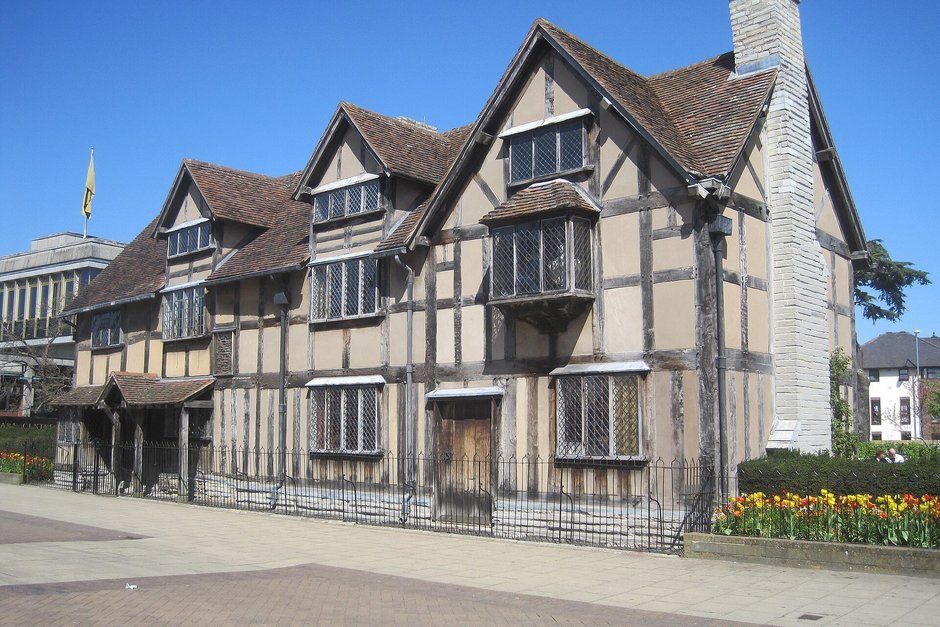
The historical basis of the novel is extremely laconic. In the 1580s, a couple with three children lived in a house on Henley Street in Stratford: Susanna, then twins Hamnet and Judith. The boy Hamnet died in 1596 at the age of 11. About four years later, his father wrote the play “Hamlet.” O'Farrell emphasizes that these facts are hardly elaborated in Shakespeare's biographies, and this silence became her starting point.
She approached writing the novel several times, putting the work aside. O'Farrell said she “circled around this story," collected books about Shakespeare, then put them back on the shelf and took up other novels. The turning point was the decision to start the text with a specific scene. “I realized I had to start with him. With the boy. I wrote the phrase: 'The boy was coming down the stairs,' and that seemed to unlock something," the writer said in one interview. By this point, she had consciously waited until her own son was older than Hamnet.
Research went hand in hand with writing. O'Farrell emphasized that she constantly encountered specific everyday questions she couldn't answer without verification: “I stopped and thought: what were floors made of in a 16th-century house? Stone? Wood? Rushes?” — and after that went to Stratford. For scenes related to rural life, she consulted her veterinarian sister, and for linguistic accuracy, she checked the Oxford Dictionary, rejecting words that had different meanings in the 16th century.
The plot revolves around the Shakespeare family left in Stratford and Hamnet's death during an epidemic. O'Farrell attributes the boy's death to the plague. The book meticulously traces the path of the contagion — from Mediterranean trade routes to the English provinces. The novel opens with a scene where Hamnet desperately searches for adults to save his ill twin sister Judith. This episode is based on the known fact of the twins' existence but is entirely fictional in detail.
However, the central figure of the book is neither Hamnet nor his father. The heart of the novel is the boy's mother, whom O'Farrell calls Agnes. The name is not chosen by chance: the writer references the will of Richard Hathaway, which names his daughter as “my daughter Agnes," and emphasizes that the spelling of names was unstable in the 16th century. In the novel, the name “Anne," by which we know Shakespeare's wife, is deliberately not used.
Agnes's character is built on a combination of documented facts and artistic invention. It is known that she received a generous dowry and later ran a malting business. Against this background, O'Farrell insists that illiteracy “is not equal to stupidity," as Shakespeare's biographers often describe his wife as a simple-minded woman. In the book, Agnes is a herbalist, beekeeper, falconer, a woman with developed intuition. She can understand animals, plants, and people. Agnes becomes the immovable center of the narrative. These traits, according to O'Farrell herself, were necessary to portray the marriage as a partnership and explain the sources of knowledge reflected in Shakespeare's plays — from herbal medicine to falconry.
The novel's focus shifts from the playwright father to the family in Stratford. London remains peripheral, while Stratford is its geographical and emotional center.
O'Farrell repeatedly emphasized that she viewed the novel as a kind of memorial. She said: “I wanted to give gravity to this death, which has been undervalued by history. To say: this mattered. He mattered.” She also argued that without Hamnet's death “there would be no 'Hamlet' and perhaps no 'Twelfth Night'," and that the key tragedy of Shakespeare's life occurred “not on stage, but at home, in Stratford.”
Hamnet and “Hamlet”
“Hamnet” is structured as an exploration of loss within a family whose existence is simultaneously well-known and almost undocumented. In the very first pages, O'Farrell establishes the key theme:
“Every life has its core, its centre, its heart, where all beginnings and ends converge” — she writes about the mother, absent at the moment her son is left alone in an empty house
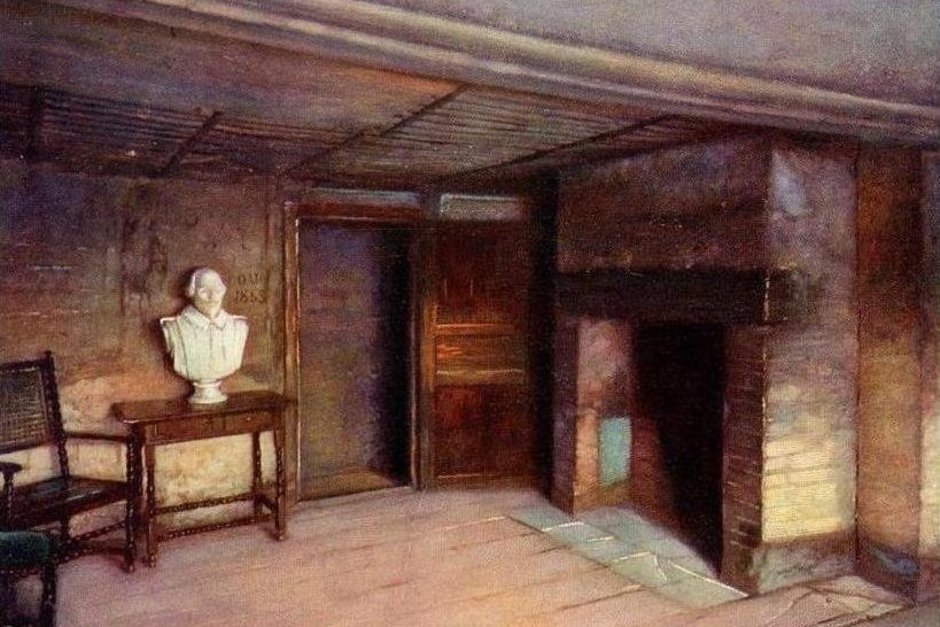
A conscious artistic device was the absence of Shakespeare's name in the text. He appears as “the husband," “the father," “the Latin tutor," and his direct speech is minimal. This frees the narrative from the burden of associations and shifts the focus to the family's daily life. O'Farrell stressed that the name “William” does not appear in the text: “It's physically impossible to write: 'William Shakespeare came down the stairs and had breakfast.' That immediately yanks you out of the narrative.” The refusal to use the name is a way to make the reader forget everything they think and know about Shakespeare and see not an icon, but a young father who has lost a child.
O'Farrell also avoided imitating Shakespeare's language. “You can't mimic him. It would be agony to write and to read," the writer said. Instead, she creates the era through mood and bodily imagery. The historical environment is formed through rhythm and metaphor, not facts: anger slips out like a rapier, words sting like hornets, and kittens' faces are like pansies. This allows maintaining distance from anachronism without overloading the text with reference details.
The research remains tangible. O'Farrell meticulously conveys the layout of Shakespeare's house through the atmosphere of the place: the glove-maker's workshop, kitchen heat, heavy garden work. However, knowledge is never presented directly. The reader is not marched through a 16th-century glove-making manual, but is allowed to feel the smell of leather, the light of London sun, and the cold of stone streets.
The central event of the novel — Hamnet's death during an epidemic — is woven into an expanded geography. In one key episode, the plague travels from a flea on a monkey in Alexandria to a Stratford seamstress's shop and then to Agnes's children. According to O'Farrell, this fragment was initially needed to “open up” the confined space of the house. Later, during COVID-19, it gained additional resonance (the original version of the novel was published in March 2020). The writer reminded that Europe retains a “folk memory of the Black Death” and compared 16th-century medicine to the present: “They had maybe an onion boiled in milk and a dried toad.”
Structurally, the novel is divided into two parts. In the first, the family is formed; in the second, it disintegrates under the pressure of loss. After their son's death, the spouses cannot speak of grief and misinterpret each other's reactions. Agnes loses her intuitive and domestic skills, and her husband limits his dramatic work to “safe” genres — history and comedy. This impasse culminates in the writing of “Hamlet," which within the novel becomes an attempt to make sense of the loss.
O'Farrell emphasizes the connection between Hamnet and “Hamlet," but does not mask its hypothetical nature. At the beginning of the book, she notes that the names Hamlet and Hamnet were interchangeable in parish records, citing Stephen Greenblatt. However, the idea of “Hamlet” as a direct memorial to a son is disputed by historians, including James Shapiro. O'Farrell herself said that for her, the answer was not as important as the question: “How might a mother have felt, knowing that her dead son's name had become the title of a play and the name of a ghost?”
The novel “Hamnet” is primarily a book about grief, where scenes of illness and death possess compelling power. According to The New York Times, by 2022, the novel had sold about 1.6 million copies worldwide. At the same time, O'Farrell herself emphasized that it was crucial not to end the book with the child's death: “What happens afterwards — the next 4 years — is no less important. That part of the story is about where art comes from and why we need it.”
“Completely Different Creatures”
Plans to adapt Maggie O'Farrell's novel “Hamnet” became known in 2023. Chloé Zhao was appointed as the director, and she co-wrote the screenplay with O'Farrell herself. For the writer, this was her first experience working on a feature film. “This was the first time I'd ever collaborated with anyone in the creative process," O'Farrell said, noting she was “thrilled” to learn of Zhao's interest in the project.
The writer immediately noticed Zhao's directorial approach to details and the materiality of the era. She recalled delighting in the characters' “dirty fingernails” and that the actors didn't look “like 21st-century people in clean costumes.”
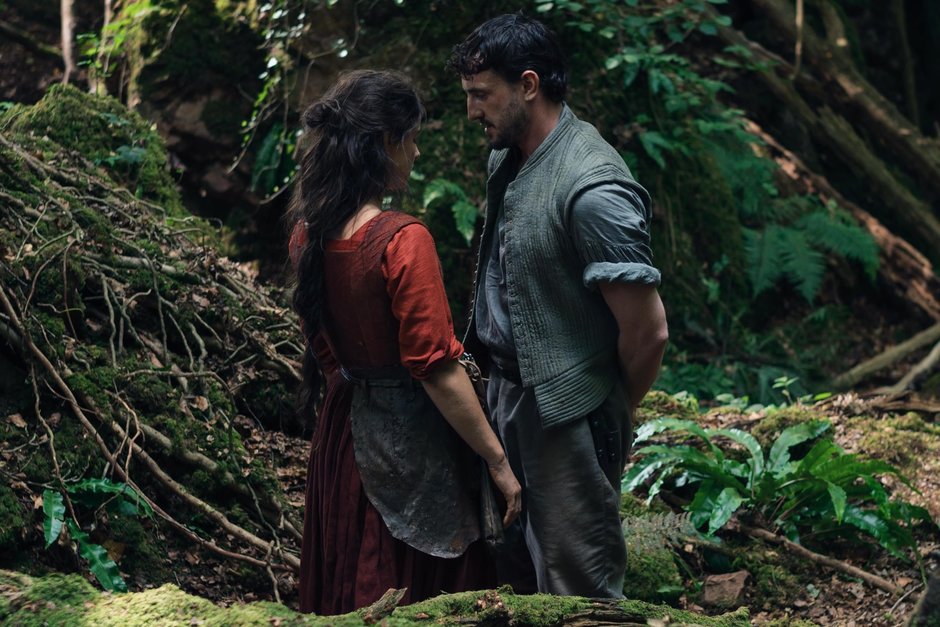
The collaborative process was conducted remotely. O'Farrell lived in Scotland, Zhao in California, and much of the discussion happened via voice messages. According to the writer, in the morning she might find “13 or 14 voice notes," the longest of which lasted 58 minutes. This format reflected their different working methods: Zhao, as O'Farrell noted, “thinks by talking," whereas she herself is accustomed to working on paper.
The key task of adaptation was radical compression of material. O'Farrell described the process as an “hourglass”: the voluminous, largely interior novel had to be “compressed to the core” of a 90-page script, then “expanded” back into film language. As a result, certain lines were removed from the film, such as those involving Shakespeare's siblings and additional details about his parents. Furthermore, the novel's chronology was restructured: while the book jumps in time, the screenplay is more linear, starting with Agnes and Will's love story.
A separate challenge was the “exteriorization” of internal narrative. O'Farrell said the novel is “very interior," and cinema required finding visual equivalents for feelings. As an example, she cited the final scene at the Globe Theatre: if in the book Agnes experiences it alone, in the film her brother is beside her so she can voice what she sees. Simultaneously, according to O'Farrell, Zhao used landscape as a way to convey repressed emotions — a technique familiar from “Nomadland.”
The film “Hamnet” was released in 2025. It was shown at the Telluride Film Festival and then at the Toronto International Film Festival, where it received the People's Choice Award. The lead roles were played by Jessie Buckley and Paul Mescal. O'Farrell praised the actors' work, saying “each of them brought exceptional focus and depth to the film.”
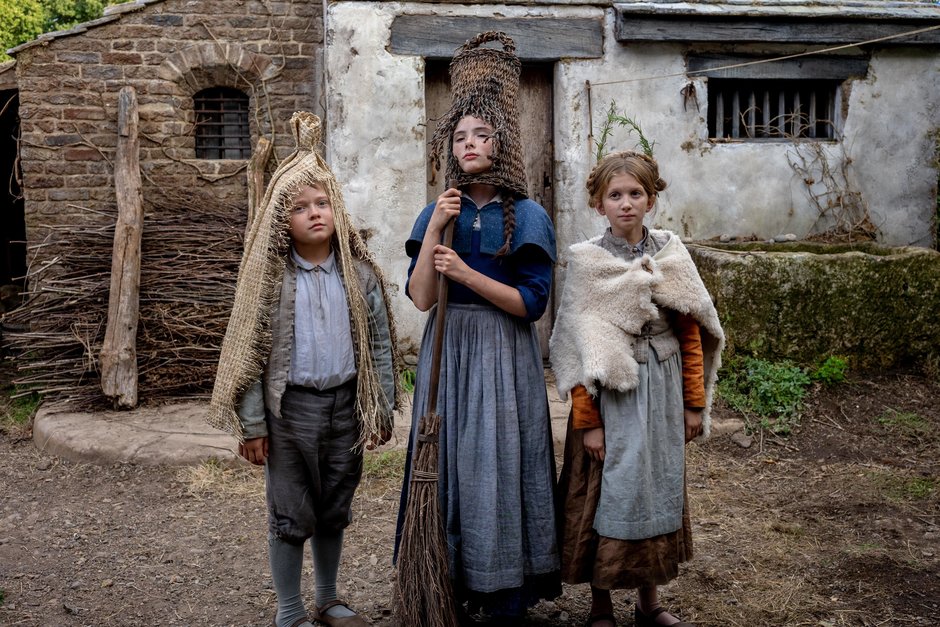
Separately, the writer highlighted the film's final 10 minutes. She explained that in the novel, the Globe scenes are inevitably condensed, whereas film allowed them to “hear large fragments of the play, see the fencing, hear the clash of steel," turning the episode into a full cinematic experience. This finale was what she “most looked forward to” as the author of the source text.
In an interview with The New York Times, O'Farrell stressed that she initially didn't want to adapt it herself but agreed after talking with Zhao. She repeated that she was confident the director would “never make a polished costume drama” or put Shakespeare at the center of the narrative. The final work was described by O'Farrell as an example of how a novel and a film are “completely different creatures” that use different tools but stem from the same story.
Publisher: Inspiria
Translated from English by: Margarita Yurkan
Number of pages: 384
Year: 2021
*Age rating: 16+*
Yekaterina Petrova is a literary critic for the online newspaper “Realnoe Vremya” and the host of the Telegram channel “Buns with Poppy.”