Russia's golden finish and Andrey Minakov's triumphant finale
Tatarstan athletes won medals of all colors at the European Championships
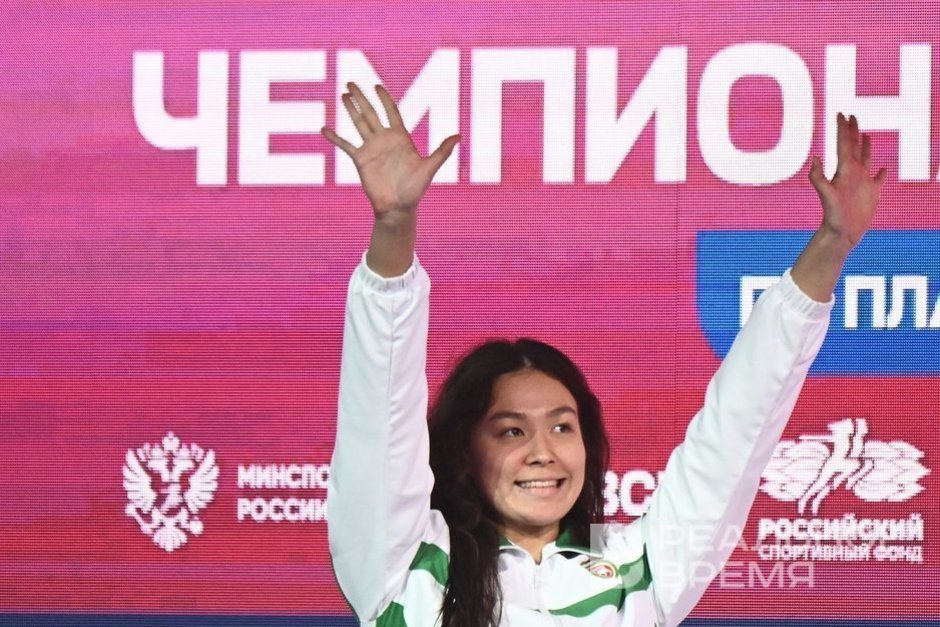
The final event of the European Aquatics Championships was the men's medley relay, in which backstroke specialist Kliment Kolesnikov, breaststroker Ivan Kozhakin, Tatarstan's Andrey Minakov (butterfly), and freestyler Egor Kornev won gold, ahead of Italy and France. In addition, Minakov earned silver in the men's 4x100m freestyle relay, while Sofya Dyakova claimed two bronzes in the 4x200m freestyle relays (women's and mixed). For more details, see the report by Realnoe Vremya.
Sofya Dyakova's first bronze
Following the sequence of events, Sofya Dyakova first won a relay bronze, and then Andrey Minakov added silver to that medal. Our women finished behind England and Hungary in the women's 4x200m freestyle relay, which had previously been highly competitive in Russian men's swimming. But we celebrate the bronze of the Russian women (Ksenia Misharina, Sofya Dyakova, Daria Surushkina, Daria Klepikova — 7:49.13). There are mixed feelings here. First, we were only 4 hundredths behind the silver-winning Hungarians over the 800-meter distance covered by the quartet — a mere drop in the pool.
On the other hand, the Germans would dream of being in our place. They lost the bronze to us by just 1 hundredth. But that's Germany's problem; in our case, we can see how long it has been since Russian women stood on the podium. They came closest to this at the 2019 World Championships, when the quartet of Guzhenkova, Salamatina, Andrusenko, and Egorova finished fifth, being the best in Europe and setting a national record of 7:48.25.
Since then, only men have brought joy in Russian swimming, although Anastasia Kirpichnikova appeared in the women's team, later switching to France. Salamatina is currently serving a two-year ban for furosemide; Guzhenkova and Egorova are still active, but the current relay quartet consists of 25-year-old Daria Surushkina, 21-year-old Daria Klepikova, and 17-year-olds Sofya Dyakova and Ksenia Misharina. One hopes for their long careers, as we have often been disappointed when even the few Tatarstan swimmers quit shortly after their junior years (Maksumov, Kuimov, Karasev).
With her bronze, Dyakova became the second female swimmer from Tatarstan to win a medal at a senior international event, after Yana Martynova. And the fourth overall, if we recall Alexander Krasnykh and Yegor Kuimov. This is its own page in history. Even with the full understanding that at the world level, our women are not competitive with their times, just like the English champions, who finished with a comfortable margin. Martynova also had silver at the 2007 Worlds (held at an unusual time) and bronze at the 2008 Europeans, when top swimmers might skip the event before the Olympics. In addition, in the pool, Tatarstan athletes initially only had hopes for Andrey Minakov's medal in the relay, but here we have a medal on the very first day of the championships.
Andrey Minakov's silver
We repeat: the women reminded us of the 4x200m relay, which, with Alexander Krasnykh, consistently brought Russia medals throughout the Olympic cycle, from Rio 2016 to Tokyo 2020. Now, the Russian men finished sixth, watching the heels of the English (Guy, Richards, Scott), the French (with Marchand starting, skipping the individual medley), and the bronze-winning Germans. Finishing below Lithuania in a medal relay is simply not acceptable.
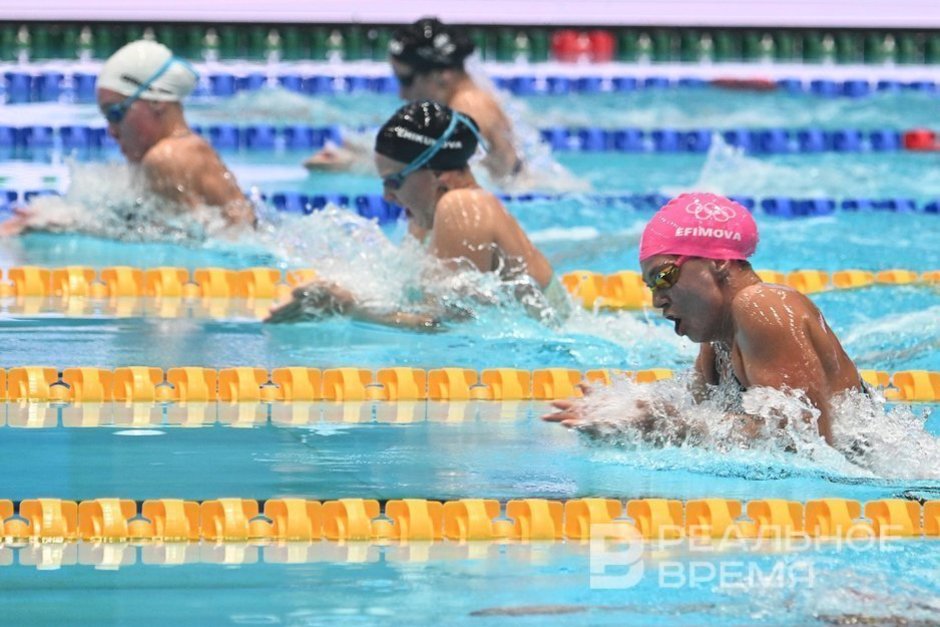
But we saw true excellence in the 4x100m freestyle relay. In the morning session, the Russians qualified for the final with the best time, thanks to Mikhail Shcherbakov, Roman Zhidkov, Vasily Kukushkin, and Andrey Minakov. Since Minakov was competing in the 100m butterfly final that evening, only Kukushkin was kept for the relay final. Along with Ivan Girev, Alexander Shchegolev, and Yegor Kornev, he won silver for himself and everyone who participated in the relay.
The Hungarian victory was fueled by Nándor Németh's excellent third leg and Kristóf Milák's final 100 meters. The Hungarians beat the Russians by 9 hundredths in the men's 4x100m relay and by 4 hundredths in the women's 4x200m. It's a bitter disappointment, but well-deserved. Just as disappointing as in 2017, when at the home World Championships in Budapest, the Hungarians unexpectedly won bronze, and the unpleasant part for us was that they edged out the Russian quartet with Kazan's Nikita Korolev on the final leg. For the Hungarians, who set a national record then, the veteran Nándor Németh was already swimming.
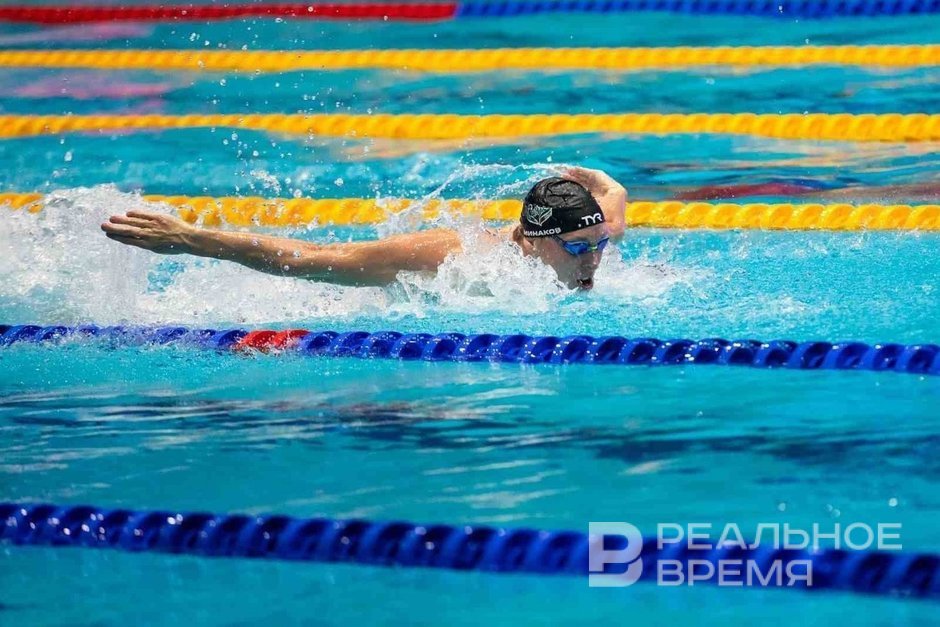
We focused so much on the Hungarians because this nation has returned to the world's top, which the Russians have not managed to do. A top team is one that has one or several leaders and a large number of strong swimmers who consistently compete for the podium. Russia, unfortunately, still relies on stars who can shine, like Rylov and Chupkov, Efimova and Chikunova, Kolesnikov and Lifintsev, and Yegor Kornev who took on the leadership role at this European Championships, but there are very few who are ready to support them now and in the future. Meanwhile, the Hungarians have both second-tier swimmers like Németh or Sebestyén Szabó and superstars like Kristóf Milák and Hubert Kós, who formed the current championship relay. By the way, Milák also started in the 100m butterfly that evening, ultimately winning ahead of Frenchman Maxime Grousset and Switzerland's Noè Ponti. Minakov finished eighth. It should be noted that this was one of the most representative finals, also featuring Hungarian Hubert Kós and Polish Jakub Majerski.
Dyakova's second bronze again went unnoticed by fans, as Sofya swam in the morning program of the mixed 4x200m freestyle relay. In the evening, the two young men Grigory Vekovishchev and Ivan Girev, along with the incomparable relay fighter Daria Klepikova and Sofya Misharina, finished third, behind England and Germany. Thus, Dyakova earned her second bronze of the championships.
Another Tatarstan swimmer, Ralina Gilyazova, finished 15th in the 100m breaststroke qualification but did not make the semifinal, as she was outperformed by Yulia Efimova and Evgenia Chikunova. In the 50m breaststroke, Gilyazova was the best among Russians, sharing 9th–10th place, which is remarkable. Gilyazova had to swim off twice against Lithuanian Kotryna Teterevkova to become the first reserve. They posted the same time in the semifinal, then again in the swim-off, and only on the third attempt did Gilyazova come out ahead. All to become the first reserve, in case one of the finalists withdrew, and only then would she have the right to substitute.
The rise of Afro-European swimmers
The first thing that stands out after the Paris European Championships is the significant changes in the European swimming elite. Among the new stars is Italian Sara Curtis, daughter of an Italian and a Nigerian. She set a world record and also a European record in the semifinal, which was frustrating for Russian Alina Gayfutdinova, who started in the same heat. Gayfutdinova also swam faster than the European record but did not even briefly hold the record, finishing behind Curtis.
Italo-Nigerian Curtis is one of the generation of Afro-European swimmers who have made their mark. Swimming was initially considered a sport where African athletes were incapable of high results, except for a few, like Dutchwoman Ranomi Kromowidjojo, American Simone Manuel, and Frenchman Mehdy Metella. But now, following Curtis, Frenchwoman Marie-Ambère Moluh finished, setting a European record in the lead-off leg of the 4x100m freestyle relay. She also won the 100m backstroke with a European record. France also had Yohan Ndoye-Brouard, who did not place at the home championships. If this continues, soon swimming will join basketball, volleyball, and football, which have long ceased to be ethnic sports in France. Germany also follows, with Melvin Imoudu emerging during our absence from competition.
Another observation from the European Championships is Germany's return to the favorites. For now, in European swimming, but Germany hasn't been among the medalists in the Old World for about 30 years. Here, the 800m freestyle was best conquered by Johannes Liebmann and Sven Schwarz, while among women, Isabel Gose and Maike Werner were second and third, only behind the legendary Italian Simona Quadarella. Similarly in the 1500m. Germany also has bronze in the 4x200m freestyle relay. In the mixed 4x200m, as we noted, silver. And most shocking of all was Liebmann's gold in the 1500m freestyle with a phenomenal world record — 14:26.79. After that, there was no doubt about Germany's return to the swimming elite.
Unexpected joy
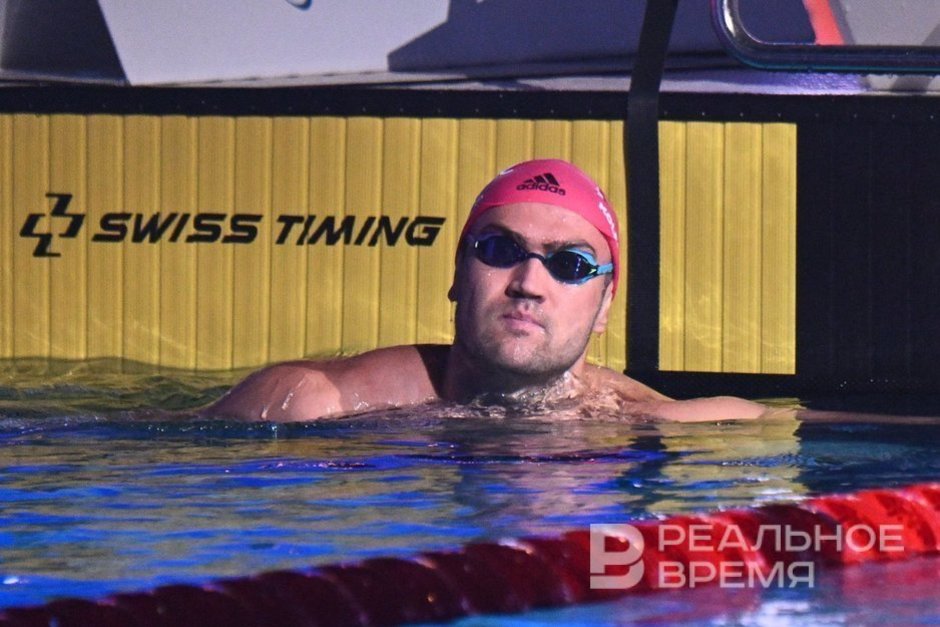
On the first day of the swimming program at the European Championships, unexpected joy came to the Russians. Let's start with Ilya Borodin's victory in the 400m individual medley. Even Soviet swimming at its peak under head coach Sergei Vaitsekhovsky did not dominate the men's individual medley.
Two great products of the Ukrainian swimming school, Sergei Fesenko and Alexander Sidorenko, gathered gold and silver with four hands. Sidorenko in the 200m, and Fesenko with silver and bronze in the 400m at World Championships, consistently losing gold to an American, a Brazilian, and a Canadian. Then came the era of Hungarian Tamás Darnyi, who suffered an eye injury as a child but, in his sporting prime, saw nothing but gold. He was challenged by Vadim Yaroshchuk, also a Soviet Ukrainian, by the way.
Ilya Borodin does not stand, as they say, on the shoulders of his predecessors; he goes, or rather swims, his own path. Alas, a very thorny one. At the Tokyo 2021 Olympics, he could not start due to a positive COVID test; last time, in Paris 2024, our athletes were not allowed. And now, a long-awaited victory, ahead of Italian Alberto Razzetti and Englishman Max Litchfield.
In Paris, Borodin was indirectly lucky from the start, as Léon Marchand withdrew from the home event. The undefeated super-champion in this event injured his adductor muscle at the French Championships in early June. As a result, the European Championship podium replicated the one from the 2020 European Championships in Budapest. Hungarian Hubert Kós also did not enter, choosing to focus on other events and participated in the relay that snatched gold from our team. This situation reminded me of Olympic Tokyo, when Evgeny Rylov was at his best in the 4x200m freestyle relay, indirectly helping Alexander Krasnykh win silver. At the same time, Rylov's energy was insufficient for the medley relay, where he lost significantly on the lead-off leg to Italian Razzetti, costing us the bronze. Tatarstan's Grigory Tarasevich also lost it, swimming in the semifinal heat.
Fresh blood
By the way, after this championship, there remains a slight sense of regret. The mixed 4x100m freestyle relay was without Andrey Minakov. In the morning session, Kukushkin and Roman Zhidkov swam for Russia. They had posted the same time in the semifinal the day before, and Minakov could have claimed a spot, especially since the team would have qualified for the final regardless. But Zhidkov was chosen, and in the evening, his teammates won gold.
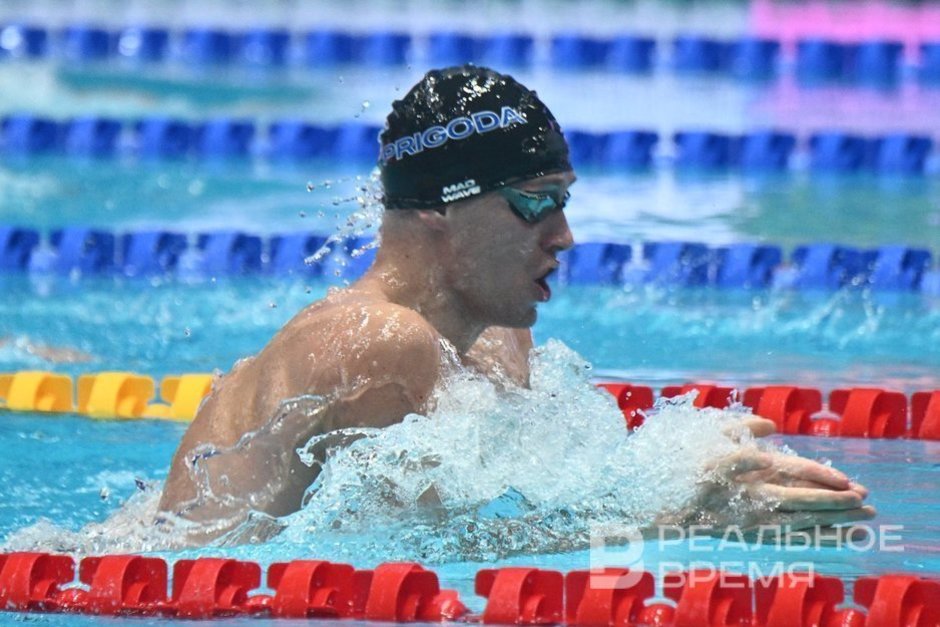
Alas, while we gained with Borodin, we lost with Kirill Prigoda. He was one step away from a medal in the 200m breaststroke, losing the bronze to American-turned-Dutchman Kaspar Corbeau. He was outperformed by English Pole Filip Nowacki and Austrian Serb Luka Mladenović, two more representatives of fresh blood.
Kliment Kolesnikov, previously almost unbeatable, finished second in the 50m backstroke. Third was Pavel Samusenko, almost like at the 2025 World Championships. Only now they were surpassed by young Czech Miroslav Knedla. Kolesnikov commented that he knew nothing about the Czech, and this is also a downside of our swimmers' absence from international competitions. In the usual state, people involved in swimming would know about Knedla since his junior days, and Kolesnikov would have heard about him from fellow juniors he competed with or trained alongside.
European champions Barbara Šimanová of Czechia and Belgian Roos Vanotterdijk, medalists Camila Rebelo of Portugal and Greek Apostolos Siskos — these are champions and medalists of Paris from countries not among the strongest. Their representatives performed well at the previous European Championships in Belgrade. However, there is a nuance: since that championship took place two months before the Olympics, most elite swimmers did not attend. Peaking was extremely difficult, and most focused on the Games.
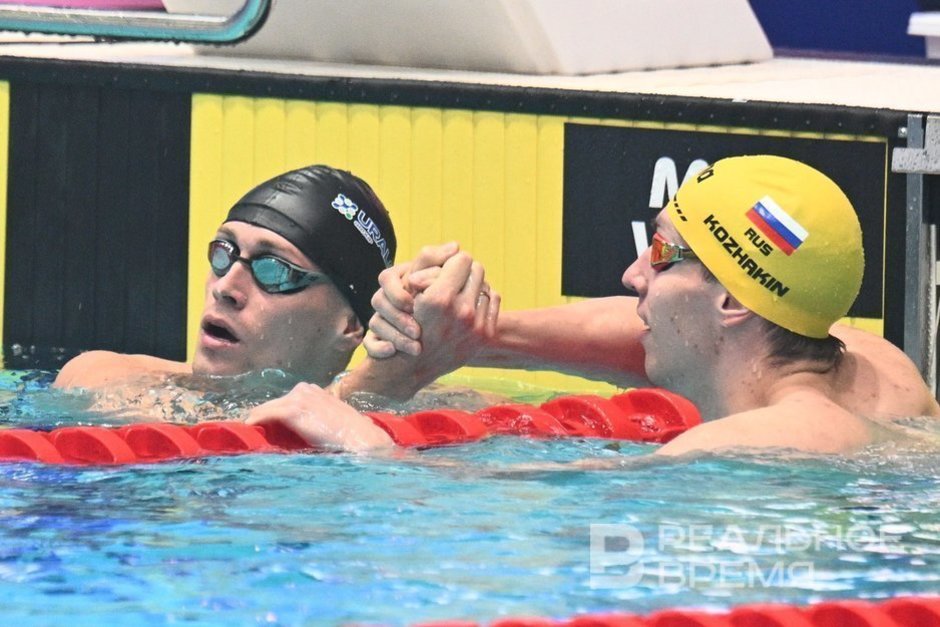
As a result, at the 2024 European Championships, Poles, Turks, Danes, Israelis, and especially Greeks were in the spotlight. But now, of those laureates, only Vanotterdijk, Rebelo, and Šimanová remain in leading roles. Otherwise, the forefront of European swimming, as before, consists of England and Italy, the Netherlands and France, Hungary and Russia, which has returned to international competition. Fortunately, among the Russians, there were also those who stood on the podium for the first time. In the 100m breaststroke, Ivan Kozhakin from Magadan won silver, finishing between two Italians: the star Nicolò Martinenghi and the lesser-known Simone Cerasuolo.
An English analogue of Evgeny Rylov
How to view Borodin's victory in terms of prospects for the 2027 World Championships and the Olympics? It should be clarified that the individual medley is a stronghold of Hungarian swimming, and besides Darnyi and the equally great László Cseh, one can also mention the younger Verrasztó and Bernek, who appear to have finished, and from the current generation, Holló, Zombori, and Hubert Kós. Not a single Hungarian was in the current lineup.
The personality of Englishman Max Litchfield is intriguing. He unsuccessfully competes with Borodin in those rare moments when he wins. Litchfield is one of two swimming brothers; there is also Joe. Their father was a professional footballer. Perhaps not of the highest caliber, but this allows analogies with our superstar Evgeny Rylov and his lesser-known footballer father, Mikhail Rylov.
The Litchfields' focus on swimming is likely due to Britain's strong push to develop aquatic disciplines when the country won the right to host the home Olympics in London. The first swallows, or dolphins (more fitting for the description), did not have time to shine in London 2012, but later they starred at the 2015 Kazan Aquatics. Divers Tom Daley and Jack Laugher, swimmers James Guy, Adam Peaty, Duncan Scott, brought the country back among the favorites, and the Litchfield brothers were part of the second wave, along with Matt Richards, who performed well at the 2019 European Junior Championships in Kazan. The ability to mobilize before home Olympics was previously demonstrated by Japan before Tokyo 1964, America before Los Angeles 1984, and South Korea before Seoul 1988; this was sporadic. Now, the mobilization of hosts is obvious; without it, countries simply do not undertake organizing the Olympics.