Natalia Kuleshova: “We started the training process, and a player ended up in the hospital”
The head coach of Krylya Barsa — on the nuances of a sport played by people with disabilities and unlimited willpower
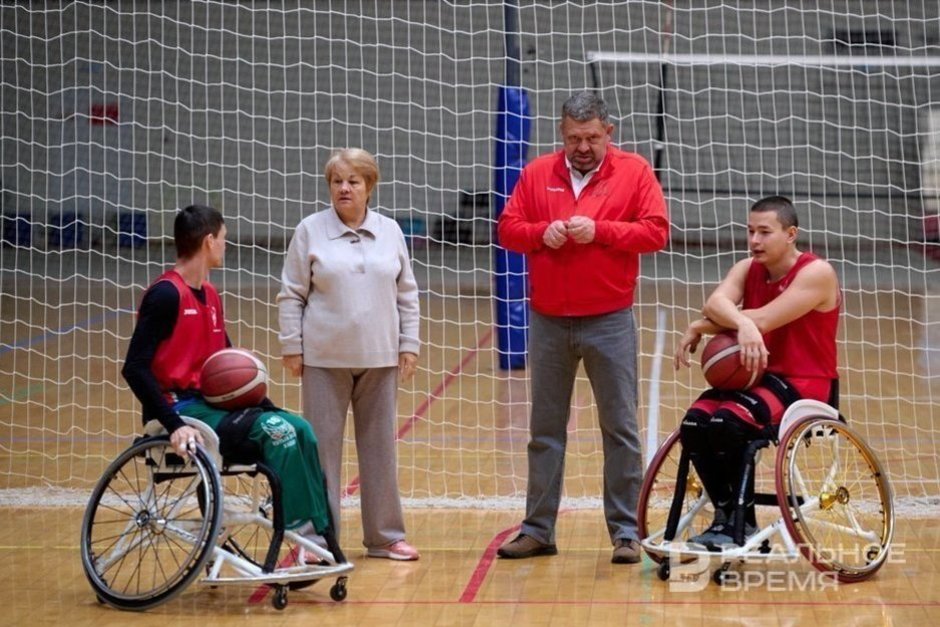
Kazan's wheelchair basketball team Krylya Barsa is currently preparing to participate in two tournaments. The first will take place in St. Petersburg in the format of friendly matches: with fewer participants and higher quality competition. The second tournament, called the “League of Strong People," will be held in Tver as part of the Russian Basketball Federation's project. The head coach of the team, Natalia Kuleshova, spoke to Realnoe Vremya about these and other events in the first part of the interview.
“We are preparing for tournaments in St. Petersburg and Tver”
— Natalia Vladimirovna, tell us what the team is currently doing and what its immediate plans are?
— The team was on vacation, and since August 3, we have started working. We are now preparing to participate in two 3x3 tournaments at once. The first will take place in St. Petersburg, and the second is organized by the Basketball Federation — this is our “League of Strong People.” It will be held in late August in Tver.
We have entered two lineups for both events. The difference between these tournaments is that the one in St. Petersburg is a friendly event, where the hosts offer to cover our accommodation and meals, so we will only spend money on travel. At the same time, there will be fewer teams there, while the “League of Strong People” will be more massive, with two divisions, each with at least six teams. Although, perhaps, the second division will be expanded to accommodate some newcomers.
— By the way, how do you distribute the work in the 3x3 format? If at Krylya Barsa you work in tandem with Sergey Anatolyevich, then in the 3x3 format you become opponents.
— Nevertheless, we continue to work together, determining the lineups of these teams, sparring with each other in the training process. And only upon arrival at the competition do we split into our mini-teams and become opponents if the schedule pits us against each other. But otherwise, we still work together.
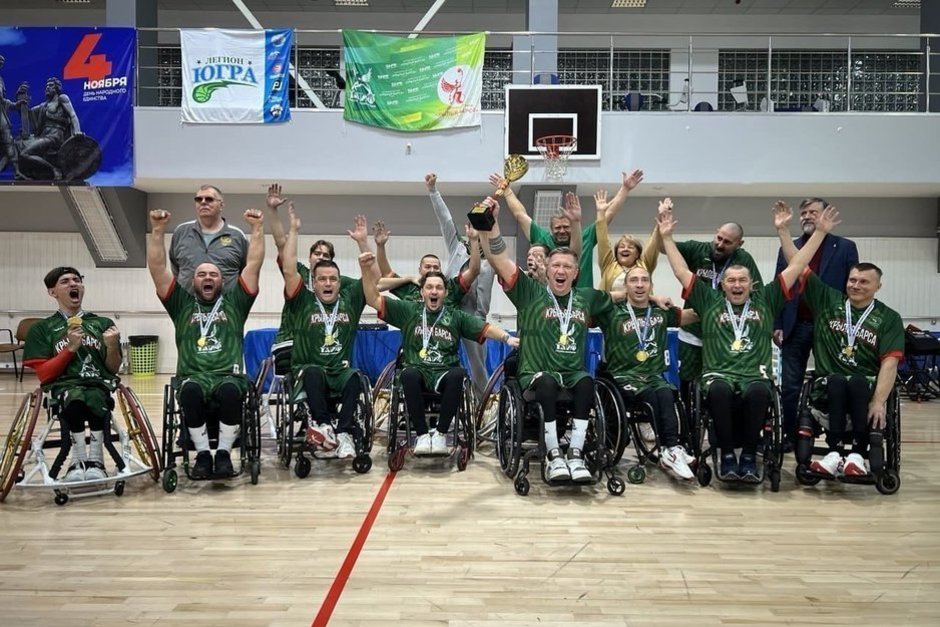
Returning to the start in the “League of Strong People," I will say that both of our teams will compete in the top division. Previously, they were called Krylya Barsa and Yunost, but now we have renamed the second team to Krylya Barsa-2.
“In the coaching staff, Sergey Anatolyevich and I do everything together”
— How is the work distributed in your coaching staff together with Sergey Anatolyevich?
— There is no difference; we do everything together, just as our players train together. For example, the winning combination that helped us win the Russian Cup final against St. Petersburg was born spontaneously, literally during a timeout. Before that, we were preparing a different setup, but here we improvised, and it brought us victory. In the end, everyone was expecting one thing, but we won with an “unexpected move.”
— This same scenario could have been repeated at the end of the home tour, but there, unfortunately, we failed to score from under the basket. True, the difference there was that until the fourth quarter we were quite comfortably winning against St. Petersburg, and in the end, it came down to a lost finish. What happened?
— We have analyzed this match many times and came to the common conclusion that we simply did not have enough physical strength for the finish. It is not even that our team is younger on average than St. Petersburg's players, but there are phases of peaking and declining form, and, as we assume, our loss objectively came during a period of a team-wide decline in form. We specifically prepared for the home start, but apparently, we overshot this peak of form.
Plus, I assume the guys might have been too nervous and simply burned out, playing on the home court in front of their home audience. Unfortunately, we still cannot overcome the nervousness on the home court, while we consistently win away.
“Participation in tournaments is necessary to maintain game rhythm”
— How do you manage to bring not just one person, but an entire team to peak form?
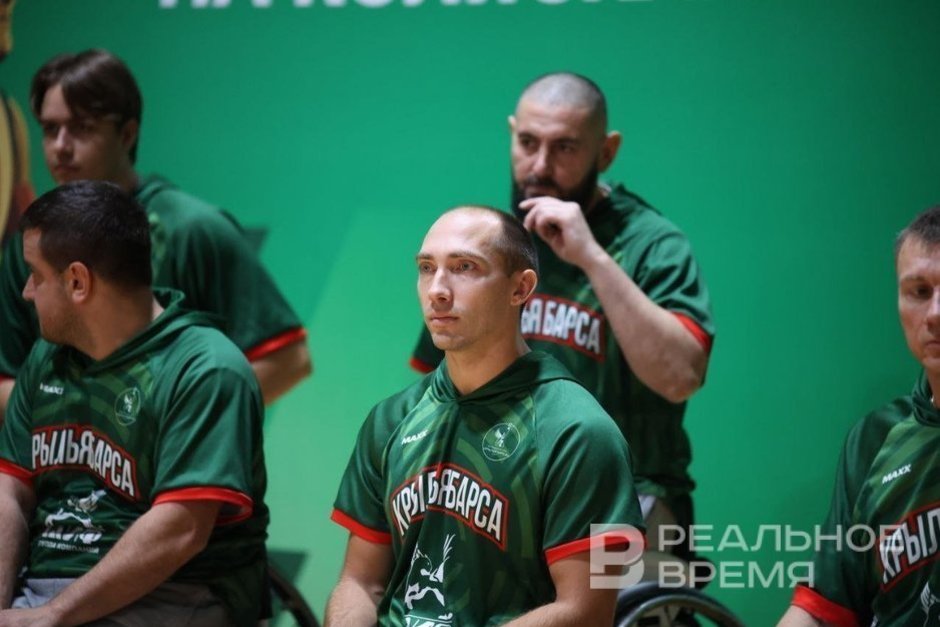
— In this regard, the main thing for us is to bring the players of the main lineup, the starting five, and the closest substitutes to peak form in order to calmly approach the next tour. Focusing on the leaders, we draw various diagrams to determine the peak of form, but even this does not give a one hundred percent result. Although we use scientific developments from Soviet times, plus we must not forget that Sergey Anatolyevich worked in athletics for a long time and achieved good results, so there are certain methods.
— Against the backdrop of one hundred percent predictable team-wide peaks of form, as it seems to me, the uneven schedule plays a role in your sport. And this applies to all teams: you play the next tour, and then there is a break that needs to be filled somehow.
— I will tell you more: not only that is a difficulty in our work. You cannot overload the guys so as not to lose game rhythm. Therefore, participation in tournaments during breaks in the championship is necessary to maintain game rhythm in a competitive environment, and not just in games among ourselves. If we talk about the international calendar in this regard, potential opponents are not always interested in playing with us, since we have different calendars for domestic competitions, and the dates of friendly matches may be inconvenient for one of the parties.
“Teaching from scratch, in my opinion, is easier than retraining”
In addition to the fact that in a sports team, preparation for a tour resembles a wave-like process — this is dosing the load, increasing it at the time of laying the physical base, and so on — we also have a special contingent of athletes. I will describe a situation to you: we started the preparatory process, and a player — bam — ended up in the hospital. After all, in addition to the main injuries related to the musculoskeletal system, they also have concomitant diseases, including internal organs, sometimes completely prohibiting physical activity. And we have similar examples in our team. And mainly, there are problems with the kidneys, thrombosis, and so on.
— Perhaps, in this regard, we can compare two types of hockey — field hockey and bandy. In the 1970s, in the USSR, winter hockey players were transferred to field hockey, enticing them with an extended game calendar and expanded geography, since the whole world played field hockey, while only four countries played bandy. But the experiment was complicated by the fact that there was a huge difference between the sports: in the modes of movement — running and skating, in the grip of the stick, which even changed a person's posture. There is also a noticeable difference between classical basketball and wheelchair basketball, isn't there? Was it difficult to retrain in the coaching process at first?
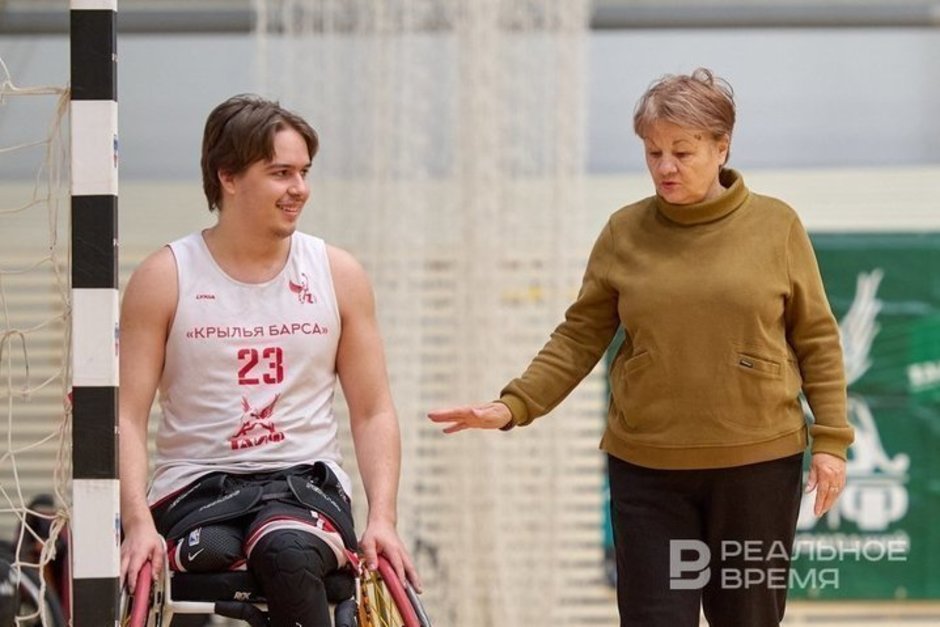
— There are common rules, canons, conditionally speaking, in ball-handling technique, shooting technique, which I could teach a person regardless of whether they do it standing or sitting in a wheelchair. True, one must understand that initially, many had to be taught from scratch, since some players at the time of joining the team did not even manage to play sports in the ordinary sense. Being disabled from birth or having received an injury at an early age. We worked individually, and then we looked at who was comfortable shooting, passing, and adapted to the player.
In general, teaching from scratch, in my opinion, is easier than retraining. My difficulties at the beginning of my coaching career were that I had no idea how one could move in a wheelchair and control the ball, dribble, pass, catch, and so on. To this day, I do not fully understand the nuances of wheelchair control, having only mastered the general principles. But I am not shy about asking the players, learning all the nuances, since they can only be felt while sitting in a wheelchair.
In our adaptive sport, there are many nuances that coaches who do not have the opportunity to work with their charges as professional athletes must take into account. This experience can be used, and I, for example, being a professional coach who worked with youth teams and then with junior teams, added a lot to my coaching arsenal when I started working in wheelchair basketball seven years ago.
For context: our teams consist of people with various types of injuries, both amputees and people with musculoskeletal disorders. Giving them the same load, the same tasks in the training process is fundamentally wrong, which is not observed in professional teams.