“Robots are bought with stable and mass orders, which is very rare”
KAMAZ explained at the “Digitalization in Industry” conference why the offer for robotization remains unclaimed
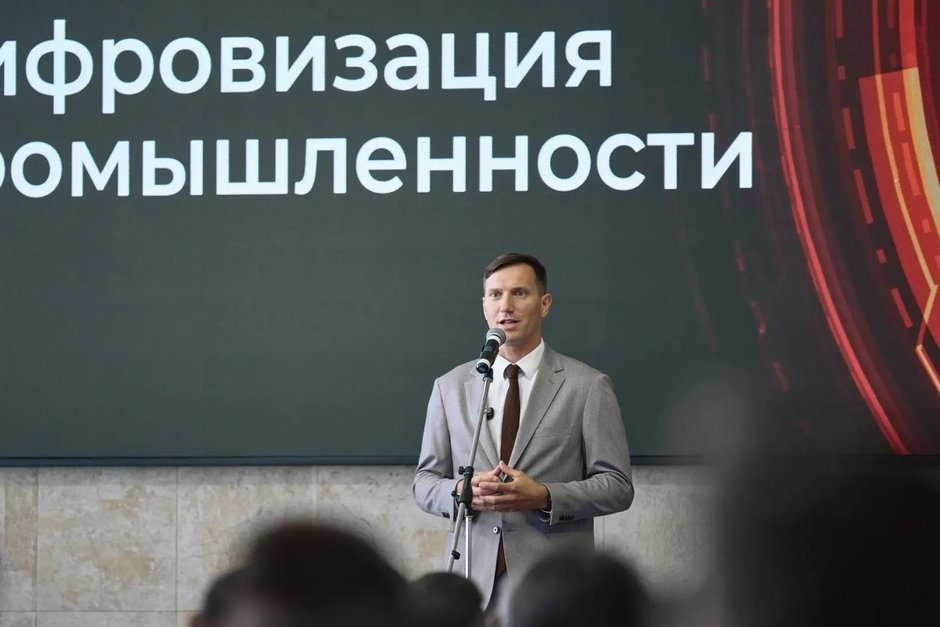
“A few years ago, we installed robotic complexes. However, statistics showed — most are loaded at less than 20%. Why? There is no workload," KAMAZ Deputy General Director Eldar Shavaliyev pointed out the main risk for Russian enterprises from total robotization. The level of digitalization of industrial enterprises in Tatarstan remains low — this is “unplowed field," said the head of the Ministry of Digitalization of Tatarstan Ilya Nachvin at the end of the interdepartmental working group as part of the conference in Naberezhnye Chelny. By 2030, the country must enter the top 25 countries in the world in terms of robot density, but there are many economic obstacles on this path. Nevertheless, 8 Tatarstan enterprises have already received approval from the Federal Competence Center and will begin introducing robots in the near future. For more details, see the material by Realnoe Vremya.
145 robots per 10,000 workers by 2030
Robotization of industrial production is gaining momentum in Tatarstan. The goal is to move to automated production cycles with minimal human involvement. Automation is especially important for petrochemical and machine-building enterprises of Zakamye, without which it is impossible to withstand competition in global markets, noted State Duma Committee member on Competition Protection Aydar Metshin at the beginning of the interdepartmental working group meeting held as part of the “Digitalization of Industry” conference in Naberezhnye Chelny.
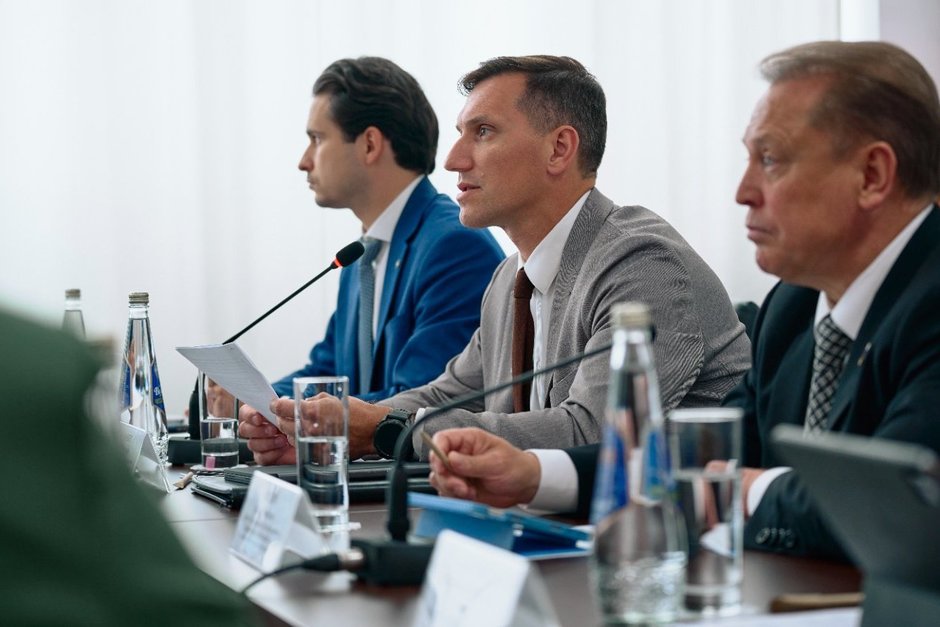
By 2030, the country must enter the top 25 countries in the world in terms of robot density. To strengthen technological independence under the national project “Means of Production and Automation," funding of 223.5 billion rubles is provided. And specifically for the development of industrial robotics and production automation, 101 billion rubles are promised to be allocated, with over 9 billion rubles allocated this year, said Deputy Minister of Industry and Trade of the Republic of Tatarstan Radion Karpov via video conference from Kazan.
Currently, Tatarstan ranks 5th in terms of robotization, having 1,406 robots in the industrial sector. It lags behind St. Petersburg, the Moscow and Samara regions, which have fleets of about 2,000 units.

True, per number of employees, the republic ranked 6th: on average, there are 50 robots per 10,000 workers in the republic, said Deputy Minister of Industry and Trade Radion Karpov. “We let Dagestan ahead," chuckled the audience upon seeing the full rating of regions by robot density on the screen. “Taking into account the small population in other regions," Karpov made an important correction. According to him, Tatarstan factories operate on an outdated base, which makes the introduction of robotic complexes twice as expensive as the complexes themselves. KAMAZ already has them. By 2030, Tatarstan has set a goal to achieve 145 robots per 10,000 people.
Eldar Shavaliyev: adaptive robots are needed
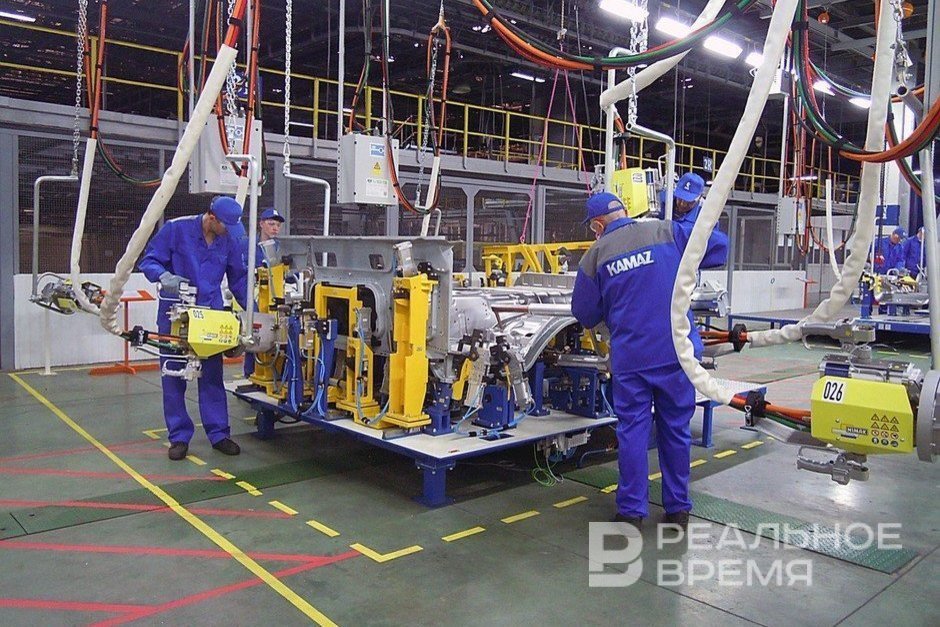
The most — 230 industrial robots — are used at KAMAZ. This year, the automobile plant plans to increase their number to 615 units, and by 2030 to bring it to 1,923 units. A significant part is used at the new plant for the production of unified cab frames. Here the level of automation is 80%. Another part works on body welding. At the same time, robotization has not improved the company's situation. Most complexes are loaded at less than 20%. Why?
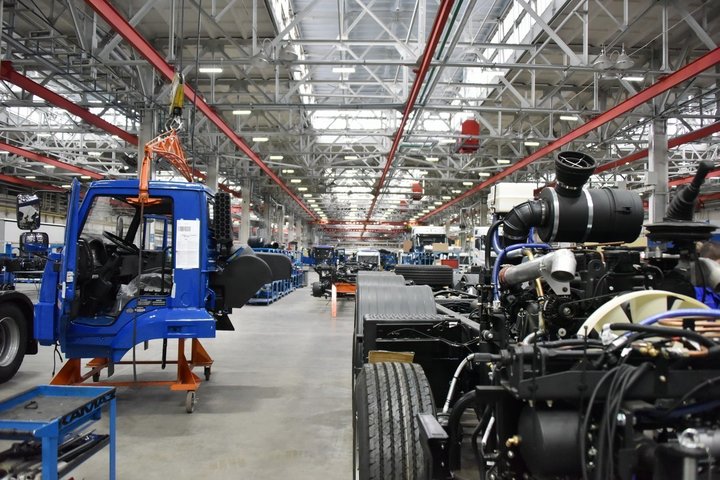
No matter how you look at it, robotization is a derivative of the workload that exists at the enterprise. If it is insufficient, robots will not help. “Our aspiration for robotization faces significant difficulties. We installed robotic complexes, but, as statistics show, today most of them are loaded at less than 20%. If your enterprise is not sure that there will be an order for this part throughout the robot's life cycle in three-shift mode, then you lose. This is the problem," shared KAMAZ Deputy General Director Eldar Shavaliyev. In such conditions, human labor looks preferable. A worker can be transferred to other areas, but a robot cannot.
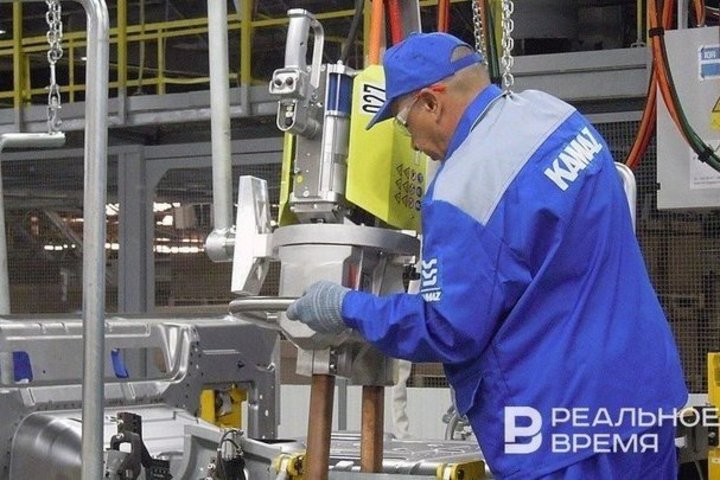
— Imagine, a robot can weld the same part for its entire life cycle, while a worker can be moved, — he exclaimed. This is especially important in conditions of high volatility, when a stable order is very rare.
China has realized this advantage, he noted. In automotive industry enterprises, the amount of human labor is large. “And they understand this problem. Therefore, their movement towards adaptive robotization is actually justified," he said.
We do not compete with Europe
— Is the rest of the world in different conditions? Do they not have this problem of adaptive robotization? They also probably have limitations, — Aydar Metshin inquired. — There, in Europe, production is also in difficult conditions.
— We do not compete with Europe, because Europe is not in orbit at all. If we talk about metrics, we compete with Asia, — Shavaliyev replied. South Korea is mass production, but it is always not only cars but also electronics, which is impossible without robots. That's why we needed to work in two directions. We needed to direct efforts toward creating new production facilities, that is, try to direct our investment efforts not at modernization, not at technical re-equipment, but at creating new things and adapting.
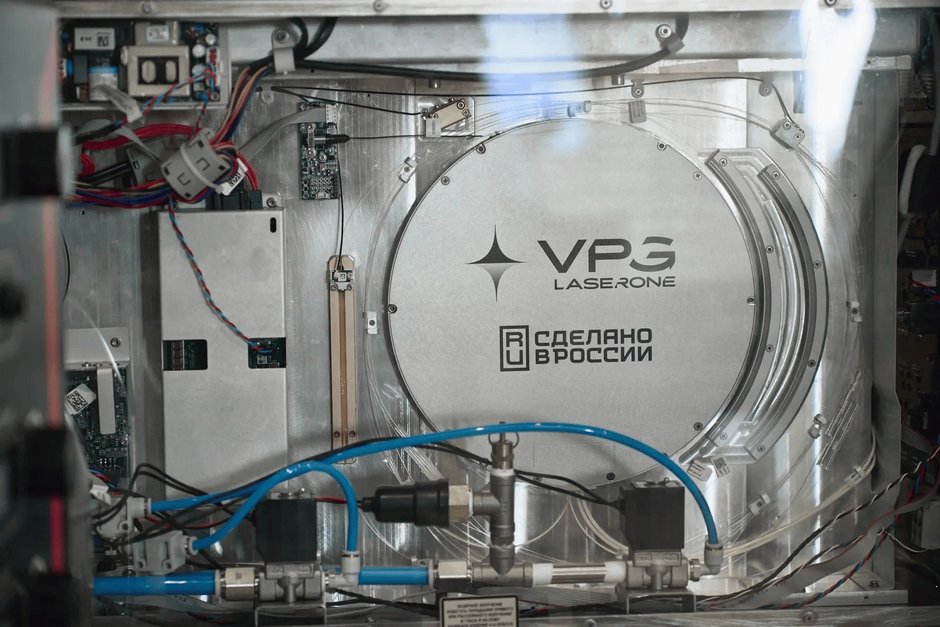
The advantage of human labor does not cancel the course toward robotization. Eldar Shavaliyev suggested that developers think about creating adaptive robots that could move and perform several operations.
Meanwhile, the Federal Competence Center in the field of labor productivity is diagnosing the current state of one product flow of an enterprise for readiness for robotization and selecting suitable robotic complexes. This year, 14 Tatarstan enterprises underwent the survey. Among them are KAMA-Avtotsentr, Zdravmedtekh, Nefis-Cosmetics, the Gorky Zelenodolsk Plant, the Kazan Aviation Plant, Elektrooptima, and others, reported Radion Karpov. 8 enterprises received approval. Among them are Radiopribor, the Kazan Instrument-Making Design Bureau, GIPO, and a furniture factory. Mostly, robots for product stacking will be installed there. The expected average increase in output on the implementation flows is about 80%.
Industrial internet for insiders
The country identifies 8 levels of digital maturity; robotization of production processes is not the only level. Slightly higher is the use of AI. KAMAZ proposed creating an internal infrastructure: a computing cluster closed from the internet, and on it — artificial intelligence: “This AI will be available to industrial enterprises, which will allow us to fully start using artificial intelligence models.”
The goal is to ensure the safety and confidentiality of industrial information. “Today we are largely limited in terms of usage possibilities to prevent our information from leaking into the global network, especially from leaking to unfriendly countries and being used against us," explained the auto giant.
KAMAZ is implementing this program in two main directions. First, artificial intelligence operating as a classic chatbot (similar to GigaChat, Alisa, ChatGPT). The main difference is the ability to fill it with corporate data. Simply put, this AI will possess the specific information held by KAMAZ employees: about vehicle models, production processes, tolerances, etc. All our internal knowledge base will be integrated into this artificial intelligence. Second, separate applications are being developed where AI is used as an integral element of a specific business process or specialized solution.
For now, there are enough computing capacities, but later it will be necessary to build another data center, Nachvin later reported.