The multiple minds of Abbas Khemiri
Language, memory, and self-appointed biographers in Jonas Hassen Khemiri's novel “Montecore. The Silence of the Tiger”

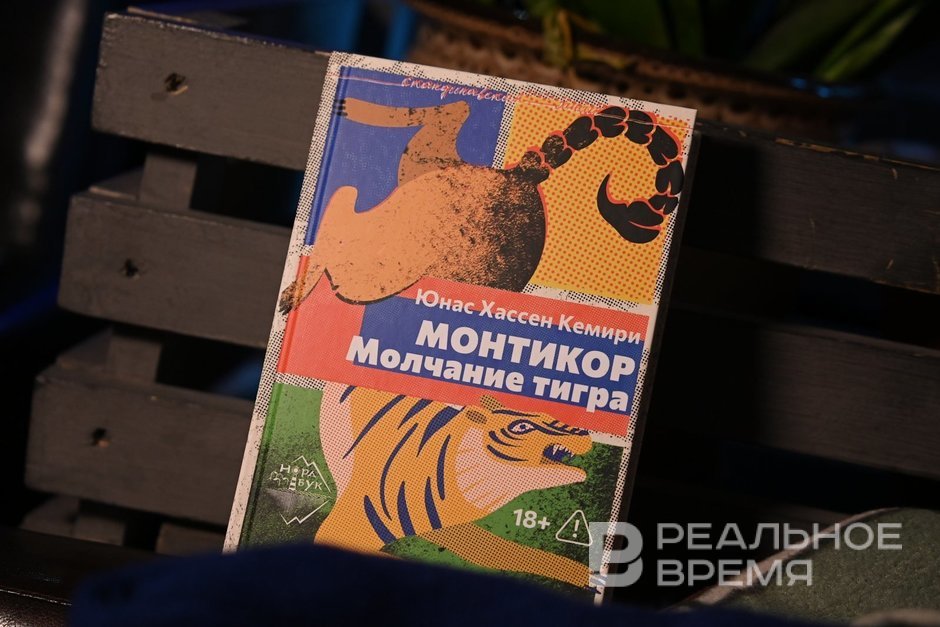
What remains of a person when memories of them turn into competing versions of the past? This question lies at the heart of Jonas Hassen Khemiri's novel “Montecore. The Silence of the Tiger.” Khemiri has long been considered one of the most important Swedish writers of his generation. His novels have changed the way emigration, identity, and belonging can be discussed in contemporary European literature. The literary critic of Realnoe Vremya, Ekaterina Petrova, explains why “Montecore. The Silence of the Tiger” is one of the most cunningly constructed European novels of the 2000s.
The war of versions
At first glance, it seems that Jonas Hassen Khemiri has written a novel about emigration. There is every reason for such an opinion. At the center of the plot is a family connected to two countries at once: Tunisia and Sweden. The photographer Abbas Khemiri came to Sweden from North Africa, and his son is trying to understand the history of his family. However, already in the very structure of the novel, another conflict emerges. Abbas's childhood friend Kadir writes letters to Jonas and proposes that they create a book about his father together. From this moment on, the story of a person gradually turns into a search for a reliable version of his life.
Each new letter adds details but does not bring the reader closer to the truth. On the contrary, the figure of Abbas becomes less and less defined. The novel is built on the correspondence between Kadir and Jonas, as well as on his memories and old letters from Abbas himself. Therefore, from the very beginning, the book shows not one story, but several conflicting versions simultaneously.
Khemiri intensifies this uncertainty with another device. The protagonist's name, like the writer's, is Jonas Hassen Khemiri. He has a Swedish mother and a Tunisian father — just like the author himself. Young Jonas is preparing to publish his first book, and this detail also mirrors the writer's biography. The novel deliberately uses signs of autobiography but then begins to dismantle them.

The question of the boundary between fiction and real biography is one of the main problems in all of Khemiri's prose. The writer himself has said that some things cannot be experienced except by turning them into literary text. Therefore, the coincidence of author and character does not create trust but, on the contrary, forces one to constantly doubt who exactly is speaking to the reader and how much their words can be trusted.
This is especially noticeable in the relationship between Kadir and Jonas. Kadir enters the novel as a man who already knows the truth. He calls himself an old friend of Abbas and offers the future book almost as a ready-made project. His letters contain biographical sketches, comments, notes, and compositional advice. Kadir tries to direct the writing of the story. He simultaneously acts as a friend, editor, commentator, translator, and even a kind of censor of the text. His goal is simple: to preserve the image of Abbas as an outstanding photographer and the best father in the world.
This is where the book's main conflict begins. While Kadir creates a legend, Jonas writes something completely different. He responds not with letters but with his own memories. In them, the father no longer looks like a hero. Jonas writes about family quarrels, alienation, and the gradual rift between son and father. Kadir's hyperbolic version constantly provokes a counter-reaction from Jonas. Childhood memories turn into a counter-narrative that challenges almost every assertion of the family friend. As a result, the reader sees a clash of two ways of remembering one person.
The Khemirian language and the myth of Abbas
Already Kadir's first letters break the usual reading rhythm. He writes in a strange Swedish that constantly deviates from the norm. Instead of ordinary words, ornate borrowings from French, Arabic, and English appear, and familiar expressions take on unexpected meanings. Kadir presents himself as the “most ancient friend of your father," asks Jonas to “oppose” him, and suggests they create a book about Abbas together. His speech looks deliberately incorrect, but this is precisely Khemiri's intention.
“Oppose me on this... is your success equivalent to your father's? Did your book contract turn you into a millionaire or a billionaire, or just provide you with a comfortable economy for the next few years?”
The stylistic errors in the novel are an artistic device. They force the reader to constantly adapt to someone else's speech and see the Swedish language through the eyes of a person who will never become its fully native speaker. It is no coincidence that critics linked Khemiri's early prose with the language of Stockholm's multi-ethnic districts, where Swedish, Arabic, English, and dozens of other languages mix. The author goes even further, creating a special “Khemirian language” — a family lexicon that combines Arabic curses, French declarations of love, English quotes about photography, and Swedish puns. Once upon a time, Abbas, Kadir, and little Jonas kept a notebook together with the rules of the Swedish language. The first rule read:
“Swedish is a language of borrowings. When in doubt — take the French equivalent. Or English. This will save you a lot of time memorizing vocabulary. The Swedes are a people who quickly give in to influences from the rest of the world.”
The authors of the notebook sought connections between languages. For Abbas, language became a tool of integration. He wanted to master correct Swedish and abandon the linguistic mixture so that society would recognize him as one of its own. But it was precisely at this moment that a distance arose between father and son. Jonas recalls that earlier Abbas had seemed to him a hero precisely because he broke the rules and created his own language, but later he began to demand only correct Swedish.
In the novel, language constantly determines a person's position. Those who command normative speech gain the right to explain the past. And those who speak with an accent or make mistakes are forced again and again to prove their right to be heard. Because of this, Abbas himself gradually turns into a mythologized character. No narrator shows him directly. Kadir paints an almost legendary hero. He remembers a talented photographer, a man “with whom few can compete in the mastery of linguistic talents.” Abbas infected those around him with a love of words and inspired his son to become a writer.
In another version, Abbas appeared as a man who came to Sweden with a dream of photography, worked as a dishwasher and a subway driver, and then spent years trying to prove that he deserved a place in the new society. He changed the name of his studio to Swedish, diligently improved his language, and believed that success would surely bring recognition. But the more Abbas strove to become one of his own in Swedish society, the more acutely he experienced his only partial belonging to it.
None of these versions can be called definitive. Jonas sees in his father primarily a man who abandoned his family. Kadir sees a friend and a hero. Abbas himself, in his letters, creates yet another image — a successful photographer and a convinced optimist. The novel constantly collides these versions with each other and does not allow the choice of a single correct one. Even Abbas's past remains a set of contradictory stories: orphan, son of a collaborator, talented photographer, victim of emigration, betrayer of his own roots, disappeared father. By the finale, the reader learns many facts about Abbas but never receives a complete biography.
Behind these literary games of the novel lies a very personal story of a son trying to understand his father who abandoned him. The motif of the absent parent runs through the entire novel and, in general, occupies an important place in Khemiri's work. The pain of loss or disappointment in a father is one of the main leitmotifs of the writer's prose. In the novel “Montecore. The Silence of the Tiger," each new story turns out to be an attempt to restore lost closeness. The search for truth itself is more important than the result. The characters try to understand who Abbas was and why he gradually disappeared from family life.
Not everything is so clear-cut in Sweden
The tiger in the novel's title is silent, but the book itself speaks a great deal about Sweden at the end of the 20th century. Khemiri shows the country through the history of Abbas's family. Behind the conversations about work, language, and raising a son, a less prosperous picture of Swedish society gradually emerges. Abbas observes:
“Strange country, this one: first you're an Arab, then a Swede for a year, then an Arab again.”
This phrase accurately describes the characters' situation. Formally, Sweden proclaims multiculturalism, but everyday life constantly reminds migrants of their foreign origin. The novel questions the idea of a conflict-free coexistence of cultures.
This is especially noticeable in the conflict between Abbas and Jonas. The father tries to become an “ideal Swede," hides his Arab origin, and even takes the Swedish name Krister Holmström for his photo studio. The son chooses the opposite path and emphasizes his migrant identity. Neither strategy brings final victory. Abbas remains a stranger despite all his efforts. Jonas also cannot find a stable foothold between two worlds. In one of the novel's most important dialogues, Abbas says of his son:
“My son is a miserable figure who lacks culture. He is not Swedish, not Tunisian, he is NOTHING. He is an eternal empty hole that varies its content according to context, like a full-scale chameleon.”

Against the backdrop of the identity conflict, the figure of the “Laserman” also appears. Khemiri refers to a series of attacks on migrants in Sweden in the early 1990s. The writer himself recalled that in adolescence, it was the “Laserman” who became one of his greatest fears and showed how fragile the image of tolerant Sweden could be.
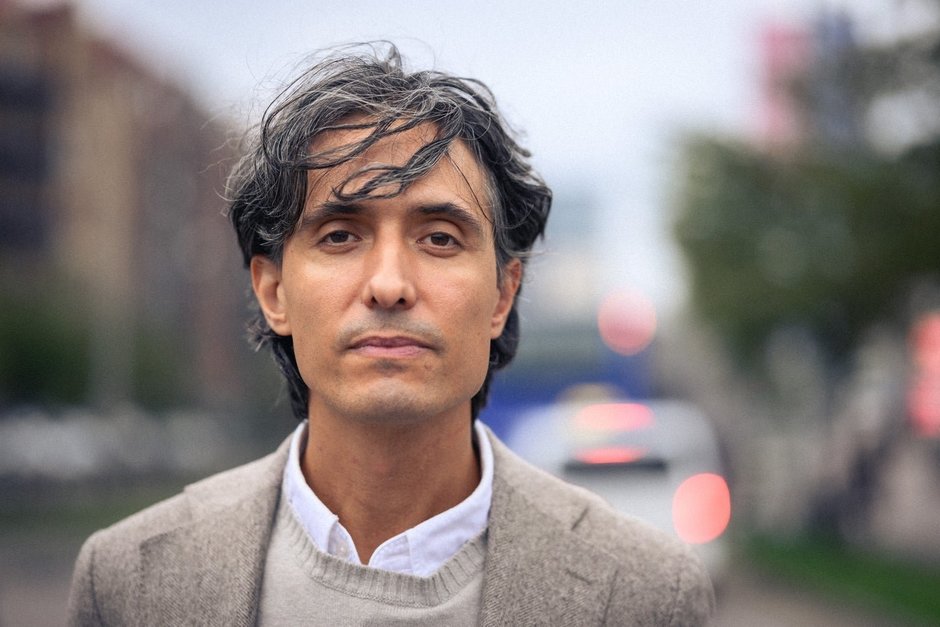
Jonas Hassen Khemiri is one of the most recognizable contemporary Swedish writers. He turned linguistic experimentation into an emotional story and showed the experience of emigration through family drama. However, the label “novel about emigrants” is too narrow for it. It is much more accurate to call “Montecore” a novel about the mechanism of memory and the creation of family myths.
Publisher: Gorodets
Translation from Swedish: Natalia Bratova
Number of pages: 464
Year: 2026
Age rating: 18+
Ekaterina Petrova — literary critic for the online newspaper Realnoe Vremya, host of the Telegram channel «Булочки с маком».