Virginia Woolf's most underrated novel
Book of the week — “Night and Day” by British writer Virginia Woolf

This week, the film “Night and Day” was released worldwide — the first full-fledged screen adaptation of one of Virginia Woolf's most rarely discussed novels. Director Tina Gharavi and screenwriter Justine Waddell made the heroine Katherine Hilbery's passion for astronomy the central motif of the story and showed how love collides with the expectations of the patriarchal society of the Edwardian era. The choice of material looks unexpected. Woolf's name is usually associated with “Mrs Dalloway” or “To the Lighthouse," while “Night and Day” rarely even makes it into her most famous books. The literary critic of Realnoe Vremya, Ekaterina Petrova, explains why this novel is called Virginia Woolf's strangest work.
Virginia Woolf's Victorian mask
“Night and Day” is Virginia Woolf's second novel. The reader opens it and, instead of a bold modernist experiment, finds a detailed story about acquaintances, engagements, family conversations, and choosing a life partner. Woolf published the book in October 1919 and set the action in turn-of-the-century London, where Katherine Hilbery and Mary Datchet reflect on love, marriage, happiness, and success. The novel tells of the relationship between Katherine and Ralph Denham, which begins with a meeting at a tea party and goes through a series of misunderstandings and romantic complications. In form, the book is much more reminiscent of a late 19th-century novel of manners than a work by the author of future modernist masterpieces.
That is why many scholars advise not to expect from “Night and Day” the Woolf known from her later books. Anyone seeking something like “To the Lighthouse” or “The Waves” risks feeling bewildered. In her second novel, Woolf conducts a dialogue not with James Joyce and Gertrude Stein, but with writers of the previous generation — Henry James, John Galsworthy, and Edward Forster. Even the book's original title — “Dreams and Reality” — hints at a more traditional conception.
Woolf began work on the novel in 1916, completed it in November 1918, and wrote it during a period of recovery from a severe nervous breakdown, when doctors allowed her to devote only limited time to literature each day.
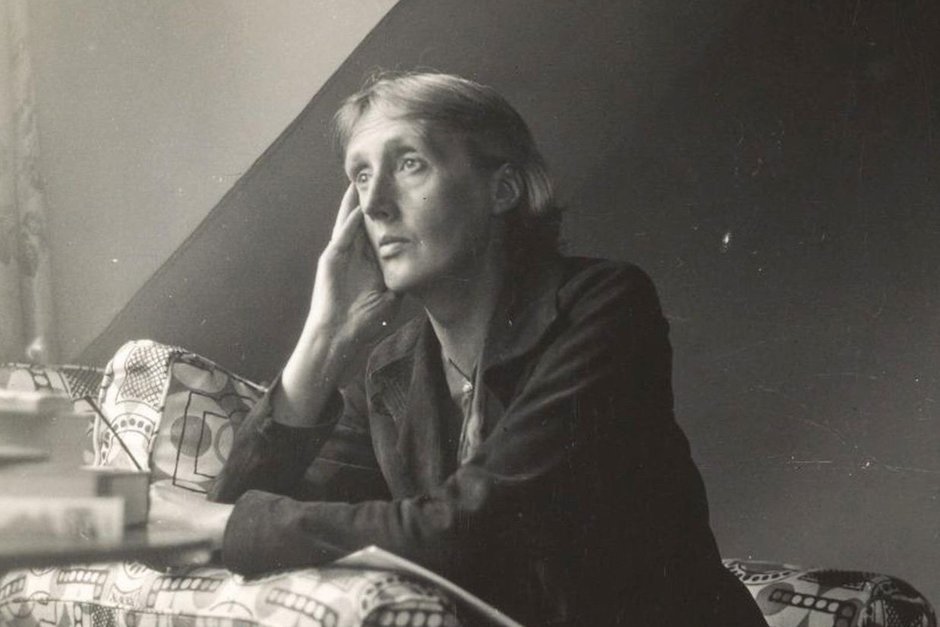
However, beneath the outwardly traditional shell, the future Woolf already shows through. The novel constantly shifts attention from actions to the characters' thoughts. The characters reflect more than they act, and often do not understand their own feelings themselves. In one episode, William Rodney convinces himself that the woman he loves is in his power, but at the same time feels love as “fetters” and “burden.” Such scenes demonstrate Woolf's interest not in the love plot itself, but in a person's inner life. The book appears simultaneously old-fashioned and unexpectedly modern.
It is precisely this dual position that long prevented the novel from finding its place in the canon. “Night and Day” stood between the debut “The Voyage Out” and the great works of the 1920s. Contemporaries received the book ambiguously. The Times Literary Supplement and Ford Madox Ford spoke favorably of it, while Katherine Mansfield saw in the novel a “return to Victorian tradition” and reproached the author for the book seemingly ignoring World War I. Even Edward Forster admitted to Woolf that he liked the novel less than the debut.
A love quadrangle
At the center of the plot are four characters: Katherine Hilbery, William Rodney, Ralph Denham, and Mary Datchet. Katherine first agrees to marry Rodney but later breaks off the engagement. Ralph first becomes interested in Mary, then grows closer to Katherine. Mary falls in love with Ralph but refuses his proposal when she realizes he loves another. Such a scheme simultaneously resembles a Victorian novel and a Shakespearean comedy with partner-swapping and a series of misunderstandings.
But the further the plot develops, the less Woolf is interested in the love intrigue itself. She shows not so much the characters' feelings as their ideas about love and marriage. Rodney dreams of a traditional union and misunderstands Katherine. He even complains to Mary Datchet that Katherine does not like conventional things:
— Katherine doesn't like Titian. She doesn't like apricots, she doesn't like pears, she doesn't like green peas. She likes the Elgin Marbles and grey cloudy days. A typical example of a cold northern nature.
Katherine, on the contrary, constantly questions any ready-made answers. She does not seek an ideal fiancé and does not aspire to the role of an exemplary wife. Woolf uses the form of a love novel but gradually shifts the conversation to another plane.

Katherine grew up in a family that lives in the literary past. Her grandfather was considered a famous poet, and her mother is engaged in preparing his biography. However, Katherine herself secretly prefers mathematical calculations to books and literary conversations. She would not like to admit how much more strongly she loves the “precise, starry facelessness of numbers” than the “confusion, excitement, and fluidity of the most elegant prose.” Katherine is more interested in mathematics and astronomy than in her family's literary traditions. It is no coincidence that film director Tina Gharavi said she immediately saw in the heroine a woman who is afraid of love, since in her era love often meant children and domestic dependence.
Mary Datchet works for an organization that seeks to secure voting rights for women. At the same time, she could live comfortably without working but consciously chooses social activity. Mary is an example of calm and confident female independence. If Katherine is looking for a new way to combine freedom and relationships, Mary already lives outside the usual romantic scenarios. Woolf contrasts these heroines with each other and through them shows how relations between men and women were changing at the beginning of the 20th century.
It is no coincidence that the novel is set in 1910. Woolf finished the book after World War I but sent her characters into a world that did not yet know of the coming catastrophe. Tina Gharavi draws attention to this choice of date and suggests that many of the novel's men, including Ralph Denham, could have gone to the front and died a few years later. “Night and Day” simultaneously looks backward and forward. The novel tells of a time that had only recently seemed contemporary but after the war had already become another era.
London in the book plays no less a role than the characters themselves. The most important events of the novel take place not in drawing rooms, but on the city's streets. Katherine and Ralph constantly meet during walks, omnibus rides, and long conversations on the embankments. It is the urban landscape that helps them abandon their initial prejudices and see each other differently. In one key episode, Katherine feels simultaneously like a person and a “silver Moon.” At that moment, she understands that Ralph does not prevent her from moving either toward home or toward the stars. Already here, Woolf connects personal freedom with the image of the sky and astronomy.
The birth of a modernist
The most interesting part of “Night and Day” begins where the novel ceases to be just a love story. Virginia Woolf still retains the realistic form that she would later call too flat and traditional, but she is already trying out the techniques that would define her later prose. She shifts attention from events to the characters' inner lives, shows the fluctuations of thought in detail, and turns everydayness into an independent object of observation.
In the novel, traditional composition is combined with fragmentation of language and a mobile temporal structure, while stream of consciousness and the internal monologues of female characters already play an important role in the narrative. It is here that the outlines of that literary optics appear, which would later define “Mrs Dalloway," “To the Lighthouse," and “The Waves.”
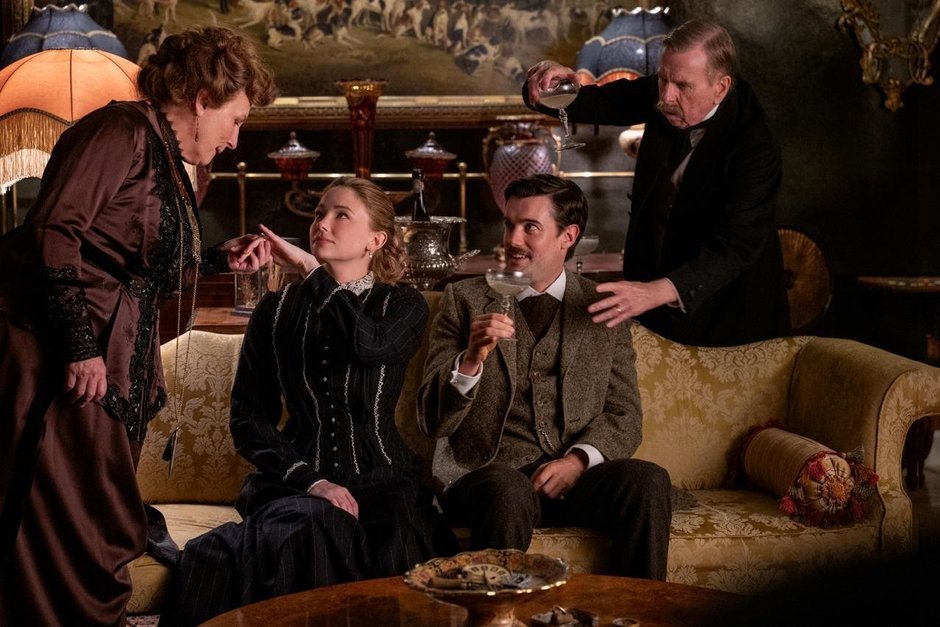
This is especially noticeable in how Woolf works with the boundary between ordinariness and insight. Later, the writer would call most of human life a state of “non-being," when a person simply walks down the street, eats, does chores, and barely perceives what is happening around them. Only occasionally does the familiar fabric of everydayness tear, and then the hidden order of things is revealed. It is precisely this effect that determines the architecture of “Night and Day”: the first half of the novel emphasizes conventions and limitations, while the second gradually breaks them down.
Woolf admitted that she tried to show both everyday life and those rare moments of true awareness when a person suddenly begins to see the world differently. Later, it was precisely this work with time, memory, and consciousness that would become the foundation of her mature modernism.
The writer also peripherally reflects the political events of that time. Suffragism in the novel remains important but does not turn into a political slogan. Woolf shows the movement for women's rights through the prism of daily work, discussions, career choices, and relationships between people. When the novel was in the making, British suffragists were still fighting for the right to vote. However, the writer is interested in a broader question: can a woman independently manage her own life.
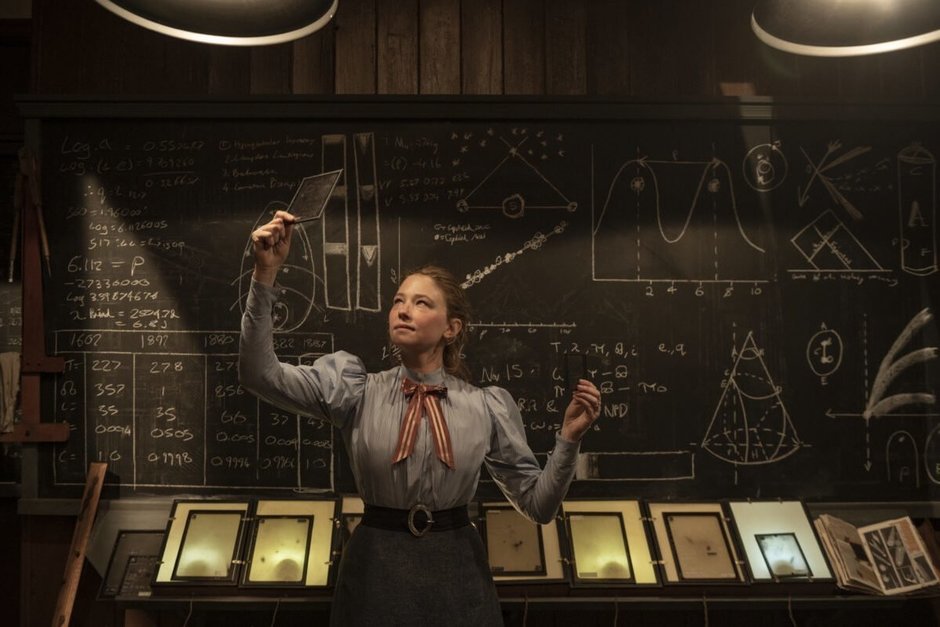
A century later, the feminist line of the novel is developed by Tina Gharavi's adaptation. The film consciously foregrounds a detail that remains secondary in the book. In the novel, Katherine only occasionally shows interest in astronomy, while the film turns it into the heroine's life calling and the main driving force of the plot. On screen, Katherine dreams of becoming an astronomer and entering Cambridge, while her father tries to push her into marriage with William Rodney. Gharavi explains that she was interested in the image of a woman who looks at the sky and tries to understand her place in the universe. According to the director, such a perspective shows how absurd it is to reduce a woman's life to predetermined roles and social restrictions.
Because of this, the adaptation noticeably strengthens the modern reading of the novel. The screenplay shifts the emphasis from romantic misunderstandings to the conflict between career and marriage, scientific ambitions and social expectations. The film retains the Edwardian setting but simultaneously introduces distinctly contemporary intonations and even plays with time, combining the historical environment with elements of today's culture.
Gharavi says she considers it necessary to make Woolf relevant for a new generation of viewers and is confident that the writer herself would have preferred a more radical reading of her own text. That is why the adaptation is interesting not only as an adaptation of a little-known novel but also as an invitation to return to a book that remained in the shadow of “Mrs Dalloway” and “To the Lighthouse” for decades.
Publisher: Text
Translation from English: Nina Usova
Number of pages: 440
Year: 2013
Age rating: 16+
Ekaterina Petrova — literary critic for the online newspaper Realnoe Vremya, host of the Telegram channel «Булочки с маком».