What to read: a North Korean spy, the afterlife of modern China, and birdwatching
Realnoe Vremya has selected three new April book releases

April has brought three books that offer different ways of telling a story. In Mirinae Lee's novel, an elderly woman in a nursing home tells eight versions of herself. Belgian writer Amélie Nothomb combines autobiography, traumatic experience, and a journey to Japan. In Yu Hua's book, a hero, after death, wanders between worlds, revealing the structure of contemporary Chinese society. Literary columnist Yekaterina Petrova of Realnoe Vremya has selected three new April book releases that explore the boundaries between life and death, memory and fiction, and personal history and the larger sweep of time.
Mirinae Lee. “8 Lives of a Century-Old Trickster," NoAge (translated from English by Sergey Karpov, 352 pp., 18+)
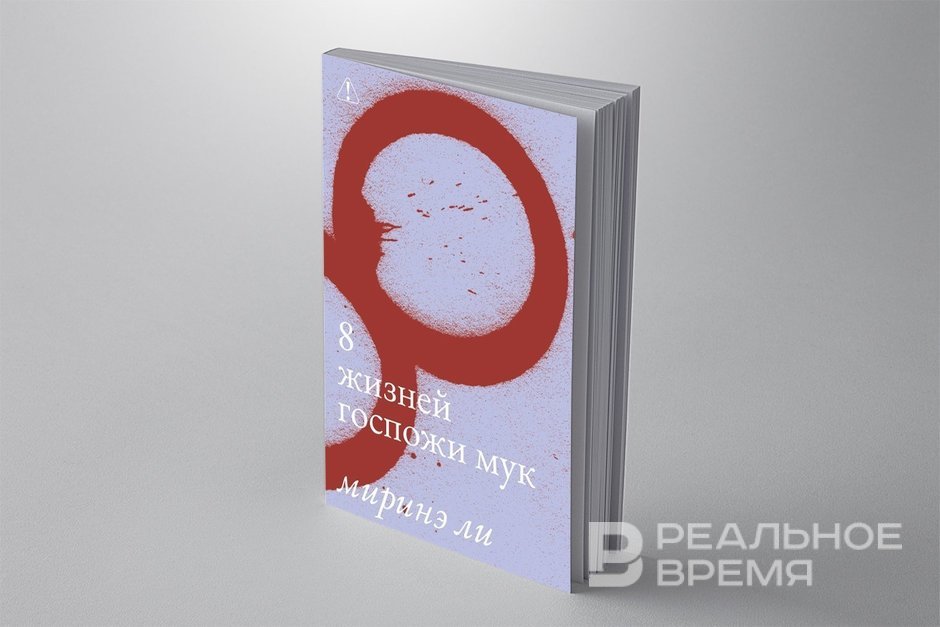
The novel “8 Lives of a Century-Old Trickster” is the debut of Mirinae Lee. She was born and educated in Seoul, then moved to the United States to study English literature. Inspiration for the book came from family history. The writer's great-aunt fled North Korea alone at the age of 60. Lee added to this experience the stories of defectors she heard while volunteering. The novel's plot revolves around an elderly woman surnamed Muk. She lives in the “Golden Sunset” nursing home. One of the staff members records residents' stories for obituaries. Instead of one biography, Muk gives eight. She calls herself a mother, a lover, a slave, a spy, a murderer, and a terrorist. Each version transports the reader to a different context: Indonesia during World War II, Seoul during the Korean War, Pyongyang during the Cold War. The narrative does not follow a straight line. The stories jump through time and space.
Lee structures the novel as a cycle of interconnected stories. There is always a single central figure, but her identity fragments. The reader sees the heroine alternately as a prisoner, a spy, a fugitive, a caring wife and mother. Sometimes she takes another's life. In one episode, a woman dies, and another assumes her place. A person “puts on” another's biography to continue on their path. The novel covers the Japanese occupation, the division of Korea, and the influence of superpowers. The author shows how these events are reflected on the bodies and fates of women. The text touches on themes of sexual slavery, physical and sexual violence, and ideological pressure. Lee draws on real testimonies but softens details to maintain credibility. At the same time, she does not construct a single version of the truth. Muk herself admits to lying and confusing facts. The book constantly asks: where is the line between fiction and truth? The characters use stories as a tool for survival.
The novel has already been translated into several languages, and the writer is currently working on a film adaptation with a talent agency. However, the book's structure was not originally planned as a novel. Lee wrote individual stories and only later saw a unified form in them.
Amélie Nothomb. “Psychopomp. The Impossible Return," Corpus (translated from French by Irina Kuznetsova and Irina Stafi, 224 pp., 16+)
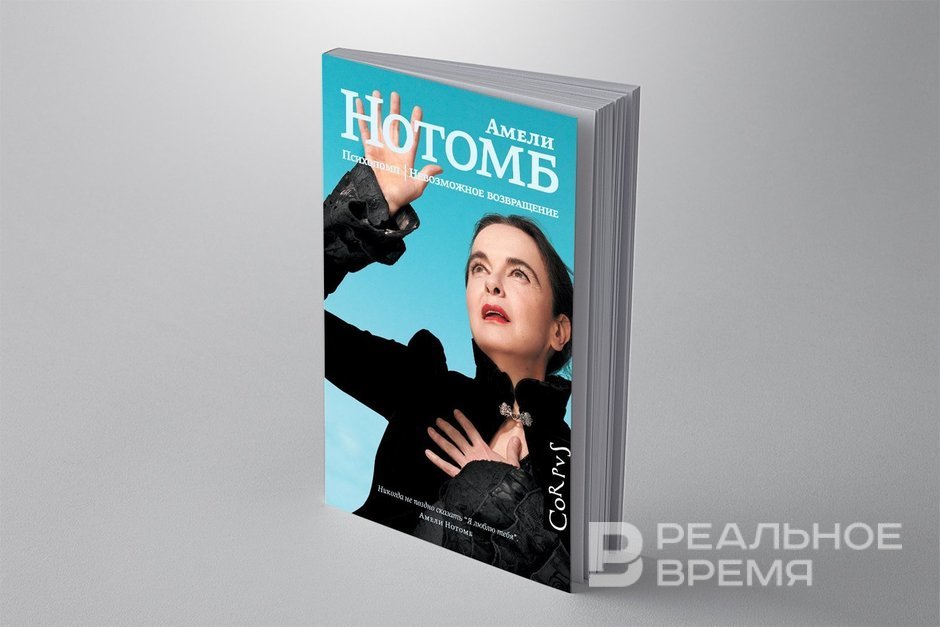
The book “Psychopomp. The Impossible Return” combines two autobiographical texts by Belgian writer Amélie Nothomb, who has written a novel a year since the early 1990s. Her books are published in large print runs and have won major awards, including prizes from the French Academy and the Prix Renaudot. Nothomb grew up in a diplomatic family and lived in Japan, China, the United States, Bangladesh, and Southeast Asian countries from childhood. This experience formed the basis of her prose.
The first text is “Psychopomp.” The title refers to the figure of the guide of souls from ancient mythology. Nothomb constructs the narrative as an autobiography through images of birds. She begins with her childhood, when her family moved between countries. In Japan, the heroine hears the legend of the crane. In China, she notices the disappearance of birdsong due to a campaign to exterminate birds. In the United States, she learns to distinguish bird voices. In Bangladesh, she undergoes a transformative experience and forms a personal connection with the theme of flight. Nothomb links this to writing. It is a skill that requires long practice, much like flight. The writer notes that her first published novel was the eleventh she had written. Nothomb describes working on a text as constant practice. She writes several books a year and chooses one for publication. Besides birds and writing, the novel also contains a traumatic experience. At age 12, the heroine suffered violence, which led to anorexia. This very moment is connected to the theme of the “psychopomp” as an internal transition between life and death. The writer speaks of an “inner death” and a return through writing.
The second text, “The Impossible Return," describes Nothomb's trip to Japan in 2023. She travels there with a photographer friend. The women face everyday difficulties and cultural differences. The friend violates local norms, and Nothomb notes the reactions of those around them. Simultaneously, she conducts an internal dialogue, recalling her past life in Japan and the work experiences described in her early books. She writes of a strong attachment to that country and a feeling of rupture. The writer says she lost her connection to the place after her father's death. The journey does not restore the former feeling; the return does not grant access to the previous experience.
Yu Hua. “The Seventh Day," Inostrannaya Literatura (translated from Chinese by Yulia Dreyzis, 288 pp., 18+)
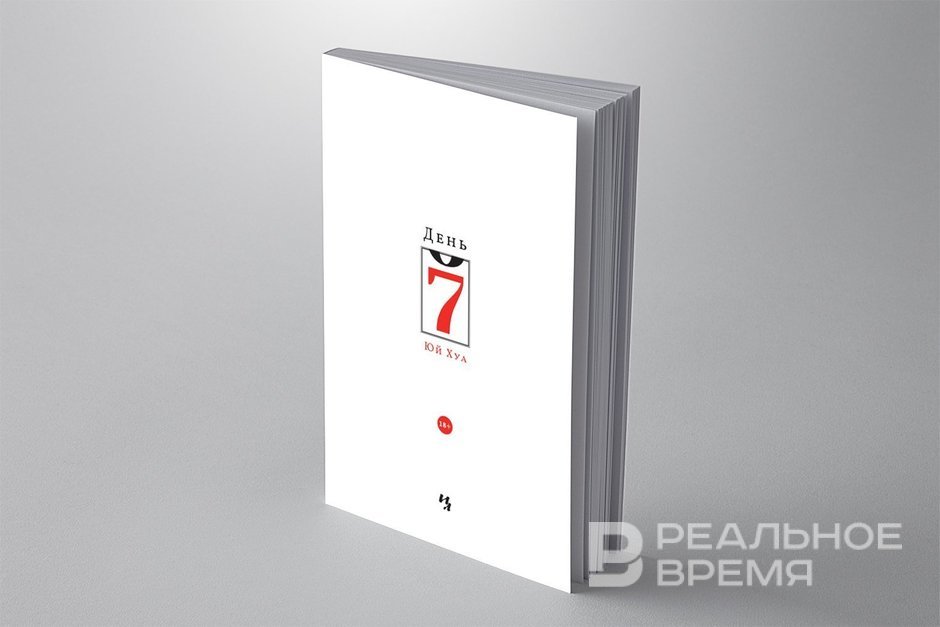
Chinese prose writer and essayist Yu Hua is considered part of the avant-garde generation of the 1980s. In his early period, he worked within postmodernism, later shifting focus to social themes and contemporary Chinese reality. His books have been translated into more than 20 languages, and total sales have exceeded nine million copies. The novel “The Seventh Day” was published in Chinese in June 2013. It became part of a new stage in the author's work. Here, Yu takes on the role of an observer of contemporary China, documenting social problems.
The main character is Yang Fei, a forty-one-year-old man who dies in an accident. He has no money for a funeral, so he cannot find peace. Over seven days, his soul wanders between worlds. Each chapter corresponds to one day. The hero encounters other deceased individuals and recalls his life: his ex-wife, adoptive father, acquaintances, and neighbors. Gradually, disparate stories form a complete picture. The text features scenes of corruption, violence, forced evictions, and organ trafficking. Some episodes are based on real events: selling a kidney to buy a cemetery plot, abandoned infant bodies, and the concealment of death tolls from disasters.
Those not yet buried become trapped between worlds. Some stay for a few days; others have been wandering for several years because their relatives lack funds for burial. The dead continue to exist in an indeterminate state. Even in this space, social inequality persists. After death, money still determines status. Yu Hua juxtaposes two worlds — the world of the living and the world of the dead. He switches their roles. The afterlife appears calm, while reality seems harsh and chaotic. This inversion reveals the structure of society. The author captures the gap between the value of life and its actual price. The text is full of absurdity, black humor, and grotesque details: queues for cremation, numbers for the deceased, ghosts discussing the cost of funerals. “The Seventh Day” is a book about contemporary China, where economic growth goes hand in hand with the loss of human connection and rising inequality.
Yekaterina Petrova is a literary columnist for the online newspaper Realnoe Vremya and hosts the Telegram channel «Булочки с маком».