Gabdulla Tukay has been fully translated into Russian
Now with glosses! Now online too!
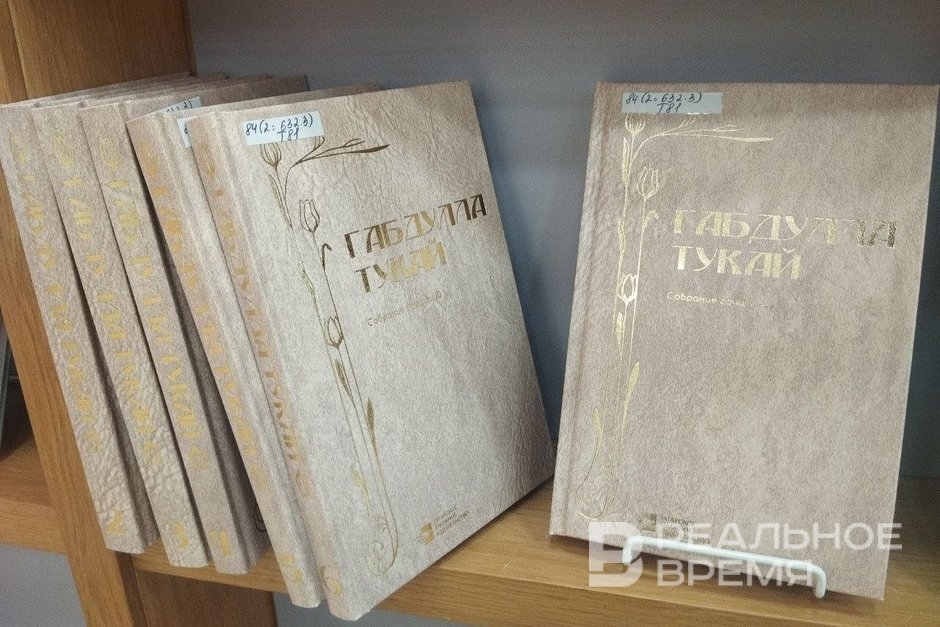
The six-volume edition of Gabdulla Tukay's works in Russian was presented at the Manezh exhibition hall of the Kazan Kremlin museum-reserve. For the first time, the complete legacy of the poet, publicist, and prose writer is available in translation, including glosses (literal word-for-word translations), based on which new books are already being prepared — a collection of poems in the languages of the Volga region peoples is expected.
Total Tukay edition for the anniversary exceeds 100,000 copies
The six-volume collection was presented at the Manezh as part of the roundtable “The Legacy of Gabdulla Tukay in the 21st Century: Study and Popularization.” As Ilgiz Khalikov, Director of the G. Ibragimov Institute of Language, Literature and Art of the Tatarstan Academy of Sciences, noted, the poet had been translated before, and his works were published in journals and collections, but these were only a small part of his creative output.
— We have managed to render into Russian all of Tukay's work, which is the heart of Tatar poetry, — Khalikov stated.
Essentially, there is now a Russian-language analogue of the academic six-volume edition in Tatar published between 2011 and 2016. Like its Tatar counterpart, the Russian edition of Tukay was published by the Tatar Book Publishing House.
Rustem Galiullin, General Director of Tatgiz, stated that as part of the anniversary year, they have published over 20 titles related to Tukay, with a total print run of over 100,000 copies. These include a bilingual album, choral scores, poetry, books about the poet, and even toys. The main financial support was received from the Commission under the Rais of Tatarstan on the preservation and development of the Tatar language and the native languages of the peoples living in the republic, headed by Marat Akhmetov.
When will there be a chronicle of life and work?
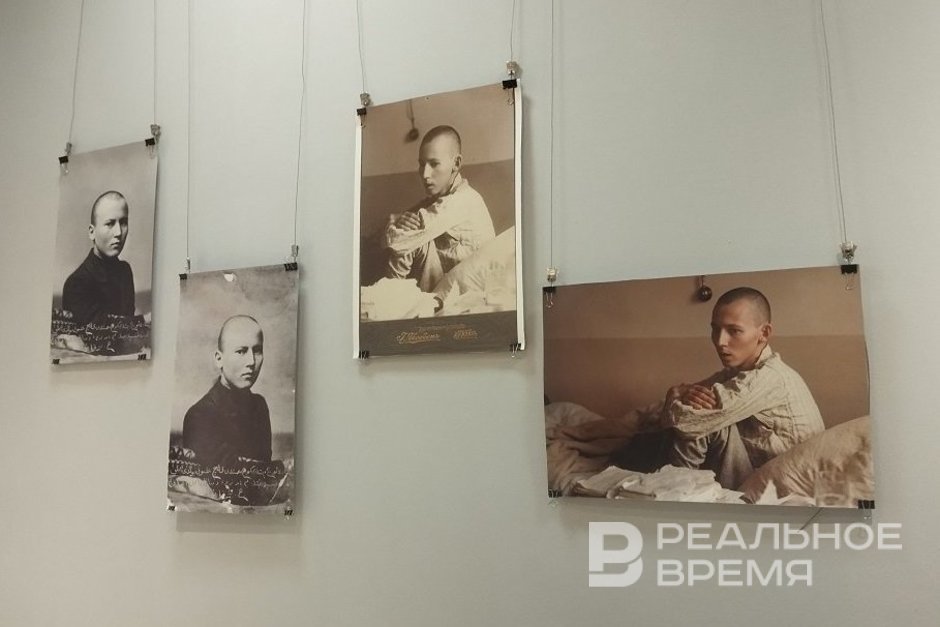
The history of the six-volume set began with the three-book “Materials for the Chronicle of the Life and Work of Gabdulla Tukay," published immediately in two languages in 2021 (they can also be found online). Marcel Ibragimov, the compiler, author of the prefaces, and translator of a significant portion of the journalism for the Russian edition of Tukay, noted that these three books were conceived as an approach to a larger project, namely a chronicle of the poet's life and work. Such a book was begun in the 1960s by Sagit Isanbaev; the manuscript of this unfinished work is kept in the archives of the Institute of Language, Literature and Art, and received high praise from the Tukay scholar Ibragim Nurullin: “This work should be on the desk of every Tatar intellectual," he once remarked.
— While working on the three-volume set, I noticed that many of Tukay's poems, and especially his journalistic works, had not been translated into Russian, — Ibragimov noted. He proposed filling these gaps and publishing a full-scale edition in Russian. — This was probably a romantic impulse. Now I've become a realist and think, would I decide to do this now, five years later?
Ibragimov approached Akhat Mushinsky and proposed that the Union of Writers of Tatarstan organize a competition for translators. The winners also took part in the work, such as Boris Wainer, Galina Bulatova, Azat Akhunov, and Rufiya Murtazina.
Is the publicist Tukay known to the Russian-language reader?
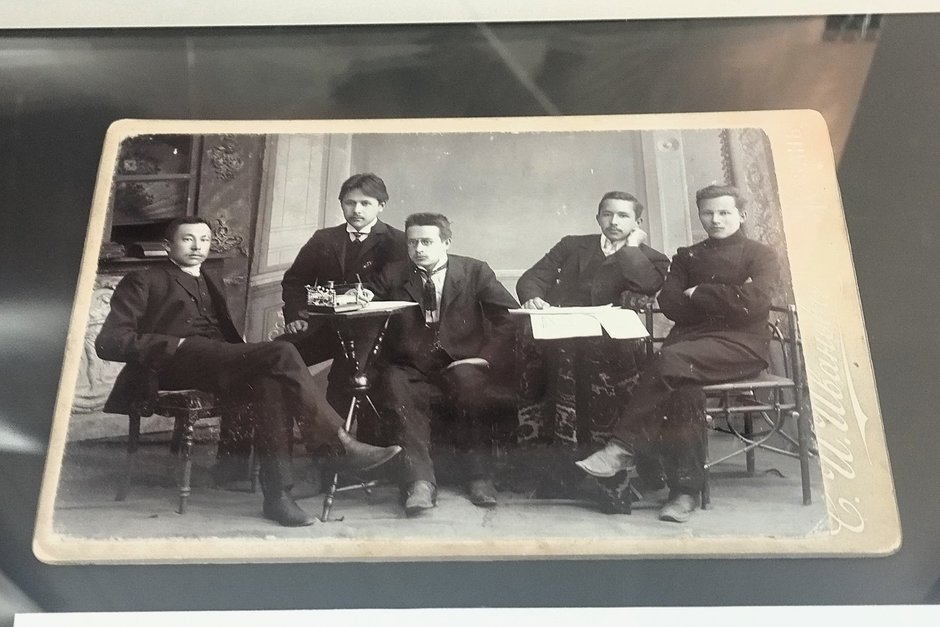
Ibragimov discovered that only a third of Tukay's journalistic writings had been translated into Russian, which he explained by ideological constraints:
— As a publicist, Tukay was deeply immersed in the life of the early 20th century, which involved figures such as Gayaz Iskhaki and Yusuf Akchura, who were under an unofficial ban.
Ibragimov himself translated about a hundred articles; Shakir Mukhamedyarov, Rafik Nafikov, Venera Dumaeva-Valieva, and others also worked on the translations. At times, it was necessary to restore text that had been interfered with by Soviet censorship.
Regarding the poetry, about 60-70 poems by Tukay had not been translated. Furthermore, they are presented in two versions — an artistic translation and a gloss (literal translation) done by Ibragimov himself.
So, for example, for “Tugan tel” (Native Language), alongside the classic translation by Semyon Lipkin (“Native language, sacred language, the language of father and mother, — How beautiful you are! A vast world arose in me thanks to you”), one can now read the gloss (“Oh, native language, oh, beautiful language, the language of father and mother! I have learned much in the world thanks to you, native language”).
Ibragimov noted that the Tatars had already had such an experience. The poet Shamil Anak prepared word-for-word translations of Tukay, accompanying them with an analysis of metrics, indicating which syllabo-tonic meters would be appropriate for translation. They are kept in the National Museum of Tatarstan, and there is an idea to publish them as well.
Thus, the poetic volumes in the Russian edition constitute three books. Another valuable feature is the commentary, sometimes even more detailed and thorough than in the Tatar six-volume edition.
— Another of our tasks is to convey the rich Tatar culture in which our great poet Gabdulla Tukay lived and worked, — Ibragimov explained.
Galiullin also stated that all legal issues regarding copyright have now been resolved, and the layout of the six-volume edition has been handed over to the Institute of Language, Literature and Art, where it will be posted on the institute's website.
This news was perhaps the most encouraging. Because the print run of each volume of the new edition is only 550 copies. For comparison, the recently published fifth and sixth volumes of the academic collected works of Fatih Amirkhan have a print run of 2,000 copies. We hope that Tukay in Russian will also be reprinted. Currently, the print run is on sale, but most of it is being distributed among libraries and departmental organizations.
And the books have already been uploaded in PDF format.