A convenient past
The film adaptation of Maxim Leo's novel “Hero at Friedrichstrasse Station” about a “freedom fighter” from the GDR is released in Russian digital distribution. We explore the book, the film, and “Ostalgic” literature.
A story of a hero who emerged by chance and a legend deliberately constructed lies at the heart of Maxim Leo's novel “Hero at Friedrichstrasse Station.” The writer shows how a journalist finds a convenient narrative in the Stasi archives about the “largest escape from the GDR” and turns a former railway worker into a symbol of an era, even though the hero himself does not confirm this version. Following the release of the film adaptation “Berlin Hero” in Russian digital distribution, literary columnist Yekaterina Petrova of Realnoe Vremya examines how Germans once again attempt to come to terms with their history in literature and how the media shape public perceptions of the past.
“Ostalgic” literature
The fall of the Berlin Wall in 1989 and the reunification of Germany in 1990 set a new historical context for literature. Writers immediately turned to the tensions between East and West, to differences in economy, culture, and daily life. Authors discussed the experience of living in the GDR and raised the question of how to understand it. The debate about the past of a vanished country recalled the post-war reckoning with the Nazi period.
At the same time, a “literary quarrel” broke out, triggered by the publication of Christa Wolf's novel “What Remains?” (1990), in which she described the consequences of being watched by the Stasi. Western critics accused Eastern writers of passivity, deepening the conflict between the two literary environments.
In the first years after reunification, literature did not immediately respond to events. Full-fledged literary works began to appear only 5–6 years later, in the mid-1990s. By then, a demand for the “novel of the transitional period” had formed. The most prominent of these are Simple Storys by Ingo Schulze, “Heroes Like Us” by Thomas Brussig (1995), and “Too Far Afield” by Günter Grass (1995). A new generation of writers, including Brussig and Thomas Hettche, offered texts that directly grappled with reunification and its psychological consequences.

Authors described identity crises, the clash of Eastern and Western values, and the problem of personal responsibility. In Erich Loest's novel “Nikolaikirche” (1995), the writer depicted the Leipzig demonstrations through the fate of a single family, thereby connecting political events with private life. In Brigitte Burmeister's book “Under the Name of Norma” (1994), the estrangement between Eastern and Western Germans is explored through the breakdown of a family. Wolfgang Hilbig, in his novel “I” (1993), portrayed a protagonist recruited by the security service, thus showing the pressure of the system on the individual.
A separate strand was formed by texts that explored language and structures of power. Reinhard Jirgl, in his novel “Dismissal of Enemies” (1995), depicted the conflict between two brothers as a model for the confrontation between two German mentalities. Gert Neumann, in the novel “Anschlag," portrayed a dialogue between an Eastern and a Western German that ends in rupture due to incompatible worldviews. These authors used complex forms and experimented with language to convey the experience of disjuncture.
In the late 1990s, interest in everyday life and memory intensified in German literature. Young authors from the former GDR described life without direct political declarations, often using irony. They turned to details of daily life and their own experiences of growing up. A kind of “culture of memory” began to form, where the past is preserved through individual stories.
Central to this process was the phenomenon of “Ostalgie” — a retrospective look at everyday life in the GDR without unequivocal judgement. After reunification, many East Germans faced rapid changes and the loss of familiar social ties, sparking interest in the past and its symbols. Literary texts appeared in which authors meticulously listed GDR products, brands, and household items, as in Reinhard Ulbrich's “Traces of Broiler” (1998). Such details functioned as cultural markers and created a sense of a lost world.
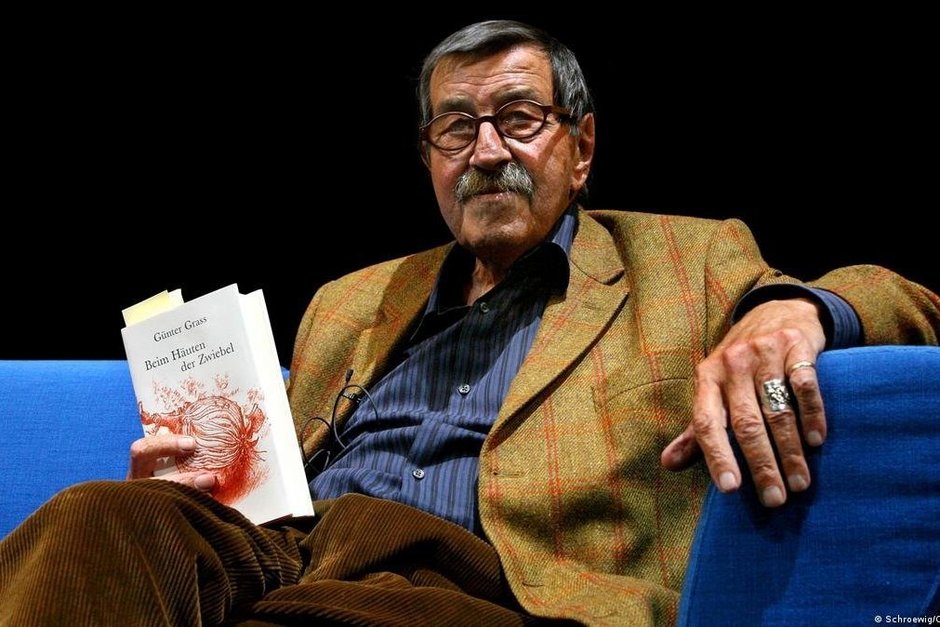
“Ostalgie” also manifested in more complex forms. In Günter Grass's novel “Too Far Afield," readers saw criticism of reunification and a defence of Eastern experience, which provoked sharp reactions from critics. In the texts of Annette Greschner and Wolfgang Seemann, GDR household items became symbols of memory and identity. However, “Ostalgie” does not mean a desire to return to the past but rather registers an attempt to preserve personal experience and explain the changes.
How to create a hero
Maxim Leo builds his texts around historical memory, connecting the fates of specific families with major political events. Leo was born in 1970 in East Berlin, trained as a chemical laboratory assistant, then studied political science at the Free University of Berlin and in Paris. After his studies, he began building a career in media, and from 1997 worked as an editor at the Berliner Zeitung newspaper, where he wrote about France and the European Union and contributed topical columns. Leo won the German-French Journalism Prize in 2002 and the Theodor Wolff Prize in 2006 for his journalistic work.
In the book “Keep Your Heart Ready," he described his family's history in the GDR and received the European Book Prize in 2011. He continued this line in the novel “Where We Are at Home," which tells the story of a Jewish family scattered across the globe. In parallel, Leo wrote crime novels about Commissioner Voss and worked on the script for the film “Crime Scene: True Love.”
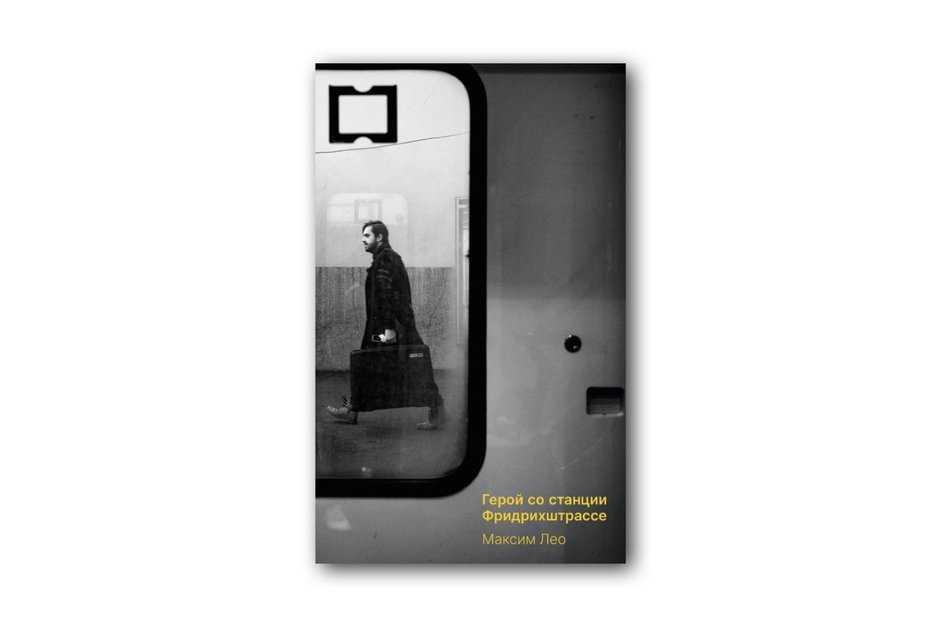
In 2022, Maxim Leo published the novel “Hero at Friedrichstrasse Station.” This text appeared against the backdrop of debates about the memory of the GDR and anniversaries of the fall of the Wall. The writer wanted to show that official forms of memory divide the past into victims, criminals, and heroes, failing to account for the everyday experiences of ordinary people. Leo used real Berlin topographies and Friedrichstrasse Station, linking the plot to the history of railway connections between East and West.

The action of the novel takes place in Berlin in 2019, as the country prepares for the thirtieth anniversary of the fall of the Wall. Journalist Alexander Landmann finds in the Stasi archives a story about the supposed largest mass escape from the GDR and makes former railway worker Michael Hartung a hero. Landmann claims that 127 passengers ended up in West Berlin due to a deliberate act of sabotage at Friedrichstrasse Station. Hartung lives in poverty and runs a failing video rental store, so he agrees to participate in the media story, even though he does not confirm the version of the heroic deed. On the fateful night in 1983, when the train went the wrong way, Michael was supposed to switch the points at the station, but something went wrong.
After the article's publication, media, advertisers, and politicians begin using Hartung as a symbol. He receives fees, participates in TV shows, and prepares to give a speech in the Bundestag. Simultaneously, Michael tries to sort out his personal life, reconnects with his daughter, and meets Paula, one of the passengers on the very train he supposedly sent West. The story becomes more complicated when contradictions emerge between the real events and the created heroic image.
The novel mixes fiction with details from the GDR era. Leo takes the fact that a railway crossing existed at Friedrichstrasse Station but invents the story of the mass escape itself. The text features forged or distorted Stasi documents that the journalist takes as truth. A real event is replaced by a mundane accident: a broken bolt locks the points, and the train mistakenly heads West. The authorities cover up the incident, and later the media turn it into a legend.
The author shows how the media construct history and create heroes. Journalist Landmann builds his article's narrative based on archival documents, enhancing its drama by adding several beautiful, pompous, but fabricated details. Essentially, in the book, everyone sees what they want to see and understands what they want to understand. Hartung's story shows how society succumbs to simple, powerful narratives and how easily it displaces complex facts.
Furthermore, Maxim Leo examines the experience of East Germans after reunification. Michael Hartung loses his job, faces economic changes, and gradually falls out of the new system. The process of reunification and modernization was painful for East Germans; their former professions were “rationalized," and their familiar way of life was destroyed.
Becker's last “Hero”
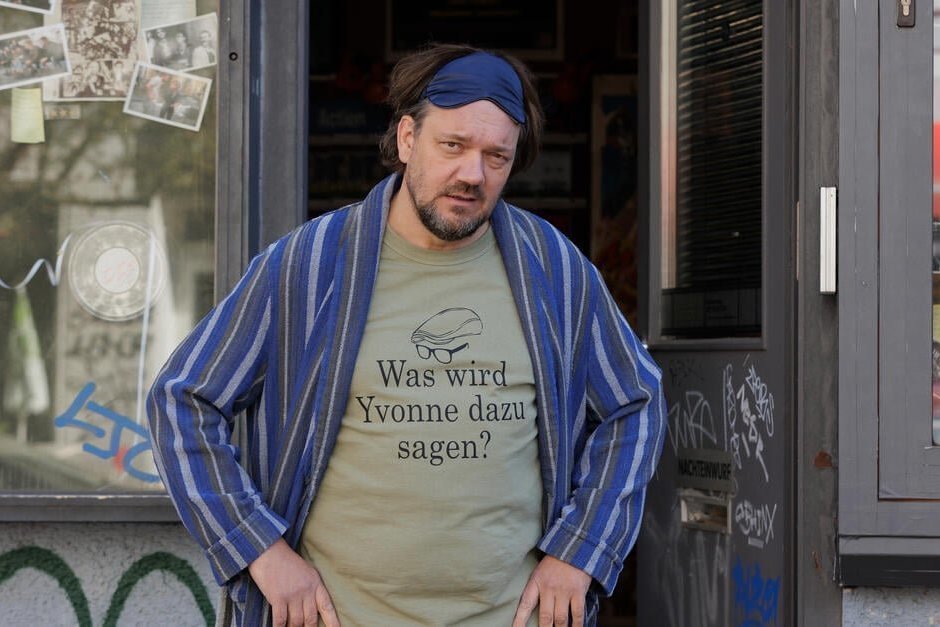
This week, the film “Berlin Hero” — an adaptation of Maxim Leo's novel “Hero at Friedrichstrasse Station” — is released in Russian digital distribution. Director Wolfgang Becker made the film as a comedy about memory, media, and the creation of heroes. The film's action takes place in 2019, as preparations for the 30th anniversary of the fall of the Berlin Wall are underway, showing how journalists and politicians search for a “suitable” story.
Becker held a special place in German cinema. He was born in 1954, studied at the Free University of Berlin and at the German Film Academy. His diploma film “Butterflies” won international awards, including a Student Oscar. In 1994, he co-founded the company X Filme together with German screenwriter and composer Tom Tykwer and other producers. The director's greatest success came with the film “Good Bye, Lenin!” (2003), which won international prizes. “Hero at Friedrichstrasse Station” was his final work: Becker completed filming shortly before his death in December 2024, with post-production completed by colleagues without him.
The film retains the book's core idea but shifts the emphasis. Maxim Leo's novel is built around a fictional event, whereas the film shifts attention to the process of creating the legend. Becker uses the story only on the periphery, exploring what collective memory makes of it. The film centers on a man whom the media turn into a resistance participant, though such a hero never existed. A journalist writes a story tailored to audience expectations, and the character himself begins to conform to this version.
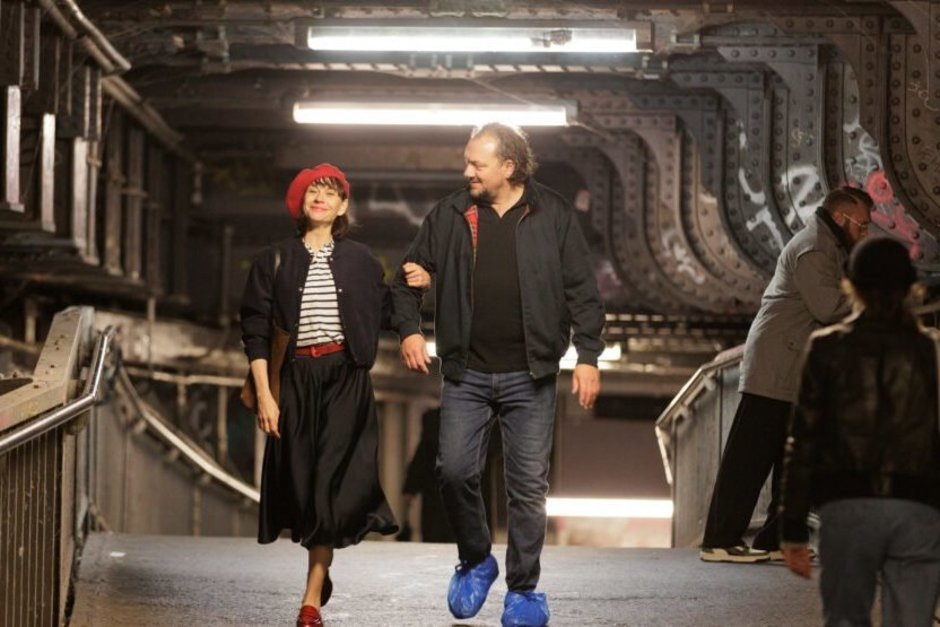
The film analyses contemporary memory culture. The director shows how politics, journalism, and society together create convenient narratives about the past. The film mocks the media's thirst for sensation and the opportunism of politics. At the same time, the film maintains a light comedic tone, addressing serious matters through everyday situations. In the film, historical memory is a patchwork quilt created by different groups — not only the victors who write history, but also the losers, as well as ordinary witnesses.
In the 1990s, Russia also experienced a sharp break with the past after the collapse of the Soviet Union, confronted with a new reality. However, in Germany, people had to learn to live together after unification — people with different social and cultural backgrounds. In Russia, society learned to exist within a changed system. It would be beneficial for Russian authors to study the experience of their German colleagues. After all, writing about the recent past and the uncomfortable present of one's country can be done not only through the lens of Russian “creepiness” (cht',' but also through everyday life, details, different perspectives, and even humour and irony.
*Age rating: 16+*
Yekaterina Petrova is a literary columnist for the online newspaper Realnoe Vremya and hosts the Telegram channel «Булочки с маком».