Duty-free Uzbek style: Tatarstan business invited to border with Afghanistan
Ministry of agriculture of Tatarstan proposed to reorient agricultural exports to Uzbekistan
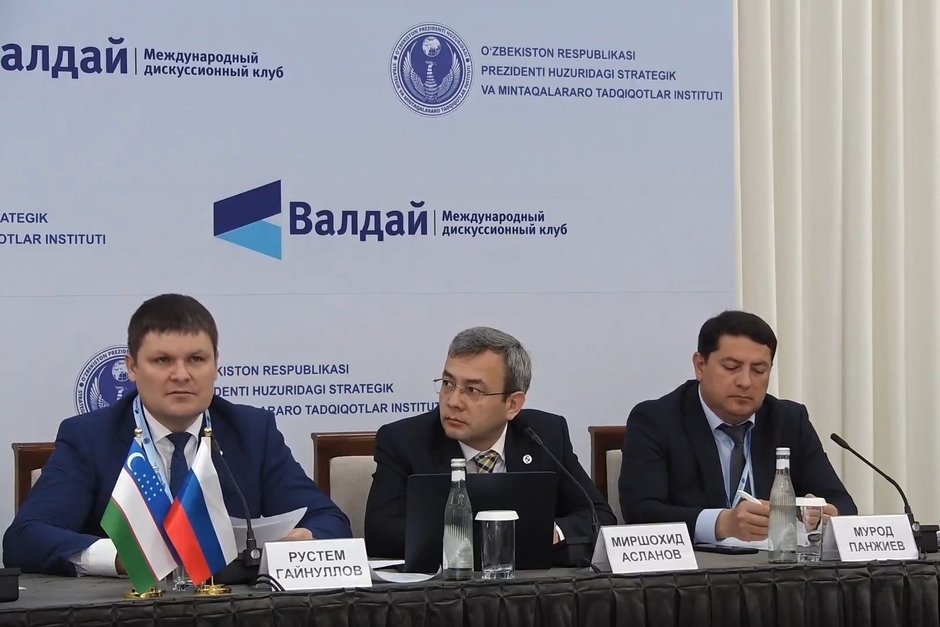
Tatarstan and Uzbekistan are discussing the possibility of revitalizing trade through duty-free turnover of goods via the “Termez” cross-border zone, which opened in August 2024. At the “Surkhandarya — Tatarstan” Russian-Uzbek conference, the management of the Termez International Trade Center invited businesses to establish assembly production in exchange for duty-free import of vegetables, herbs, and fruits. Currently, the Leto Group operates under this scheme, importing tomatoes into Tatarstan. The initiative did not generate much enthusiasm from Khimgrad. Details in this report by Realnoe Vremya.
AIRITOM FREE ZONE
Uzbekistan initiated another Russian-Uzbek conference to discuss cargo transshipment opportunities through the city of Termez (on the Uzbekistan-Afghanistan border) as part of the North-South International Transport Corridor.
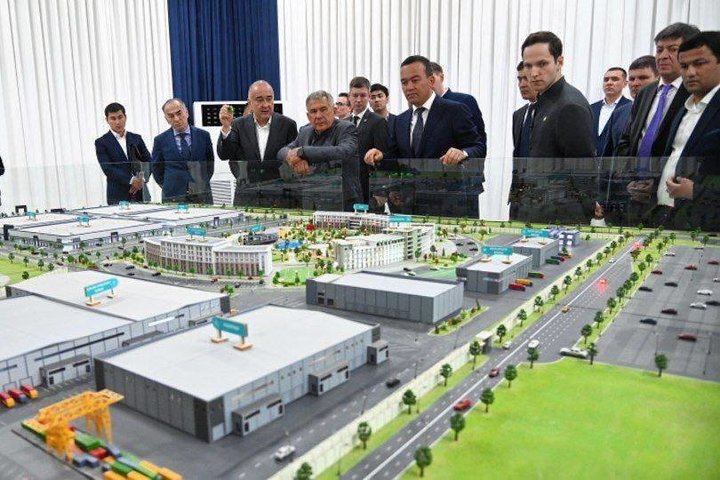
“Termez junction plays a key role as a link between Central and South Asia, providing the shortest route to the ports of the Indian Ocean," noted Akramjon Nematov, First Deputy Director of the Institute for Strategic and Regional Studies under the President of Uzbekistan. A year ago, this zone was visited by Rustam Minnikhanov with a delegation from the Tatarstan Ministry of Industry and Trade.
Given the importance of the moment, Russian Deputy Foreign Minister Mikhail Galuzin and Russian Ambassador to Uzbekistan Alexey Yerkhov came to the conference, with the Valdai International Discussion Club acting as co-organizer. The meeting took place in Termez within the free trade zone.
Tatarstan has long participated in updating Uzbekistan's infrastructure, so the republic's authorities received an invitation and took part in the practical part of the conference. Deputy Minister of Agriculture and Food of Tatarstan Rustem Gainullov spoke at the business session “Surkhandarya — Tatarstan," dedicated to the possibility of establishing product exports via Termez (the administrative center of the Surkhandarya region of Uzbekistan).
“MADE IN TERMEZ” — ENTRY TICKET TO AFGHAN AND PAKISTANI MARKETS
For this purpose, Uzbek developers built the Termez International Trade Center, which has been operating as the Airitom Free Zone since the summer of 2024. According to Zafar Abdukerimov, Commercial Director of the Termez ITC (Airitom Free Zone), storage, sorting, and transshipment of Russian goods are carried out here without unnecessary customs barriers. From here, grain, vegetable oils, and other products can be exported to Asian markets. The nearest markets are Afghanistan, Pakistan, and India. He did not specify the current volume of Russian cargo passing through Termez.
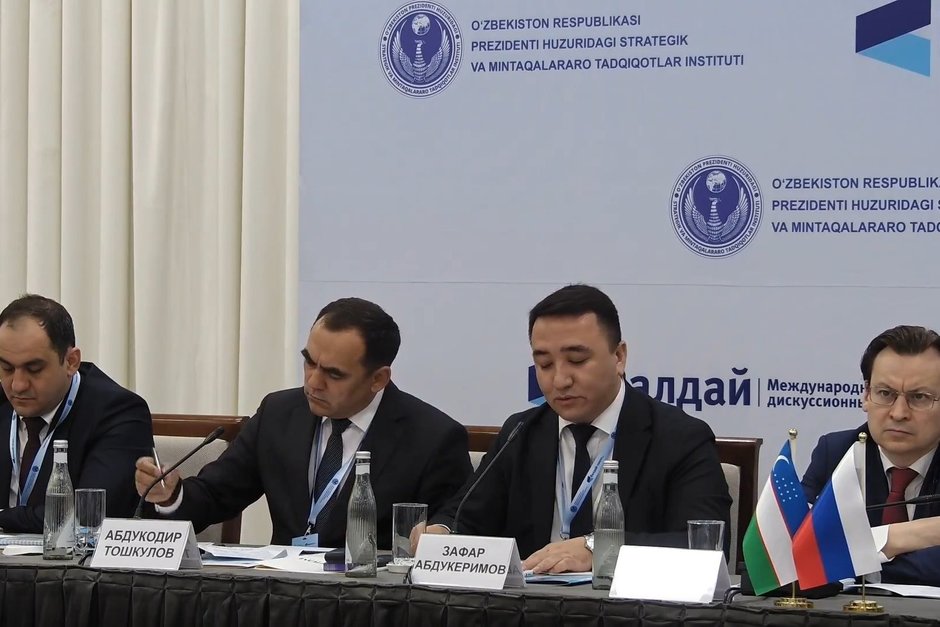
At the same time, the zone's management proposed organizing assembly production. According to him, Uzbekistan is interested in establishing production of agricultural machinery, auto components, and electronics. “The 'Made in Termez' label will open access to markets that were previously logistically inaccessible," he said. He also promised procurement of energy equipment during the region's infrastructure modernization.
In the reverse direction, he proposed establishing imports of fresh vegetables, herbs, and fruits from Asia. In his opinion, the green corridor for duty-free supply of fresh fruit and vegetable products via Termez could meet the needs of Russia and neighboring countries. He did not specify the possible volume of vegetable shipments. “Russia views the Termez ITC not as a competitor to its logistics hubs, but as a vital partner in creating a unified, seamless trade space in Eurasia," he concluded.
MILK IN EXCHANGE FOR FRESH VEGETABLES
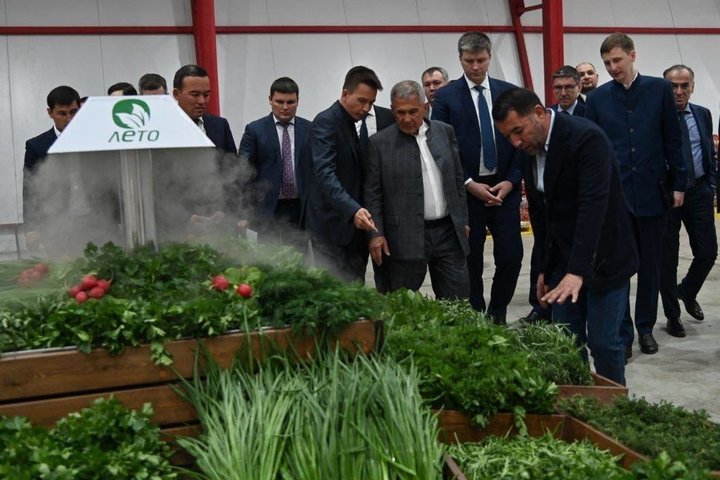
Uzbekistan is Tatarstan's second-largest foreign trade partner. At the end of 2025, export volume reached $427 million, but the share of agricultural products is small, Deputy Minister Rustem Gainullov agreed on the need to revive trade. According to him, processors exported products worth $38.3 million. “In fact, that's about 7–8% of total exports. We believe there is huge potential here," he said. The Leto Group, which imports tomatoes grown in Surkhandarya into Tatarstan, currently operates in the duty-free zone, he noted.
Sugar and fat-and-oil products sell well, but not dairy products. Given the overstocking of warehouses, he considers it important to expand dairy exports. Agreements have been reached with the Uzbek GU “Navruz” for the purchase of dairy products. In exchange, counter-supplies of vegetable products to Tatarstan are possible. But this is not enough, he believes.
Regarding industrial cooperation, he said that KAMAZ is interested in developing distribution and service of equipment with local suppliers in the Surkhandarya region. Chelny-based “RemDiesel” is ready to create a joint venture for civilian equipment production. Currently, Tatneft is launching a network of gas stations in Uzbekistan, and KER-Holding supplies electrical products, added Deputy Minister Rustem Gainullov.
“KHIMGRAD” PROMOTES INVESTMENT INFLOW
The duty-free trade initiative in Termez seems to have aroused jealousy from Kazan's “Khimgrad.” After all, the new hub creates competition for the industrial parks built by Khimgrad together with the Uzbek chemical company Uzkimyosanoat. Ruslan Sabirov, Head of Foreign Projects at Khimgrad JSC, recalled that the company came to Uzbekistan to develop the chemical industry, and now investments of $33 million are planned.
“In 2022, the Chirchik technopark was launched in the Tashkent region, and in 2023, the Jizzakh industrial park. The Chirchik technopark is already fully occupied, with major enterprises such as Eidos Medicine, Khimplast Corporation, Bionovatik, and Polymer as its residents. They produced $60 million worth of products. Moreover, half of the manufactured products are export-oriented," said Ruslan Sabirov.
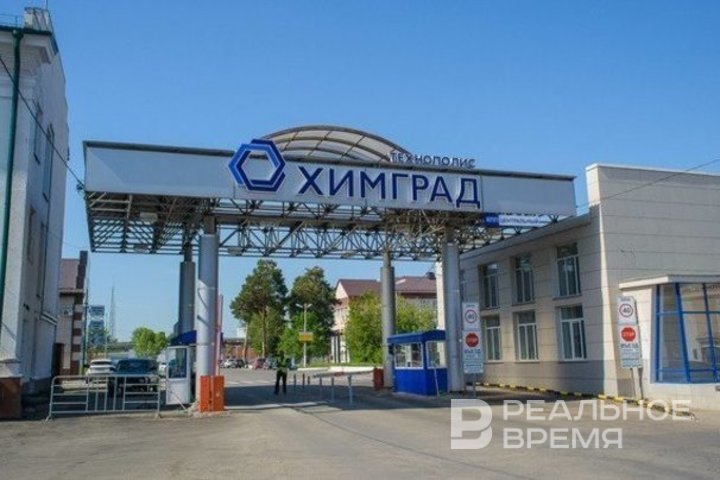
Currently, construction is being completed on two similar complexes in the Bukhara and Navoi regions. The progress of construction is under the personal control of the presidents.
In total, more than 40 residents have been located across the four sites, attracting $200 million in investment, he added. He emphasized that the industrial parks also have preferential regimes and privileges that help develop Uzbekistan's chemical industry.
He also noted that within the framework of strategic partnership in the Eurasian space, Khimgrad has been allocated 10 hectares of land in Azerbaijan (where there is access to Caspian ports). A joint technopark project is being implemented in Sumgayit. The first phase has been built — 10,000 square meters — with tax benefits. To defuse tension in the discussion, Valdai Club Chairman Andrey Bystritsky hastened to close the conversation.
LOGISTICS SHIFT TO RAIL
Land transportation through Uzbekistan and Turkmenistan has become more preferable than sea routes through Iran, noted Shamil Yenikeyev, a leading researcher at the Russian Academy of Sciences' Center for Central Asian Studies and China.
“This year, just days before the escalation of the conflict in the Middle East, a meeting of the transport ministers of Uzbekistan, Iran, and Turkey took place in Istanbul. The parties actively discussed integrating the under-construction China — Kyrgyzstan — Uzbekistan railway with Iranian ports and Turkish terminals. It was assumed that this route would become one of the key ones for accessing world markets. But after February 28, when hostilities began and strikes hit Iran's port infrastructure, these plans were put on hold," he recalled. “Iranian ports came under attack, and Tehran banned food exports, which also created a negative trend.”
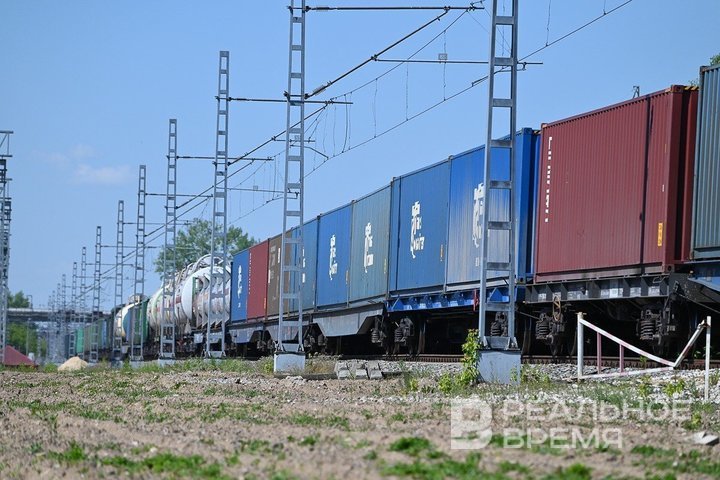
In such a situation, logistics are shifting to rail. “At the end of 2025, rail freight volume between Kazakhstan and Uzbekistan reached 32.3 million tons, a 16% increase from 2024. Interestingly, the parties also agreed to increase this figure to 60 million tons, indicating serious intentions to develop the northern direction. The main limiting factor for the development of the North-South sea route today is primarily the lack of specialized port infrastructure. However, the question is how long this conflict will last, given the twelve-day war. Have we entered a period of prolonged instability, or will this be a short-term event? Although there are different estimates: some say it could last several years, others that it will end by autumn, and others that it will be resolved in April," he reasoned.
Another question is how much this route might change after the armed confrontation ends. Is cheaper transport possible? According to Shamil Yenikeyev, the lack of specialized terminals for transshipping grain and fertilizers in Russian and Iranian ports on the Caspian negatively affects the overall dynamics of the North-South ITC. “If we look at what was happening until recently in the Caspian ports involved in the North-South ITC, they accounted for 20% of non-commodity maritime transport, a similar percentage of grain, and nearly 100% of mineral construction materials.”