People become more important than oil
The decline in the working-age population, the entry of small generations into the labor market, and a decrease in migration inflow are long-term trends that will determine the situation over the next 10–15 years

A lecture-discussion by renowned regional economics expert and Lomonosov Moscow State University Professor Natalya Zubarevich took place in Kazan as part of the interregional conference “Business Day. RBC," which presented the results of 2025 and forecasts for 2026. Over the decade since the 2014–2015 crisis, the Russian economy has gone through several cycles of decline and recovery. However, 2025 demonstrated an anomalous picture: record-low unemployment (2.1–2.2%) is combined with minimal industrial growth (+1.3%), while investment is concentrated in only a few leading regions. The expert's key conclusion is that a shift in the limiting factor is occurring in the Russian economy: human capital is replacing oil. Digital economist and Candidate of Economic Sciences Ravil Akhtyamov, specifically for Realnoe Vremya, analyzes the main trends based on Zubarevich's data and official statistics, as well as the results of his own research in big data processing of the labor market, and explains why regions and businesses need to restructure their strategies.
Macroeconomic dynamics: slowdown after a period of growth
According to Rosstat, industrial production grew by 5.6% in 2024, primarily driven by the output of the military-industrial complex. In 2025, growth slowed to +1.3% (for January–October — 1%).
The sectoral structure shows increasing divergence:
- Growth Leaders — Military-industrial complex sectors (production of vehicles and aircraft grew by 49.1% in July 2025), fertilizer production, gold mining.
- Decline is recorded in civil engineering, metallurgy (-10.2%), wood processing, construction materials production, the chemical industry, as well as gas and coal mining (the extractive sector decreased by 2.7% in the first half of 2025).
A slowdown in the construction sector has been observed for the second consecutive year. Housing construction volumes are declining even in traditionally leading regions — the Moscow and Leningrad agglomerations, and Krasnodar Krai. Some growth persists in the Far East due to preferential mortgage programs, but its scale is insufficient to compensate for the nationwide decline. Retail trade turnover is also slowing due to high interest rates and the population shifting to a savings model. The forecast for 2026 does not suggest a significant recovery in this sector.
Investment: regional concentration
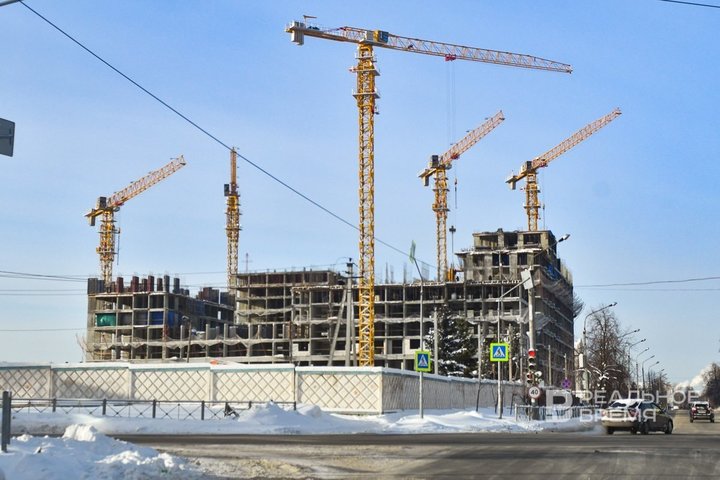
In 2024, investment activity maintained a high regional concentration. Moscow and Tyumen Oblast remained leaders in investment volume, reflecting their role as financial and raw material centers. The Far East's share reached 10% of the nationwide investment volume — a result of long-term development programs for the macroregion, including preferential regimes and infrastructure projects.

Demographic situation: increasing natural decline
In 2024, the natural population decline in Russia amounted to 596.2 thousand people, exceeding the 2023 figure. The birth rate decreased by 3.4%, while the death rate increased by 3.3%. Migration growth reached 568.5 thousand people (compared to 203 thousand in 2023). Such a sharp increase, according to experts, is associated with the transition to an electronic migrant registration system and stricter migration control, which requires cautious interpretation when comparing with data from previous years.
Regions with sustained population growth are few: the Moscow and St. Petersburg agglomerations, Tyumen Oblast, several republics of the North Caucasus, Kalmykia, Tyva, and Yakutia. In most other subjects of the Federation, natural decline or population stagnation is observed.

Labor market: structural supply deficit
The unemployment rate according to ILO methodology at the end of 2025 was 2.1–2.2% — the lowest value in the entire observation period. This phenomenon is due to a combination of long-term demographic trends and short-term market factors:
- Demographic structure. Between 2023 and 2025, the generation born in the 2000s — the smallest in recent decades — entered the labor market. The number of 20-year-olds during this period was 15–18% lower than in the 2010s.
- Changes in economic activity. Part of the working-age population has moved into the informal sector or into self-employment, reducing the officially registered labor supply. Additionally, the growth of part-time employment and changes in the sectoral structure (a shift towards services) reduce the share of the economically active population accounted for in statistics.
- Decrease in migration inflow. The influx of labor migrants from CIS countries, according to expert estimates, decreased from 4–4.5 million people in the 2010s to 3–3.5 million in 2025.
For a more accurate assessment of the real labor supply, the author has developed a methodology for cleaning and weighting data from online employment platforms (hh.ru, Work in Russia), taking into account the duplication of resumes and the presence of “dead souls.” Applying cascade deduplication and behavioral scoring shows that the actual number of active job seekers may be 25–35% lower than the “raw” platform data, further exacerbating the personnel shortage problem.
The most acute personnel shortage persists in blue-collar occupations — in manufacturing, agriculture, construction, and logistics. Since spring 2025, there has been a trend towards a reduction in the number of vacancies and an increase in part-time employment, which may indicate the economy is entering a phase of stagnation.
Income dynamics: the end of the “wage race”
The period from summer 2022 to 2024 was characterized by accelerated growth in nominal wages caused by an acute personnel shortage. As of May 2025, nominal wage growth was +14.5% (the forecast for the whole year is about 12.5%). The slowdown is most noticeable in the Central, Volga (excluding Tatarstan), Ural, and Siberian Federal Districts.
Tatarstan stands out against the general background: wage growth here was higher than the Russian average. However, the forecast for 2026 suggests the end of the “wage race” in the republic as well, with a transition to stagnation or minimal wage growth.

Regional industrial dynamics in 2025
Analysis of industrial production by region reveals significant differentiation. In half of the subjects of the Federation, a decline or stagnation was recorded. The most difficult situation is observed in the South, Siberia, the North-West, and the Urals.
Growth Leaders:
- Kurgan Oblast, Tatarstan, Udmurtia, Tula Oblast — due to the concentration of military-industrial complex enterprises;
- Novgorod Oblast — due to fertilizer production;
- Kaluga and Kaliningrad Oblasts — show growth from a low base in the automotive industry after the crisis of 2022–2023;
- The Far East — growth is ensured by increased gold and coal mining.
Thus, current economic growth has a narrow sectoral base (military-industrial complex and raw material exports), while civilian manufacturing industries are stagnating.
Regional budgets: growing deficits
Preliminary data for 2025 indicate a tense situation in regional finances. Revenues of the consolidated budgets of the subjects of the Russian Federation increased by only +5% in nominal terms (in real terms, accounting for inflation, a decrease), while expenditures increased by +10%. Corporate profit tax decreased by 9% nationwide, while personal income tax (PIT) increased by 12% (but its growth will slow down following wages).
Tatarstan: preliminary 2025 statistics
| Indicator | Value | Deviation from Russian Average |
| Budget Revenues | +4% | Below average |
| Corporate Profit Tax | –12% | Worse than decline (–9% in RF) |
| Personal Income Tax (PIT) | +17% | Above average (+12% in RF) |
| Spending on Economy | –4% | While +14% growth in RF |
Budget deficits were preliminarily recorded in 70 regions. The highest values (23–26% of revenues) were noted in Vologda, Tyumen, Kemerovo, Sakhalin Oblasts, and the Yamalo-Nenets Autonomous Okrug. High deficits (15–19%) were recorded in Chelyabinsk, Murmansk, Tomsk, Nizhny Novgorod, Orenburg, Novosibirsk Oblasts, and Perm Krai. The list includes not only depressed regions but also traditionally prosperous resource-producing regions, indicating the systemic nature of the difficulties.
Inflation for the poor and real incomes of pensioners
According to the Center for Macroeconomic Analysis and Short-Term Forecasting (CMASF), in March 2025, inflation for the poorest segments of the population reached 17% (significantly higher than official figures). The real size of pensions for this category decreased by 4%. The proportion of pensioners is particularly high in the regions of the North-West and parts of the Volga region, creating risks of increased social tension.

The nature of the current slowdown: expert's position
During the discussion, Realnoe Vremya asked Natalya Zubarevich whether the current slowdown is another cyclical crisis or the formation of a fundamentally new reality.
— What is happening now is not entirely correct to call a cyclical crisis in the classical sense. A cyclical crisis usually begins with a fall in demand, followed by rising unemployment and falling wages. In this case, we see a different sequence: record-low unemployment, high labor demand, accelerated wage growth, and only then — a slowdown. This is more like an overheating economy transitioning into stagnation. More importantly, the limiting factor for development itself is changing. In the previous two decades, the main constraint was the commodity market situation, primarily oil prices. Today, the demographic factor is coming to the fore. The decline in the working-age population, the entry of small generations into the labor market, and the decrease in migration inflow are long-term trends that will determine the situation over the next 10–15 years. The extensive path of development, based on involving additional labor, has been exhausted, — the expert responded.
Conclusions: the need for structural adaptation
- Change in limiting factor. The availability of human capital is becoming the key development constraint. Demographic trends are creating a sustainable shortage of labor resources that cannot be overcome through extensive methods.
- Exhaustion of extensive factors. Growth driven by increasing headcount and raising wages without corresponding productivity gains is impossible at the current level of labor supply.
- Increased regional differentiation. Industrial growth is supported by a narrow group of regions with concentrations of the military-industrial complex or resource extraction industries. The majority of Federation subjects are stagnating or reducing production. Investment is also concentrated in a limited number of centers.
- Need for strategy change. For regions and businesses, priority should be investments in increasing labor efficiency, automation, human capital development, and retaining skilled personnel.
- Adaptation opportunities. The experience of some companies shows that even in difficult conditions, growth can be achieved by relying on diversification, infrastructure availability, and personnel training.
2026 will be a period where economic agents that can most effectively work with limited human resources, increasing the output per employee, will gain the advantage.