Science news: Superbacteria, inherited procrastination, cancer therapy
Interesting science news of the week.
Mice immune system taught to fight antibiotic-resistant superbacteria
Combating bacterial antibiotic resistance is a challenge faced by modern medicine. Pathogenic bacteria that disguise themselves from antibiotics cause pneumonia and sepsis that are impossible to treat. One way to fight them is to try to turn the human body's own immune system against them. And for it to accurately know what to attack, a precise marker of such a bacterium must be provided so that it produces antibodies to a specific substance.
An international team of scientists attempted to use a specific carbohydrate from the bacterial envelope — pseudaminic acid — as such a marker. This sugar is very similar in structure to human sialic acid, so the immune system usually doesn't notice it. The task was to obtain antibodies to it.
They solved this task elegantly: they started training the immune system not on individual molecules, but on artificially synthesized fragments of the pathogenic bacterium's flagella with pseudaminic acid attached to them. This composition was used to vaccinate mice, and then the most effective resulting antibodies were isolated from the blood.
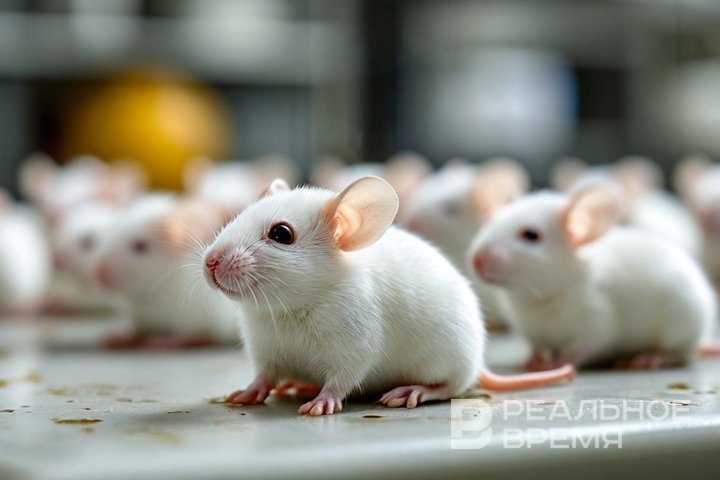
Here's what the subsequent experiment showed. Mice were infected with a lethal concentration of one of the most dangerous antibiotic-resistant bacteria — Acinetobacter baumannii. An hour after that, the isolated antibodies were administered to the rodents in the experimental group. A week later, all these mice were alive. That is, the antibody served as a kind of beacon for immune cells — macrophages, which using this marker quickly tracked down all the bacteria and dealt with them. But in the control group — where the organism was left to cope with the infection on its own — sepsis developed, and within half a day all mice died.
This gives hope: even if antibiotics fail, it's possible to teach the immune system to see the cunning bacterium, rip off its “camouflage," and destroy it.
Innovative CAR-T therapy taught to kill cancer cells without dangerous side effects. true, so far only in mice.
A new generation of genetically modified immune cells destroys cancer cells in mice as effectively as traditional CAR-T cell therapy, but without suppressing the immune system. Such cells can also be used to treat some patients with autoimmune diseases (for example, lupus).
Recall that in CAR-T cell therapy, immune T-cells are modified so that the cells start producing special receptor proteins targeting antigens on tumor cells. But this therapy suppresses the immune system, putting the patient at risk of dying from any infection.
In the new experiment, the therapy was developed so that T-cells would target receptors carrying a gene involved in immune responses. This gene is found in large quantities in cancer cells. The experiment was conducted on genetically modified mice with diffuse large B-cell lymphoma. It turned out that the new therapy acts on cancer cells no less effectively than previous versions, but without affecting healthy cells of the immune system. After all, the specific gene targeted by the modified T-cells is rarely found in them.
Researchers express cautious optimism: the first phase of clinical trials is ahead, but it's already clear that this new type of therapy won't suit every patient. After all, not all cancer cells, even focusing only on lymphoma, carry the gene targeted by the modified T-lymphocytes. Therefore, in the future, this approach will need to be developed to allow choosing which receptors the CAR-T therapy will act on.
Don't blame yourself: the ability to procrastinate may be inherited
The most uplifting news of the week is brought to us by Chinese scientists. They found specific structural features in the brains of adolescents that can be inherited and are directly linked in adulthood to an irresistible passion for procrastination. So, if you constantly beat yourself up for constantly postponing important tasks — perhaps it's not your fault, but the genetic mosaic formed in your DNA.
So, scientists from the Institute of Psychology of the Chinese Academy of Sciences (Beijing) studied MRI data from 71 pairs of adolescent twins. And 8 years later, they surveyed the grown-up participants about their tendency to procrastinate. It turned out that adult procrastinators had impaired dopamine metabolism in the brain's nucleus accumbens (the center of pleasure, motivation, and reward) during adolescence. Their dopamine and serotonin receptors also worked differently.
These features depend on genetics — precisely to understand this, studying twin pairs was necessary. It turned out that the tendency to procrastinate is inherited in about 47% of cases.

So next time you start blaming yourself for working from one deadline to another, remember that this might very well not be up to you.
Ultra-processed foods should be perceived more like cigarettes than food
Ultra-processed foods, like cigarettes, are created to cause addiction and continuous consumption. Therefore, their circulation needs to be regulated no less strictly than tobacco products. Such an unexpected conclusion is contained in a report by researchers from Harvard, the University of Michigan, and Duke University. They draw parallels based on the widespread health harm linking both products.
Ultra-processed foods are industrially produced food using emulsifiers, artificial colors, and flavors. These include soda and snacks like chips and cookies. Researchers note similar efforts by producers of such food and cigarettes to optimize product “doses” and the speed of their impact on the body's reward centers. In their article, they rely on data from the fields of addiction, nutrition, and public health history.
The authors suggested that marketing claims about “low fat” or “no sugar” are medical PR that could slow down the introduction of strict regulation, similar to cigarette filter advertising in the 1950s. These “defensive innovations” in practice did not bring significant benefits. Therefore, ultra-processed foods require regulation commensurate with the significant public health risks they pose.
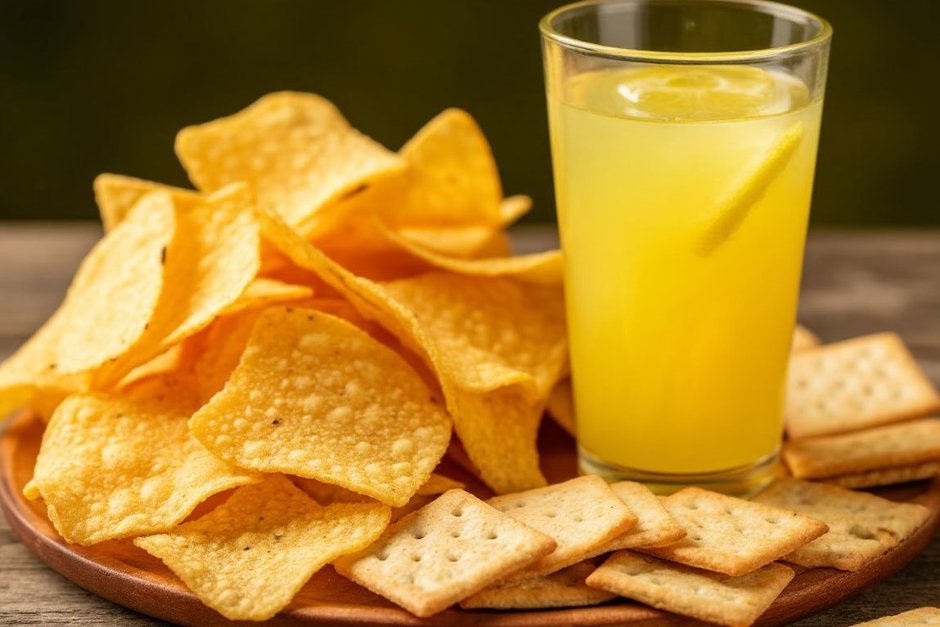
Scientists report that patients compare their addiction to donuts and soda to cigarette addiction. They know it's killing them, want to quit, but can't.
Four out of ten cancer cases could have been prevented
The WHO and doctors from five countries worldwide conducted a global study: they assessed 30 main modifiable cancer risk factors by their impact on actual incidence in 2022.
They concluded: about 40% of the 20 million cancer cases detected worldwide in 2022 were caused by preventable reasons. For example, among them are excessive body weight, physical inactivity, smoking (including smokeless tobacco products), air pollution, ultraviolet radiation, several infections, and 13 occupational carcinogens.
Data from the GLOBOCAN monitoring platform, launched by the WHO's International Agency for Research on Cancer (IARC), were used. According to its data, 9.7 million people died from cancer in 2022, and by 2050, if current trends continue, the growth in cancer incidence will reach 76.6%. 44% of current cancer deaths are due to modifiable risk factors.
For the study, GLOBOCAN data for 2022 from 185 countries and 36 cancer types were examined. It turned out that the main risk factors were smoking (15.1%), infections (10.2%), alcohol (3.2%). The most preventable cancer was lung cancer. For men, the next in the sad ranking were stomach, liver, colon, and rectal cancers. For women — breast, cervical, and stomach cancers.