Olive Schreiner's “The African Farm” — a genuine bestseller of the late Victorian era
In 1883 Olive Schreiner published a bestselling novel under a male pseudonym, which became a manifesto of the “new woman”
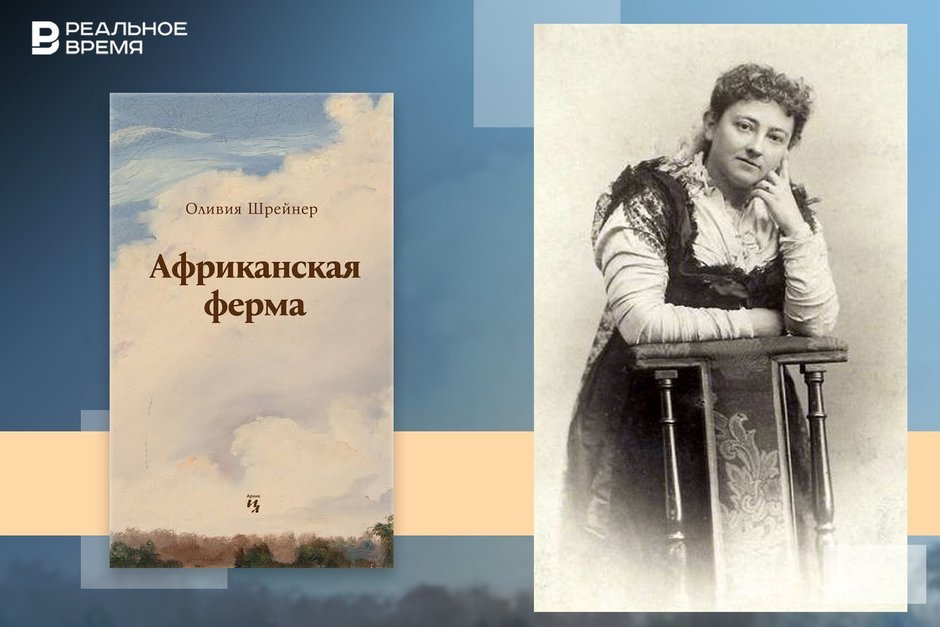
In 1883 the novel “The African Farm” came out in London under the name of Ralph Iron and immediately attracted the attention of readers. The book was translated, reprinted and discussed in Europe and North America. Its author, Olive Schreiner, long remained in the shadow of the male pseudonym. Decades later the book received the reputation of one of the first feminist novels, and Schreiner herself became a notable figure of South African literature and social thought. The literary reviewer of “Real Time” Ekaterina Petrova tells who Schreiner was, how the book was born and what path it went through in Russia.
Who is Olive Schreiner
The future writer was born on March 24, 1855 at the missionary station of Wittebergen in the Cape Colony. Her father Gottlob Schreiner came from Germany and was a Methodist missionary; her mother Rebecca was English. There were twelve children in the family; Olive became the ninth child.
The family lived poorly, so the future writer did not receive a full education. But she read a great deal on her own. From the age of seventeen she began working as a governess in the families of Boer farmers. Over the following seven years Schreiner changed five places of work in the colony. In this same period she began to write her literary works, among which are the novels “Undine” (1928), “The African Farm” (1883), “From Man to Man” (1926).
All this time Schreiner continued to read. She admired the texts of Charles Darwin, Herbert Spencer, John Stuart Mill. Later, already in London, she entered the circle of radical intellectuals and became acquainted with Havelock Ellis, Eleanor Marx and other participants of social and political discussions. In 1884 Ellis read “The African Farm” and expressed admiration for the novel.
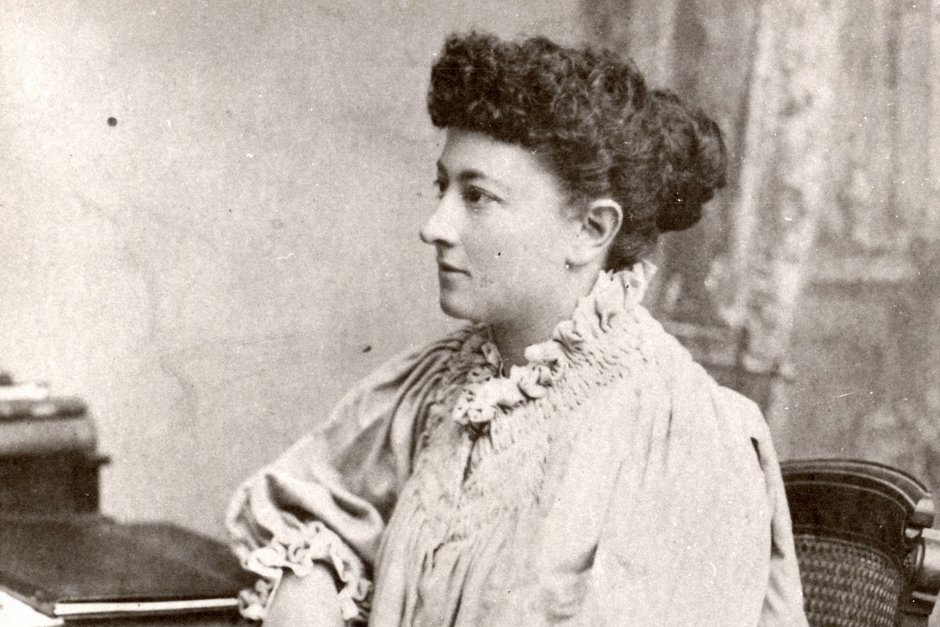
Besides literature, Schreiner was engaged in activism. She spoke out for the equality of women, participated in the suffragette movement, wrote about the position of women and criticized British colonial policy in South Africa. In 1897 the writer published “Trooper Peter Halket of Mashonaland” — an artistic criticism of the policy of Cecil Rhodes. During the Anglo-Boer War Schreiner spoke out against British policy. Later she was increasingly occupied with the position of the African population. In 1910 Olive left the Cape Town Women's Civil Rights League after the organization refused to accept representatives of the non-white race into its ranks.
Olive Schreiner's social views found continuation in her publicistic writing. In 1911 the book “Woman and Labour” came out, where the writer defended the equality of men and women. And in 1908, reflecting on the future of South Africa, she wrote:
— I am convinced that the attempt to build the life of our country on differences of race or skin color as such will prove fatal for us.
How “The African Farm” was created
The history of the novel began on those very farms where Schreiner worked as a governess. By 1879 an early version of “The African Farm” was already completed. At first Schreiner called the novel “Thorn-Kloof," then — “Lyndall.” The final title — “The African Farm” (in the original The Story of an African Farm is translated as “The Story of an African Farm”) — appeared later. In 1880 Olive sent the manuscript to her friends Mary and John Brown in England with a request to find a publisher.
The novel was not published on the first attempt. The Edinburgh publisher David Douglas proposed that Schreiner substantially rework the text. She made changes and sent the manuscript to other publishers, but they also refused to print it. In 1881 the writer came to England with three manuscripts. She counted on finding a publisher and at the same time obtaining a medical education. She had to stop her studies at the Edinburgh Royal Infirmary after a few days because of health problems. Then she concentrated on finding a publisher for the novel.
The decisive step was made by the writer George Meredith. He worked as a reader of manuscripts at the London publishing house Chapman & Hall and recommended the novel for publication. In January 1883 the publishing house released “The African Farm” in two volumes. Soon a second edition came out, and during Schreiner's lifetime the novel went through 15 reprints.
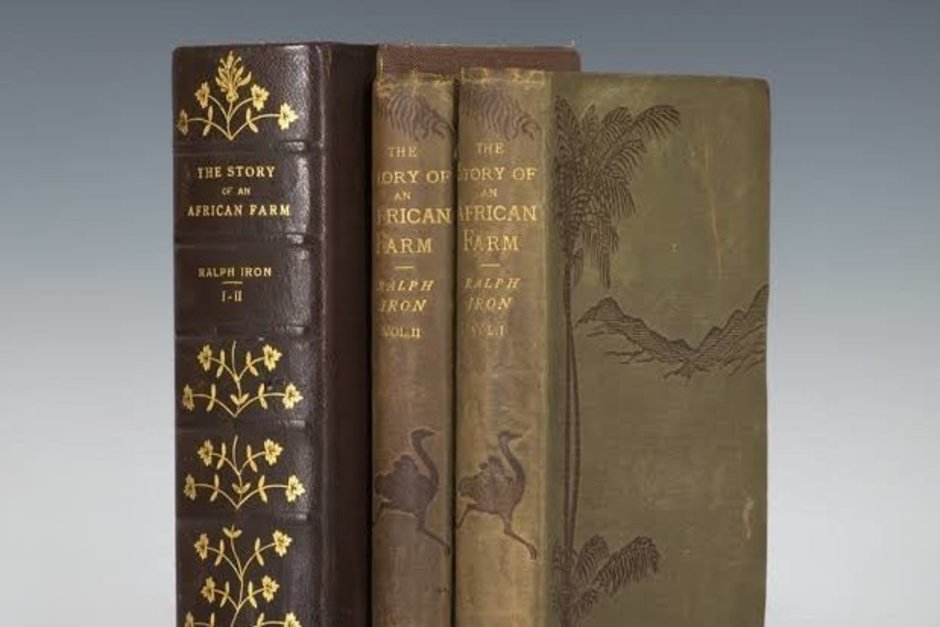
On the title page the publishing house indicated the name of Ralph Iron. The male pseudonym helped Olive bypass the prejudice against women writers widespread among publishers of that time. When readers learned that the author of the novel was a woman, the book became the subject of new disputes. Critics discussed her views on marriage, religion and the position of women. By the way, Schreiner's real name appeared on the cover of the second edition, which came out in 1891. The novel was also translated into other languages: a Dutch edition appeared in 1892, a French one in 1901, a Czech one in 1903, and an Esperanto translation in 1934.
Freedom, faith and rebellion: what “The African Farm” is about
“The African Farm” begins as a farm story against the background of the South African Karoo. But Schreiner does not build a traditional linear plot. She connects separate episodes, philosophical reflections, allegories and dialogues. At the center are three heroes — Em, Lyndall and Waldo. At first they grow up on the farm, then leave it and try to determine their lives independently. The writer turns the farm novel into a coming-of-age story and a novel of ideas, where the fates of the children show different attitudes to sex, freedom and spiritual life.
The three heroes offer three different models of human fate. Em accepts the traditional role of woman. She links family happiness with marriage and motherhood. Lyndall, on the contrary, strives to obtain an education, to dispose of her life independently and to renounce dependence on a man. The researcher Elaine Showalter calls her “the first fully feminist heroine” of English literature. Waldo goes through another path. In childhood he deeply believes in God, but gradually encounters religious doubts. In the end he renounces his former faith and seeks answers in philosophy and science. His spiritual crisis is the second important line of the novel.
Through Lyndall Schreiner examines the position of woman in Victorian society. The heroine speaks out against marriage if it requires a woman to renounce her independence. She compares marriage without love to trade and says that a woman must have the possibility to become a doctor, a lawyer or a legislator, and not be content with the role of a poorly paid worker. In another remark Lyndall draws a parallel between the upbringing of girls and the Chinese tradition of foot binding: society forms a woman in advance for a certain role and gradually limits her possibilities.
Lyndall refuses to marry the father of her child, because she does not want to lose her independence. At the same time Schreiner does not depict motherhood unambiguously. Lyndall speaks of it as the greatest and noblest human labor, but at the same time as something terrifying. The novel does not give a simple resolution of the conflict between a woman's striving for freedom and social norms.
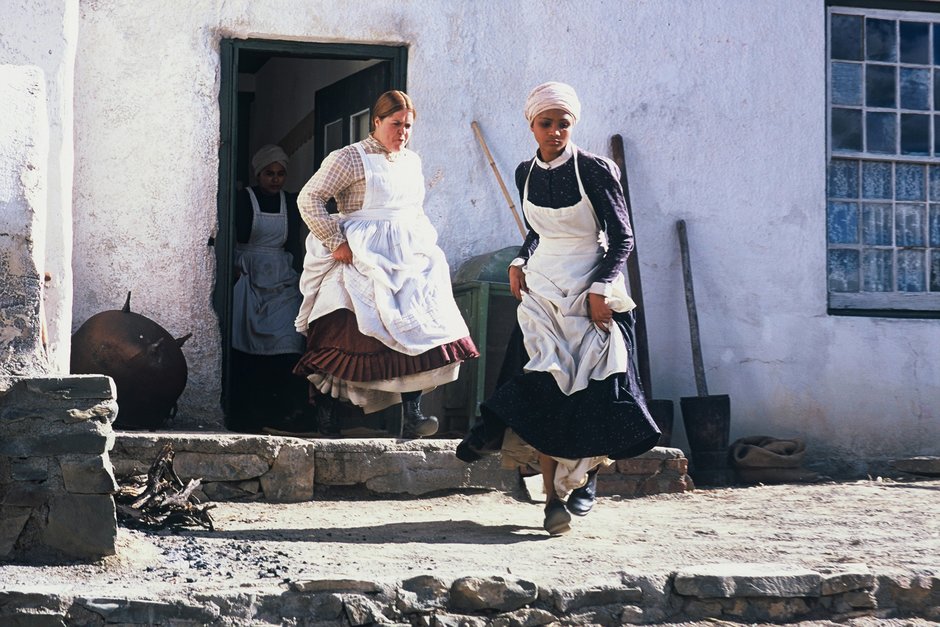
At this time Waldo goes through a path from strict faith to doubt, and then to atheism and an interest in nature. In one of the episodes he says that he loves Christ, but hates God. Schreiner connects realistic narration with mystical allegories, sermons, dreams and philosophical reflections.
Such a form makes the novel unusual for Victorian literature. Schreiner violates chronological sequence, changes narrative voices and directly addresses philosophical and social questions. The book anticipates those formal freedoms that later would become characteristic of modernist prose.
At the same time the modern reader will pay attention not only to its feminist problematic. In the novel the depictions of racial relations are clearly limited. Black characters occupy a peripheral position, receive almost no lines, and some descriptions use the racially disparaging lexicon of their time. At the same time Lyndall's ideas are broader than the South African context and speak of the possibility of their transnational and transracial reading.
The Russian history of the South African novel
In 1893 the St. Petersburg “Herald of Foreign Literature” printed a full translation of the novel under the title “The Story of an African Farm.” The text came out in four issues, from September to December. The translation was done by Elizaveta Beketova — one of the notable Russian translators of her time. She had a free command of European languages and translated George Eliot, Charles Dickens, Walter Scott, Victor Hugo and other authors. By the way, she was the maternal grandmother of Alexander Blok. In his “Autobiography” the poet recalled that she was “very well read and had a command of several languages," and her translations were distinguished by incredible precision.
The appearance of the novel was preceded by a small publication by Schreiner in the same journal. It became the writer's first “calling card” for the Russian reader. The translation itself was accompanied by a note about the author. In it the editors explained why Schreiner refused to present the “exotic” Africa customary for European literature. The writer said that “such books are best written in London," whereas an author depicting the reality familiar to him encounters the fact that “facts are stronger than he is.”

Her stories and other works were printed by “Niva," “Russkaya Mysl," “Journal for All," “Literary Evenings," “Mir Bozhy," “Russkoye Bogatstvo," “Northern Lights," “Picturesque Review” and other publications. Schreiner's books came out both for “intelligent readers” and in the mass series “Book after Book.” In 1899 Maxim Gorky published the South African writer's allegorical stories in the “Nizhegorodsky Listok” and highly appreciated them, noting their “large ideological content” and “deep faith in the power of the human spirit.”
In the 1920s Schreiner's works continued to be published. But then came a long break. The next major Russian edition of “The African Farm” appeared only in 1974. The Moscow publishing house “Khudozhestvennaya Literatura” released a collection of selected works of the South African writer. It included the novel in A. Klyshko's translation. More than 50 years later the journal “Inostrannaya Literatura” announced the preparation of “The African Farm” for print in Elizaveta Beketova's translation.
Publisher: “Inostrannaya Literatura”
Translation from English: Elizaveta Beketova
Number of pages: 384
Year: 2026
Age restriction: 16+
Ekaterina Petrova — literary reviewer of the online newspaper “Real Time," host of the Telegram channel «Булочки с маком».