The Invisible Man in reverse: how Herbert Wells wrote a novel about personal branding in 1937
For the 160th anniversary of the writer's birth, a late and forgotten (perhaps deservedly so) novel “Brynhild, or the Image Without Embellishment” is being published in Russian for the first time

Today, September 21, marks 160 years since the birth of Herbert Wells. For this date, his late novel (1937) “Brynhild, or the Image Without Embellishment” is being published in Russian for the first time in the “Yandex Books Translations” series, a joint project of the “Yandex Books” service and the “Podpisnye Izdaniya” publishing house. The novel has neither Martians nor a time machine. The writer Rowland Dvorkitz suffers because of unsuccessful newspaper photographs and hires a PR agent to create a “correct” public image for himself. The literary reviewer of “Real Time” Ekaterina Petrova tells how Wells described black PR and personal branding and why it is precisely this book that no one remembers.
The other Herbert Wells
By 1937, Herbert Wells had managed to write more than forty books, release the world bestseller “The Outline of History” (1920) and “An Experiment in Autobiography” (1934), meet Lenin and Stalin and appear on the cover of Time magazine. For readers he remained first of all the author of “The War of the Worlds” (1898) and “The Invisible Man” (1897). However, later the writer went beyond science fiction.
In the 1930s Wells turned to politics, social conflicts and everyday life. From under his pen came “The Autocracy of Mr. Parham” (1930), “The Bulpington of Blup” (1932), “The Shape of Things to Come” (1933), “The Croquet Player” (1936), “Star Begotten” (1937), “Brynhild” (1937) and “Meanwhile, about Dolores” (1938). The researcher Yuli Kagarlitsky noted that the writer never limited himself to science fiction: he wrote about the “little man," explored social strata and gradually turned artistic works into “novels-treatises.”
The early Wells invented the future, the late one diagnosed the present, and the public did not sign up for this. In 1937 the writer released three books at once: “Star Begotten," “Brynhild” and “The Camford Visitation.” “Brynhild” found itself between works about fantastic and social anxieties, but itself took up a much more down-to-earth subject — how a writer sells his own reputation.
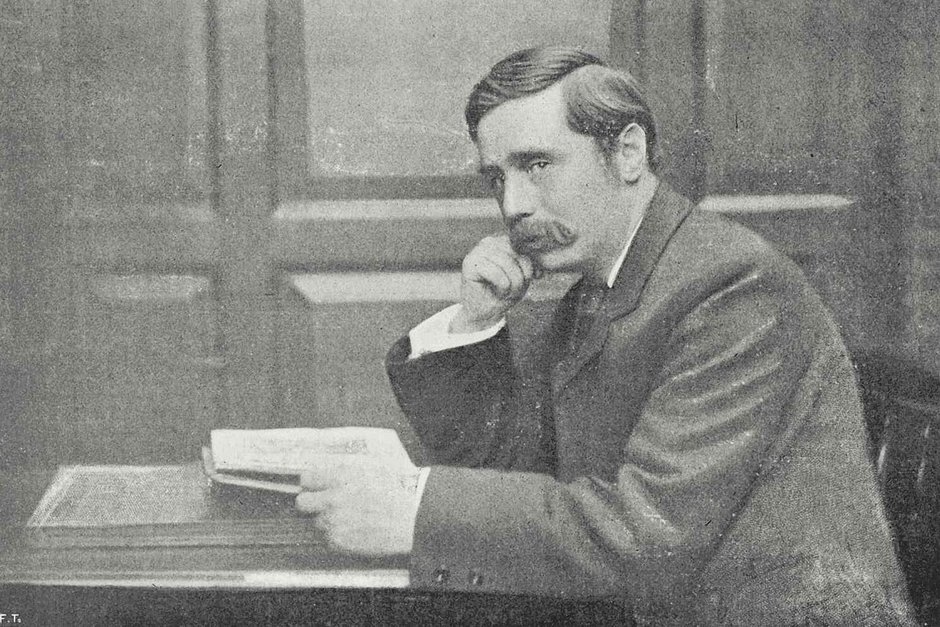
To understand this novel, one needs to turn to the literary process of that time. Books in 1930s Britain were already being sold not only by authors and publishers. In 1929 The Book Society appeared — the country's first monthly book club, which sent a new book to subscribers by mail. The organizers were guided by the American Book-of-the-Month Club, founded by advertising agent Harry Sherman in 1926. The British club gathered a committee of writers and critics headed by Hugh Walpole. It included J. B. Priestley, Sylvia Lynd, Clemence Dane and the Oxford professor George Stuart Gordon. Their names were supposed to convince readers that the club was offering worthy literature, and not random goods.
The club quickly became a noticeable participant in the book market. By the early 1930s it had gathered more than 10 thousand subscribers. By 1939 its books were received by readers in Britain and abroad, with 30 to 40% of participants living outside the country. The club's choice brought the publisher a guaranteed additional order. According to archives, in the first years a nomination could add 7 thousand copies to the print run. For comparison, bookstores and libraries then ordered approximately 3—5 thousand copies.
The book club became an instrument that shaped literary taste. The choice of books was discussed in the press, libraries, salons and stores. Even those who were not members of the club listened to the recommendation and ordered books. And the Boots Book-Lovers library after World War II even called the club's choice “a landmark in literary advice recognized throughout the country.”
But far from everyone was pleased with such a state of affairs. The researcher Q. D. Leavis in the book “Fiction and the Reading Public” (1932) put forward a number of accusations against the Book Society. She believed that the book community “gives authority to second-rate” works and forms a “scale of values for the intellectual mainstream.” The disputes flared up ever more strongly. Writers and critics discussed the role of book clubs: do they expand access to literature or turn reading into a managed consumer choice.
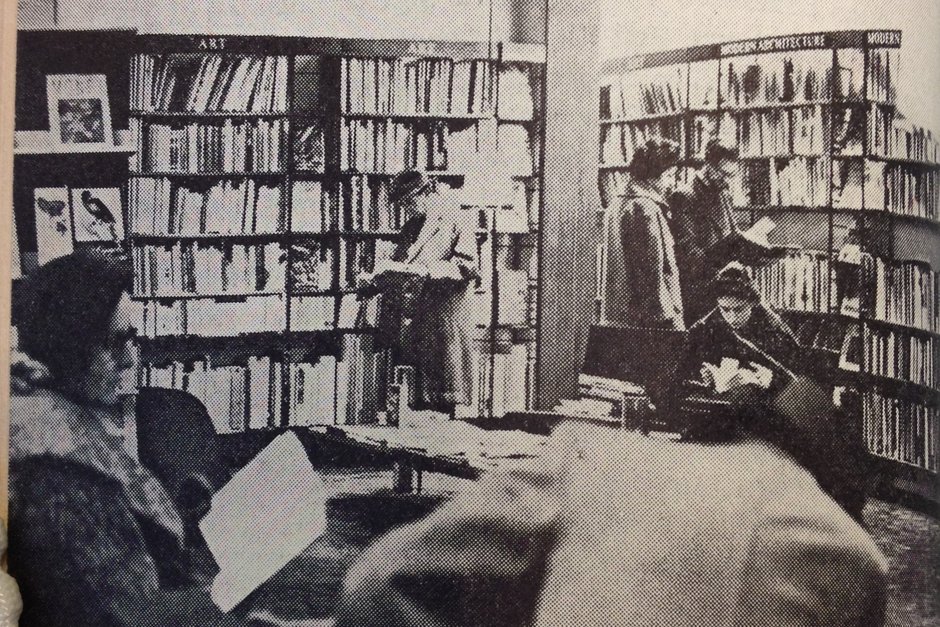
In 1936 the publicist Victor Gollancz launched a left-wing book club. He proposed choosing cheap editions and compiled a selection of books about politics, fascism, socialism and social phenomena. In 1937 another community appeared — Readers Union. The book market began to make more active use of subscriptions, recommendations, author appearances and public images of writers. In parallel the culture of literary celebrities developed. Radio and the press savored the personal lives and public appearances of authors, which gradually became part of literary reputation. It was precisely in this space that Wells released “Brynhild.”
The facade man: how Wells dissected the public image
One cannot say that Wells fell out of love with science fiction or exhausted it. Rather he returned to what he always considered the main subject of the novel: human actions and social roles. In “An Experiment in Autobiography” he called the novel an “ethical investigation” and contrasted this view with the position of Henry James. The latter saw in the novel first of all a form of high art. For Wells, however, the novel is a “market or boulevard.” The reader walks along it for various reasons, lingers, returns and moves on.
This dispute trailed after Wells for decades. In 1911 he gave a lecture “The Contemporary Novel," and then continued the polemic with James. The literary scholar J. R. Hammond called the dispute between Wells and James one of the most famous literary conflicts of the 20th century and noted that it seriously damaged Wells's reputation. James is usually considered the winner in this dispute, and Wells himself — a writer whom the dispute forced to defend his own artistic program too sharply. Two decades later “Brynhild” returned Wells to the same zone of conflict. He wrote about literary people and literary reputation precisely as he had once defended the right to write a novel: freely, conversationally, with digressions, ideas and satire.
Moreover, for Wells this is familiar territory. By 1937 he himself had long existed inside literary publicity, where the writer's name became a separate social object. Therefore he is interested in a quite practical question: what happens to a person when he sees his own unsuccessful image in a newspaper and decides to urgently correct not himself, but the impression of himself. “Brynhild” turns this episode into the mechanism of a whole novel.
The story of Rowland Dvorkitz began precisely with a photograph. A respectable literary man puts on a bard's costume at Lady Cytheria's party, receives an artificial laurel wreath and a cardboard lyre, and the newspaper shots show him as not at all the great author he is used to considering himself. Dvorkitz decides: the problem is not in him, but in his image. That means a specialist must deal with the image. Secretly from his wife he hires Immanuel Klat — a man with commercial grip and a rich imagination. Klat promises to make Dvorkitz's name “in America a byword for literary perfection” and to place him next to the Bible and Shakespeare.

While Dvorkitz builds a career from the outside, his wife Brynhild sorts out her own life from the inside. She is twelve years younger than her husband. Wells describes her as a tall, slender, fair-haired woman “with a broad serene face and kind brown eyes habitually radiating bewilderment.” Brynhild grows close to the young writer Alfred Pestrix. She reads his work and finds the text “uneven”: the heroes rush about, dreams press from above, passions — from below.
— Some parts of the text were swallowed with a “hurrah," like meat lumps in a lean soup, some evoked a response in the soul; from some one could even feel sleepy, but others made the heart beat faster.
Then Pestrix reveals to her his real secret. He is not Pestrix at all, but David Lewis, a pharmaceutical chemist from Birmingham. The real Pestrix died, and Lewis appropriated his name in order to begin another life. He understands the weakness of his books: “he strives to penetrate into the essence of things — and beneath it," but does not achieve the desired result. He writes books while evading the past and preserving his incognito. Klat exposes him, at the same time removing Dvorkitz's literary competitor. Thus two plots converge at one point. Dvorkitz creates a new image on top of the old one. Brynhild tries to get to her own life under the habitual role of wife. Lewis altogether replaces one personality with another. Here the main concept of the novel also appears — the facade man. Dvorkitz calls it the BUF.
— The BUF is the Big Simplified Facade. It must present a clear, simple version of oneself. His appearance, the anecdotes published about him, his reputation, his prestige — everything must coincide with his creativity.
A public person turns into a construction that can be presented to the public. Dvorkitz gradually brings this thought to a general rule: every person on the public stage becomes a “stuffed dummy, a facade, a deliberate lie," and life itself turns into an “arena for pretenders, a universal bluff.” Brynhild answers him briefly:
— The whole world is a masquerade.
The subtitle of the novel — “The Image Without Embellishment” — expands this game with the facade. Wells connects Dvorkitz's discovery of his own “image” with the philosophical concept of representation in Schopenhauer. In “The World as Will and Representation” (1818) representation designates that world which a person receives as a phenomenon for consciousness. In the novel Wells transfers this problem into the everyday and literary sphere: Dvorkitz discovers for himself the “image” and begins to build a public personality around it. It is precisely this discovery that separates the spouses in different directions: he strengthens the facade, and she tries to understand what is behind it.
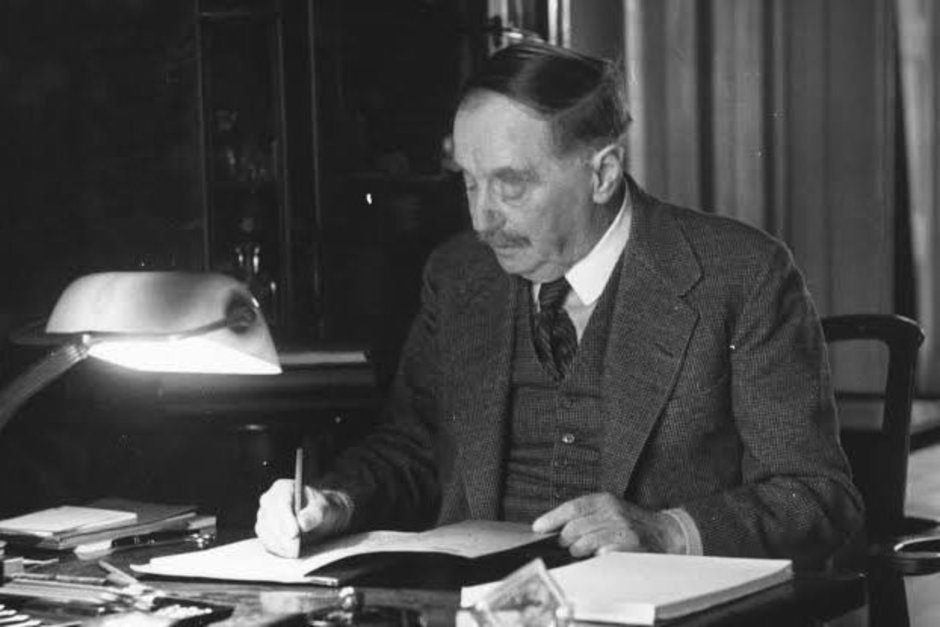
A modern analogy here arises almost by itself. The “facade man” resembles today's positioning and personal branding. Klat works with competitors as a specialist in black PR. Dvorkitz's tour resembles today's warm-ups and tours around festivals with presentations. But Wells does not predict a specific technology. He records the psychological situation of publicity: a person sees his unsuccessful image and begins to correct the picture, although it would be more logical to correct behavioral patterns.
The forgotten Wells: how “Brynhild” lost
“Brynhild” has a problem that is hard to solve even with all the entertaining quality of its idea: the novel begins to fall apart where it should be gaining momentum. The first part rests on the story of Rowland Dvorkitz, his publishing ambitions and public image. The second sharply switches to Alfred Pestrix and his real name — David Lewis. Along with the plot the tone also changes: the story about literary PR turns into a melodrama with bigamy, blackmail, an illegitimate child and the death of a relative.
Rowland also does not help the plot: he is rather an object of others' actions than a hero who himself moves the story. The PR man Immanuel Klat invents a new image for him, sends him into public life and deals with competitors, and Rowland follows this scheme. In the novel Klat says that a writer must not get stuck on one characteristic, otherwise the public will turn it into a label. He cites Gissing, Chesterton and Wells himself as examples of writers whom the public reduced to one trait: Gissing — to irony, Chesterton — to paradox, Wells — to “some kind of Future.”
With Brynhild another difficulty arises. In the finale she returns to her husband pregnant after an affair with Pestrix and says that she wants to find “her own role.”
— She found her essence. Her ostentatious virtue was thrown off. Now she is the same deceiver as everyone else. Now she is a hypocrite, like everyone else. She is a mystery behind the facade. And a completely ordinary person. She has finally grown up…
At the same time the plot connects this change with a love affair and future motherhood. The novel offers no other variants of liberation.
Besides this, the satirical “Brynhild” did not fit into the temporal space. It came out in 1937, but in no way reflected the political reality of the decade. Although a year earlier “The Croquet Player” had come out. There Wells told a story about ancient evil that returned to modernity. And one of the heroes, Dr. Norbert, spoke about a world that was losing its former frames. Then contemporaries read this novella as a reference to the Spanish Civil War. In “Brynhild” there is no such scale: its conflict remained inside a rather narrow literary environment.
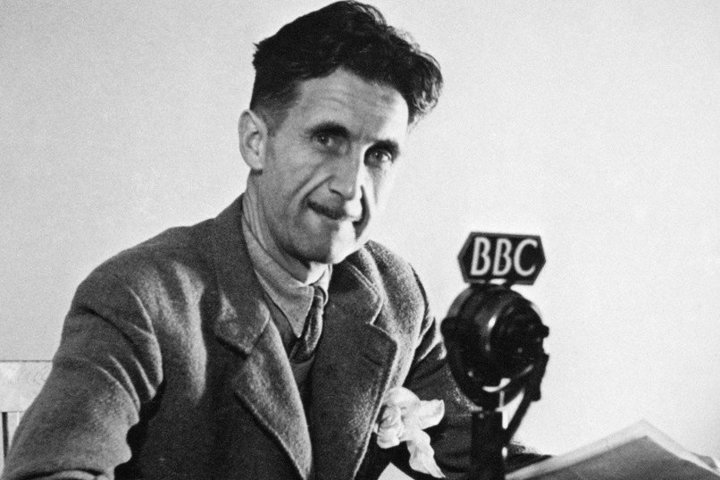
And moreover, the novel about the public image became a hostage of its author's image. Wells received the reputation of a science fiction writer and prophet of the future, and the late realistic and comic novels fit much worse into his portrait. Besides, in 1941 George Orwell added a big fly in the ointment to Wells's literary reputation. In the essay “Wells, Hitler and the World State” he delivered one of the harshest verdicts on the writer. Orwell said that the series of novels about the lower layer of the middle class, which he considered Wells's main achievement, ended with World War I. And then he added that since 1920 Wells “strikes down paper dragons.” Orwell believed that the science fiction writer continued to think through the old antithesis of science and reaction and could not explain the political force of “nationalism, religious frenzy and feudal loyalty to the banner.”
Ekaterina Petrova — literary reviewer of the online newspaper “Real Time," host of the Telegram channel «Булочки с маком».