A knife defeated by love: how the attempt on Salman Rushdie's life became a book and a film
Book of the week — Salman Rushdie's reflections “Knife” about the attempt on his life
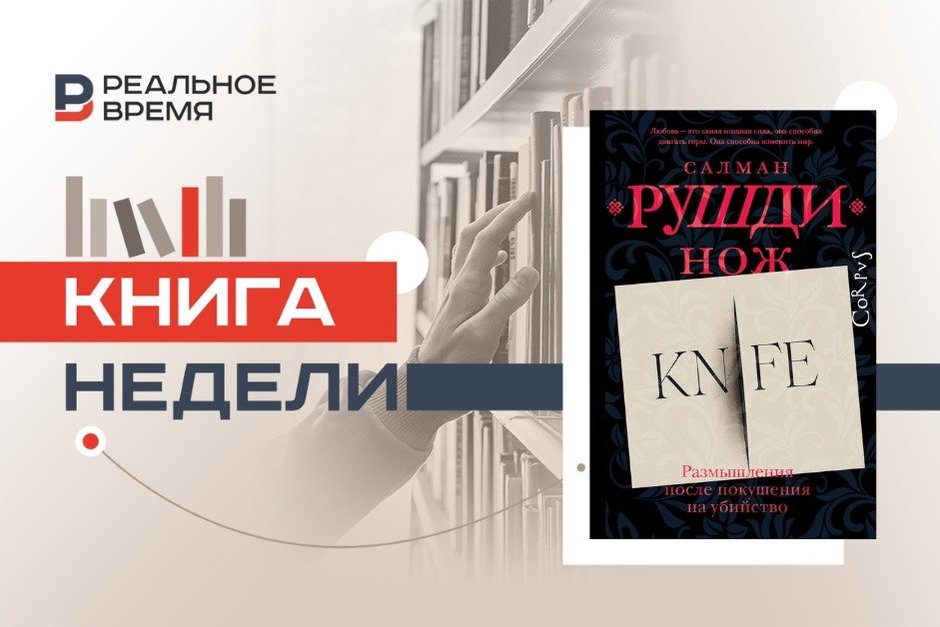
This week, on September 17, the screening of Alex Gibney's documentary film “Knife: The Attempted Murder of Salman Rushdie” began at the IFC Center in New York. The picture is based on the writer's memoirs “Knife” and is dedicated to the attack that nearly cost him his life. The film was first shown at the Sundance festival in January 2026. Gibney builds the narrative around the attempt itself, Rushdie's life before it and the history of the fatwa. The literary reviewer of “Real Time” Ekaterina Petrova tells what happened to the writer on August 12, 2022 and why decades later the threat from the past again became reality.
“Well, here you are. You've come”: how the attack happened
On August 12, 2022, Salman Rushdie came out onto the stage of the Chautauqua Institution in New York State. There Rushdie was supposed to speak about a program that provides writers with refuge from persecution. The event was timed to the 20th anniversary of this program. Rushdie was sitting on the stage when he saw a man in black. The attacker was moving toward him from the side of the auditorium. The writer immediately recognized in him that very murderer whom he had pictured in his thoughts for decades: “Well, here you are. You've come.” Other questions followed:
— Why now? Is this really true? So much time has passed. Why now, after so many years?
The attack on the writer lasted 27 seconds. According to Rushdie, at first he did not even see the knife and decided that the attacker had hit him with his fist. The weapon became obvious when the writer saw blood. The police identified the attacker as 24-year-old Hadi Matar from New Jersey. The writer received 15 knife wounds to the neck, abdomen, chest, thigh, eye and left hand. The video of the attack, shown later at trial, recorded how Matar ran up to the seated Rushdie and continued to strike until spectators intervened.
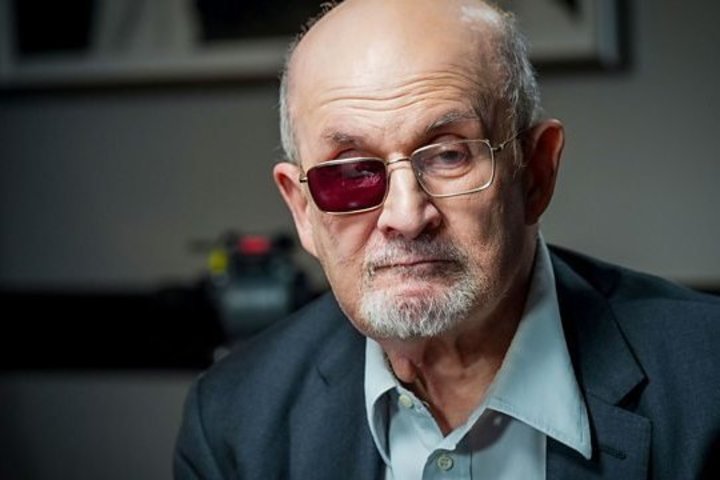
The attack occurred more than three decades after the publication of “The Satanic Verses.” In 1988 the novel caused protests in a number of countries, and on February 14, 1989, Ayatollah Ruhollah Khomeini declared a fatwa, calling for the killing of Rushdie and the people connected with the publication of the book. In 1991 the Japanese translator of “The Satanic Verses” was killed; the Italian translator survived an attack. In 1993 unknown persons attacked the Norwegian publisher of the novel. After this the writer lived in Great Britain under guard for almost ten years and hid from the public.
By the time of the attempt Rushdie had already lived in New York for about 24 years and regularly appeared at literary events. He said that he had gradually decided: the time of threats had passed.
— It was as if I told myself that that time was over, but unfortunately I was mistaken, the writer recalled in an interview with NPR.
After the attack Rushdie lost the sight of his right eye. His left hand received serious damage: doctors recorded damage to nerves and tendons. The writer spent 17 days in a Pennsylvania hospital, then more than three weeks in a rehabilitation center in New York. Later he described the recovery in the book “Knife.”
At the same time Matar was born already after the publication of “The Satanic Verses” and years after the fatwa. At trial he said that he had read only a few pages of the novel and did not like Rushdie for supposedly “attacking Islam.” The writer in “Knife” formulated the main contradiction: the attacker, in his words, had never read anything written by Rushdie, but was nevertheless ready to commit murder.
In February 2025, during the first trial, the jury of Chautauqua County in less than two hours found Hadi Matar guilty of attempted murder in the second degree and of attacking moderator Henry Reese. On May 16 the court assigned him the maximum punishment — 25 years for the attempt on Rushdie's life and another seven years for wounding Reese. The terms are to run concurrently. The writer himself did not come to the pronouncement of the sentence, but submitted a victim statement. At the trial he acted as the main witness and told how during the attack he thought he was dying. Before the pronouncement of the sentence Matar made a statement about freedom of speech and called Rushdie a hypocrite and a bully.
— He wants to not respect other people. He wants to be a bully, he wants to bully others, Matar said.
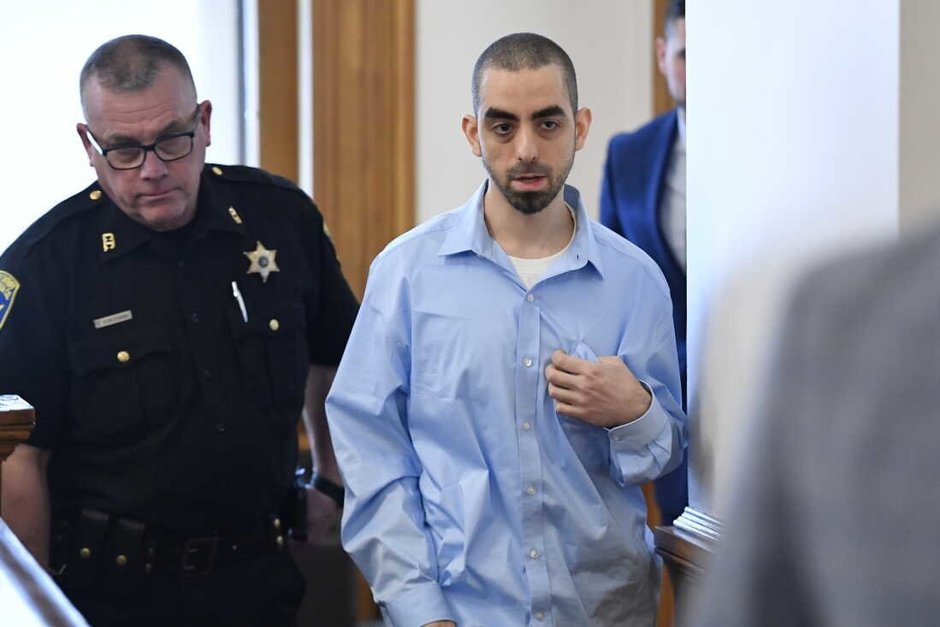
The second trial shifted the question from the knife strike itself to the alleged motive. In July 2026 federal jurors in Buffalo found Matar guilty on all three counts of the accusation: of attempting to provide material support to Hezbollah, of providing material support to terrorists and of terrorism transcending national borders. Rushdie again gave testimony. The federal court must pronounce the sentence on November 3, 2026. Matar faces life imprisonment.
“Angel of Death” and “Angel of Life”: the knife, love and the right to speak
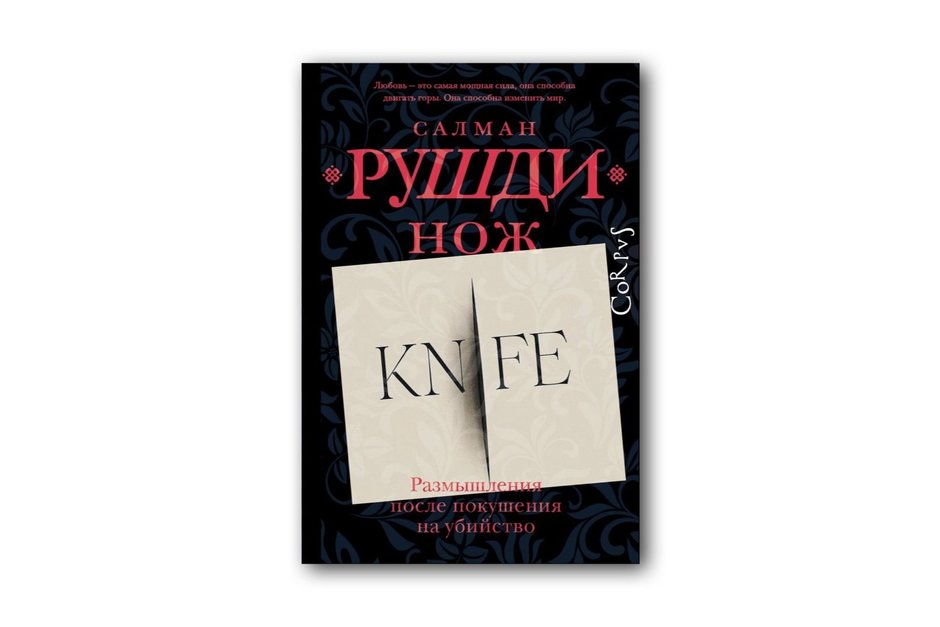
On April 16, 2024, Salman Rushdie released the book “Knife: Meditations After an Attempted Murder.” This is his 22nd book. In Russia it was published by the Corpus publishing house in Anna Chelnokova's translation in 2025. The book became a finalist for the National Book Award, topped the bestseller list and entered 13 final lists of the best books of 2024 according to Literary Hub. Rushdie did not want to write about the attack right away. But he quickly understood that he must first tell precisely this story.
— It became clear that I could not write anything else, I had to write this first, he said in an interview with Euronews.
Salman Rushdie wanted to change his own role in this story, to become “the man who wrote a book about how he was stabbed with a knife.” According to Rushdie, this returned what he had lived through into his authorial space and gave him a feeling of control over his own story.
“Knife” does not fit into the usual genre of memoirs. The writer builds the book around two parts — the “Angel of Death” and the “Angel of Life.” The first returns the reader to the attack and the hospital. The second tells about rehabilitation, returning home, loved ones and a new life. The author describes his own body in detail: wounds, operations, the loss of sight in the right eye, the damage to the left hand. At the same time he preserves a dry tone and adds black humor. “Knife” simultaneously tells about physical recovery and returns Rushdie to questions of freedom of speech, art and self-identity.
There is also a detail in the book that the author does not try to turn into a ready-made explanation. Two nights before the attack he dreamed that he was publicly stabbed by a man with a spear. The dream turned out to be so realistic that Rushdie almost cancelled the appearance.
— I felt that it was a bad omen (despite the fact that bad omens are something I do not believe in).
But the most unusual move Rushdie makes is when he addresses his attacker. The author does not name him. Instead he uses the letter “A.” and devotes to him about 30 pages of an invented conversation. In reality the writer wanted to meet with the attacker, but his family talked him out of it. Then he invented such a meeting on paper. In the dialogue A. says that he almost did not read “The Satanic Verses”: he is familiar with only two pages. He first heard about God from “Imam YouTube.”
“Knife” also has another story — about marriage. Rushdie writes about the novelist, poet and photographer Rachel Eliza Griffiths, whom he met in 2017. In 2021 they married. After the attack she helped him undergo treatment, rehabilitation and return to ordinary life. The writer explained the idea of the book through two forces: violence and hatred on one side, love and healing — on the other. “The second force was embodied in my wife," he said.
“This is a love story”: Alex Gibney's film about Salman Rushdie
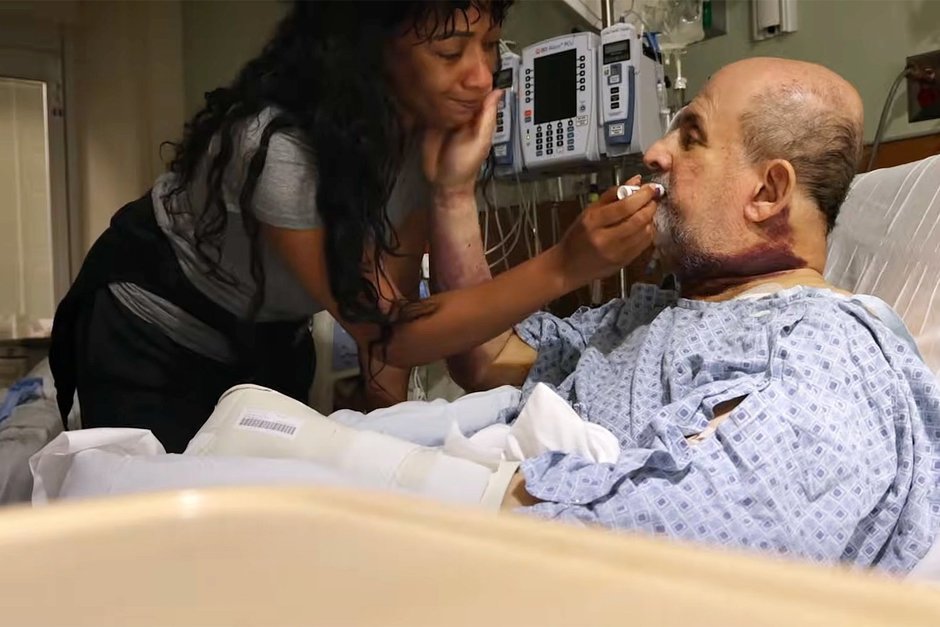
“We agreed that we would make a documentary film," Salman Rushdie expressed this thought soon after the attack. Rachel Eliza Griffiths took the camera and began filming her husband in the hospital. At first the spouses did this only for themselves. Griffiths did not show the filmed material to her husband for several weeks. She feared that he would not withstand watching it. Later Rushdie wrote “Knife," and then the spouses handed the recordings to the director Alex Gibney. They needed the view of an outside person. Gibney decided not to limit himself to the chronicle of the attempt. He proposed telling also about the relationship of the writer and Griffiths.
— It was Alex's idea: it was necessary to expand the story and not limit it to a story about a crime, but also make it a human story about a relationship, Rushdie told Variety.
Gibney did not show the attack right away. The film begins with its reconstruction through the eyes of the writer. The light of the footlights turns the attacker into a dark figure, and the knife strikes sound like muffled blows. The director left the actual recording of the attack almost to the finale. He explained this by saying that the film tells first of all about recovery. Memory after trauma, in his words, works in a complex way, therefore at first the viewer sees not a documentary recording, but Rushdie's own impression of what happened.
Then the film moves along several lines at once. The hospital and the writer's recovery intertwine with Griffiths's recordings, archival materials about his childhood and literary career, the history of “The Satanic Verses” and the writer's return to work. In the picture fragments of his books sound, animation and film footage appear. Rushdie himself constantly tells the story in his own voice. The film almost does not bring the name of Hadi Matar to the foreground; he does not appear in the picture. Gibney tried to talk with him, but he refused an interview.
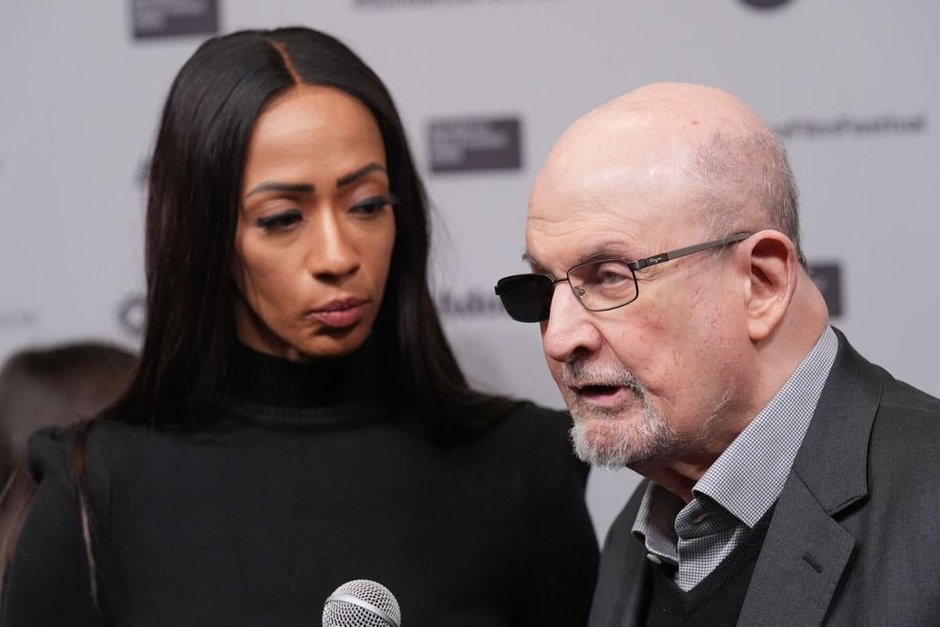
The climax comes after the writer's return to Chautauqua. More than a year after the attack he again comes out onto that same stage and shows Griffiths what exactly was happening before, during and immediately after the attack.
— I stood exactly in that place — there, where, as I told myself, was that very spot — where I had fallen before.
Only after this does the film show the real recording of the attack. “People must see what terrorism looks like," Rushdie explained the appearance of the documentary recording. Gibney obtained it later, within the framework of the court process. He slowed down individual fragments and returned the viewer to the scene that the writer had previously reconstructed from memory.
The film also has another important material — Griffiths's hospital camera. She does not turn the lens away from the wounds, operations and consequences of the trauma. In the frame remain the damaged hand, the stitches, the right eye that Rushdie lost. At the same time the camera records their conversations, fear, everyday moments and the restoration of the relationship after what they had lived through.
The picture received high ratings from aggregators: on Rotten Tomatoes 95% of 22 reviews are considered positive; on Metacritic the film received 81 points out of 100 based on 12 reviews. Critics draw attention to the different weight of the film's components. Variety writes that the strength of the picture is especially noticeable in the footage that Griffiths shot, and calls Gibney's work otherwise a “solid, though standard” portrait of the writer.
Rushdie's imaginary conversation with the attacker is transferred from the book to the film. Gibney uses it to investigate the question of the causes of the attack. At the same time the critic of The Hollywood Reporter notes that such a construction pushes the attacker himself into the background and does not allow him to take a central place in the narrative.
The premiere of the film took place at Sundance in January 2026. There Gibney asked the audience not to leave until the end of the credits. At the finale a recording awaited them that sharply changed the tone of the film: Rushdie was blowing out candles on a celebratory cake. That is how the documentary story of “Knife” ends. But the film leaves the same question that the writer asks in the book: what happens to a person after the violence has already happened. In his case the answer turns out to be connected with a return to writing and relationships. “When I first began to think about the film, I considered that it was a story of a crime. But in fact it is a love story," Rushdie said in an interview with The Hollywood Reporter.
Publisher: Corpus
Translation from English: Anna Chelnokova
Number of pages: 272
Year: 2025
Age restriction: 16+
Ekaterina Petrova — literary reviewer of the online newspaper “Real Time," host of the Telegram channel «Булочки с маком».