Alexey Fedorchenko: “When I watch a film, the presence of the camera always irritates me”
The Yekaterinburg author of unusual cinema became a guest of “Aksenov-fest”
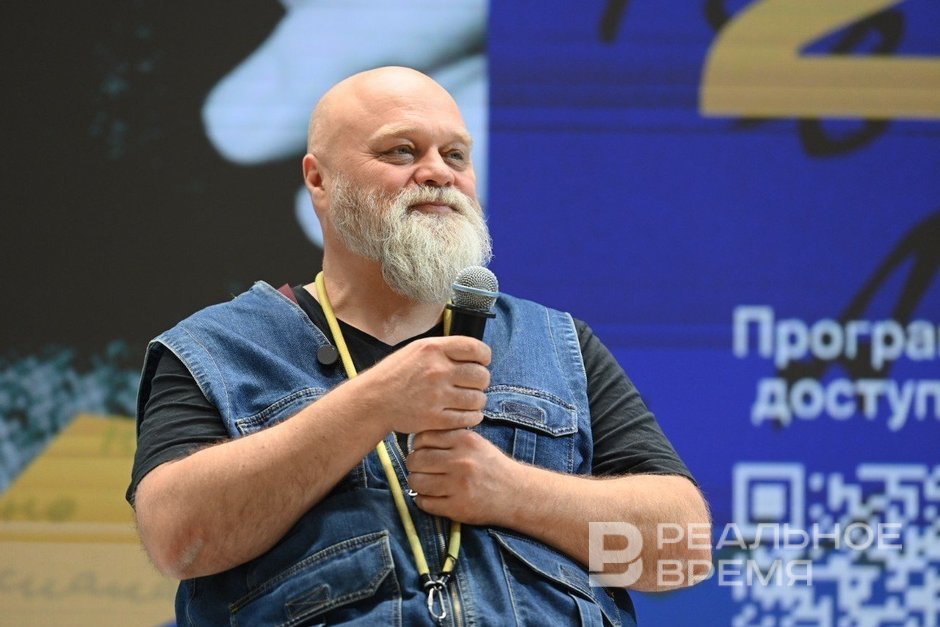
Film director Alexey Fedorchenko at “Aksenov-fest” presented three films — “New Berlin," “Mitrofan Aksenov's Sausage” and “The Big Snakes of Ulli-Kale” (all 18+). At the meeting with the audience, the winner of the FIPRESSI world film press prize at the Venice Festival spoke about his interest in artificial intelligence, and also about how he went from being the director of the production department of the Sverdlovsk Film Studio to a person who makes films in the genres of “found footage," silent cinema, and animation. Details — in the material of “Real Time.”
“We most often have no mockery”
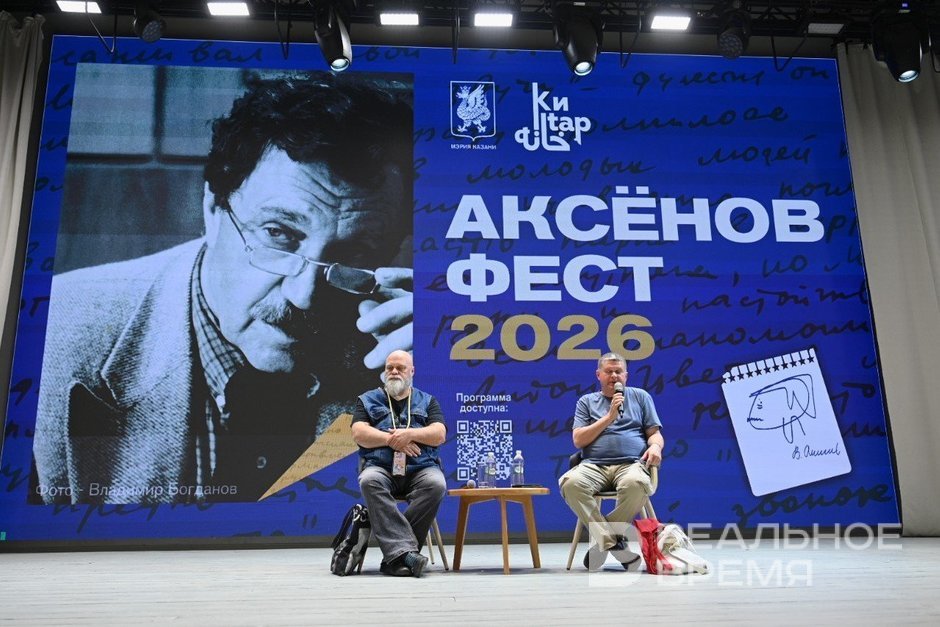
The moderator of the meeting was the writer Denis Osokin, with whom Fedorchenko made the films “Ovsyanki," “The Celestial Wives of the Meadow Mari," “Angels of the Revolution," “New Berlin” (all 18+). By the way, the playwright immediately noted that his interference in the conversation would be minimal, called Fedorchenko “the best director of Europe," adding that this is not only his opinion. And very soon (more precisely on September 29), Osokin reminded, Fedorchenko has an anniversary — 60 years.
— These are films of very strange genres that you, probably, most likely have not seen, because they are rarely released in the world, Fedorchenko began the conversation, pointing out that usually many of his pictures are called “mockumentary," that is, pseudo-documentary, “mockery of the document.” — Although we most often have no mockery. I like the name “found footage” more.
One of these films came out in 2004, “The First on the Moon," from which Fedorchenko's fiction filmography is counted. And to Kazan he brought, in particular, “Mitrofan Aksenov's Sausage.”
— Mitrofan Aksenov was a remarkable Russian philosopher, undeservedly forgotten, the director said. — I found him by chance. I seriously collect books, and at one of the auctions I saw a book called “There Is No Death," author Mitrofan Aksenov, 1906. I began to look for some information about him, and it turned out that nothing is known about him.
At the same time the man was unique, one who anticipated Einstein's theory of relativity several years before the author, Fedorchenko noted.
About the love for artificial intelligence
Fedorchenko said that he, together with the screenwriter Lida Kanashova, published the book “The Chief of Fairy Tales," 50 mini-stories about repressed Soviet scientists. The book was also born from collecting: the director has been collecting books of victims of the regime for many years — scientists, writers.
— These are fifty fairy tales about people who have been unforgivably forgotten, Fedorchenko said. — The thing is that they repressed by professions: there was a campaign against biologists, geologists, orientalists, archaeologists, historians; there was the case of the deaf-mute, fifty people were shot. When you take these lifetime editions with an autograph, find a biography, a bibliography, the titles of unique books where the headings read like poetry, you understand that this generation is a whole stratum. I call them elves; these are people who are completely different for us.
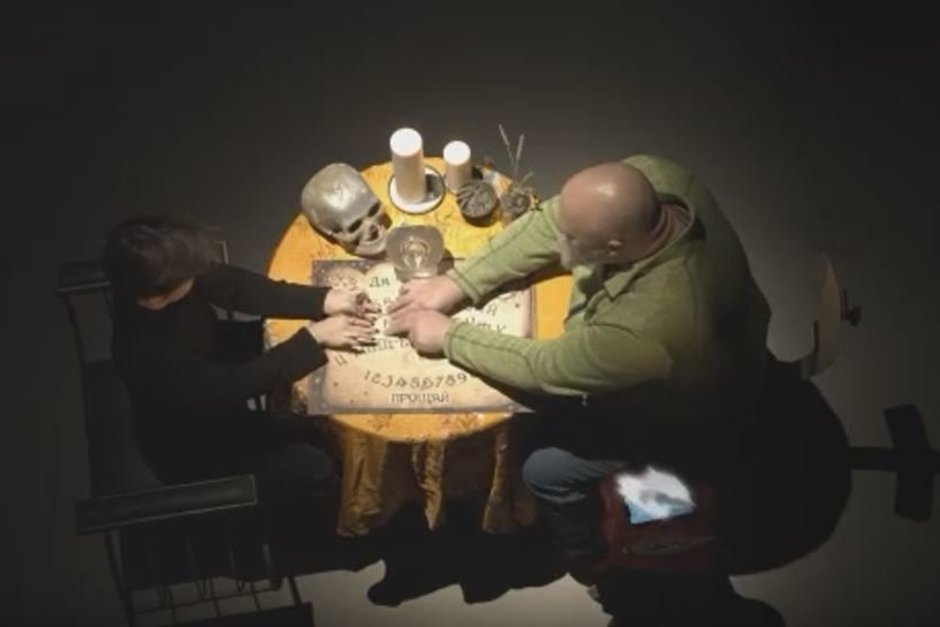
In the last few years Fedorchenko has been actively using artificial intelligence in cinema, so “Real Time” asked about the reasons for such interest. It is an excellent tool for a director, the guest answered, while in texts he would not advise using it — “very harmful and wrong.” But in video AI can be shown in different ways.
— In “Mitrofan Aksenov's Sausage” there are samples of this imperfection of artificial intelligence, its “mastery," which turns into style, into an interesting picture, the director explained. — You know, before everyone laughed when you give it a task and it attaches a second head, a fourth leg. I liked this very much, and I used it precisely.
Now Fedorchenko is hooked on Chinese micro-dramas five to ten minutes long, which are entirely drawn by artificial intelligence, but at the same time look like staged fiction cinema.
— I have no doubt that in two or three years a very hard period will come for film actors, because it is much cheaper, more convenient for producers — to make actors into graphics, the director summarized.
Corporate cinema and travels in Latin America
Fedorchenko's penultimate film — “Myths about Hephaestus, God and the Construction Brigade," dedicated to the history of the construction brigade “Hephaestus” of the Ural Polytechnic Institute. He himself was a fighter of “Hephaestus” in the 1980s, and its commissar was a man from the Forbes list, Dmitry Pumpyansky.
— I was commissioned to make such a film about the brigade, about the anniversary, Fedorchenko said. — And since there was no task other than this, no pressure, I was completely trusted, I took up this business. The result was a film by no means commissioned, not corporate; we managed to make a generational film, a film about a generation. Unexpectedly for me, it is shown at many festivals, it wins… There too I used artificial intelligence very seriously, in addition to the ordinary animation with which the whole story of Hephaestus the god is drawn.
For “The Big Snakes of Ulli-Kale” he selected nine out of 35 people who filmed stories about the relationship between Russia and the Caucasus in the genre of silent cinema.
— It was a fashionable topic. The end of the nineteenth century, after the end of the Caucasian War many went to the Caucasus and filmed a lot of things there, the director explained. — There was a fashion for clothing, costume jewelry, jewelry made from Caucasian beetles; they were brought here in thousands. This is both documentary cinema, and animation, and salon cinema. That is, visually it is a feast of the spirit. Come, you will not regret it.
And he added, leading the audience to the screening of “New Berlin”: “When I watch a film, the presence of the camera always irritates me. That is, I know that there is a camera here, and behind the camera twenty people are standing and filming this erotic scene. This is professional deformation. I understand that the actor sees the camera, he plays to the camera. And I tried to make the camera the hero. Why is the camera in the frame at this moment? Why does the hero see it?”
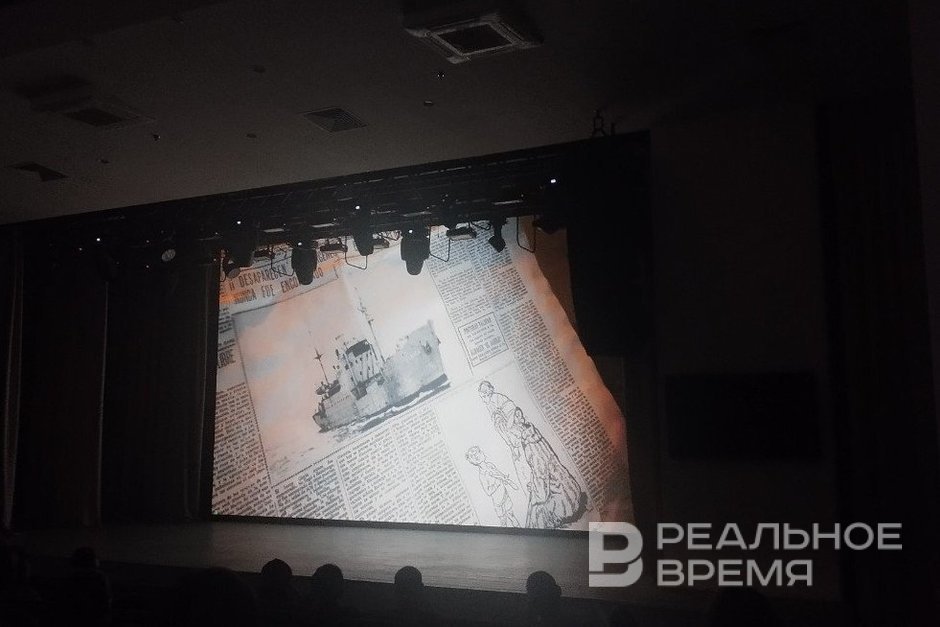
“New Berlin” is stylized as a video shot by a father and daughter in Latin America — on the road they try to find traces of an aunt who disappeared on the ship “Gloria.” Fedorchenko read about this in a newspaper — “The Mystery of the Five Hundred Missing Virgins.” At the same time the journey is preceded by a short monologue of the “mother” of Russian documentary film, Marina Razbezhkina: “Reality cannot be transmitted one hundred percent on screen. Reality is you.”
— I say to Denis: great story, let's write. Denis took a long time to get going, for a long time, probably up to a year, it seems to me, Fedorchenko said. — Then unexpectedly he invented a unique story that you will see. The script was ready, but I was not satisfied that it was not feature-length, about forty to fifty minutes. We wrote another part and began to look for money, for almost ten years. The difficulty is that the film must be shot in South America in Spanish. Now, of course, this is impossible at all, and even then it was very difficult to find money for such conditions. But it worked out.
— We have a very good atmosphere on the set, the director summed up. — Many Moscow actors do not want to leave. They stay and say: can we stay here with you until the end of filming, for free? We will help, make tea. And they stay, because with us they do not shout, do not swear on the set, which for a Moscow crew is practically impossible.
In two weeks Fedorchenko will release a new film at the festival “Message to Man” — “The Adventures of Mosaics.”