Lyutsia Mingatina: “We have been treating many patients for years. And we see gratitude from them”
A gastroenterologist from the Republican Clinical Hospital — about the subtleties of her work, about debunking myths and about how formidable diseases cease to be a death sentence
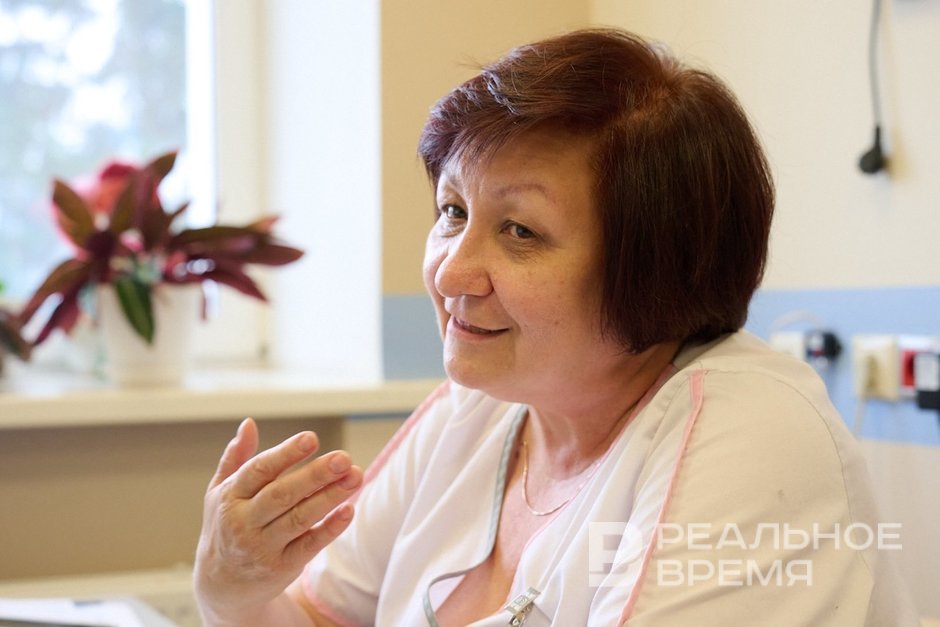
Lyutsia Ilgizovna Mingatina has been working as a gastroenterologist for more than 30 years. She currently sees patients at the consultative polyclinic of the Republican Clinical Hospital (RCH). Over 30 years, this field has changed dramatically. For example, complex stomach ulcers have practically disappeared, while autoimmune diseases have become more common. Contrary to the accepted idea, diet plays a small role in the development of gastrointestinal diseases, while stress and anxiety can directly cause even stomach ulcers, so gastroenterologists often refer their patients to a psychotherapist. Lyutsia Ilgizovna talks about how almost four decades in a white coat have passed, about her work and about her attitude toward patients in a traditional portrait for “Real Time.”
“It never occurred to me that I would become a gastroenterologist”
There were no medical professionals in Lyutsia Ilgizovna's family; the desire to become a doctor arose spontaneously in her upper grades. She recalls that at that moment she was possessed by youthful romantic aspirations — life must be devoted to saving people, helping them. She entered the Kazan Medical Institute in 1983 with the dream of becoming a surgeon. But while she was studying, she saw that besides surgery there was much that was interesting in medicine. Our heroine quickly understood that therapeutic specialties were closer to her:
— Therapy, in my opinion, is more interesting compared to surgery. You follow a patient from the very beginning of the development of the disease, gradually unwinding the tangle to understand what is happening with them. It's like putting together a puzzle. You make a diagnosis and begin treatment. We have been treating many patients for years. And we see deep gratitude from them. When you hear “Now I will come only to you," that return really supports you in your work, Lyutsia Ilgizovna reflects.
The doctor did not come to gastroenterology immediately — she admits that upon graduating from the institute she did not know what kind of therapist she would be. After completing her internship in general therapy, the doctor was assigned to Naberezhnye Chelny to work in a hospital. Two years later she returned to Kazan and also worked as a therapist. And in the process she listened to the stories of colleagues who had completed residency — and she too caught fire.
She entered residency at the Department of Internal Diseases of the GIDUV (now — KSMA). In those years the department specialized mainly in cardiology, but also produced general therapists. Our heroine thought about going into either cardiology or functional diagnostics, which was then developing by leaps and bounds. But closer to the end of her residency, a friend who worked at the RCH informed Lyutsia Ilgizovna that a vacancy for a gastroenterologist had appeared in the central clinic of the republic.
— Until then it had never even occurred to me to go into gastroenterology. But I thought: “Why not?” I came to talk with the head of the department, Alfiya Kharisovna Odintsova. She encouraged me and said: “I also never thought that I would become a gastroenterologist. And it turns out to be so interesting!” And in the end I decided to try, the doctor recalls.
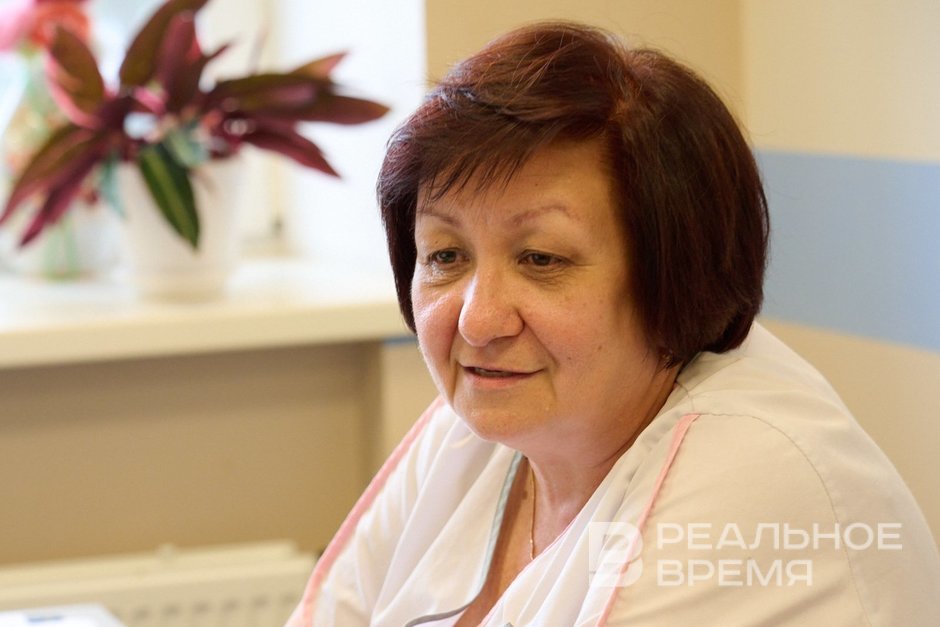
You follow a patient from the very beginning of the development of the disease, gradually unwinding the tangle to understand what is happening with them. It's like putting together a puzzle.
In 1994, our heroine completed a traineeship in the hospital of the gastroenterology department, received the necessary set of knowledge, and then began working in the consultative polyclinic of the RCH. Gastroenterologists periodically underwent rotation: some time in the hospital, some time in the polyclinic, and then a change of “registration” again.
— The hospital is also very interesting, says Lyutsia Ilgizovna. — But here it's easier in the sense that I am free when the working day ends. But in the hospital, the doctor is still responsible for the patient around the clock. They only let the patient go upon discharge. Plus, in the hospital, every year more and more work accumulates that you must manage to do simultaneously, while putting off your main work. Sometimes I even have scary dreams: that I am in the hospital, the time is 4:00 p.m., and I still have not been on rounds. I was doing discharge summaries, admitting new patients, consulting, running around, did not manage to have lunch and was not on rounds. This really still happens in my dreams!
The hospital of the gastroenterology department indeed lives in constant time pressure (in fact, like the other departments of the RCH). Besides looking after their own patients, doctors fill out documentation, consult patients on referrals from other departments, and now the Perinatal Center has been added to their work, when women with inflammatory bowel diseases or liver diseases give birth there.
But the polyclinic, of course, is no resort either. Here the doctor has no time for a different reason: a gastroenterologist has 20 minutes at an appointment to sort out the patient's problem, make an assumption, send the person for the necessary examinations, etc. Here maximum involvement, attentiveness and almost detective thinking are needed.

“We have been observing our main patients for decades”
Gastroenterology is a medical specialty that considers in a complex all the organs involved in the digestion of food. The esophagus, stomach, gallbladder, all sections of the intestine, plus the parenchymal organs: the liver and spleen — all of this is in the focus of the work of doctors of this specialty.
The polyclinic of the RCH belongs to a level III medical institution, so patients with banal gastritis and reflux still do not reach here. Here are patients whose diagnosis could not be made by district therapists, and people with serious cases requiring the intervention of RCH doctors.
Lyutsia Ilgizovna gives an example: a patient comes to the appointment with jaundice. It is necessary to “unwind” the tangle and understand what the cause is. The yellow color of the face and whites of the eyes can be caused by several different diseases: for example, mechanical jaundice is a surgical case, and it must be differentiated. There is hemolytic jaundice, when the problem is in the blood. And there is parenchymal jaundice — caused by liver diseases, and primarily cirrhosis and hepatitis of non-viral etiology.

Our main patients are those with chronic diseases of the liver and intestine. We have been observing them for decades. Many of these diseases require certain medications that cannot simply be prescribed at the district level.
Another large group of Lyutsia Ilgizovna's patients are people with inflammatory bowel diseases. The polyclinic treats them in conjunction with the hospital — patients are hospitalized, and then they are observed for years in the consultative polyclinic.
— There are diseases that come and go. For example, gastritis or biliary dyskinesia. The patient came, you prescribe treatment — and they do not return, because your help is no longer required. Further they will go along with the district therapist. But our main patients are those with chronic diseases of the liver and intestine. We have been observing them for decades. Many of these diseases require certain medications that cannot simply be prescribed at the district level — this requires a collegial decision of our specialists. And all of this is very exciting and interesting, the doctor says.
“Every prescription must be explained in detail”
Lyutsia Ilgizovna is a thorough, affable and very disarming doctor. In most cases she manages to immediately tune in to the same wavelength as the patient. But, as she herself admits, there are still cases when she cannot find a common language with a person who is irritated or even embittered in advance.
It also happens that a person has disorders, but they are functional — that is, they are not dangerous and one can live with them for a long time. Moreover, it is functional diseases that an ordinary gastroenterologist encounters most often. The organs look healthy in tests, on ultrasound, on endoscopy, but their function suffers: for example, there is a disorder of motility or connection with the nervous system. The patient experiences pain, heaviness in the abdomen, dyspepsia (this happens, for example, with irritable bowel syndrome). In this case the doctor must find a way to alleviate the symptoms.
Interestingly, often one must turn not only to a gastroenterologist, but also to a psychotherapist. Constant stress or self-suggestion can be no less of a trigger for the development of unpleasant symptoms or even serious diseases (for example, stomach ulcers). And how Lyutsia Ilgizovna persuades her difficult patients that they really need to see a psychotherapist is a separate question. The stigma around this still exists in society, and not everyone can be persuaded. However, as our heroine says, apparently the gift of persuasion comes with experience. Therefore the percentage of referrals is growing, and patients come to her with the story that the psychotherapist prescribed antidepressants — and everything miraculously calmed down.
A separate task is to form in the patient adherence to treatment, especially when it comes to chronic diseases requiring a certain discipline and strict observance of the rules proposed by the doctor. The regimen of taking medications, often a change in lifestyle, the necessary physical activity — all of this must be observed scrupulously. How to form such discipline in a patient? How to explain to them what is happening with them so that they understand?
— The whole point is that the conversation cannot be structured like this: “Here are your pills, take them according to such and such a regimen, and Google what diet you need.” All of this is clearly stipulated: for so much time you take the medication. If it does not help — lower the dose. If the symptoms return — take another medication. Every prescription must be explained in detail: how the pill works, what it is needed for. And when the patient comes back — during the conversation it quickly becomes clear which pills they took and whether they followed the rules, the doctor explains.
In the case of elderly patients, the presence of accompanying persons helps: even if the person themselves did not hear or did not understand something, their son or daughter, as a rule, absorbs the regimen and then helps their ailing parent.
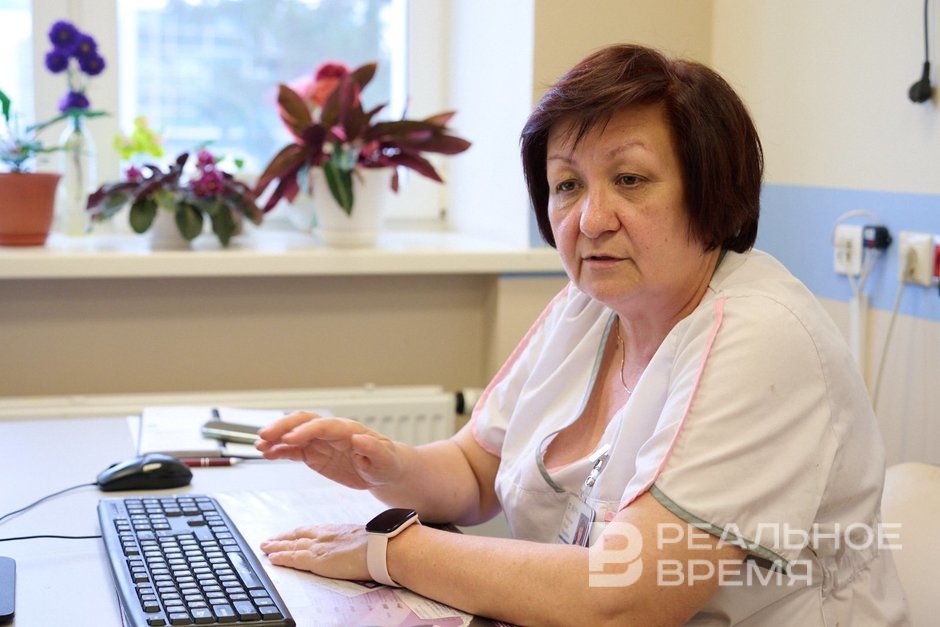
You warn: “You have already drunk your share, now you cannot have even a drop.” And the patient after some time thinks: “Well, I got better. Why can't I?”
Lyutsia Ilgizovna admits: of course, she is vexed and hurt when the prescriptions are not followed, and the person continues to systematically engage in worsening their condition.
— When I have stipulated everything with the patient, explained everything to them, made all the warnings, tried to get through to them, and they ignored all of it, of course, it is hurtful. The patient in this case is working against themselves. Especially, for example, with the same liver cirrhosis, if it is of alcoholic etiology. You warn: “You have already drunk your share, now you cannot have even a drop.” And the patient after some time thinks: “Well, I got better. Why can't I?” It is much harder to get through to people with alcoholism. And the worst thing is when in such cases next to a 40-year-old drinking man sits his mother or wife as an accompanying person — and justifies his drunkenness! But then you think: “Well, sorry, this is your choice. I tried, and more than once.”
“What we prescribed 5 years ago may be absolutely irrelevant today”
Gastroenterology, like the other medical specialties, is developing very quickly. Lyutsia Ilgizovna recalls how in 2001 she went on maternity leave. Returning to work in 2003, she discovered that over these two years the treatment regimens had changed, new medications had appeared, the specialty seemed to have been turned upside down.
— It was as if I had come into a new world, I had to learn everything anew. Of course, I had to immerse myself very quickly, our heroine smiles. — And it is exactly the same now: what we prescribed 5 years ago may be absolutely irrelevant today. There are a lot of new medications, the tactics of managing patients are being updated. Everything is moving forward!
There are diseases whose treatment over the past decades has reached an absolutely different qualitative level. Even incurable diseases can be corrected so that the patient lives a good, normal life. For example, genetically engineered medications that appeared literally in the last decade bring the life of people with inflammatory bowel diseases to another level. Patients receive these medications free of charge under a federal program.
— And this is qualitative treatment that gives a very good, stable remission. They live with this disease absolutely calmly. But before, most of our medications did not help the patient, and there were no other options. Therefore their whole life was built so that there was a toilet nearby, pardon the expression. And now, since 2022, there are even regional programs for providing genetically engineered medications. Under them, they can be received by those patients who do not have a disability (unlike the federal program). And quite a lot of our patients have already managed to get into these two programs and are now receiving treatment. At the RCH we even have a center for inflammatory bowel diseases, where we and our colleagues deal with these issues, the doctor explains.
Meanwhile, there are not as few people with inflammatory bowel diseases as it may seem. Almost every day at least one such patient is hospitalized at the RCH.
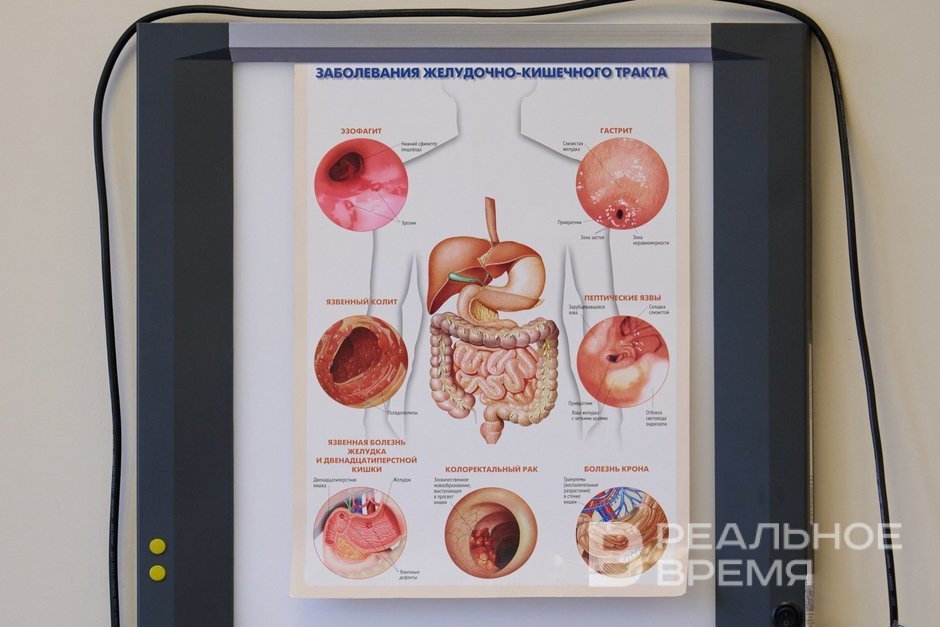
Liver cirrhosis today, unlike in the 1990s, is also not a death sentence — especially if it is “caught” at a certain stage. This formidable disease is caused not only by alcoholism, as is commonly believed. Cirrhoses, as the doctor says, can be a consequence of an autoimmune or congenital disease — sometimes patients with cirrhosis move to RCH doctors from the children's network. They can also be caused by viral hepatitis: hepatitis is treated, but the cirrhosis that remains after it is not. But the disease can be stopped and not allowed to develop further. And it will remain at a stable level, and may even take half a step back!
— The liver softens, becomes better. This happens if a person follows all our recommendations. For example, stopped drinking or cured hepatitis C. Just 10 years ago a person with such hepatitis could hardly get into federal programs for the treatment of the virus. But in recent years — completely calmly. That is, if not this year, then next year they will definitely get into it, the virus will be treated — and the cirrhosis will stop, and the tests will become much better. And this patient will live a long time (especially if they do not additionally ruin their liver with anything), Lyutsia Ilgizovna says.
All of this is the story of recent years, because before, the diagnosis of “liver cirrhosis” assumed, rather, survival. Moreover, even far-advanced cirrhosis with pronounced decompensation (with bleeding, with ascites) today does not necessarily lead to the death of the patient. After all, now the RCH performs liver transplantation.
Interestingly, alcoholic cirrhoses and hepatitises respond best to treatment, to abstinence, to eliminating the cause of the disease. And if a person stops drinking and takes themselves in hand — the disease proceeds more easily for them. But only if the disease has not passed a certain point of no return.
Over the 32 years that Lyutsia Ilgizovna has worked as a gastroenterologist, the structure of morbidity has changed greatly. For example, in the 1990s there were very many patients with peptic ulcer disease who needed to be operated on. No fewer than three times a week the polyclinic received patients after stomach surgeries. Now there are two or three such patients a year; Lyutsia Ilgizovna has long not seen a person operated on for an advanced ulcer. This is connected with the fact that medications have appeared that do not leave scars in the stomach and duodenum and promote the healing of ulcers. On medications that reduce the production of hydrochloric acid, ulcers heal quickly and effectively.

Just 10 years ago a person with such hepatitis could hardly get into federal programs for the treatment of the virus. But in recent years — completely calmly.
On the other hand, autoimmune diseases of the intestine and liver have begun to appear much more often. The incidence of gallstone disease has also increased compared to the last century.
Is it necessary to fast with gastrointestinal diseases
Is it necessary to fast with gastrointestinal diseases
Among the patients of gastroenterologists at the RCH polyclinic there are not only elderly people. Young people seek help no less often than older patients. These diseases are not as connected with age as, for example, cardiological or neurological ones. So where do the numerous diseases of the gastrointestinal tract come from? There are many causes.
Lyutsia Ilgizovna says that diseases of autoimmune genesis have begun to be encountered more and more often — when the body begins to produce antibodies that work against its own organs. Every year there are more and more of them, and what the cause is — so far a question.
But nutrition, surprisingly, according to recent studies, does not give such a strong correlation with gastrointestinal diseases as was previously believed. The famous numbered diets according to Pevzner have long gone into the past. To each specific person the doctor recommends giving up specific products that cause symptoms specifically in them. As a result, as our heroine says, the restrictions are not as great as, for example, in the 1990s, when patients with gastritis were allowed to eat only a narrow set of products, pureed into porridge beyond recognition.
— Of course, there are diseases in which whole groups of products must be excluded in order to get rid of symptoms. For example, with celiac disease it is recommended to exclude gluten. Or it happens that the stomach, esophagus or intestine is susceptible, sensitive to specific products. But most diseases, and even inflammatory bowel diseases, are such that the restrictions are small, and mainly during exacerbations. But to provoke the development of the disease with spicy or fatty food — unlikely, the doctor reassures.

“When a patient comes with relief of symptoms — you feel satisfaction from your work”
The number of gastroenterologists in the republic, unfortunately, leaves much to be desired. In district central hospitals there are no gastroenterologists — only therapists. In Naberezhnye Chelny there are a couple of doctors who see patients, and two departments in hospitals that are very hard to get into (and there are few places there). One gastroenterologist each works in Nizhnekamsk and Almetyevsk. In Kazan, gastroenterologists have only just begun to appear in district polyclinics.
Of course, in paid clinics an appointment with a gastroenterologist is always available — but in the state network there are vanishingly few of them. Usually gastroenterological patients are treated in therapeutic departments of clinics. In Kazan, specialized inpatient departments exist at the RCH, at “seven” and at city hospital No. 12. There is no outpatient appointment with a gastroenterologist at hospital No. 12 — only an inpatient one.
Lyutsia Ilgizovna receives an average of 20 people a day — half of them are primary patients, half are follow-up appointments. To the question of whether she has compassion for patients, she answers without hesitation:
— Of course there is. Especially if young people come with serious diseases. Or if we see signs of an oncological process and send the patient to colleagues at the Republican Clinical Oncology Dispensary. It is hard. And you remember these patients — especially those who were observed by us, and then cancer overtook them. When after several years they no longer come to you — you understand that, probably, that's it…
Lyutsia Ilgizovna talks about her work with great love. She asserts that this is a very interesting specialty. She says how she likes to sort out each specific case, to make diagnoses.
— And then — to prescribe treatment, to select a regimen in which side effects are minimal and an improvement in well-being occurs. And when a patient comes with relief of symptoms and improved examination results, that is when you feel satisfaction from your work. That you did not come today in vain, that you helped! the doctor smiles.
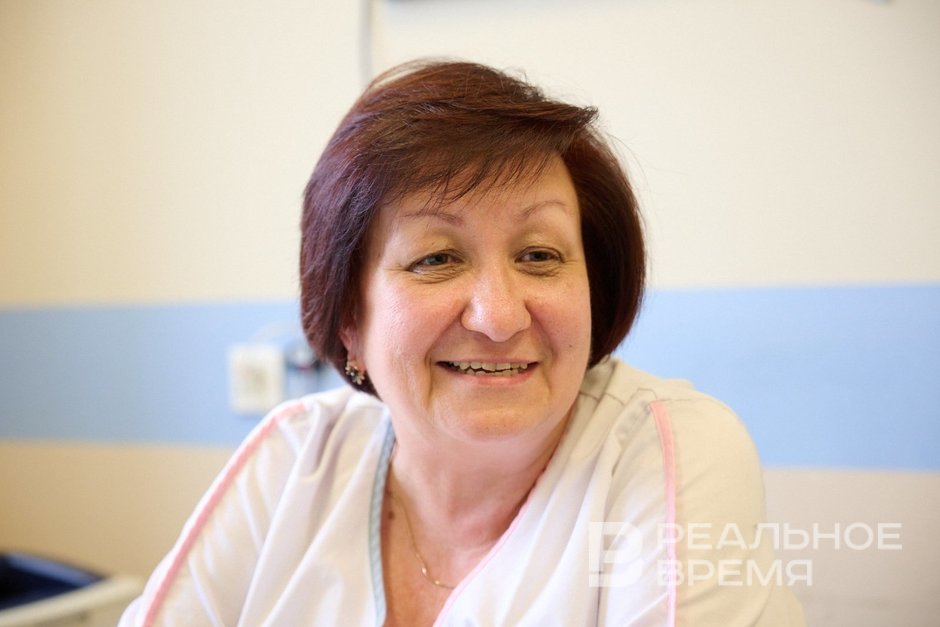
To our traditional question about what she would like to avoid in her work, our heroine answers that she would like to meet fewer eternally dissatisfied, ungrateful patients.
— Their treatment is going on, and their condition is stable, and they are obviously getting better. But they are still dissatisfied with something. Everyone around is bad, everyone owes them — both I and the other doctors. Such people also occur, though not often. Definitely not every day, the doctor admits.
And outside the walls of the polyclinic, Lyutsia Ilgizovna is a loving mother of an adult daughter, the owner of a beautiful cat, and an avid dacha gardener. Periodically, together with her fellow doctors, she goes to quizzes — she especially likes detective projects. Everything is like at work: our heroine loves puzzles!
Reflecting on her dreams, the doctor says that she has no particular professional ambitions. She likes working in the polyclinic and bringing people relief.
— After all, that is why I come here! Lyutsia Ilgizovna smiles in farewell.