Daniel Marinov's start as the final chord of the Spartakiad
From triumph in summer sports to failures in basketball — the tournament highlighted the strengths and weaknesses of Tatarstan sport
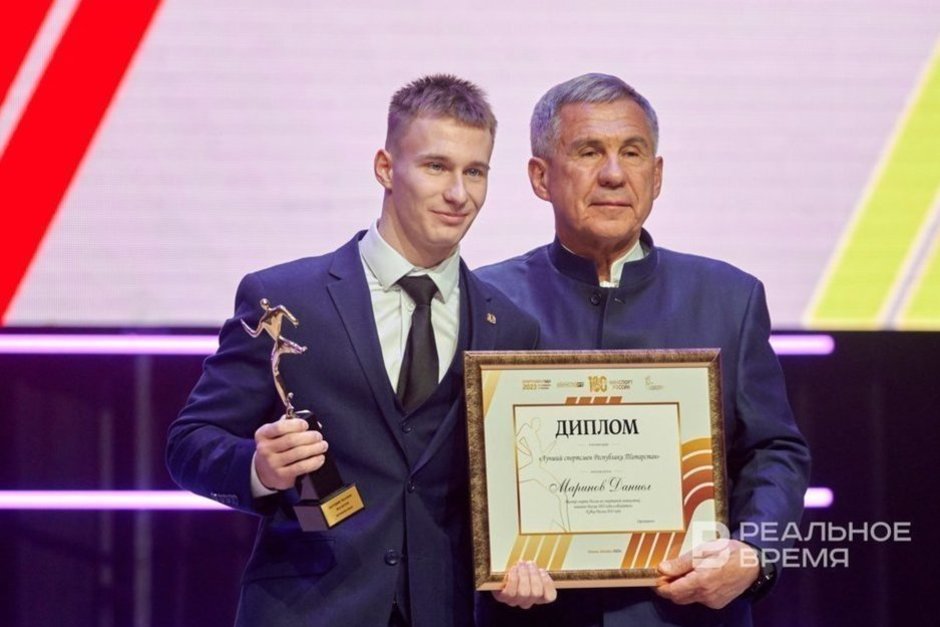
Competitions among men in the framework of the Spartakiad of the Peoples of Russia are starting at the Kazan Gymnastics Center. Kazan's Daniel Marinov, together with his partners on the republic's national team, will fight for medals on their home floor at competitions that are approaching their end, often symbolizing the conclusion of the summer season. For more details, see the preview by Realnoe Vremya.
Marinov and Dukhno enter the fight for a place on the World Championship team
These days, Kazan has again actively joined the sports program of the Russian Spartakiad, being the host of competitions at which the strongest female gymnasts finished the medal events on individual apparatus in the competition program on September 10, passing the baton to representatives of the men's part of artistic gymnastics. On these same days, at the Rowing Center, the starts of representatives of academic rowing will conclude, also picking up the baton from kayak and canoe rowers.
The shooting complex will become the venue for the starts of bullet shooters. Flag football matches will take place at the Central Stadium of Kazan (September 11–13), the penultimate in terms of the competitions hosted by the capital of Tatarstan. And the final one will be the baseball tournament (September 23–29) at the same arena.
Rugby, skateboarding, softball, football with the participation of women's teams, and equestrian sport — these are the sports disciplines of the Spartakiad whose medals were contested in Kazan this past summer. In this series, it is men's artistic gymnastics and men's rugby that represent those sports areas in which Tatarstan was among the favorites of the home starts.
The current European vice-champion, Daniel Marinov, and Zelenodolsk's Radmir Musaev from the country's junior national team will surely be among the strongest at the starts, whose grand opening took place on September 8, before the beginning of competitions in the women's program. President of the Republic's Artistic Gymnastics Federation Marat Bariev and First Deputy Minister of Sports Khalil Shaykhutdinov welcomed 85 athletes representing 17 teams. Nominally the strongest appears to be Muscovite Arseny Dukhno, who has already won the Russian all-around championship for two years, but the home floor and repeatedly tested gymnastics apparatus may influence Marinov just like the notorious home walls.
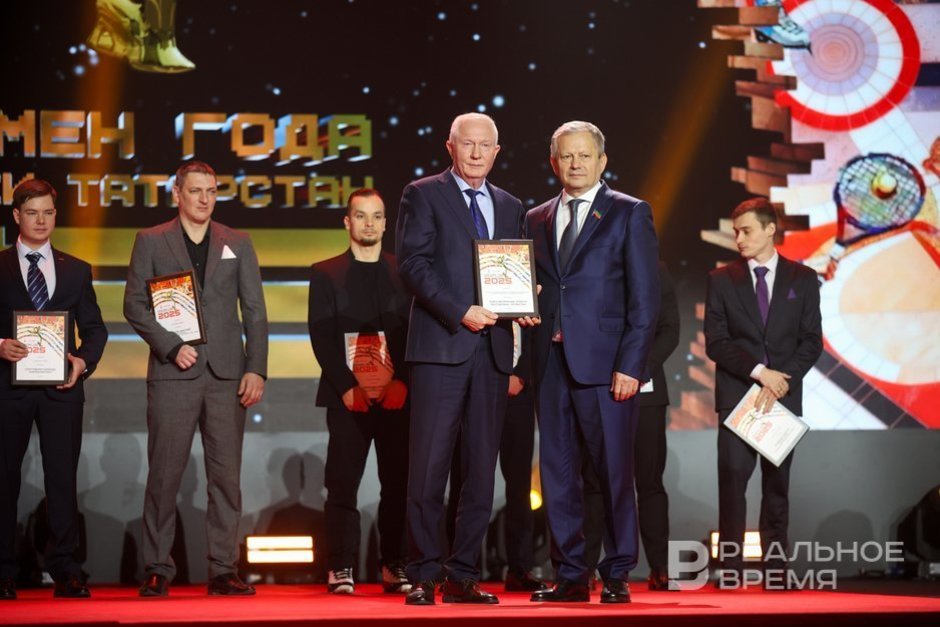
A gallop across Europe
The Russian Spartakiad literally spotlights the level of sports development in a particular region, helping to navigate where which sports discipline is developed. This is especially visible in the context of Olympic sports. If Marinov, Dukhno, and their national team comrades, including our gymnastics superstar Angelina Melnikova, only had the need this week to prove their high level demonstrated earlier at the European Championships, then, for example, swimmers finished their program back in late August. This is partly why Tatarstan swimmers Ralina Gilyazova and Sofya Dyakova won Spartakiad gold on the “leftovers” of the athletic form they had built up before the European Championships in Paris. Gilyazova won gold in Yekaterinburg in the 50-meter breaststroke, which is becoming her signature event. Dyakova won twice in the 400 and 800-meter freestyle. Gilyazova also has bronze in the 100-meter event.
From September 25 to 28, on the eve of the Spartakiad's closing, representatives of another aquatic discipline — diving — will contest medals in the same Yekaterinburg. The coach for this sport, Pavel Muyakin, already noted in a comment for our publication that after the European Championships he advised Schleicher: “Rest, don't train. Try to get diving out of your head for a while.” He replied: “I can't, I have to prepare for the Russian Spartakiad.”
In perspective, we also have gold in the men's water polo tournament, which will be held from September 22 to 27 in Pervouralsk.
The best among the team sports were our summer hockey players, who synchronously won their starts in both men's and women's teams. The rest were worse: the men's volleyball team of Tatarstan became second, the men's rugby team — third, the women's volleyball team — fourth. Men's handball, whose representative changed the name of the “Zilant” team to “Ak Bars” before returning to the Super League, finished in 11th place out of 12 teams. This weekend, the handball players will play their first Super League match as guests of Astrakhan's Dynamo.
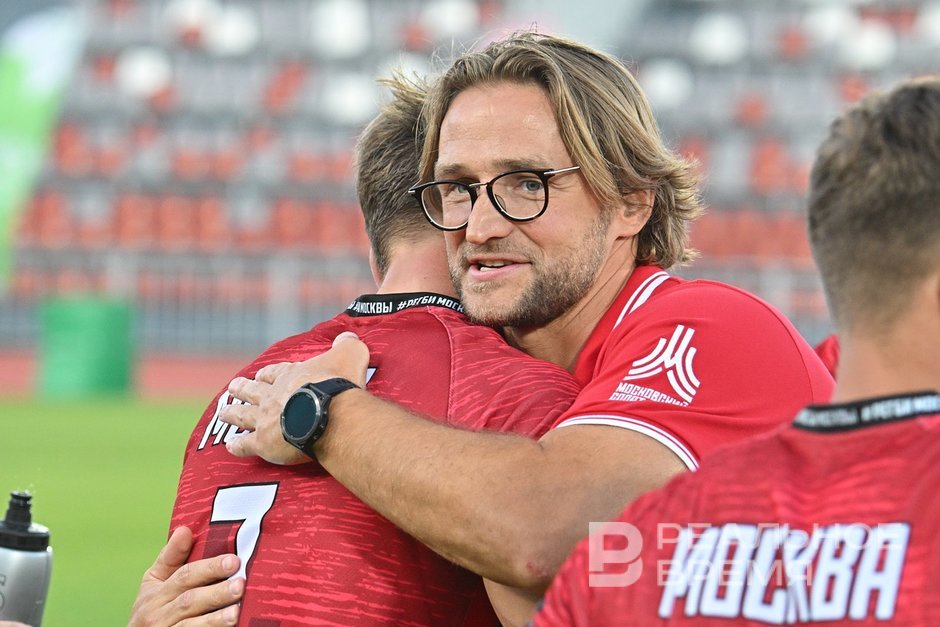
The failure of Tatarstan basketball players
Tatarstan's basketball players performed at the same level as the handball players, which is perplexing. After all, the handball players are newcomers among the strongest, and their performance reflects the real state of affairs in this sport, as in principle in all team sports except basketball. They managed not to reach the quarterfinals of the tournament, where there were no strong opponents, but the Tatarstan team accomplished the task. The core of the national team was assembled from UNICS basketball players (Mikhail Belenitsky and Denis Zakharov with experience playing for the national team, team newcomers Evgeny Baburin, Alexander Gudumak, Sergey Klyuev, Makar Konovalov, Nikita Mikhailovsky, and Dmitry Uzinsky, who already played in Kazan from 2019 to 2022).
This set of players lost to the Udmurtia national team, essentially the “Kupol-Rodniki” team from Izhevsk, which was only 11th at the end of last season in the Super League, the second most important division of Russian basketball after the VTB United League. By the way, the attitude toward the Spartakiad is also demonstrated by the fact that many national teams played practically in their own kit. For example, the same Udmurtia national team played in uniforms with the “Kupol-Rodniki” logo. In contrast: in rugby, a sport not as well-funded as basketball, they found the means to sew original uniforms for the republics' national teams, rather than playing in team T-shirts.
Returning to the tournament layout — it is in the VTB United League that UNICS, St. Petersburg's Zenit, and Perm's Parma play, but they do so relying on players from abroad, mostly from across the ocean. The same Parma, for example, signed Canadian Joshua Primo before the start of this season.
As a result, the potentially star-studded St. Petersburg lost to the Bashkortostan national team — 80:86, and the potential favorite Tatarstan was routed by modest Udmurtia — 66:90. And they won only once, against the same Perm region.
The champion of the Spartakiad was Sverdlovsk Oblast (read “Ural” from Yekaterinburg), which beat Moscow in the final. In the vice-champions' roster were 40-year-old Voronov and 37-year-old Khvostov, who crossed paths on the court with the fathers of current teammates on the capital's MBA team — Padius and Pivtsaikin. In other words: the vice-champions were also staffed with veterans and juniors, on whom one should not bet in the context of the national team. In third place is Moscow Oblast (it was Moscow and Moscow Oblast that were represented by players from the MBA and Khimki clubs, which have no legionnaires), and in fourth place is Tatarstan's offender — Udmurtia.
What is sad: the Spartakiad revealed at the local level, and the potential return of Russian national teams to the international level will confirm the obvious fact that the bet of the country's leading clubs on legionnaires, six per team, will finally bury this sport at the level of European and world championships.
We await Tatarstan Spartakiad laureates at the tennis championship
Chelny trampoline jumper Kirill Kozlov also confirmed his high level of personal mastery, winning the competition in the “individual jumps” discipline, having previously been a bronze medalist at the European Championships and last year a silver medalist at the World Championships.
The republic's badminton and tennis, judo and trap shooting continue to remain among the country's leaders, although there are nuances. In badminton, for example, they encountered a rare case when Evgenia Kosetskaya was not on the top step of the podium, losing in the final of the individual competition. As a result, Kosetskaya took gold in the doubles with Anastasia Redkina.
In judo, the girls distinguished themselves — Alana Alborova (silver) and Darya Baskakova (bronze). In tennis, the individual medal event in the men's competition became an internal affair of two Tatarstan players — Marat Sharipov and Ilya Simakin. Simakin withdrew from the final due to a minor injury. But they will still have a chance to determine the strongest at the national championship, which traditionally takes place in Kazan. Only because of the Spartakiad, its dates will be shifted from late September to October.
The shooters have two bronzes in team starts and one award each in individual events. Darya Lekomtseva won in “skeet," ahead of Ekaterina Demina, who previously bore the surname Komarova. And under that surname, incidentally, she successfully performed in the mixed event with Sergey Demin Jr., a representative of a glorious shooting family. The entire shooting elite represents the Dynamo-RT Physical Culture and Sports Society; possibly that is why the potential competitions that were to be held to mark the 100th anniversary of this glorious society were put on pause.