Allergy vaccine, Napoleon's letter, a mine from an oil well
Interesting science news of the week
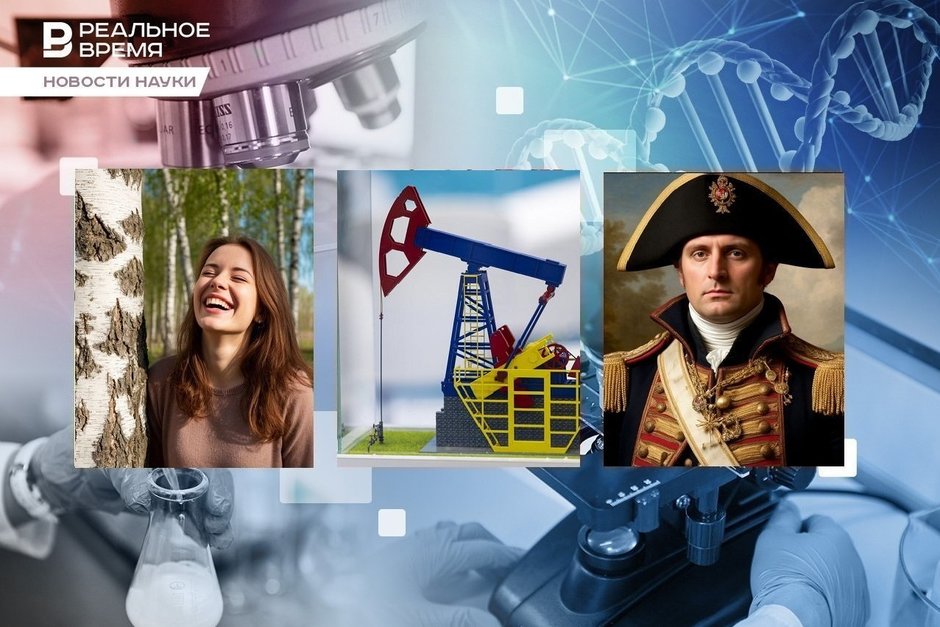
AI deciphered Napoleon's letter in 6 hours: the cipher was lost, and scientists could not do anything for 200 years. A transplanted heart quickly adopts the biological age of the organism into which it was transplanted. In Russia a recombinant vaccine against allergy to birch pollen has been registered. They propose extracting metals from oil wells in the USA. Every eighth oncological patient has a carcinogenic infection — for example, Helicobacter or the human papillomavirus.
Scientists could not read Napoleon's letter for more than 200 years. AI deciphered it in 6 hours
Another loud news item connected with AI — this time in the field of historical cryptography. This week the model GPT-6 Astra read Napoleon Bonaparte's letter to General Auguste de Marmont, sent in 1809. The letter was written in a cipher that until now remained a mystery to scientists, because it was lost practically immediately after being sent. The letter has 1,300 characters, 155 symbols and 29 codes that replace whole old words. To date only 33 symbols have been precisely determined by modern cryptographers. Everything was complicated by the fact that the cipher is homophonic: the same letter is written with a dozen different signs, and that means frequency analysis is not applicable here.
This week the artificial intelligence engineer of the company Sentinel One, Carter Church, stated that he used the new AI model from OpenAI to decipher this message. It needed 6 hours: it recognized all the handwritten signs on the image of the letter, tied to them the 33 already established meanings, and then quickly began to sort through suitable variants of words, checking how they add up into a meaningful text. Nothing prevented “protein-based” cryptographers from doing this either, but the work is too voluminous, and until now no one has brought it to the end. But the AI managed it.
It turned out that there is no sacral information in it — but there is a detailed layout of the movements of French and Austrian troops during the war between France and the Austrian Habsburg Empire. Auguste de Marmont was one of Napoleon's main generals. At the moment of sending the letter he, together with his units, was deployed on the territory of present-day Croatia, separately from Napoleon's main armies. The Habsburgs at that moment were preparing to strike France in order to return the territories they had lost. In the letter to Marmont the emperor demands preparing for a march in order to reunite with the main forces and not to yield to “intimidation by a gathering of rabble.” He writes: “Austria will immediately be attacked from all sides. Consequently, she is rushing toward her destruction.”

It all ended with Marmont's army managing to break through from Croatia and reunite with Napoleon's armies — in the Battle of Wagram the Austrian troops were routed. Marmont became a Marshal of France.
And we received new confirmation that AI surpasses humans in many of its capabilities. Now researchers fear that in the future, for example, new neural network models will be able to “dox” absolutely any social network user — by individual style and handwriting.
The main thing, guys, is not to age with the heart: a transplanted heart grows younger along with its new owner
What happens to an organ after transplantation? Scientists from Harvard University (Boston, Massachusetts) decided to measure the biological age of transplanted hearts — by the quantity of accumulated DNA damage. The studies were conducted on mice and on humans.
It turned out that the hearts of young donors quickly age in the organisms of elderly recipients. But older hearts grow younger, finding themselves in the organisms of young people.
First experiments were conducted on mice of three ages: young (3 months), middle-aged (1 year) and old (1.5 years). Cross transplantations were conducted between all groups. In parallel a control group was observed of mice of all these three ages, which underwent no transplantations. Six months after the operation samples of tissue were taken from the mice's new hearts to measure the level of DNA methylation (a marker of cell aging). Their results were compared with analogous ones in the control group. The biological age of the donor hearts changed and began to correspond more precisely to the age of the recipients. Younger hearts transplanted into old mice aged at an accelerated rate. And old hearts for some reason grew younger in young bodies.
And what about humans? Of course, no one experimented on them. They simply took the data by which it was possible to obtain biopsy samples from already conducted transplantations. They studied 11 transplantations in a Boston hospital. A feature of these operations was the large difference in age between donor and recipient (8—24 years for elderly hearts transplanted into young people, and 38—50 years for young hearts transplanted into elderly people). And the effect turned out to be the same! The transplanted hearts either quickly aged or acceleratedly grew younger following their “new master” organism! Moreover, the result was confirmed not only in the composition of the DNA, but also in the very work of the new heart.
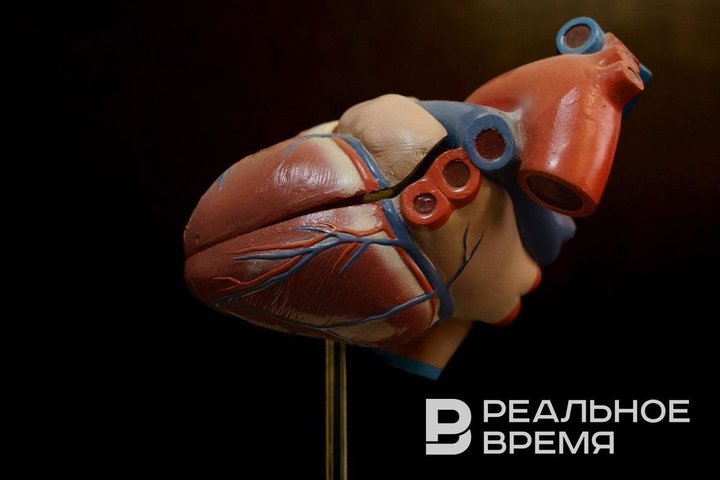
These results are so far published on a preprint server and have not yet gone through review, but if the results are confirmed — this will mean that the upper age limit of potential donors can be increased. This will give a chance to hundreds of people around the world who die without waiting for a heart for transplantation. As a rule, donors younger than 45 are now recommended, and if they are older — they must not show signs of significant damage to the coronary arteries. There are not enough hearts for all those in need. But if elderly people are included in the cohort of donors and one does not fear the “short-livedness” of an old heart — this may partially solve the problem.
In Russia the world's first recombinant allergy vaccine was registered
Hurrah, now one can protect oneself from allergy to birch pollen. The first vaccine against it received a registration certificate in Russia. True, for now a temporary one. The preparation was created by specialists of the NMIC of Allergology and Immunology of the FMBA of Russia together with the pharmaceutical company AO “Generium.” According to the developers, already this autumn the preparation will be able to be received by tens of thousands of patients — the course consists of five injections, and it is recommended to undergo it before the start of the next birch flowering season in 2027.
The developers assert that this is the world's first example of gene-engineering therapy for allergy to birch pollen. From traditional allergen-specific immunotherapy (ASIT) the new development differs in its principle of action. The scientists used not a natural extract of the allergen protein and not its whole molecule, but only its separate parts, which are obtained biotechnologically. And besides, instead of 30 injections the patient will need five.
The goal of the treatment is not to temporarily remove the runny nose, lacrimation and other manifestations of pollinosis. Allergen-specific immunotherapy must gradually form in the immune system tolerance to the allergen and rid the person of this affliction forever. Another feature of the preparation is that it must help not only against pollinosis, but also against manifestations of food allergy that are caused by that very birch pollen. After all, in this case the organism may react to apples, peaches, pears, soy, peanuts. The developers count on the new therapy affecting such manifestations too.

The effectiveness of the preparation is proven in the course of clinical studies. In the 2025 season the content of birch pollen in the air, according to FMBA data, exceeded the usual level by more than five times. Against this background, in a quarter of the patients receiving the preparation, the symptoms of allergy were completely absent. In the rest the manifestations of the disease decreased sixfold. In 2026 the effect turned out to be even higher: the manifestations of allergy decreased sevenfold. At the same time in all patients the level of protective IgG antibodies grew substantially.
Oil wells can become “mines” for extracting critically important minerals
The mines of the future may in many ways resemble the oil wells of the past. At deposits developed by the method of hydraulic fracturing, one can, with the help of specially injected liquids, extract metals needed in the production of solar batteries and electric vehicles. The possibility of repurposing the vast network of oil and gas wells drilled in the USA is now being actively studied by researchers from the Pacific Northwest National Laboratory and the University of Oklahoma.
The idea is based on the technology of hydraulic fracturing: huge volumes of liquid are injected into underground layers of rock, they are destroyed, releasing oil and gas to the surface. Along with this, the accompanying liquid also pours out to the surface. It has long been known that such liquid can incidentally accumulate trace quantities of metals — for example, lithium or even uranium. And now scientists want to make this process more selective. After all, reagents for dissolving certain minerals from the underground rock can be added to this liquid, and then they can be extracted back.
The concentration of critically important minerals at individual oil and gas deposits is negligibly small. But this concerns more than 900 thousand active wells over a vast territory — thanks to the overall volume the profit turns out to be considerable. According to the scientists' estimates, oil wells could give up to 500 million tons of minerals a year. This is shown by core samples from 13 main oil-bearing formations of America: in them the content of 15 target elements was assessed. In the Permian Basin of Texas vanadium, titanium and nickel were found. The Uinta shale formation in Utah and Colorado can become a source of manganese.
The easiest to extract is lithium — it dissolves best in the liquid. There is even already a commercial startup in Texas that adds aluminum hydroxide to the wastewater of oil-extracting enterprises. This substance binds the lithium dissolved in the water, which is then released with the help of hot water. Titanium is much harder to extract. Therefore chemists are testing organic acids, oxidizers and other reactive molecules that can “pull” metal ions out of the rock.
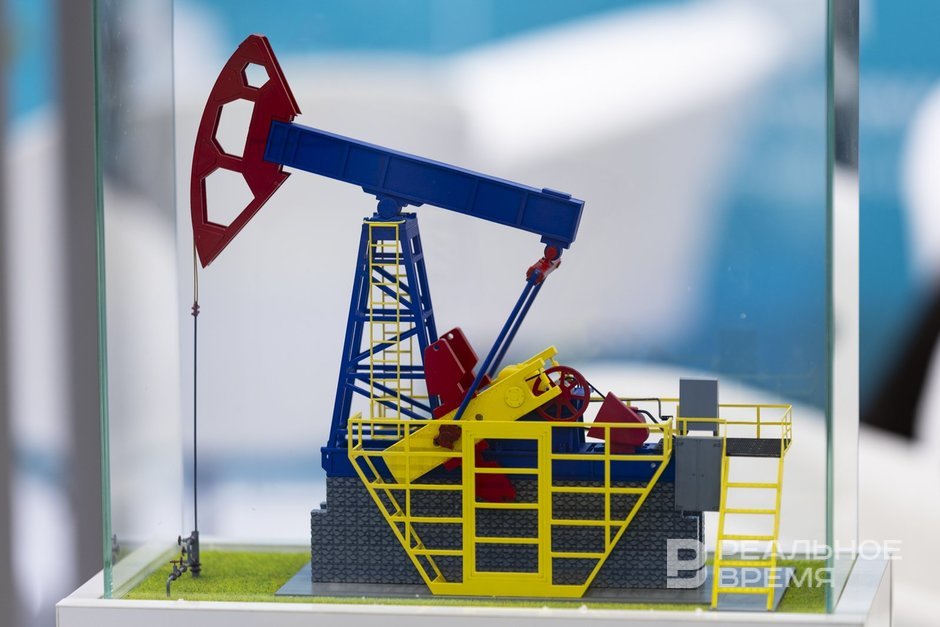
In a couple of years the scientists plan to develop a plan for extracting metals from oil wells. It is planned to extract them in parallel with the extraction of oil and gas. And one can also concentrate on those 80% of wells that are low-productivity and inefficient. At the same time the wastewater is planned to be subsequently purified and reused.
True, for now it is not entirely clear how to solve the potential problem: the seepage of liquid with new chemicals through fractured rock into aquifers.
Every eighth oncological patient in 2024 got cancer because of infections
Scientists from the International Agency for Research on Cancer studied the GLOBOCAN database and assessed from it what share of the 20 million new cases of oncological diseases registered in the world in 2024 is connected with infections. The point is that 12 infectious agents are classified as group 1 carcinogens: it is proven that they cause cancer in humans. These are the bacterium Helicobacter pylori, the human papillomavirus, hepatitis B and C viruses, herpesvirus, HIV, the Epstein-Barr virus, the Merkel cell polyomavirus, the T-lymphotropic virus and three parasites.
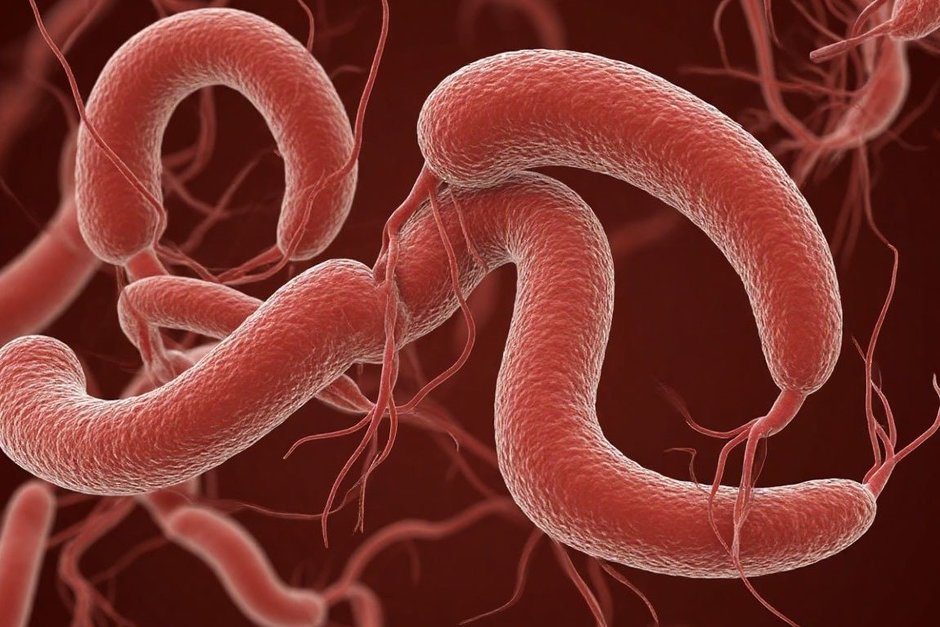
It turned out that approximately 2.3 million new cases of cancer out of 20 million — 12% — fall to these infections. The most oncogenic turned out to be Helicobacter pylori — 760 thousand registered cases; it caused 85% of new diagnoses of non-cardial stomach cancer. 750 thousand cases were “provided” by the human papillomavirus — at minimum it turned out to be connected with all 600 thousand cases of cervical cancer that entered the analysis. Next in this anti-rating come the hepatitis B virus (hepatocellular carcinoma), Epstein-Barr (nasopharyngeal cancer) and hepatitis C (hepatocellular carcinoma).
77 percent of all cases of cancer that are connected with infections fell in 2024 to countries with low and middle income levels. This is connected both with the prevalence of infections and with access to vaccination, diagnosis, treatment and screening. At the same time it is important to understand that for many such tumors there are ways to reduce the risk. Against HPV and hepatitis B one can get vaccinated. Helicobacter can be detected and a course of treatment undergone. If HPV infection is already present, one can conduct detailed screening of precancerous changes.