The birth of the Moon, meeting dark matter, 9 months with a pig kidney
Interesting science news of the week
This week, the Ig Nobel Prize was awarded, which became one of the main events in the scientific world. A separate article about it has already been published in Realnoe Vremya. But the week, as usual, brought many other interesting science news stories. Scientists have proposed a hypothesis that the Moon was born in just five hours, rather than over several years. Humanity has already crossed the line and will not be able to keep global warming within the target range. For the first time, a human lived with a transplanted pig kidney for 9 months and waited for a human kidney transplant. Physicists have for the first time recorded a phenomenon that may be caused by a dark matter particle. Using CAR-T therapy, it was possible to reboot the immune system and alleviate autoimmune diseases. These and other science news stories are in our review.
A new scenario for the birth of the Moon
At the dawn of the Solar System, Theia — an ancient planet about the size of Mars — crashed into the young Earth. Theia was destroyed, leaving gas, molten rock, and dust around the Earth. From these “building materials," the Moon formed over several years.
This is the generally accepted theory of the appearance of our satellite. But it has been called into question. Astrophysicists from the US have presented a new model for the formation of the Earth's natural satellite, which could overturn our understanding of the most dramatic event in our planet's geological history. According to the scientists' calculations, the Moon could have been born almost entirely in just five hours after the giant catastrophe, rather than assembling piece by piece from a debris disk over many months.
For this, the specialists took into account the temperature of the rocks during the collision and their strength. Astronomers had already performed similar calculations when studying asteroid collisions. For these calculations, the researchers adapted methods originally developed to analyze collisions of much smaller asteroids. They published the results of their study in the prestigious journal The Astrophysical Journal Letters.
The key factor determining the fate of Theia's debris turned out to be how heated this planet was before the collision. Modeling showed: if its rocks were cooled, they were strong and did not deform. In this “cold” scenario, the largest fragment of the shattered Theia did not break apart, but in just five hours became what we now call the Moon.
If both cosmic bodies were still hot, their collision led to the classic result — a giant disk of debris. This difference in scenarios is fundamentally important not only for the speed of the Moon's formation. It directly determines the chemical composition of the satellite, namely how many volatile substances remained in its rocks.
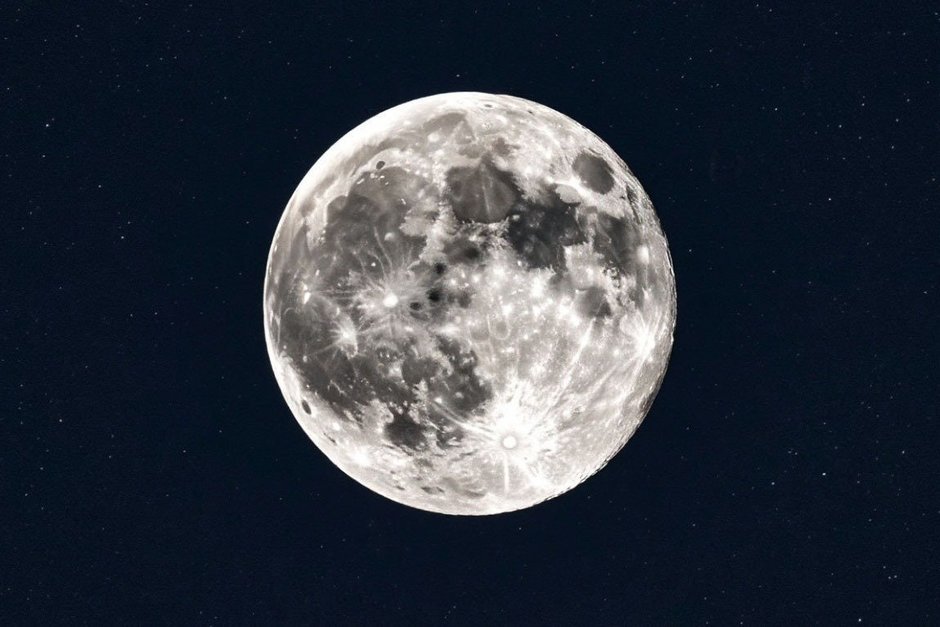
This hypothesis may lead astronomers to think about exactly what period in the early history of the Solar System the fateful meeting of the two planets occurred.
Is climate apocalypse unavoidable?
There is no more time to prevent the consequences of global warming. Humanity has failed this task. The UN Environment Programme has published a report stating that global warming will rise by 1.5 degrees compared to the pre-industrial era. This is inevitable.
What is so terrible about that? Only one and a half degrees, is that really so important? However, this is precisely the threshold after which the risk of fatal climate consequences increases.
For example, if the permafrost in the forests of Siberia and Canada suddenly thaws — the ground will collapse, threatening northern cities such as Norilsk, Yakutsk, and Vorkuta. Pipelines will break, oil and gas pipelines will be damaged, and the environmental catastrophe will be unprecedented. Swamps and new lakes will form where ice sheets once lay. In addition, giant amounts of carbon dioxide and methane will be released into the atmosphere from the ice, triggering a new cycle of warming.

Among other pleasant likely prospects is the disruption of major ocean circulation systems. This will lead to a global catastrophic climate shift, ecosystem destruction, and a humanitarian crisis. In the Northern Hemisphere, the lack of warm water inflow from the tropics could cause extreme cooling (and consequently, the impossibility of obtaining normal harvests). And the Southern Hemisphere will suffer from abnormal heat and drought. An agricultural crisis will cause a global food shortage. Many marine ecosystems will die.
Will this definitely happen? No. But the probability increases with every tenth of a degree of global warming. Scientists say that current global warming is about 1.4 degrees compared to the pre-industrial era. And even under the most favorable scenario, if everyone fulfills their stated climate commitments (reduce greenhouse gas emissions and start removing more CO2 from the atmosphere than they emit), warming will reach 1.8 degrees by 2050. And that is already very bad.
But if we maintain our current course, this value will rise to 2.6 degrees, which will definitely increase the risks.
A patient lived with a pig kidney for 9 months for the first time
Xenotransplantation — transplanting organs from animals to humans — continues to develop. In this regard, scientists are paying particular attention to pigs — their heart, kidneys, and liver are close to ours in both size and physiology. The main task is to make the human immune system accept pig organs. For this, pigs are genetically modified, immunosuppressants are used, and other ways are devised to “befriend” the recipient and the donor organ.
Nephrologists and transplantologists from Harvard Medical School published data on one of the most successful experiments to date. A pig kidney was transplanted into a 66-year-old American with end-stage renal failure. He was on dialysis waiting for a suitable human donor kidney.
The scientists took a kidney from a miniature pig, into whose genome they had previously introduced 69 changes: removed antigens, killed 59 copies of retroviruses, and added a mix of human genes. After transplantation into the patient, the kidney worked immediately. The man was freed from dialysis and began living a normal life. At the same time, he took drugs that suppress the immune system — to prevent the body from rejecting the foreign organ. But when, six months later, the patient required therapy against staphylococcus, the intensity of the immunosuppressive therapy had to be reduced.
And the kidney began to “die.” 271 days after the transplant, the kidney was removed, and the patient returned to dialysis. Later, he did manage to receive a human kidney transplant. For now, his case is the longest example of a pig kidney functioning in a living human without dialysis.

Have physicists found dark matter?
Deep underground, in 1.5 kilometers of rock, hidden from cosmic rays, a huge tank of liquid xenon registered something unusual. A single powerful energy burst — possibly the first direct trace of dark matter, the invisible substance that makes up 85% of the universe's mass. Physicists around the world held their breath.
Dark matter is the greatest mystery of modern astrophysics. We know it exists: galaxies rotate too fast to be held together by visible mass alone, gravitational lenses bend light where there are no stars. But for decades, scientists have been hunting for the elusive particles that should make up this hidden mass. The problem is that these particles almost do not interact with ordinary matter, passing through us and the entire Earth unnoticed.
An international team of 250 physicists decided to outsmart nature. They built the LUX-ZEPLIN detector (or simply LZ) in a laboratory hidden in the depths of the black hills of South Dakota. 1.5 kilometers of rock above is a giant shield, cutting off all cosmic radiation and radioactive interference that could drown out the faint whisper of dark matter.
The heart of the facility is a chamber filled with seven tons of ultra-pure liquid xenon. The physicists reasoned: if a dark matter particle does collide with a xenon nucleus, a tiny burst will occur. They are caught by hundreds of ultra-sensitive sensors. Each such event is like a fingerprint, by which one can judge the mass and nature of the incoming particle.
For three years, the detector remained silent, collecting background noise statistics. And suddenly — a hit. A single powerful burst with an energy of 248 kilo-electronvolts. According to all calculations, this is too strong a burst to be just interference. Mathematical processing showed: the signal is highly likely to stand out from the usual noise pattern.
In particle physics, this is called a “serious hint of a discovery.” Now physicists continue to collect statistics, aiming to reach 1000 days of “clean” observations. Only then will it become clear whether that burst was a coincidence, an error, or whether people have for the first time in history directly touched the invisible matter that makes up the foundation of the universe.
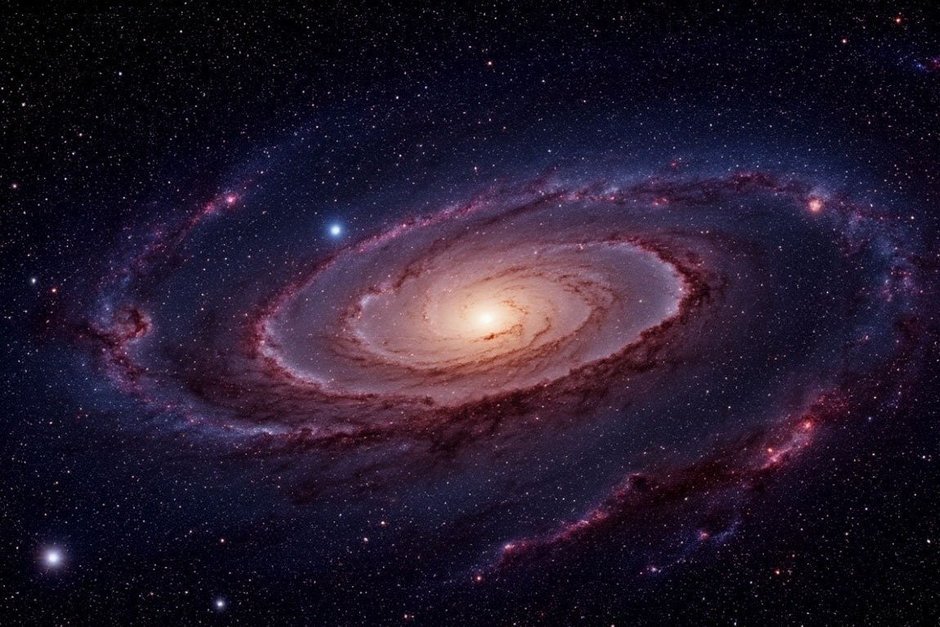
If the hypothesis is confirmed, it will not just be a breakthrough. It will be new physics, a new understanding of the universe. For now, scientists are staring at their graphs — and waiting for a second strike from the darkness.
A virus reprograms the body to defeat multiple sclerosis
A modified virus, injected just once, forced immune cells to attack their own “traitors” — and 16 patients with severe autoimmune diseases felt improvement within a few months. Scientists speak of a promising breakthrough but warn: the finish line is still far away.
It sounds like science fiction: instead of taking the patient's blood, growing an army of supercells in the laboratory, and returning them, Chinese researchers decided to take a different path. They engineered a virus that itself finds the right cells directly inside the body, in vivo, and turns them into disease hunters. And, judging by the first results, it works.
At the heart of the story is CAR-T therapy technology, which has already saved thousands of people with blood cancers. Its essence: a patient's T-cells (the immune system's soldiers) are taken, chimeric antigen receptors — special “sights” for recognizing the enemy — are inserted into them in the laboratory, and then they are returned to the bloodstream. The method is formidable and effective, but insanely expensive and slow.
A group of scientists from Wuhan, led by neurologist Dai-Shi Tian, decided to simplify the system. They took a lentivirus — a safe version of an HIV-like virus — and loaded it with genetic instructions for creating those very receptors. An injection — and the courier virus delivers the blueprints directly to the T-cells inside the patient's body. Therapy creation time shrinks from weeks to hours, and the cost drops many times over. Moreover, it is synthesized directly inside the body!
The trial involved 16 people: some suffered from multiple sclerosis, others from autoimmune myositis (when the immune system attacks muscles), and others from rare diseases in which the brain, spinal cord, and eyes become inflamed.
The results are impressive: after a single injection, the number of B-cells (the very ones that produce autoantibodies that destroy healthy tissues) dropped sharply. And when they recovered — they no longer produced harmful antibodies. The immune system seemed to have undergone a reboot, forgetting its previous aggression against its own body. Participants with multiple sclerosis moved better, their thinking cleared, and fatigue receded. Patients with muscle diseases gained strength and reduced inflammation.
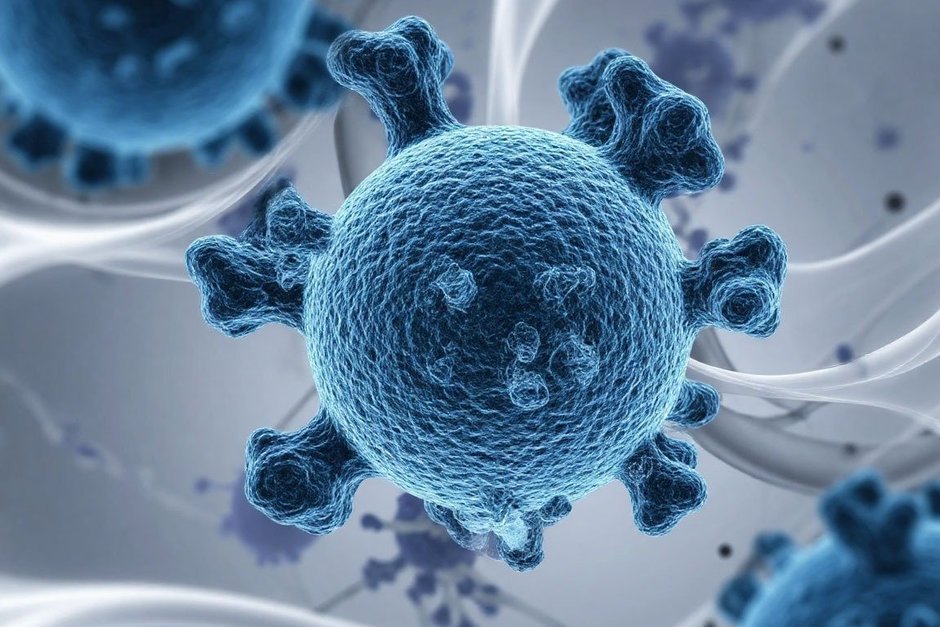
However, researchers urge caution with triumphant reports. First, the sample is too small — only 16 people. Second, observation was only for six months, while autoimmune diseases require years. Third, and most importantly: the lentivirus inserts its DNA into the cell's genome. There is a non-zero probability that this could provoke mutations and even cancer. The researchers predict that they need at least 10 years to ensure the safety and effectiveness of their method.
The study's authors themselves admit: the current data are only “promising signals," not definitive proof. Tian's team plans to launch larger trials focused on each disease separately and monitor patients for several years for infections, relapses, and long-term complications.
But even with all the “buts," this experiment became a crucial milestone. For the first time, CAR-T therapy was created directly inside a human and showed a clinical effect in autoimmune pathologies. If the next stages confirm the results, we will witness a revolution: cheap, fast, and truly personalized treatment that does not require complex laboratories — only an injection and trust in genetic engineering.