How Holden Caulfield's story became the main symbol of teenage loneliness
Book of the week — J.D. Salinger's novel “The Catcher in the Rye”

On July 16, 1951, American writer J.D. Salinger published “The Catcher in the Rye.” Over 75 years, the book has become a classic of 20th-century American literature. By the beginning of the 21st century, its total circulation had exceeded 75 million copies, and annual sales still reach about a million copies. The novel was included in school curricula, banned in libraries, analyzed in university courses, and constantly returned to lists of books everyone should read. Salinger's first-person narrative style influenced many writers, and Holden Caulfield became one of the main symbols of teenage loneliness and rejection of phoniness. The literary critic of Realnoe Vremya, Ekaterina Petrova, explains why, 75 years later, “The Catcher in the Rye” remains a novel that is constantly reread, banned, and reinterpreted.
How Salinger wrote his main book
Holden Caulfield first appeared in Salinger's stories published in American magazines in the first half of the 1940s. In one of them — “I'm Crazy” (1945) — Holden told his own story in the first person for the first time. By that point, the writer had been returning to the Caulfield family for several years, but only the novel made the character full and alive.
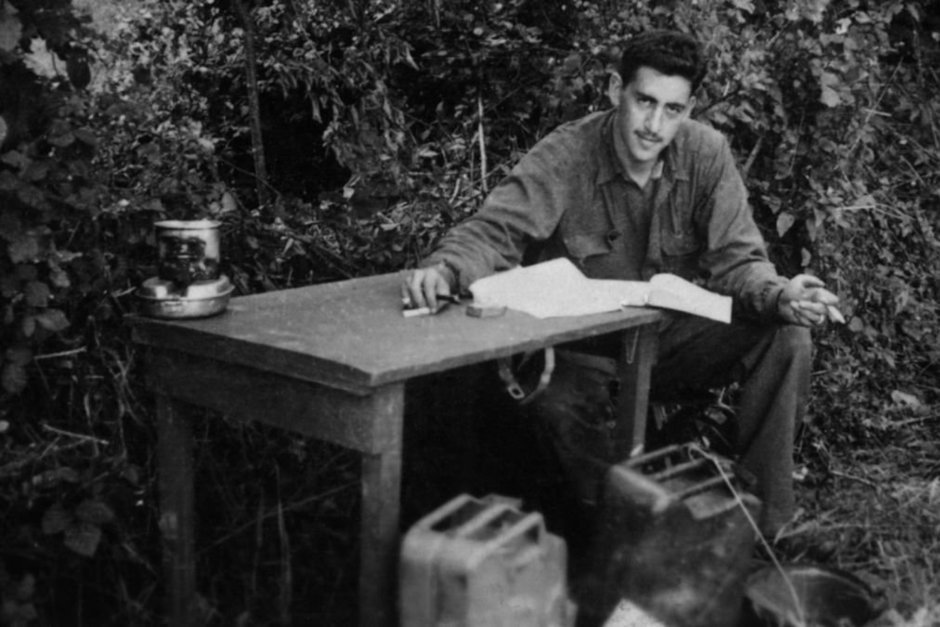
Work on the novel was interrupted by the war. In 1942, Salinger was drafted into the US Army. He served in counterintelligence, participated in the Allied landings in Normandy, fought in the Ardennes, and then found himself among the American soldiers liberating the Kaufering concentration camp — a subcamp of Dachau. During his service, he met Ernest Hemingway, who, after reading his stories, said:
— My God, this guy is damn talented.
What he experienced at the front seriously affected the writer's health. After the war, doctors treated him for weeks for “battle fatigue," which today is called post-traumatic stress disorder. It was then that Salinger wrote the story “I'm Crazy.”
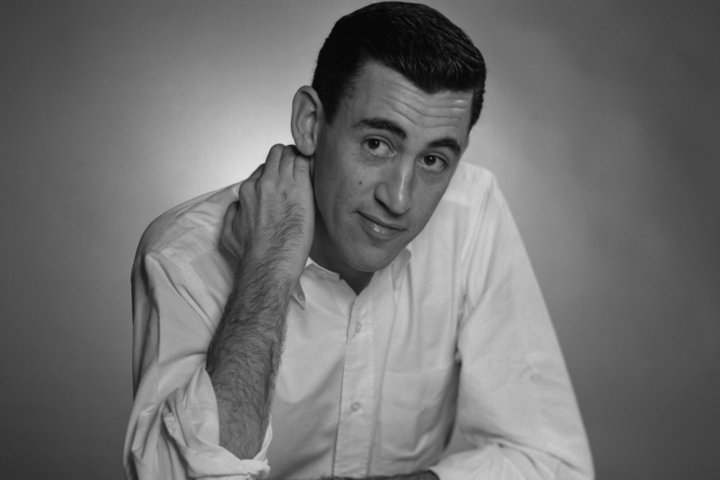
He returned home in 1946 and spent nearly ten years refining the future novel. But publishers were not eager to print it. One publishing house considered Holden insane. The editors of The New Yorker found the Caulfield children too implausible and the author's style overly ostentatious. Only Little, Brown and Company agreed to publish the book in the summer of 1951.
After the book's release, critics' reviews were mixed. Some admired the new voice in American literature and the unusual narrative style; others called the novel crude and too wordy. But this controversy played to the book's advantage. It turned “The Catcher in the Rye” into one of the most talked-about books of its time.
Holden Caulfield — a teenager with an unusually honest voice
Sixteen-year-old Holden Caulfield is one of the most recognizable characters in world literature. He was the first to speak to readers in a way almost no one had spoken before. He is sarcastic, repetitive, jumps from thought to thought, gets irritated, doubts, and constantly calls those around him “phony.” The conversational style, as close as possible to live teenage speech, seemed almost revolutionary in the early 1950s.
Holden became one of the first convincing unreliable narrators in American literature. The reader sees the world exclusively through his eyes and gradually understands that behind the cynicism and rudeness lie pain and fear of growing up.
Salinger's contemporaries often perceived Holden as a rebel rejecting social rules. However, over time, critics began to pay attention to the other side of the hero. After the death of his younger brother Allie, he grieves heavily, reacts painfully to any injustice, and desperately tries to preserve his childhood ability to trust people.
His constant accusations of hypocrisy — the famous word “phony” — became one of the novel's trademarks. At the same time, the English “phony” is much broader than the usual Russian translations of “lipe” (fake) or “falshivka” (counterfeit). Holden puts into this word everything that seems insincere, artificial, done or said under the influence of others' expectations.

In the original, the book is called “The Catcher in the Rye.” It refers to the scene where Holden tells his younger sister Phoebe about his dream. He wants to stand at the edge of a huge rye field and catch children so they don't fall into the abyss. Only the hero misremembers a line from Robert Burns's poem “Comin' Through the Rye.” Holden replaces the word “meet” with “catch.” In his worldview, an adult should protect childhood from an inevitable confrontation with reality.
In the Russian version, the title was not translated literally. “Above the Abyss in the Rye” was proposed by translator Rita Wright-Kovalyova. Literary scholars agree that this translation, nevertheless, conveys the central image of the novel — the feeling of a dangerous border between childhood and adult life.
From school bans to classic status
“The Catcher in the Rye” has a rare quality: it both irritates and attracts readers. Already in the early years after publication, some critics called the book “an unusually brilliant debut," while others accused it of “immorality and perversion.”
From the early 1960s, more than 70 American cities and school districts demanded that the novel be removed from curricula or restricted. Parents and school boards were outraged by Holden's constant swearing, talk of sex, the episode with the prostitute that the hero ultimately avoids, and the scene with Mr. Antolini, whose behavior Holden perceives as sexual harassment. Added to these complaints were accusations of blasphemy, promotion of alcohol, smoking, lying, and teenage rebellion.
But while some schools banned the book, others included it in their mandatory literature curriculum. Researcher Pamela Hunt Steinle noted that half a century after its release, “The Catcher in the Rye” remained simultaneously “America's most taught and most banned book.” Teachers defended the novel because they saw in it an honest conversation about growing up, while supporters of the ban feared something else. According to Professor John Arthur Maynard, many censors were not afraid of free speech per se but that Holden would convince teenagers to “have no values at all.” Yet the hero himself does not reject morality at all. On the contrary, he is irritated that adults do not live up to their own principles.
The noise around the bans only increased interest in the book. In 2005, Time magazine included “The Catcher in the Rye” in the list of the best 100 English-language novels since 1923, and by that time, the novel had already become one of the most studied works in American schools and colleges.
Literary scholars find Salinger's intonations in the works of Sylvia Plath, Philip Roth, John Updike, and Dave Eggers. After the writer's death, Eggers recalled that Salinger's dialogues still seem to him “the truest," and his prose simultaneously sounds natural and musical.
Salinger himself categorically forbade film adaptations of the novel:
— The value of the book is in the voice of its narrator... It cannot be separated from the first-person narrative. Holden Caulfield cannot be played, — he explained in a 1957 letter.
The novel never received an official film adaptation. The efforts of Steven Spielberg, Billy Wilder, and other directors were in vain.
But over the past decades, researchers have reconsidered their attitude toward Holden. Early reviewers debated whether he was a rebel or a spoiled teenager. Modern literary scholars increasingly examine the novel through the lens of psychology. They focus on the death of his younger brother Allie, feelings of alienation, depression, emotional trauma, and signs of post-traumatic stress disorder that manifest in the hero's behavior. Incidentally, Holden himself repeatedly called his story “crazy.” He felt as if he was “disappearing” every time he crossed the street and dreamed of going somewhere where no one knew him.
“The Catcher in the Rye” is simultaneously a coming-of-age novel, a psychological confession, a conversation about trauma, and a critique of a society where sincerity constantly clashes with phoniness. Each new generation of readers tries anew to answer Salinger's question, which he left open back in 1951. Can one be compassionate when the world around seems phony?!
Publisher: Eksmo
Translation from English: Rita Wright-Kovalyova
Number of pages: 320
Year: 2026
Age rating: 16+
Ekaterina Petrova — literary critic for the online newspaper Realnoe Vremya, host of the Telegram channel «Булочки с маком».