Freedom according to Bobin
This week's book: Christian Bobin's short novel “The light pace”
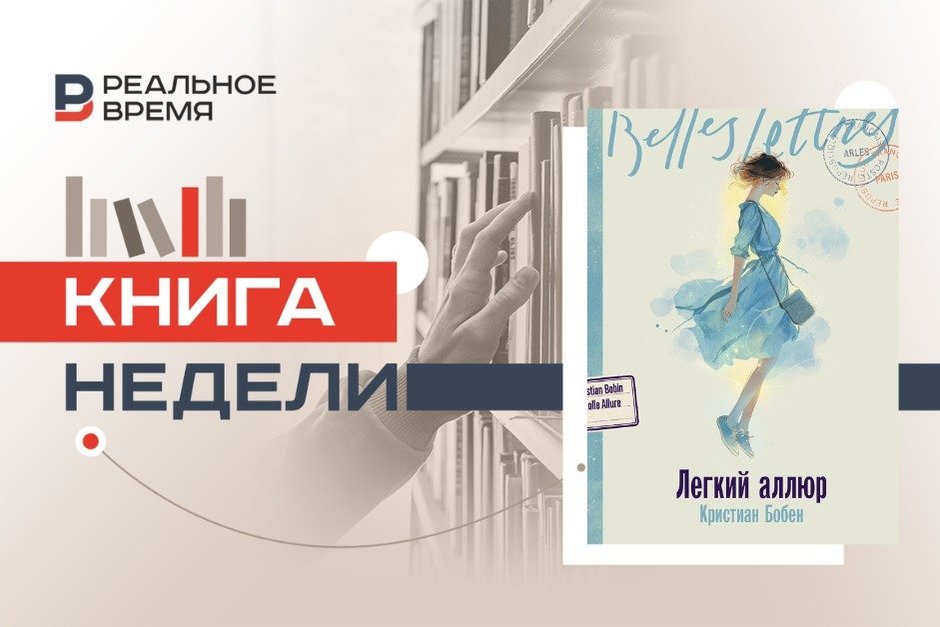
On Friday, April 24, Christian Bobin would have turned 75. An author who wrote briefly, lived reclusively, and turned attention to the small into great prose. Literary columnist Yekaterina Petrova of Realnoe Vremya explains how Bobin consciously rejected a loud literary career and how, in his short novel “The Light Pace," he managed to pack decades of life into a continuous movement.
Silence instead of loudness
“I am very happy that my books touch people, both the very simple and the very learned," Christian Bobin said in one interview. Behind his texts stands a man who consciously chose silence over loudness.
Christian Bobin was born on April 24, 1951, in Le Creusot to factory workers at the Schneider plant. His father worked as an industrial painter, his mother as a copyist drafter. The youngest of three children, Bobin developed an early interest in books and immersed himself in them completely. “I would be incapable of writing stories about childhood… my memory of all that is almost destroyed," Bobin recalled of his childhood. He chose philosophy at the University of Dijon and became fascinated with Plato, Spinoza, and Kierkegaard. This reading later entered his prose as a hidden foundation.
He did not build a straight career path nor seek success. Christian Bobin worked as a librarian, a guide at an ecomuseum, an editor, an orderly in psychiatry, taught philosophy, and wrote simultaneously. In 1977, he published his first book, “The Purple Letter.” In the 1980s, Bobin chose a short form — fragments between essay and poetry. In 1991, he received wide recognition with “The Little Festive Dress," and a year later solidified his success with “The Very Little One” — a book about Francis of Assisi that won the Prix des Deux Magots. Bobin continued to publish regularly but avoided the literary scene. “My life has passed in books, far from the world… I did with reading what birds do with twigs — I built a nest," Christian Bobin described his life in the book “Louise Amour” (2004).
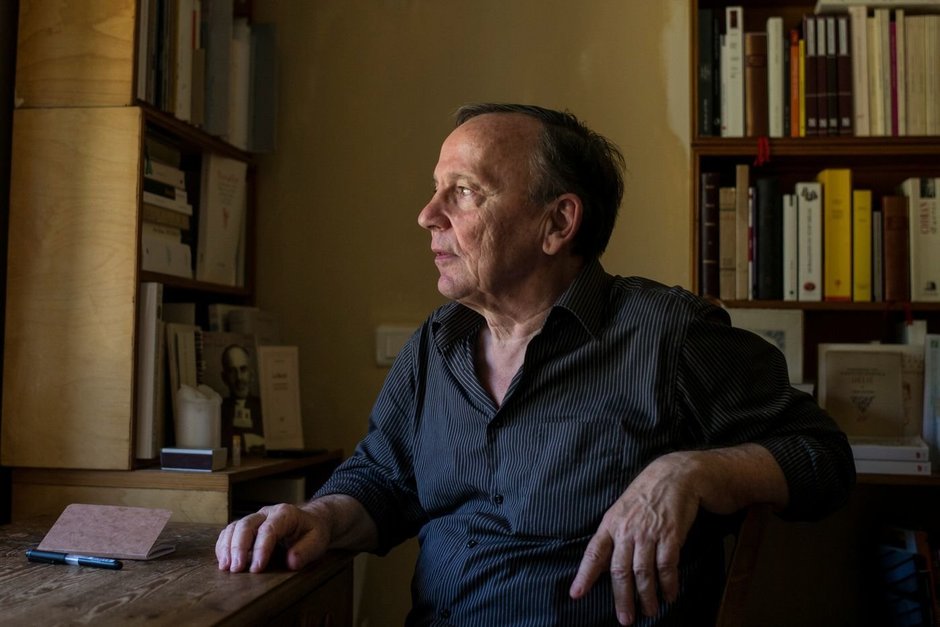
He wrote briefly and densely, as if capturing moments. His texts blur genre boundaries: novel, diary, essay, and prose poems coexist in Bobin's work in the same space. He chose a fragment and built an entire world from it. The writer often returned to themes of childhood, solitude, absence, and emptiness. In his texts, joy coexists with sadness — a sadness filled with hope.
Christian Bobin sought that which “seems unaware of time: flowers, love in its first shyness, waiting, the beauty of a face, silence.” After the death of his friend Ghislaine Marion in 1995, he wrote “More Alive Than the Living” and continued to return to the theme of loss in other works.
He lived reclusively, consistently reducing contact with the outside world to the necessary minimum. From 2005 onward, Bobin settled into a house on the edge of a forest near his hometown and stayed away from publicity. He died in November 2022 from a rapidly developing form of cancer at the age of 71. Christian Bobin left behind dozens of books and an attention to the small that he transformed into text.
Always in motion
“The Light Pace” is a short novel — small only in size but huge in impulse. The text immediately sets motion in action. Within this motion appears Lucy. She changes names — Lucy, Irene, Prune, Marilyn. With each new name, Lucy invents a new life for herself. She grows up in a traveling circus and doesn't stay there either. Lucy runs again and again. These escapes began with the death of a wolf who, from the entire troupe, recognized only two-year-old Lucy, allowed her near him, and guarded her sleep.
Lucy marries, divorces, has affairs, works in film, and finally retreats to a hotel to write the book the reader holds in their hands. Accompanying her are a wolf with yellow teeth, an angel with red hair, and a “fat man” named Bach.
Lucy does not explain her decisions or seek excuses. She listens to what she calls “her angel” and follows that voice. This voice leads her into a basement, to foreign cities, and to chance encounters. She clings to a simple formula: “we'll see.” She tests “her angel” (an inner voice) on every significant and not-so-significant decision. She proves that no one can ever force her to do what she does not want.
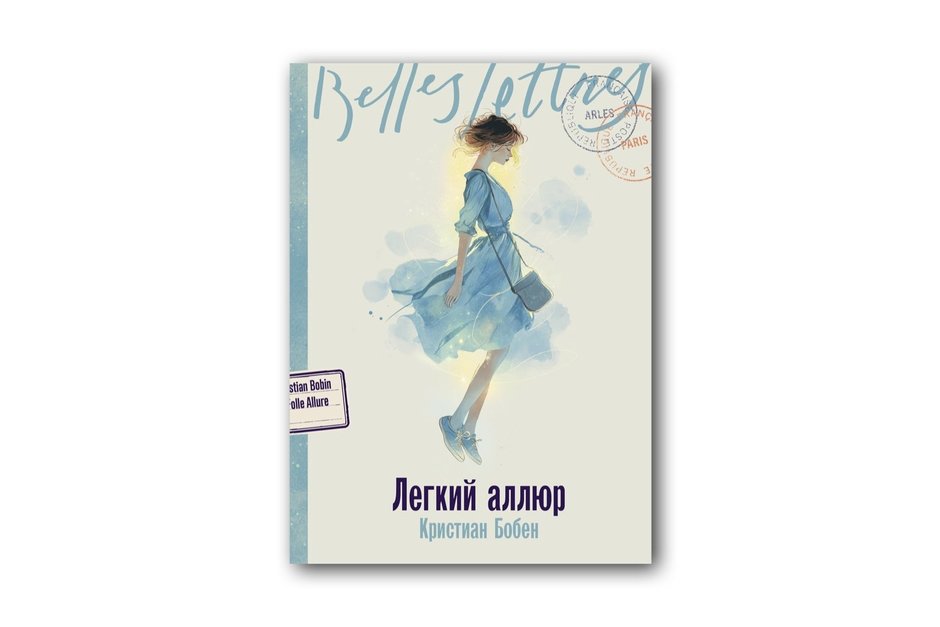
Lucy's story begins with childhood. She recalls her first love:
— My first love had yellow teeth. I was two, two and a half years old, and I stared at him with wide eyes. He crept through my pupils straight into the little girl's heart and made himself a burrow, a home, a lair there.
She does not separate adult life from early impressions. Lucy sees time differently: the short book, just over 150 pages, encompasses decades, as if life stretches out within motion. Lucy returns to the past and assembles it as a series of episodes, not as a linear path.
Bobin constructs the text from fragments and observations. He captures details and extracts meaning from them. He writes as if cutting out feelings and displaying them separately, cutting away the excess. His phrases move quickly, like Lucy herself, and maintain the rhythm of her light pace.
Christian Bobin does not argue with life nor simplify it. He offers another way of seeing. “The Light Pace” is a book about the love of life — unconditional love, despite all the world's injustice and contradictions. Bobin registers these contradictions while simultaneously holding onto joy. He shows how to turn darkness into light.
This book is worth reading if only for the motion it sets in motion. It offers a way to live life, marveling at each event as if for the first time. “The Light Pace” is an ode to freedom — fierce, mad, yet simultaneously calm and measured. The book leaves the reader inside this tempo. After finishing it, one feels that the movement toward freedom could continue indefinitely.
Publisher: Belle Lettre
Translation from French: Ira Filippova
Number of pages: 176
Year of publication: 2026
*Age rating: 16+*
Yekaterina Petrova is a literary columnist for the online newspaper Realnoe Vremya and hosts the Telegram channel «Булочки с маком».