The Englishman who offended Kazan: what we learned about Turnerelli from the book “The British Tatar”
The National Museum of the Republic of Tatarstan has published a book about the artist Edward Tracy Turnerelli. We tell what can be learned new from it, and what has remained a mystery
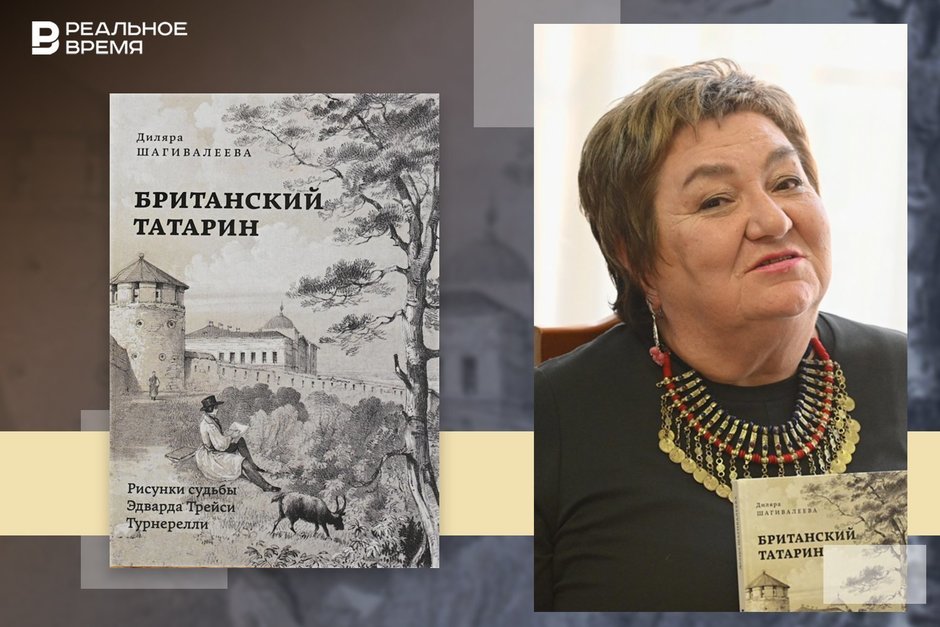
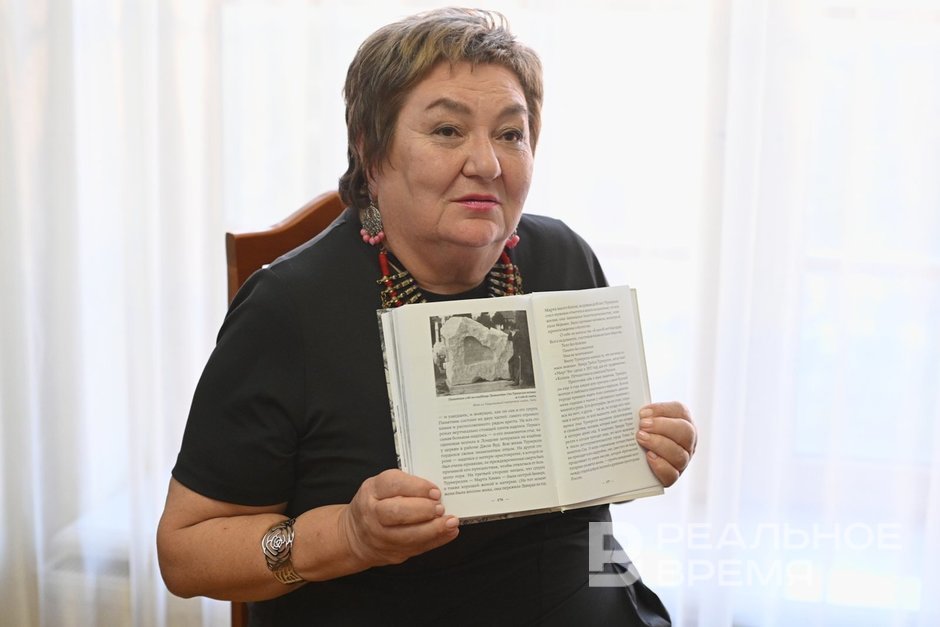
The National Museum of the Republic of Tatarstan has published the book “The British Tatar” by the art historian and researcher Dilyara Shagivaleeva. This is a biography of the artist Edward Tracy Turnerelli, well known in Kazan, who lived in our city in the middle of the 19th century, taught English at Kazan University and left sketches of views of Kazan. The literary reviewer of “Real Time” Ekaterina Petrova read the book and tells what new can be learned from it about Turnerelli, and what requires additional research.
How a student enthusiasm turned into a book
Dilyara Shagivaleeva is a Russian and British art historian, culturologist, candidate of philosophical sciences, independent researcher and professional guide-translator. Her main sphere of interests is art history, mainly the Northern Renaissance and the work of Hieronymus Bosch. But back in her student years in Kazan Shagivaleeva became interested in the figure of Edward Tracy Turnerelli. She studied his Kazan period, but after moving to London Shagivaleeva learned about his rather eventful life in Great Britain. At the same time in Russia he is known more precisely as an artist, but in his homeland he is known as a writer and political figure.
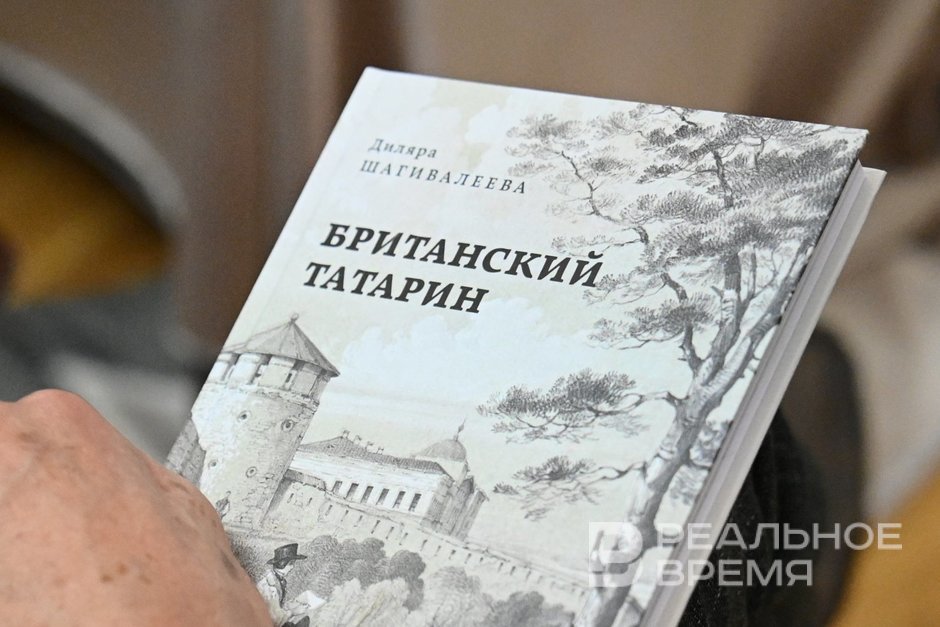
In the end the student enthusiasm grew into a research work, the result of which was the biography of Turnerelli, “The British Tatar.” In this book the art historian tried to gather the fullest possible information about the artist's life in Great Britain and Russia. The work itself turned out to be small: only 192 pages, which included Turnerelli's drawings, as well as an impressive list of sources. At the same time Shagivaleeva even in this small volume managed to fit new information about the object of her research that was not known earlier either in Russia or in Britain.
The documentary basis of the book was archival documents, newspaper articles of the mid-19th century, memoirs. But of greatest interest is Turnerelli's autobiography, which Shagivaleeva uses as a source for demonstrating the artist's impressions of various events in his life. But the author of “The British Tatar” does not follow the text blindly. For example, Shagivaleeva conducts a fact-check of Turnerelli's trip to Russia.
In 1835 the artist's mother — Margaret Tracy Turnerelli — dies. This was a blow for the young man. But an even greater blow awaited him ahead, when a few months later his father married a second time. According to Shagivaleeva, it was precisely this that became the reason for Turnerelli's departure from Great Britain. In his memoirs he writes that he “left England in the autumn of 1836 together with the suite of the newly appointed British ambassador heading to the Russian Empire," by carriage through Europe. Only, according to Shagivaleeva's investigation, this could not have been, since the ambassador arrived in St. Petersburg in November 1835 by ship through Odessa.
These “inaccuracies” the author of the book explains by Turnerelli's advanced age: at the time of writing the autobiography he had turned 71. But at the same time Shagivaleeva allows that the artist could have deliberately “embellished” the details of his life (there are many such “inaccuracies” in the autobiography) in order to raise his social status in the eyes of British readers.
Turnerelli in Kazan
Edward Tracy Turnerelli arrived in Kazan on June 20, 1837 together with the professor of oriental literature of Kazan University Alexander Kasimovich Kazem-Bek. On that same day the arrival of the tsarevich Alexander Nikolaevich, the future emperor Alexander II, was expected. Even then there was a tradition of showing oneself only from the best side, therefore Kazan was decorated approximately as it was done for the football world championship.
— The whole city was illuminated, a huge crowd of inhabitants of all estates filled the streets, rich carriages kept passing by, Turnerelli wrote, sharing his impressions of the rich illumination.
Besides the first impressions of the city, Turnerelli told in his autobiography that he was presented to the tsarevich and even “received an invitation to accompany the heir and his suite on a trip to Bolgar.” Shagivaleeva doubts the truthfulness of these words, since no confirmations of this were found. But the artist was in Bolgar all the same, only later. He left a detailed description of his trip and several drawings. To our days only two have been preserved: images of the Black Chamber and the Great Minaret. According to Shagivaleeva, there should be other drawings, but so far they have not been found. The art historian hopes that someday they will “surface” and give more information both about the old city and about Turnerelli's stay in it.
In Kazan the artist was first of all engaged in teaching English at the 1st gymnasium and at Kazan University, where he became close with the local intelligentsia. Turnerelli was a welcome guest in the house of Karl Fuchs; he introduced him to the customs and everyday life of the Tatar population of Kazan. Shagivaleeva also makes an assumption based on a personal conversation with Lia Bushkanets that Turnerelli could have given English lessons to the young Leo Tolstoy. Since the latter was interested in the language and even bought a self-teaching manual. A rather bold assumption.
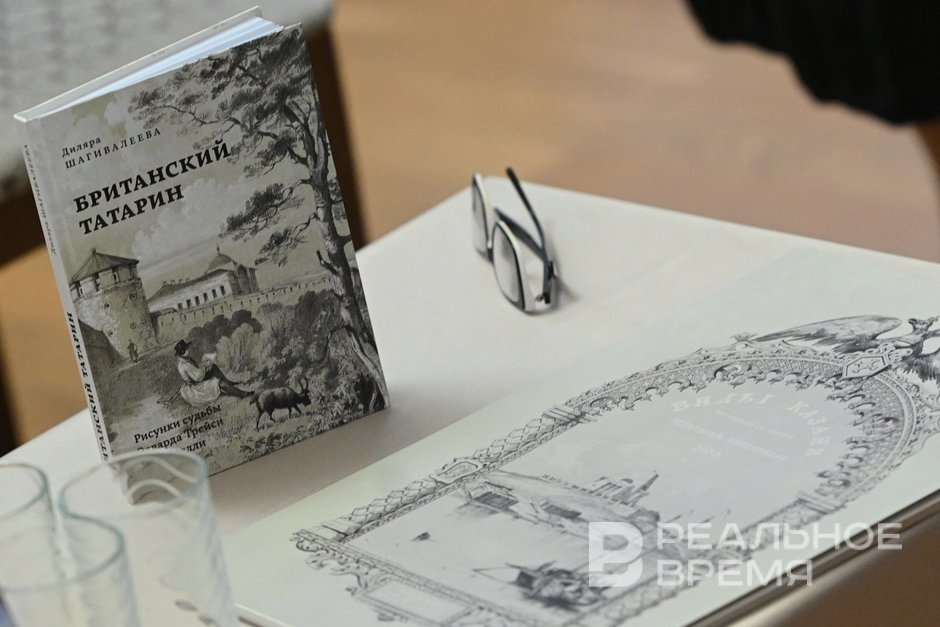
The main result of Edward Tracy Turnerelli's stay in Kazan were two works, one of which turned out to be scandalous for the artist. He had accumulated a decent number of drawings that could be combined into the album “Views of Kazan, Drawn from Nature.” In Turnerelli's works the “wooden” appearance of Kazan was preserved, which completely disappeared after the fire of 1842. Turnerelli published the album in London in 1839.
In his memoirs the artist writes that the cost of publishing the album was 600 pounds. Shagivaleeva reasonably asks the question: where did he get the money? In that same 1839 Edward Turnerelli's father died, the entire inheritance passed to the second wife, and the artist was left without means of subsistence. Shagivaleeva notes that Turnerelli had several imperial rings. The researcher supposes that the artist sold one or two to pay for the making of the album. By the way, 14 view tonal lithographs, of which the album consisted, are in the book. They are presented by several spreads randomly scattered throughout the whole edition of “The British Tatar.” Only for some reason they were included by several spreads, breaking the unfinished sentences of the text itself. And it is unclear: whether to look at the pictures or to read the text.
And in 1841 Turnerelli printed in St. Petersburg the book “Kazan and Its Inhabitants.” It came out in French and was addressed to the Russian and European reader. In this work the artist told “about various sides of the life of Kazan, including history, peculiarities of architecture, weather and, of course, a characterization of its inhabitants.” And for the “characterization” he paid.
— The book “Kazan and Its Inhabitants” is extremely interesting as a rare testimony of the era. These are apt, lively and European-ironic observations of the inner life of the Russian provinces through the eyes of an outsider. Unique notes of a foreigner who showed the life of Russia hidden from outside eyes with subtle British humor.
What today is read with interest was then, apparently, read with horror. Turnerelli went over the secular mores of the Kazan nobility like a steamroller. He noted that Kazan tries to blindly imitate Petersburg and Paris, and it comes out provincial. The nobility is seized by gambling mania instead of conversations about art and science (not much has changed since that time; in the best houses of Kazan, art is still not discussed at dinner), they prefer to dance and play preference. He also showed the underside of hospitality, behind which is hidden not generosity but vanity, and described the officialdom “with a purely Gogolian sweep.” In short, he made himself plenty of enemies.
It is considered that it was precisely the release of this book and its rejection in secular society that forced Turnerelli to leave Kazan. Shagivaleeva considers that this is not so. She writes that back in 1840 the artist was inquiring about a teaching position in St. Petersburg, that is, before the release of the book. Only he left Kazan not even in the nearest year. This happened in August 1844. On the whole quite a lot of time passed from the release of the book. Therefore the reasons for the departure from Kazan, in my opinion, have remained unclear.
After Kazan
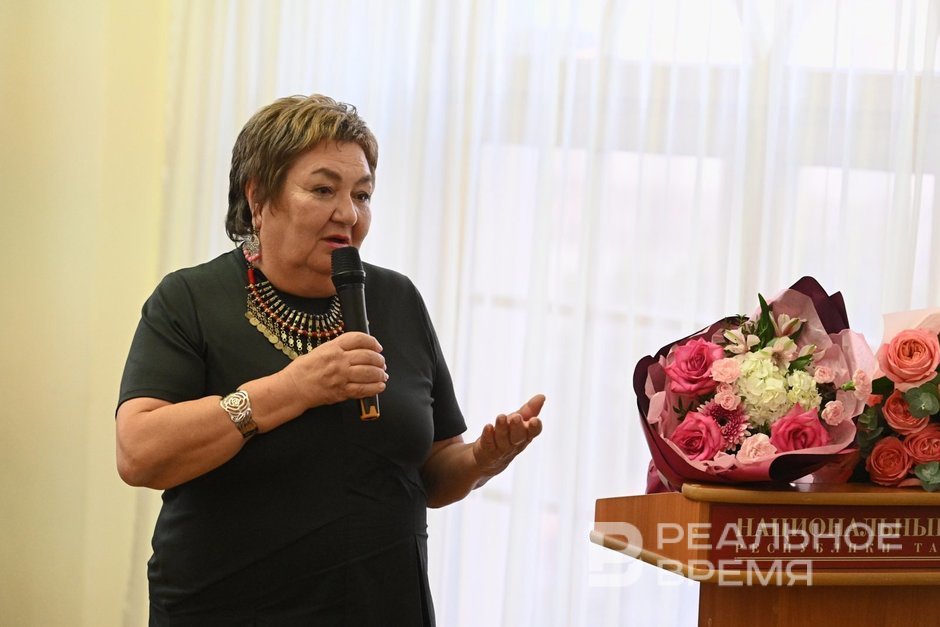
And then the most interesting begins. At the presentation of the book at the National Museum of the Republic of Tatarstan Dilyara Shagivaleeva said that Turnerelli's further stay in Russia is her personal contribution to the study of the artist's life. As it turned out, local researchers stopped exactly at Turnerelli's departure from Kazan, while British ones studied exclusively life in England. Shagivaleeva began to search for what the artist did in Russia for another ten years before his arrival in his homeland.
As the researcher found out, “on June 1, 1844 Eduard Petrovich Turnerelli submits a petition for transfer to the Naval Cadet Corps” in St. Petersburg. There he taught English for 10 years, and also arranged public lectures and group language study close to the modern methodology of teaching. Shagivaleeva found in old archives newspapers with an announcement about the recruitment of groups and tutoring. According to her, he was “one of the most popular teachers of English for the general public in St. Petersburg.” Besides, it was precisely work in the capital that helped improve Turnerelli's financial position.
But then the Crimean War began, because of which he was forced to leave Russia and return to his homeland. This block in Shagivaleeva is rather dubious. There is a lot of factual information here, there are archival materials and Turnerelli's autobiography. But the author uses emotionally colored expressions that are unclear what they are supported by. “Made a difficult decision," “realized the tragedy of the situation that had developed personally for him," “perceived the anger of his compatriots painfully," “the awareness that his students and his fellow tribesmen would now kill each other gave him no peace.” There are no footnotes to the autobiography, so from where could Shagivaleeva know what Turnerelli thought and felt?
Here she also writes that upon returning to London Turnerelli proposed to draw a detailed plan of the fortress in the Kronstadt bay, so that it would be easier to neutralize the cannons and seize the fortress. On the one hand, this is a logical decision for a citizen of a country that is at war with another. But it contradicts all those spiritual torments that Shagivaleeva set out two pages earlier.
Then the author of the book writes that the artist “decided to fight British stereotypes about Russia.” Such an assumption can be made taking into account his further activity, when Turnerelli traveled around the country with lectures about Russia in general and about Kazan in particular. But from where again such an assertion appeared is unclear.
On the whole, if one does not count the small shortcomings, “The British Tatar” is an informative book not only for local historians. It is interesting to read for any resident of Kazan, to see the city through the eyes of a foreigner, to examine, in the end, the appearance of the capital of Tatarstan in the middle of the 19th century. Perhaps it is precisely this book that will become a stimulus to delve into the works of other scientists and travelers, for example Roderick Murchison, with whom that same Turnerelli was acquainted and who visited Kazan in May 1841.
Publisher: National Museum of the Republic of Tatarstan
Number of pages: 192
Year: 2026
Age restriction: 12+
Ekaterina Petrova — literary reviewer of the online newspaper “Real Time," host of the Telegram channel «Булочки с маком».