What Dreiser understood about the American Dream a hundred years ago
Book of the week — American writer Theodore Dreiser's novel “An American Tragedy”

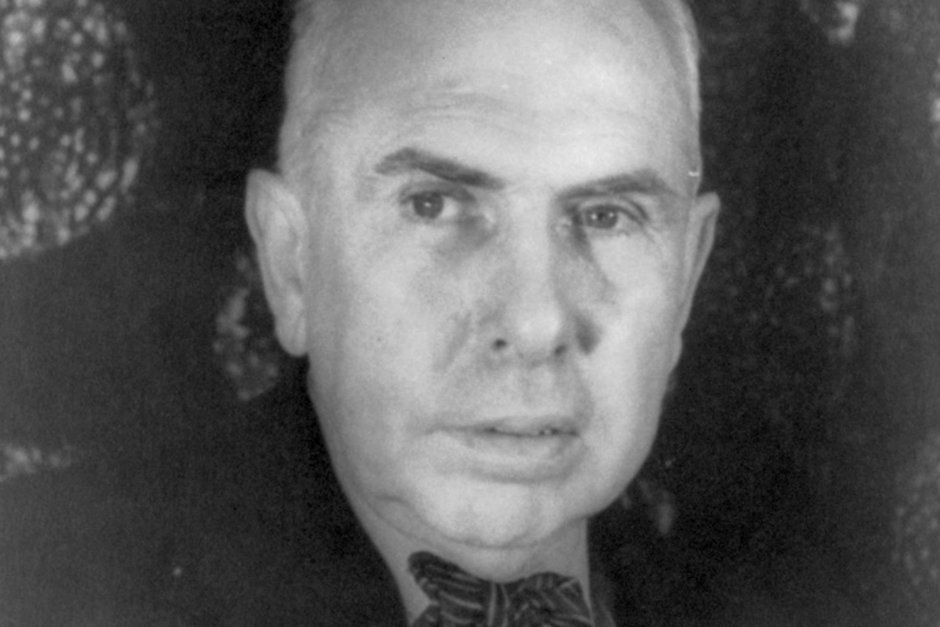
This week, on August 27, marked the 155th anniversary of Theodore Dreiser's birth. His most famous novel, “An American Tragedy," is over a hundred years old, but Clyde Griffiths's story still sounds quite recognizable today. The hero wants to make something of himself, get money, a beautiful life, and recognition from those above him on the social ladder. But in the end, he finds himself on a path to murder. The literary critic of Realnoe Vremya, Ekaterina Petrova, examines whether this is Clyde's personal tragedy or a tragedy of American society.
Where Clyde Griffiths came from
Published in 1925, “An American Tragedy” became the culmination of Dreiser's artistic path and at the same time one of the most ambitious American novels about how personal ambitions collide with the social structure of society. Dreiser knew the America he wrote about well. He was born in 1871 in Indiana, grew up in poverty, studied at university for only a year, and then entered journalism, working for newspapers in St. Louis, Chicago, and New York. It was largely his journalistic training that defined his writing method.
Researcher Matthew Bruccoli called him one of the most “documentary” American social novelists. Reporting gave Dreiser the technique of observation and the ability to turn journalistic material into literature. While preparing to work on “An American Tragedy," the writer studied criminal behavior, consulted with psychoanalyst A. A. Brill, read Dostoevsky and Freud, and also independently studied the natural sciences.
The starting point for the novel was the sensational 1906 murder. Young Chester Gillette drowned his pregnant lover, Grace Brown, in a lake in upstate New York. After a widely publicized trial, he was sentenced to death and executed in 1908. Dreiser followed the case in the newspapers and returned to the story for many years before it became the basis of the novel. But most importantly, the writer deliberately moved the action from the early 20th century to his contemporary America of the 1920s.
Dreiser believed that the circumstances that produced the Gillette case had not disappeared. The external side of life had changed — cars appeared, a new youth culture, different social habits — but the fundamental limitations and inequality remained.
Chester Gillette gave Dreiser the plot, but Clyde Griffiths turned out to be much more than a literary double of the real killer. He is a poor, restless son of a family of street preachers. He grew up in a world where religious sermons explained little about human desires, while the surrounding America constantly demonstrated the allure of wealth and a beautiful life.
Even as a teenager, Clyde wanted to escape from his family and his position. Working in a hotel introduced him to the world of money and entertainment, and then he ended up at his rich uncle's factory. Here, his desire to “rise” took on an almost tangible form. Clyde began to understand that between him and the people he admired there was not only a difference in money but also a whole social distance. He was particularly drawn to Sondra Finchley — a girl from a wealthy family, the embodiment of the life he wanted to have. At the other pole was Roberta, a factory worker, socially close to Clyde and therefore reminding him of his past.
Clyde is one of the novel's most complex characters. He does not appear as a born criminal or a hero of classical tragedy. He has neither particular greatness, nor a strong will, nor a clear value system. He is rather an ordinary young man whom Dreiser places under the pressure of desires and the social environment. His misfortune is that wealth becomes for him almost the only conceivable form of freedom, and social success becomes proof of his own worth.
At the same time, Dreiser does not absolve him of responsibility. Clyde makes a choice that leads to Roberta's death. But the writer is interested in the entire path to this choice: doubts, fantasies, cowardice, attempts to justify himself, and the gradual transformation of the thought of crime into the possibility of committing it. Clyde is both the culprit and a product of the surrounding world.
The two Americas between which Clyde is torn
Clyde has every reason to perceive America as a land of opportunity, but almost no chance to take advantage of them on equal terms. In “An American Tragedy," Dreiser confronts two Americas that exist side by side but live by different rules. One is Clyde and Roberta's world. It is factories, hard work, modest incomes, religious prohibitions, and constant dependence on the will of others. The other is Sondra's world and her circle. In it, there is money, beautiful houses, cars, entertainment, connections, and confidence in one's own future.
The difference between them is measured not only by bank account balances. The rich receive, along with money, freedom of choice and the right to make mistakes, while the poor have to pay for every violation of social rules. Dreiser shows this particularly harshly in Roberta's story. Poverty and her position as a factory worker practically predetermine her place in society. Choosing between two women, Clyde is essentially choosing between two Americas.

Dreiser's man does not exist in a vacuum and does not control his own destiny with the freedom that the classical crime-and-punishment story assumes. Clyde remains responsible for what he did, but ceases to be the sole cause of the catastrophe for the reader. In this sense, the novel can be read as an investigation of a mechanism: society produces desires, a person tries to match them, and then is punished for going too far.
But for the modern reader, reading “An American Tragedy” becomes a trial. Dreiser writes heavily, in detail, sometimes painfully slowly. He seems to refuse to miss a single detail that could explain the hero's actions. As a result, the factory, the hotel, clothing, conversations, money, newspaper reports, and court procedures receive almost as much weight in the novel as the plot itself.
Bruccoli ironically called Theodore Dreiser one of the greatest “bad writers” and at the same time explained why he cannot simply be dismissed. After all, behind the heaviness of the prose, one feels immense sincerity. And Dreiser's excessiveness creates a sense of documentary investigation, while the slow movement toward the catastrophe does not allow reducing it to a single fatal decision.
We see hundreds of small circumstances from which it gradually unfolds. The lake, the boat, clothing, cars, factory spaces, the houses of the rich. All of them gradually become symbols of Clyde's position and his internal state. The scene on the lake is particularly terrifying: the beauty of nature contrasts with what is happening in the hero's mind. The dark lake and the empty forest give Clyde simultaneously a sense of a trap and the possibility of disappearing along with his crime. Nature seems to continue to exist indifferently alongside his moral collapse. Dreiser endows the most mundane things with emotional tension, and connects recurring objects and natural images with Clyde's hopes, fears, and fragmented consciousness.
After the murder, Dreiser moves the tragedy from the quiet space of the lake to the even more brutal world of the police and newspapers. Clyde turns from a man into a “case," and his crime becomes a public spectacle. Here again, two Americas converge. On one hand, the law is formally the same for everyone, but on the other, it is precisely social status that determines how a person is seen by others and what consequences follow for them. By the way, Sondra's name practically disappears from the judicial history. Her family has enough wealth and influence to shield their daughter from public shame. But Clyde has no such protection.
America as a character
America in the novel becomes another character. It is vast and indifferent to the fate of an individual. Dreiser shows it through factories and hotels, rich houses and cheap apartments, cars, clothing, restaurants, newspapers, courts, and churches. All of this constitutes a unified social system in which a person is constantly reminded of their place.
It cannot be said that the entire novel is merely a critique of the American dream. The desire for wealth or social success is not inherently vicious. On the contrary, Clyde wants what the surrounding culture constantly teaches him: to be successful, dress well, date a beautiful girl, belong to the wealthy class, and enjoy all the advantages of modern life. The problem arises when success becomes for him the measure of his own human worth.
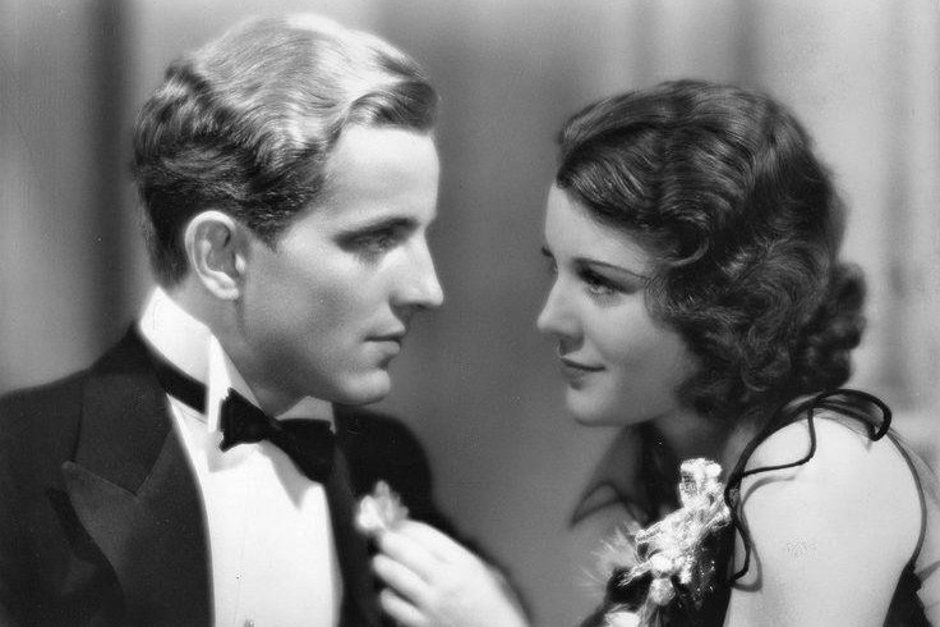
Dreiser's American dream acquires a terrible paradox. It promises a person freedom but makes them increasingly dependent on money and status. At the same time, Dreiser's contemporaries saw much more than social criticism in the novel. “An American Tragedy” was a major commercial success, and the critics' reactions were mostly favorable, although the book immediately sparked debates about its style and artistic merits. They praised Dreiser's scale and his ability to see the structure of American life behind a criminal story. Among his well-known supporters were H. G. Wells, Sherwood Anderson, and Sinclair Lewis.
But there was also an opposing tradition of assessment. The novel seemed excessively long and overloaded with details. Indeed, Dreiser is hard to call a stylistically elegant author, but it is even harder to deny the scale of what he tried to do with the American novel. And today, the strongest side of “An American Tragedy” is precisely this scale. The author does not give the reader a convenient choice between two simple explanations: “Clyde is to blame himself” and “society is to blame for everything.” Dreiser refuses to allow the reader to condemn Clyde too quickly.
Perhaps today the novel reads more slowly than a hundred years ago and requires more patience than contemporary books. But “An American Tragedy” contains something that more rapid prose lacks: the feeling that behind a private human story lies an entire world. And as long as success remains a social religion, and the gap between what a person wants and what is available to them is capable of destroying lives, Clyde Griffiths's tragedy will remain American and at the same time too recognizable to be considered solely American.
Publisher: Azbuka
Translation from English: Nora Gal, Zinaida Vershinina
Number of pages: 864
Year: 2026
Age rating: 16+
Ekaterina Petrova — literary critic for the online newspaper Realnoe Vremya, host of the Telegram channel «Булочки с маком».