Kurban Berdyev: “At Rubin, we had a strong, united, hardworking team”
The legendary Rubin coach recalls the best period of his coaching career
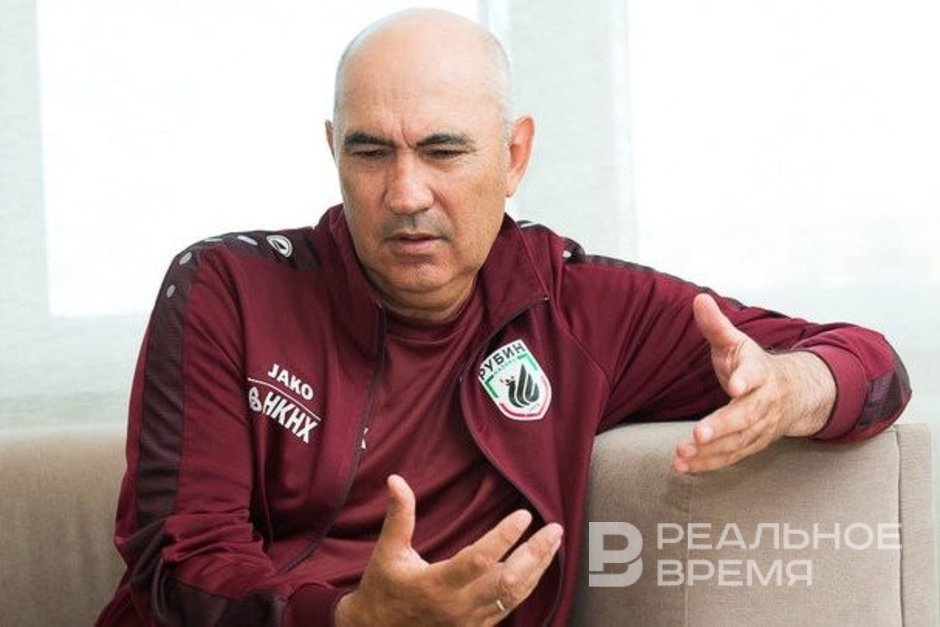
Today, former Rubin head coach Kurban Berdyev turns 74. In total, the coach devoted 14 of those years to the Kazan club, leading it to victories in the national championship and winning the Russian Cup. Berdyev spoke about these and other events in a book dedicated to Rubin's best period from 2001 to 2013, created with the support of TAIF. Realnoe Vremya publishes an exclusive interview from this edition, recorded last spring.
“When Pakhtakor crashed, I wrote an application to join the renewed team”
— Kurban Bekievich, there was a moment when you almost ended up at Tashkent's Pakhtakor, in the year when the team perished in a plane crash.
— Yes, I remember that moment. I was leaving Ashgabat for Rostov-on-Don, to the SKA team. I was in a taxi to the airport, and the car stopped at a traffic light. I saw Sergey Pokatilov, our goalkeeper from the Ashgabat “Kolhozchi," who by then had been defending Pakhtakor's goal for a long time. I wanted to get out and say hello; we hadn't seen each other for a long time, but the light turned green, and the taxi drove off. Already upon arriving in Rostov-on-Don, I wrote an application to join the team. Then I went to the post office to call my wife. Nowadays, one has to explain that back then, for long-distance calls, we went to the main post office. I call, and my wife says: “Pokatilov came by, inviting you to join Pakhtakor.” I felt so upset because I wanted to play there alongside Mikhail An. Apparently, the Almighty saved me from ending up in Tashkent.
And I visually met Misha at one of the youth tournaments — it was the “Hope Cup” in Navoi, where An, playing for the Uzbek SSR national team, practically single-handedly “ran circles” around our Turkmen SSR team. They beat us 4:0, and all the goals followed the same script: Misha would take the ball, beat everyone, and score. I was so stunned that I quit football for a while. I didn't play for six months because I saw a peer with such an amazing level of play.
And when they crashed, I wrote an application to join the renewed Pakhtakor, which needed to assemble a new squad, but army regulations, and I was a senior lieutenant, did not allow me to leave so easily. I really wanted to; I approached our coach Nikolai Aleksandrovich Samarin, but...
At the same SKA, Yuri Churkin played for us, whose older brother Viktor died in the Pakhtakor crash. And I shared a hotel room with him. Samarin asked me to deliver this terrible news, but when I went in, I couldn't say anything in response to Yura's questions: “What happened?” As a result, the coaches had to say it all.
— In the same Rostov-on-Don, you then played for Rostselmash, the current Rostov, and, as they say, cost the local team a few points.
— The regulations for the national championship in 1980 stipulated that the team had to include 18-year-old footballers; such were the rules of the Soviet limit. Two of our young players were injured, and another was taken by the national team, about which the club leaders informed the federation. The federation responded with a letter allowing us to play with one limit player on the field. We played and won, and then our competitor for first place, Rotor, filed a protest. And the situation in the group changed dramatically.
“The governor joked that he was happy about our victories, while worrying about how to reward them”
— Not to return to this question: the move to Kazan was an opportunity to make a name for yourself. But before that, you worked in Smolensk, where you went, as they say, as a completely unknown person.
— Yes, it was a challenge from all sides. Because CSK VVS-Kristall had no money for existence at all. I had a good relationship with Governor Alexander Dmitrievich Prokhorov, who joked that he was happy about our victories while simultaneously worrying about how to reward them. He'd say, “In Smolensk, it's still okay, but when you go away, I just pray that you lose.” At the same time, Alexander Dmitrievich loved football very much and did everything he could for the team's well-being.
— By that time, your Soviet playing and coaching past might have been forgotten, but it was precisely at that moment that you were on the coaching staff of the national under-18 team, which performed very successfully at the European Championship in Israel.
— But that was still a consulting job, to which I was invited by my friend from Alma-Ata's Kairat, Sergey Stukashov. The tournament itself was interesting and revealing in that due to the federation's financial problems, we had already bought return tickets for after the group stage. No one thought we would reach the quarterfinals (laughs). And we, having beaten England, Ireland, and Portugal, topped the group and advanced to the top eight. The tickets went to waste (laughs).
“I owe a great deal to Kamil Shamilevich”
— How did your invitation to Rubin come about?
— The first call came from Kamil Shamilevich Iskhakov; he invited me for an interview. At that meeting, I raised the issue of infrastructure, but Kamil Shamilevich replied that his priority was promotion to the Premier League, and infrastructure development should be the next stage. I was not ready for that, understanding that it was a single whole. In the end, we agreed that I would take time to think. Then, some time later, about a month, Kamil Shamilevich called again to arrange a meeting. And there, the issue of infrastructure was also raised and became one of the priority tasks.
In general, I owe a great deal to Kamil Shamilevich. Inviting an unknown person, a coach to accomplish serious tasks, required great courage and seemed like a big risk. Especially since promotion to the Premier League was planned in a very short time. His support and belief in me meant a lot.
Besides, he taught me how to work. Before meeting him, I thought I worked a lot. But there was a case when he called at 11 p.m. and asked what I was doing. “Working.” And we had many organizational issues to discuss; I came to him at the mayor's office; we discussed them; it was already late, about midnight. Kamil Shamilevich says: “Just sketch out the main points; we'll decide tomorrow. Come at six.” I say: “I can't; I have a training session at six.” He replies: “At six in the morning," meaning five or six hours after this meeting, which hadn't even ended yet. I thought he was joking, came out, asked his assistants; they said: “No, no jokes; that's how we work.” I was shocked by a man who showed an example of obsession with his work and the goals set — and they had to be solved!
— I would like to smoothly move on to the question of assembling the 2003 bronze team. Nowadays, such questions are not asked because there are agents, but back then there were very few, so within the country and the former USSR, “telephone rights” worked, when a player could be invited on the recommendation of another player, coaches, or referees. But Rubin was almost the first to enter the foreign market, and very successfully assembled the team.
— Often, I traveled myself. For example, I scouted Jiri Novotny at Sparta and noticed his partner Tomas Cizek. Flying to Brazil, we saw Roni and Calisto there; besides that, we watched a lot of old-format videotapes, reels. Tapes, personal viewings, and a little later, with the acquisition of Alejandro Dominguez, the role of Konstantin Sarsania, may he rest in peace, must be noted. We were in Portugal, and before dawn, after each had watched a huge number of their tapes, he came to my room and said: “Bekich, look at this guy. He hasn't played for a year due to a broken leg — that's a minus, but there's clearly something in him.” I watched and immediately replied: “Kostya, let's take him!” And every flight to another country was accompanied by viewings, non-stop, literally around the clock.
“We had a strong, united, hardworking, unassuming team”
— A personal memory: we came to Moscow for a match against Lokomotiv, holding a quiz with fans: predict the score. I wrote 1:1, to which one of the football figures, working at the city sports committee at the time, said: “What draw?! The budget has run out of money.” I believed him, changed the score to 0:2, and in the end, no one guessed because Roman Sharonov equalized at the end — 1:1.
— Your interlocutor was right; there was no money. They paid, with slight delays, but there wasn't such big money to motivate the guys with. But we had a strong, united, hardworking, unassuming team. You remember, and for others, I'll remind you what the old Rubin base was like, located in one of the former sanatoriums. Shared toilet and washbasin, one per floor, iron beds with spring mattresses that sagged to the floor under body weight, so the Brazilians couldn't lie on them and slept on the floor. The canteen couldn't fit everyone, so they ate in shifts because there were only four tables. And, having gone through this, we reached the bronze medals. Because a strong team was formed.
— Having successfully broken through in your debut season, did you feel the team had reached its ceiling?
— No, because I understood perfectly well that in the debut year, everything had worked out extremely well for us. Recalling the victories: two shots — one goal. Two shots — two goals. Often at the end of matches, like against Spartak, when Jiri Novotny scored, although before that David Chaladze had worked with the last defender of the visitors, taking the ball from him. There were many such victories. And I understood perfectly well that, praise be to Allah, we were often lucky. But I believed that in the long term, we would accomplish the tasks set for the team.
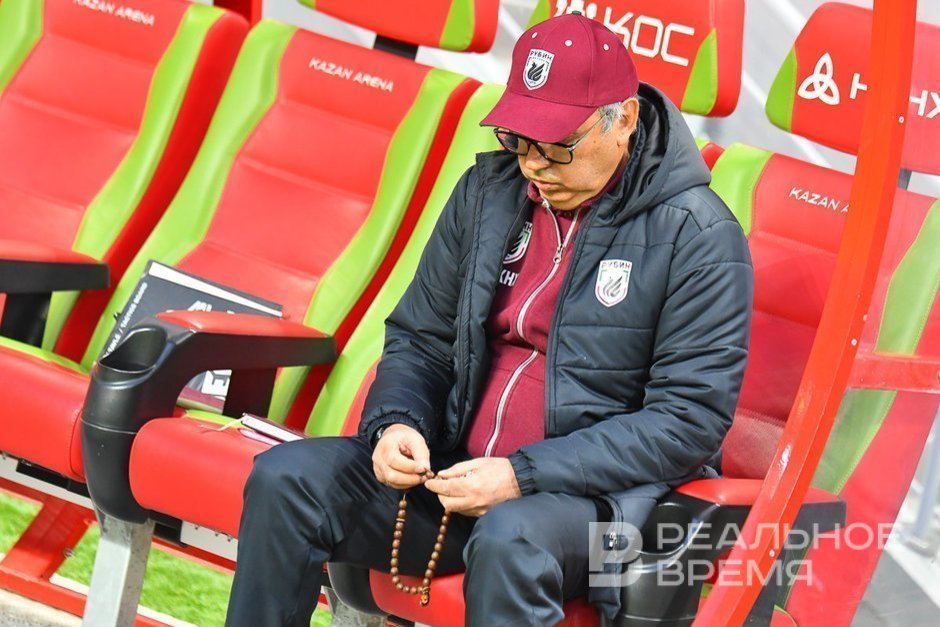
In general, football history shows that a team can have one very successful season, after which a decline follows. There are many such examples, but the most striking in recent years is Leicester. There were also nuances. I recall a case when we brought in a player we were counting on a lot. At that time, the whole of Kazan was undergoing reconstruction for the 1000th anniversary celebration, with many roads dug up. And this player's driver, instead of taking him to the base via a detour, decided to drive straight through all the construction sites and ruins. The newcomer was so impressed that he said: “Coach, I'm leaving...”
— Literally in the near future, the club received both a new base and a new indoor arena. Could the new infrastructure help in negotiations with newcomers to the team?
— The main thing in this construction was still the development of youth football. The indoor arena was built with the support of the first president of the republic, Mintimer Sharipovich Shaimiev, who gave the club a new boarding school. By the way, in a conversation with him, I sinned, being a little dishonest when asked about the estimated cost of building the arena, naming a smaller amount than it turned out to be. On the other hand, it became more expensive due to the athletics tracks.
“Fan support remained even when we lost big at home to Spartak”
— Not only footballers are grateful for the arena, but also athletes. For example, the Kazan Marathon simply rejoices at having such a great base for a running celebration. Moving on to the next stage of the team's development, let's note that the championship squad of 2008 was also assembled during another reconstruction of Kazan, this time in preparation for the Universiade.
— I will say this: in the period from 2003 to 2008, we experimented a lot with the lineup, trying different types of tactics and pre-season physical training methods. There were seasons when experiments at training camps caused us to start poorly, entering the season with a large number of injuries. But by 2008, the club had arrived with its own philosophy, combining physical training and game tactics. For this philosophy, it was necessary to assemble a team of experienced and at the same time ambitious guys, for whom not only contracts were important, but also the goal. They were super professionals.
Plus, fan support meant a lot, especially after our start. It remained even when we lost big at home to Spartak.
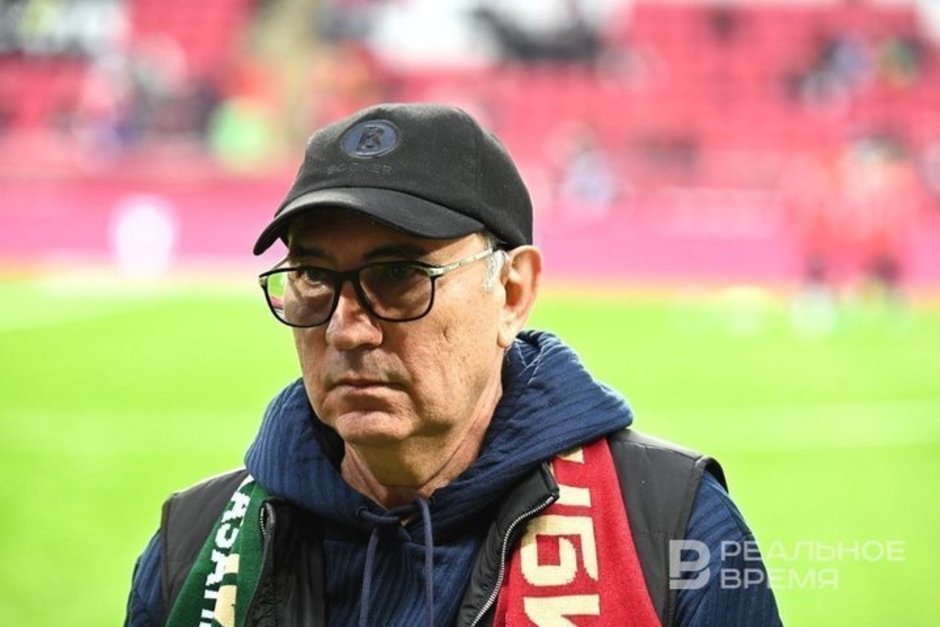
— I would like to add that in 2009, when we defeated Spartak in Moscow 3:0, returning the favor, I was on vacation in Turkey. Wearing a Rubin jersey, I heard thanks for that victory and for Rubin in general from fans from Krasnoyarsk, Nizhny Novgorod, St. Petersburg, and Ufa.
— I myself have encountered such gratitude from strangers. In Samara, they thanked us; in Rostov, for fighting in European competitions. Now in Azerbaijan, Russians living there thank us, often for Rostov too, for its path in the Champions League and Europa League.
— In turn, Rostov could thank Rubin for the 2016 championship.
— It's still before my eyes: Portnyagin headed it, Akinfeev saved it, fell, leaving his raised hand above him. Rubin's Tkachuk had an open goal to shoot at. He shoots — and hits that very hand. Hit anywhere else — and Rostov would be champion! Oh, salt in the wound.
But what surprises me is that all the media and fans remember Barcelona, leaving our victories over Tottenham, Inter, Chelsea, and Atlético in the background. As if those matches never happened (smiles).
The victory over Atlético in Madrid. Its importance was also to prevent the impression that the victory over Barcelona was accidental. I was struck that when we were leaving Madrid on the bus, Real Madrid fans applauded us, welcoming this victory.