“Frau, das Haus is mine”: what Kaliningrad was like right after the war
For the 80th anniversary of the formation of the Kaliningrad region, Realnoe Vremya publishes testimonies of Soviet settlers
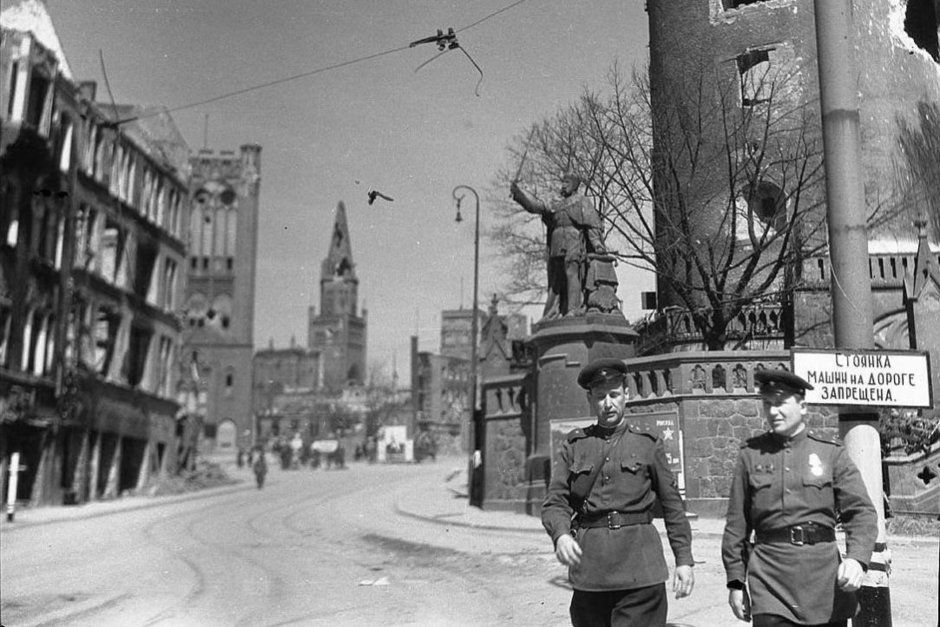
This week, Kaliningrad and the region are celebrating the 80th anniversary of the region's formation. Today it is a popular tourist destination with a rich historical heritage. But 80 years ago, it was practically ruins. In the early 1990s, Doctor of Historical Sciences Yuri Kostyashov and his colleagues from Kaliningrad University began work on describing the life of people in the post-war period. Who were these settlers, why did they come to a foreign land, what did they see, and how did their lives unfold? The book “East Prussia through the Eyes of Soviet Settlers” was supposed to be published in 1997. But the regional administration banned it, citing “facts that blacken” our past. Therefore, the book was first published in Germany (1999) and Poland (2000). It only appeared in Russia in 2002. Since then, it has been republished three times, the last time in 2018. This is a unique historical document that primarily tells about ordinary people who survived a huge tragedy. The literary critic of Realnoe Vremya, Ekaterina Petrova, provides quotes from eyewitnesses describing the first post-war years.
On resettlement
Irina Vasilievna Pobortseva:
— In 1945, my husband, Pobortsev Mikhail Vasilievich, was demobilized from Königsberg. During demobilization, many were persuaded to stay in Prussia. There were different cases: some were left voluntarily, others forcibly. Those who had no family, nowhere to go — they were forcibly left by order. And people could do nothing about it. But Misha said that he had a family and could not stay immediately — he had to go back for everyone.
Sergey Vladimirovich Daniel-Beck:
— When recruiters agitated, they often lied. They said, for example, that one could find an empty mansion or apartment in the city and occupy it. But we had become accustomed during the war to being deceived often, so we did not count on much and were not disappointed. The main thing we came for was the firmly promised military ration of the third category for all family members. And indeed, we received it for four months.
On first impressions
Yuri Nikolaevich Tregub:
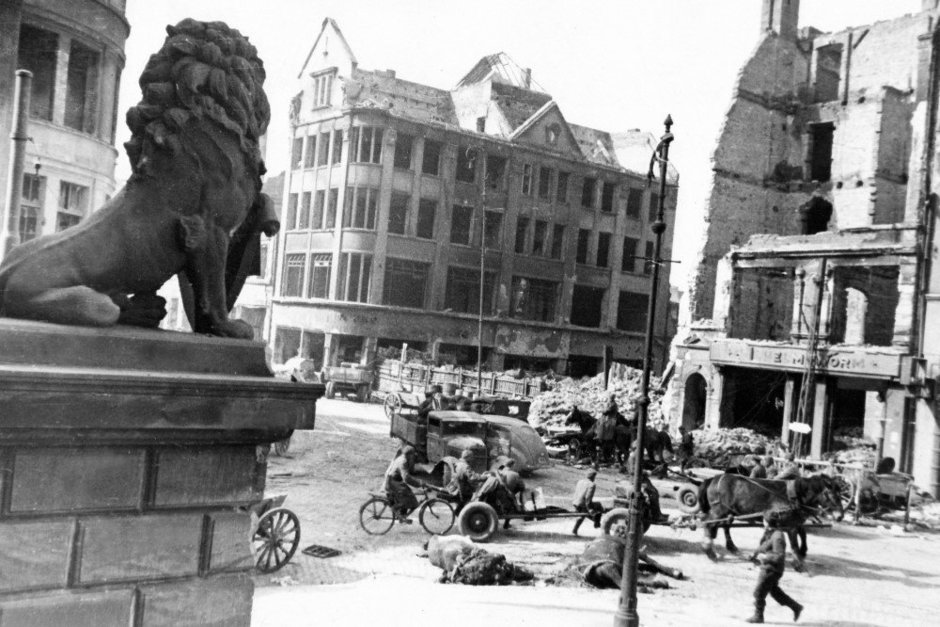
— When we began to enter the former East Prussia, when we passed the city of Vilkaviskis, hell began. Everything was destroyed, all the houses were battered, railway cars were mangled on the tracks, anti-tank hedgehogs, concrete fortifications — pillboxes, bunkers, abandoned guns were everywhere... The city of Insterburg left a special impression. When we approached the station, it was completely destroyed. Only iron pillars that once held the roof and metal frames without glass remained. There were burnt bricks all around, and the smell of burning hung in the air — I still remember it.
Alexander Augustovich Melngalv:
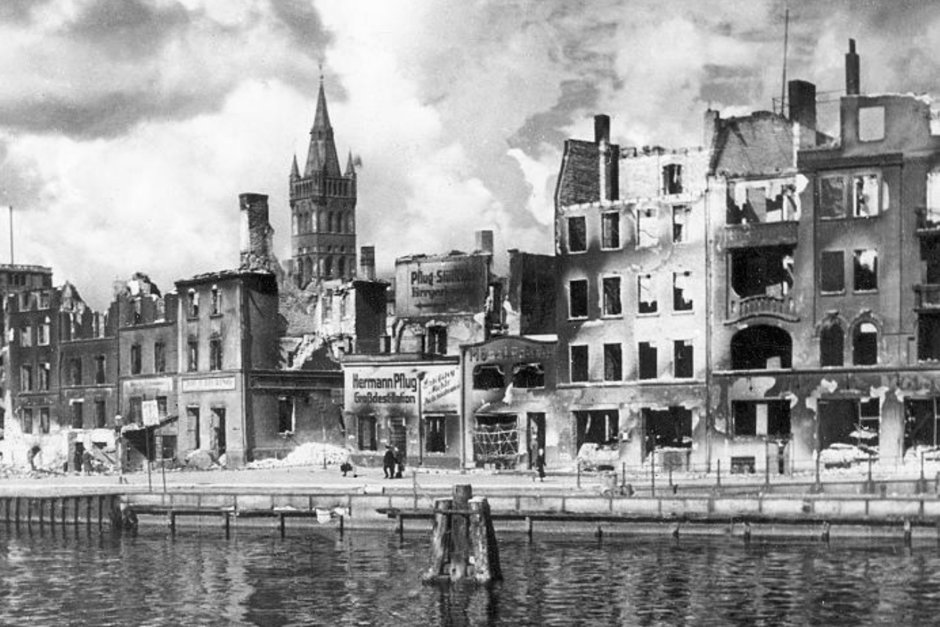
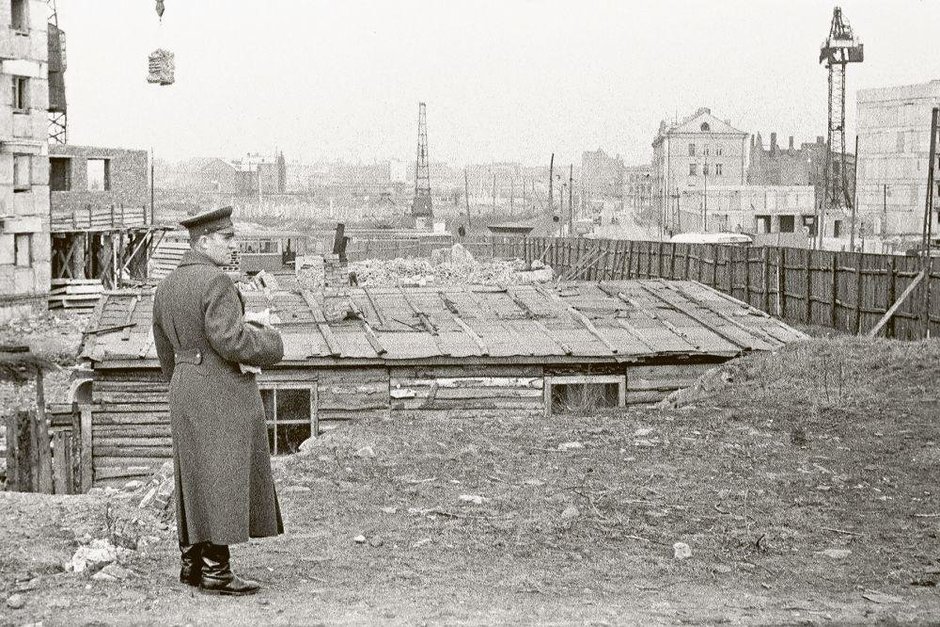
— We arrived in Königsberg on a cloudy, slushy, gloomy, rainy day. It was January 17, 1947. We unloaded near two wooden barracks, where the “waiting room” was. The barracks were packed with a huge mass of people. We managed to “seize” a bench; people in the barracks were constantly moving. We sat there for two or three days. And the worst thing was the sea of bedbugs; they fell straight from the ceiling! I still remember how they bit... After some time, I went outside. To the right and left — swamp, and ahead — ruins. I went out onto the surviving bridge on what is now Kievskaya Street. All around — silence and ruins. To the left of the railroad tracks — hundreds of German locomotives. I look from the bridge towards the city: not a wisp of smoke, not a car, not a person — only ruins. Such emptiness! And I felt so miserable. I returned and said to my mother: “Let's go back before it's too late.” She replied: “We received money, we were summoned," she calmed me down somehow.
Manefa Stepanovna Shevchenko:
— When I flew in, Sasha (Manefa's fiancé — editor's note) met me in a car. We drove from the airport to Königsberg. We drove for so long that I couldn't stand it: “Lord, when will we get to the city?” Then Sasha turned and said: “We've been driving through the city for ten minutes already.” Oh my goodness! There was no city! Only ruins. Only here and there smoke wisps curled. These were the Germans. They lived in these ruins. We could only dream of running water and electricity. The tram tracks were broken. “How can anyone live here?” I thought.
Anna Andreevna Kopylova:
— Even from the remains of the buildings, it was clear how beautiful the city had been before the war. The streets were paved with cobblestones and green with trees. And despite the ruins, I was overcome with a feeling of awe. It was a pity that such a beautiful city had been destroyed. We climbed around the Royal Castle. Only the upper part was destroyed; all the utilities and basements were intact. Everything was well-maintained, and paved paths led to every little house. The houses, even their ruins, were surrounded by well-groomed shrubs. It was evident that people who valued nature, beauty, and their comfort had once lived here.
Margarita Serafimovna Zolotareva (about the Central Market area):
— Everything around was strewn with daisies and violets. It was a solid carpet. The canal banks were adorned with weeping willows; they were huge trees whose branches cascaded down to the water, forming a kind of canopy. There was an amazing silence, and when I first went there as a child, simply wandering in, I stopped in admiration: it seemed like some kind of fairy-tale kingdom.
Ekaterina Petrovna Kozhevnikova (about Primorsk in 1947):
— What caught my eye? Order. Everything was destroyed, but everything was in flowers. Absolutely everything was in flowers. Believe me? Jasmine. There were several types of lilacs alone: Persian, Turkish, and of different colors. There was such flowering shrubbery that I don't even know what it's called. So many peonies! And it was arranged so: the snow melts, something starts to bloom, then another, and it blooms until winter, until frost. In every yard, there was such a fence. Not like ours now: everyone sets up picket fences, some crooked, some lopsided. They had hedges. And you know, in such steps: one — higher, another — lower, a third — even lower. And it all starts to bloom from bottom to top. It all intertwined with other plants: wild grapes, ivy, and something else. And our park? Look what relict trees there were. Many were imported. Here grows a plane tree, fir, cork tree, beech, pyramid oak. And all of it is planted not just in alleys, but as it grows in nature.
Anna Ivanovna Ryzhova:
— I was struck by the special power of the buildings, their solidity and impregnability. And at the same time — lightness through the aspiration upward. It was difficult for me to understand this. One had to be born here, grow up. A different psychology, a different understanding of eternity. This was felt primarily when looking at sacred places — at the churches, cathedrals. Our churches, temples seem kinder somehow, more hospitable. The severity and angularity of the local cathedrals do not correspond to our Russian character. I could admire them as works of architecture, but I could not perceive them as a place where you would be understood and supported. Their outward appearance seemed to warn of the opposite. They emanate a certain coldness and aloofness. In rainy weather, the city made a dreary impression. The narrowness of the streets, the sternness of the buildings weighed down. On such days, there was a feeling of temporary stay, and it was especially felt that we were strangers here.
Alexander Sergeevich Shtuchny:
— Despite the whirlwind of war that had passed, there were many beautiful monuments, family burial crypts, some special trees, and shrubs here. This cemetery, with its uniqueness, its culture, and something inexpressibly special, impressed me so much that I remembered it for the rest of my life.
On housing and daily life
Nikolai Petrovich Mukhin:
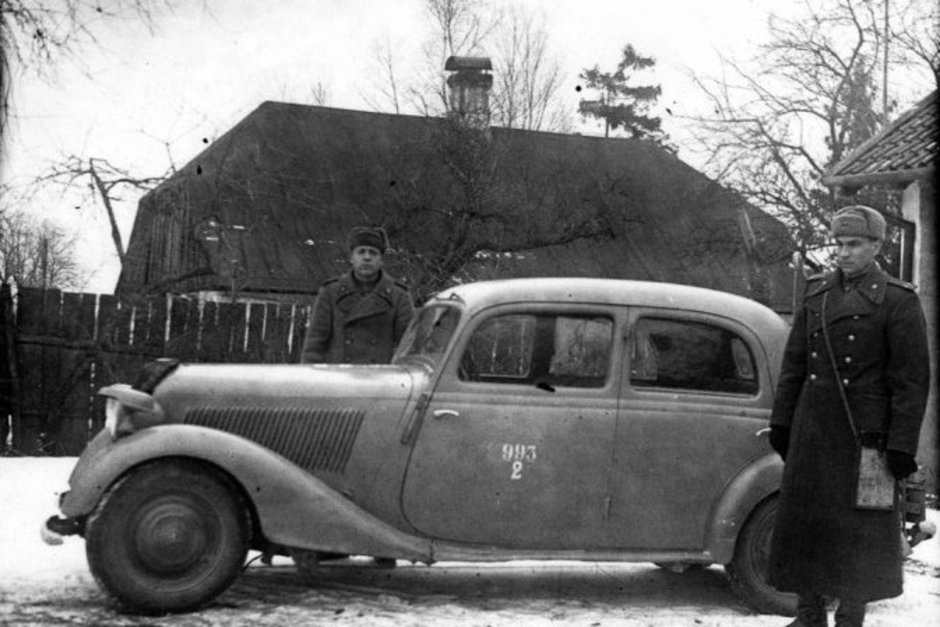
— People were taken from the train around the city. They were brought to some house in what is now the Baltiysky district and asked: “Do you like it?” If they liked it, the settler and his family stayed. So my family settled on the second floor of a two-story house.
Manefa Stepanovna Shevchenko:
— When I started working at a school in 1947, it was very difficult for me to get to work because the tram tracks were not working. Then my husband and I were given a warrant for any house in the school's area. My husband and I chose for a very long time, and finally, we liked one house. Four Germans lived there. Housing authority representatives gave them twenty-four hours to move out. Moreover, mind you, they were not allowed to take their belongings. Or rather, they were allowed to take a bundle weighing no more than two kilograms, and only in some cases, for example, if it was a large family, they were allowed to take up to seven kilograms.
Vasily Andreevich Godyaev:
— In 1948, in April, after the Germans were evicted, we were given one room from the ship repair plant. Our room was on the first floor, and the second floor had been hit by a shell. For a long time, we lived in the kitchen — the large room was packed because rainwater poured from the second floor through the ruined roof. Over time, the small room was repaired. Once I came home, and someone had taken the doors off. I ran to the neighboring house and took theirs.
Alexei Nikolaevich Solovyov (former lecturer of the regional party committee):
— I witnessed one savage scene. During the 20th Congress of the CPSU, as part of a propaganda group, I was sent to the Gusevsky district, to the collective farm named after Gusev. It was already 1956. We were walking through the village when suddenly we heard a crash in a hut and shouting. We went there. And there, a man was smashing a magnificent tiled stove. He shouted: “They hanged my mother! Bastards! I won't leave anything of theirs!”
Maria Timofeevna Smurygina:
— I was one of the first hairdressers in the region. The very first hairdresser in the city opened opposite the Zarya cinema. There was a small temporary structure — like a booth. That's where we started working. In addition, the first two hairdressers were located: one on Krasnaya Street, the second on Kashtanovaya Alley. Besides me, there were six German masters. I was the only Russian among them. They treated their work diligently; we had no conflicts. We received a salary of eight hundred rubles. There were quite a few visitors; we always met the plan. Germans and Russians came. German women did styling and perms; German men shaved and got haircuts. The most fashionable haircuts were the “shaved box” and the “brush cut.” And women already did six-month perms back then. Our tools were good; everything was left from the Germans. And when they left, they also left everything for us.
Alexei Nikolaevich Solovyov:
— In 1947, on the fourth of December, ration cards were abolished. I remember this day for the rest of my life. Mother put a whole loaf of bread on the table and said: “Eat.” I cut a slice, and she said: “Eat the whole thing.” For the first time, I ate a whole loaf, felt full for the first time, and my mother suddenly burst into sobs.
About the Germans
Nadezhda Alekseevna Agafonova:
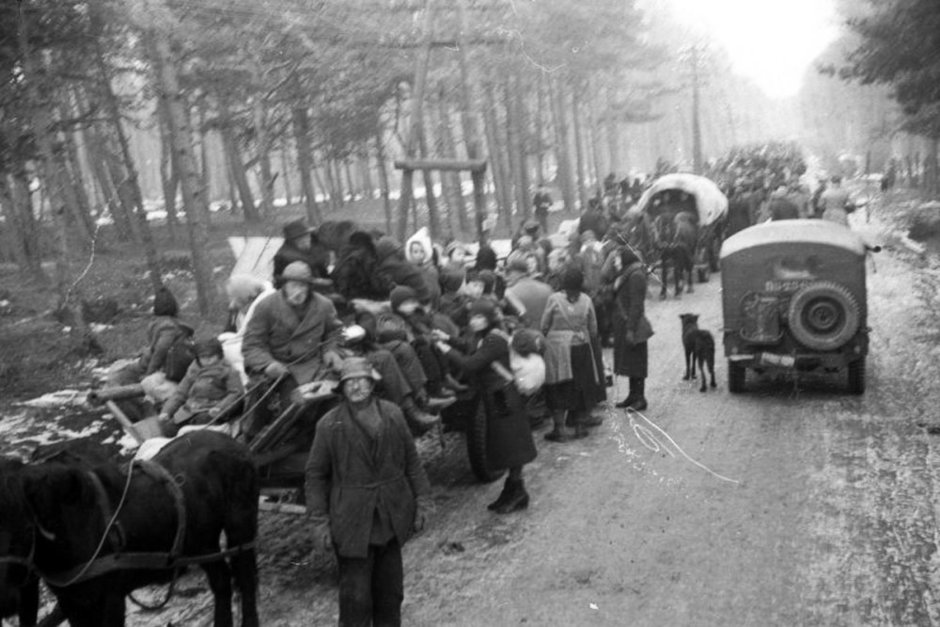
— A great impression was made by the mass flight of Königsberg residents in the first days of April 1945, on the eve of the assault on the fortress, when the Soviet command humanely gave civilians the opportunity to leave it. People, already quite hungry in the city, with no supplies, streamed to where no one was waiting for them. They surrounded the Soviet field kitchens, and women silently pushed their children forward to ask for bread. As a rule, we did not refuse when possible; we took pity. Although there were also instances of cruel treatment of Germans — looting, often rape. Sometimes in the general flow of hungry people, there were carts loaded with various goods — Soviet people who had been deported by the Germans during the occupation were returning home. In general, war is a great tragedy, and it is terrible when innocent people suffer.
Ekaterina Petrovna Kozhevnikova (about friendship with a local German woman):
— She sewed for everyone. And she never took anything for her work. “You've suffered so much," she said, “that I don't consider it a trouble to do something for you for free.” And her husband was an SS man. Under the Germans, he maintained the underground utilities in Primorsk, that is, water supply and sewage. He knew all the plans. He didn't say a word! That's how harmful he was. He would walk around, smiling, so polite. I've forgotten his name. No matter how much they invited him to the administration — they needed to restore the underground utilities — he said nothing.
Maria Pavlovna Teterevleva:
— In the basement of our house on Gogol Street, there was also a German family living: an old man, a woman about forty, and three school-age girls. But I saw them for literally a few weeks; then they left. Our neighbors, an Armenian family who had evicted the Germans to the basement, told us some things — without malice, completely indifferently. It seemed completely natural to them to throw this family out and just as natural to use their services: the woman (I think her name was Marta) sewed and washed clothes and linen for my neighbors.
Mikhail Nikolaevich Churkin:
— We were always amazed by their punctuality. They started work at nine o'clock and not a second later, they went to lunch exactly on time, and could leave a screw half-turned.
Ivan Panteleevich Lysenko:
— They went to work with canvas bags. They had everything, right down to lead pipes. He was a plasterer, a stove-maker, and a plumber. They made their own tools; we just marveled. And what paint brushes they made by hand! Our painters kissed them for it. They almost carried them in their arms. But their pace, of course, was not like ours.
Vasily Andreevich Godyaev:
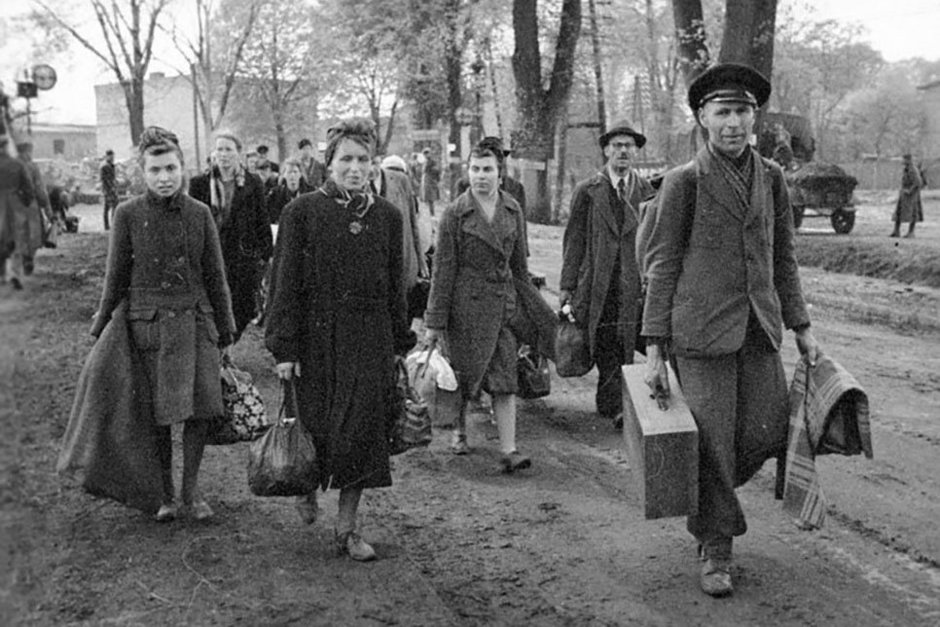
— They didn't work like us on the principle of “hurry-hurry.” They worked slowly, but it was a pleasure to watch. Let me give you an example. At our plant, in one of the buildings, ZIS-5 trucks were being repaired. Germans and our people worked there. The foremen were Russian. As I remember now, once the late foreman Sandakov came to the shop and said to a German repairing a truck: “Kamrad! Schnell! Davay-davay!” The German endured and endured, then came up to the foreman and said: “Schnell nicht gut!” And he explained that after the work of the Russian comrades on the principle of “schnell-schnell” and “davay-davay," the repaired cars had to be towed to start them, while after the work of the German comrades, you could get in and drive away calmly.
Maria Pavlovna Kubareva:
— One day, an old German woman of about seventy or eighty entered the editor's office and fell to her knees before him, crying. She was lifted up and calmed down. She said that she was lonely and homeless; during the bombing by British planes, the street where she lived on the banks of the Pregel River was completely destroyed; her daughter died in the fire. The woman asked to be placed in a nursing home. Easy to say, but where to find a place? I was tasked with taking the German woman to the institution that dealt with these issues, located somewhere at the end of Telman Street or on Alexander Nevsky Street (I don't remember exactly). It was winter, there was a lot of snow on the pavement; I barely dragged this woman, supporting her by the arm, to the right house. But they didn't want to take her because there were no places in the nursing home. I had to go for help to the regional party committee (it was then on Soviet Prospekt). Everything was settled, and the German woman was placed in a nursing home.
Alexandra Ivanovna Mitrofanovna:
— She was begging with a little girl. The girl was about eight or ten years old. She came and said: “Frau, das Haus is mine.” I said: “I'm not to blame.” I gave her alms, and they went on. It was already cold. And not far from Zelenogradsk, near the “Pobeda” collective farm, there was a ruined farmstead. They lit a stove there and warmed themselves by it. And they froze to death...
Ekaterina Petrova — literary critic for the online newspaper Realnoe Vremya, host of the Telegram channel «Булочки с маком».