Roman Sharonov: “Kurban Bekievich managed to convince the government of Tatarstan that football is alive”
The legend of Rubin Kazan — on the football “novel” with the Kazan club
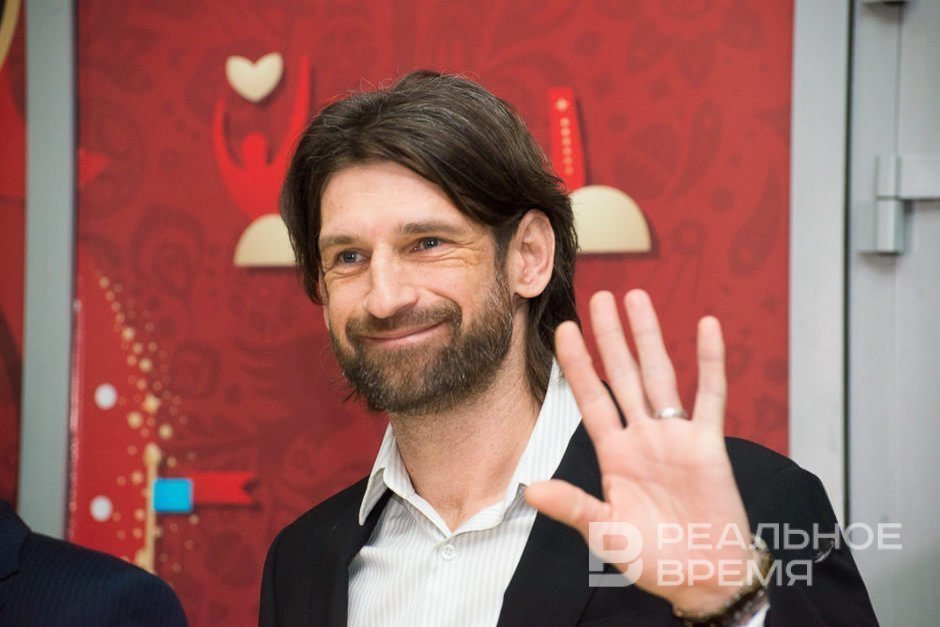
Russian footballer Roman Sharonov, approaching his 50th birthday, became one of the key figures of Kazan's Rubin during its golden period — from 2003 to 2014. Later, the athlete worked in the club system for five years and at the peak of his career took the position of head coach of the team in the 2019 season. Realnoe Vremya publishes an excerpt from a book on the history of the Kazan team, prepared with the support of TAIF and dedicated to the legend of Rubin.
“Yuri Semin helped me get to Rubin”
— Roman, how did you end up at Rubin?
— In this, I was helped by Lokomotiv's coach Yuri Semin. After a loan at Krasnoyarsk Metallurg, I was left without a team. There was an option with Torpedo-ZIL, but we couldn't reach an agreement — I was supposed to stay at Lokomotiv. However, the day before the transfer window closed, Pavel Fedorovich Sadyrin called, and within five minutes we settled everything. That's how I ended up in Kazan. And Pavel Fedorovich's call was due to his good relationship with Semin.
After my season at Rubin, a group of players were supposed to go on trial to CSKA — Pavel Fedorovich had moved there. Among them were Rustem Bulatov, Evgeny Dyachkov, Stanislav Lysenko, Yuri Okroshidze. But my trial at the army club was prevented by an injury — instead of Moscow, I ended up on the operating table.
— We've gotten a little ahead of ourselves: before Rubin and Krasnoyarsk, you had an unusual experience — playing in the Chinese championship. What do you remember about your trip to China?
— China was a great experience for me. First of all, it was moving to another country, which required adaptation and acclimatization. All of this was an important step in my career and affected me mentally. Thanks to this, it was easier for me to adapt to Kazan in the 90s.
I can compare what a huge leap the capital of Tatarstan has made over the past thirty years. It's great that the city has flourished so much. In the end, I happily stayed here to live — I really like it. Besides, my wife Nadezhda is from Kazan: we met here, and she supported me in the most difficult times — both during my injury and in moments of failure. Of course, our victories are also shared. So she is my true Muse.
Facts from his biography: Defender Roman Sharonov had memorable goals for Rubin even during his performances in the First League. One can note a goal in the season when Kazan was promoted to the Premier League. Sharonov scored just after crossing the halfway line, and Novorossiysk Chernomorets goalkeeper Andrei Samorukov, perhaps after that conceded goal, decided that his son would be better off continuing his career not in football, but in hockey. This refers to the current CSKA hockey club defenseman Dmitry Samorukov.
“I'm glad I was the first player to represent the team in the final stages of the Euros”
— You won your first awards here, if we recall the bronze season of 2003. Moreover, your goal against Lokomotiv in the away game played a very important role in achieving this result.
— I recall that no one set us the task of winning medals, but football is good for its unpredictability. And we, making our debut in the Premier League, immediately managed to rise to third place. First and foremost, this result gave a big impetus to the development of football and the development of the corresponding infrastructure. Kurban Bekievich managed to convince the government of Tatarstan that football is alive. And that's why we got both a training base, and an indoor football and athletics arena, and a boarding school. First and foremost, thanks to Berdyev, who did not look at football only as achieving the final score on the scoreboard. Our third place led to the creation of those opportunities that Kazan now has.
Looking back at my playing past, I evaluate it from my current coaching perspective. And now I understand what Kurban Bekievich wanted, building certain game processes that greatly influenced me. My playing career and the fact that I continued myself in coaching — this is the influence of Kurban Bekievich.
— Already a year after the debut, both your own and the team's, at the Premier League level, you made your debut for the national team. Moreover, after friendly matches, you went to the final stage of the European Championship in Portugal.
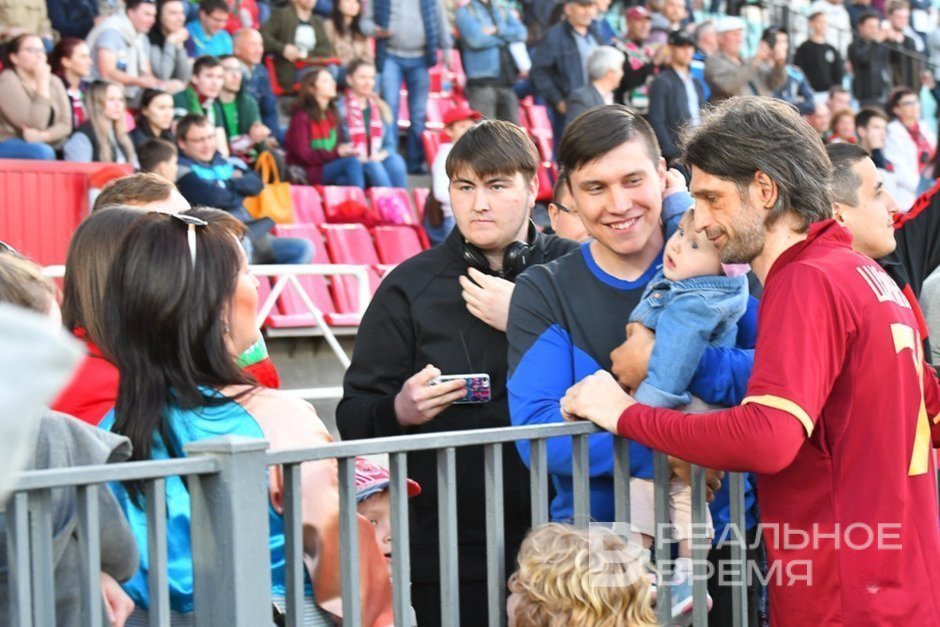
— The 2004 European Championship, like the second Euro in 2012, is one of the most important milestones in my football biography. Not every star player manages to play in such competitions, and I remember the Russian national team coach Georgy Alexandrovich Yartsev saying that we were very lucky. I'm glad I was the first Rubin player in history to represent the team in the final stages of the Euros.
— It should be clarified here that in 1972, ex-Rubin player Viktor Kolotov and Kazan football product Gennady Evryuzhikhin made their debuts for the USSR national team at the Euros, where they won silver, and at the Olympics, where both had bronze. But then they represented Dynamo Kyiv and Dynamo Moscow respectively. You are truly the first to make it to the national team as a current Rubin player.
— But this is not my merit, but the work of the entire team's coaching staff. Moreover, I would note both Kurban Bekievich, and Pavel Fedorovich Sadyrin, and Viktor Petrovich Antikhovich, who coached me at Rubin. Plus, the contribution of my teammates who represented Rubin during its years of performances in different leagues, because, as trite as it may sound, football is a team sport.
The quartet of football offspring from Mytishchi
— After playing, as they say, an “Olympic cycle” outside Kazan from 2005 to 2008, you returned to Rubin to begin the campaign for gold medals with it.
— This was probably one of the most important moments in my career. I'm very glad that everything turned out this way, I returned to Rubin despite everything, and I can express great gratitude to Kurban Bekievich, this time solely, for helping me restart my career. It seemed like it was already close to completion, I was 32 years old at the time of my second coming to Rubin, but in terms of the level of play and the titles we won together with the team, this stage turned out even better than the previous one.
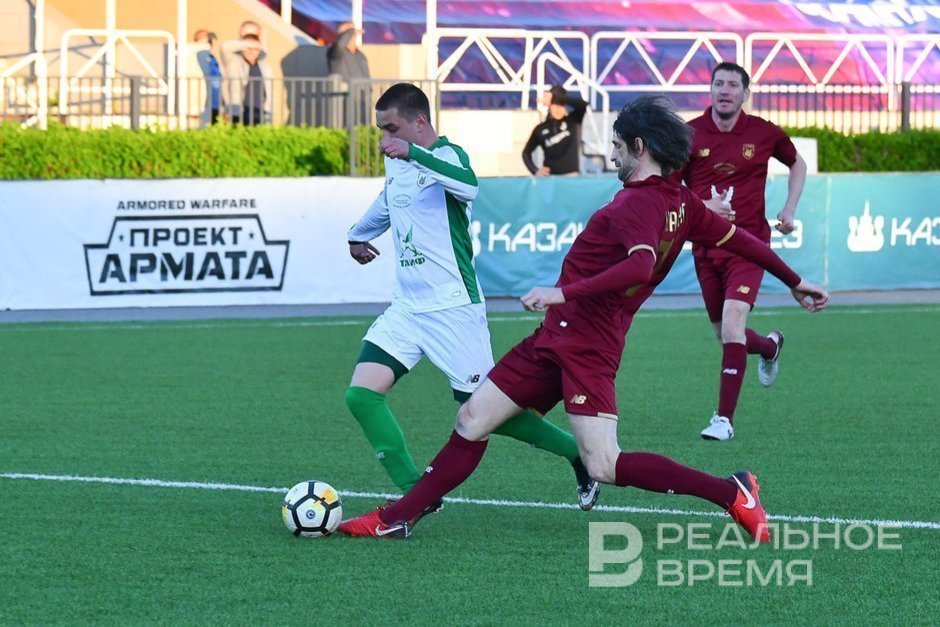
As for my goals against Lokomotiv, there were two of them, both turned out to be quite important. One was in the bronze season, since our draw did not allow Lokomotiv to overtake us in the standings. The other marked a successful start to the season that brought the championship title.
Facts from his biography: The first confrontation between Sharonov and his home club Lokomotiv took place in 2003. Then Berdyev substituted Roman in the 78th minute of the Kazan match, and two minutes earlier, Lokomotiv player Vadim Evseev had been substituted. True, Oleg Pashinin remained on the field. All of them plus Vitaly Veselov are products of football in the city of Mytishchi, and the quartet of Mytishchi footballers itself invites an analogy with Alexandre Dumas's musketeers.
Since there was only amateur football in their hometown, the footballers went to develop their skills in Moscow. First — Veselov, then — Pashinin, Roman Sharonov, and Evseev, who in the process moved from Dynamo to the Lokomotiv sports school, which became the alma mater for this quartet. The transition from Soviet times to Russian realities introduced such a concept as loan, and Veselov, being under contract with Loko for seven years, spent all this time on loan. Evseev caught the attention of Moscow Spartak scouts. And Sharonov and Pashinin stayed at Loko.
Evseev and Pashinin initially looked brutal, and Sharonov came to this over time, for example, after losing in Krasnoyarsk. And here it is — the first clash between Rubin and Lokomotiv in 2003, which ended to the delight of the Kazan public with a score of 3:1. The second clash took place in Moscow, and Sharonov's header brought Rubin a draw, which by the end of the season turned into bronze. If only Semin had known what a problem for his team he would create by sending Sharonov to Rubin four years earlier.
After that, Roman sheathed his scoring head for five years, since he scored his best goals in the Premier League exclusively with it, and at the start of 2008, he again scored against Lokomotiv, in which only Pashinin remained by that time.
“The second recovery period turned out to be much more difficult”
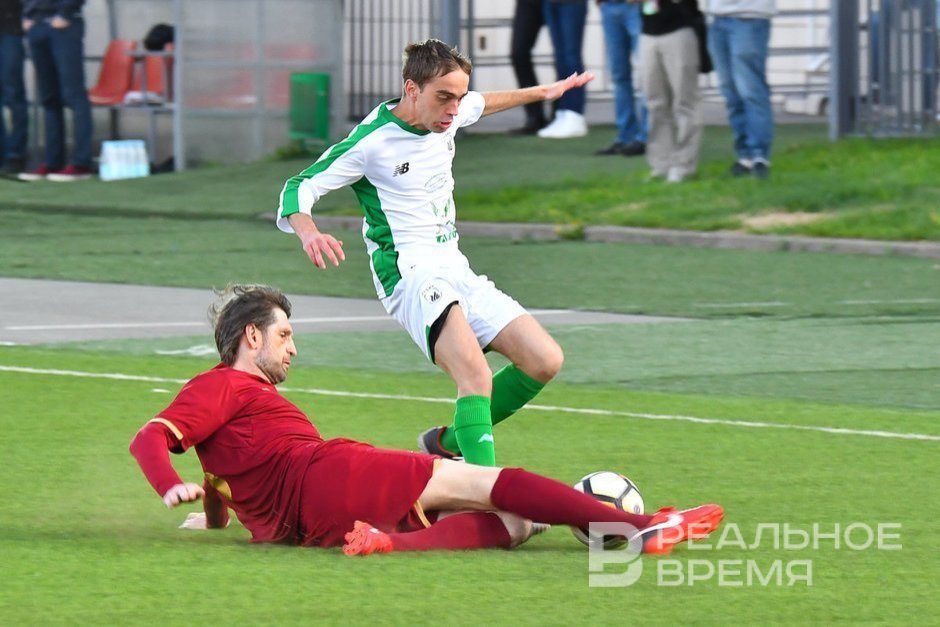
— You mentioned difficult times when your wife supported you. In December 2009, you underwent surgery on the cruciate ligaments of your knee. A difficult injury with a long recovery period, after which many simply end their football careers. Nevertheless, after missing almost a year, you managed to fully recover, return to your previous level, and again play in Rubin's starting lineup.
— I suffered a rupture of two ligaments, both the cruciate and lateral ligaments. But in this case, a personal approach to the problem is very important. I had a great desire to return, and mentally I was ready, not even doubting that I would return. As a result, the recovery was going very fast, and after four and a half months, I was approaching the point of gradually starting team training. It must be understood that at that time the team did not have a rehabilitation specialist, and I went through the recovery process under my own control and the control of a rehabilitation specialist based in Germany. I literally had two weeks left to hold on, but I rushed a little, started training earlier, and then damaged the cartilage in my knee joint.
— One of your teammates at Rubin, who suffered a similar injury and was unable to return to football after it, expressed doubts in a private conversation about your return.
— During my recovery, I read comments on the internet that I wouldn't make it back. As a result, the initial 4.5 months were extended by the same amount, and in total, my recovery lasted nine months. Moreover, the second recovery period turned out to be much more difficult. For a long time, my condition did not improve, training didn't help, I felt pain in my knee. But I didn't give up and, thanks to the support of my family, I managed to return to the field. This happened in a home game against Zenit.
— In a match that ended 2:2, a match of overcoming for Rubin, since Kazan was losing 0:2 after the first hour of play, but goals from César Navas and Aleksey Medvedev brought a well-deserved draw. This story is somewhat reminiscent of yours.
— An important point. Even before the injury, I had an agreement with the club that we were extending the contract, and then the injury happened. But Kurban Bekievich is a man of his word; life has repeatedly confirmed that his word is kept. As a result, the club, as agreed, extended the contract. And during my recovery, I had full support from both my family and Rubin.
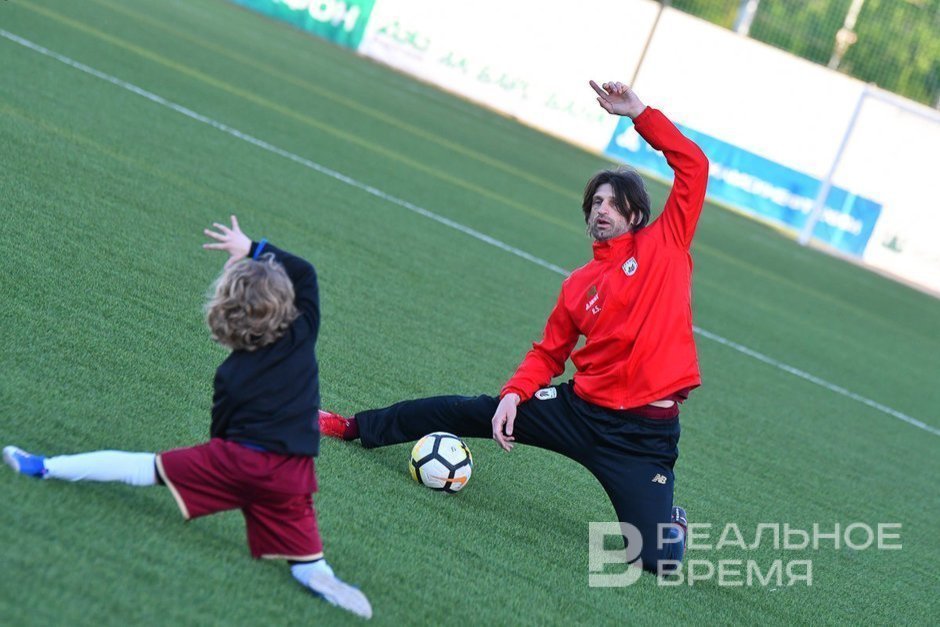
“I will never forget the atmosphere at the Central Stadium — it's forever in my heart!”
— Can you tell us more about any “super” match?
— Overall, we wrote a whole football history, bringing great European-class teams to Kazan. Moreover, on the international stage, we had quite successful performances, giving Kazan fans the emotions they had to experience while seeing great clubs live. I will never forget the atmosphere created by our fans at the good old Central Stadium. It's forever in my heart!
— What do you remember about the confrontation with Barcelona?
— If we focus on the most important confrontations in Rubin's European history, of course, the victory over the Spanish superclub comes to mind, when we were initially considered underdogs. Moreover, there is nothing shameful in this, since at that time Barcelona was the favorite in a confrontation with any opponent. According to my feelings, when the fear that was present before the away game disappeared, I played the second half quite confidently. Moreover, I rewatched that game and can note that my psychologically changed state is transmitted through the screen.
It is clear that the away victory will forever remain in history, but the second match of our confrontation is also important, since at that point we no longer felt the uncertainty that was present before the first game.
As for our first home game in the Champions League, it was a game against Inter. At that time, we also felt pre-start nervousness, but overall we looked more than decent in comparison with the future Champions League winner. In my personal memory, the confrontation with Samuel Eto'o remains. He acted very skillfully without the ball during his team's attacks. I always tell my players in the teams I coach about this.
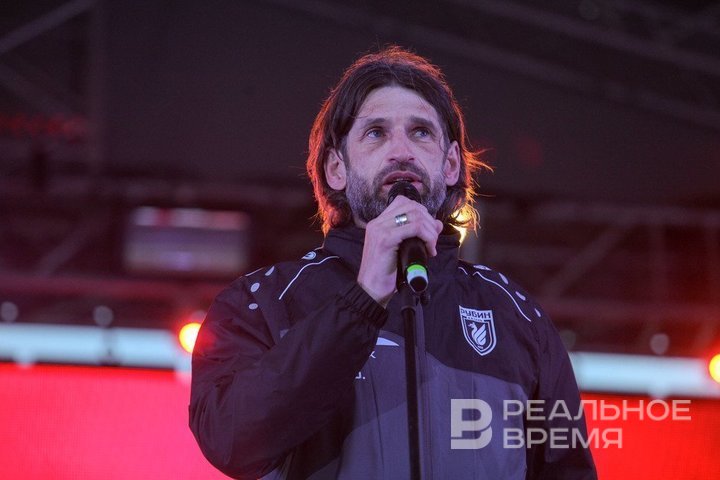
— What do you remember about the Europa League?
— I would like to note the away game against Chelsea, when there was an unforgettable atmosphere created by the English fans. They cannot be compared with the Spanish ones: neither worse nor better, but the energy that reigned at Stamford Bridge — it's simply unforgettable!
How does it feel? You simply make every move under the gaze of tens of thousands of eyes living for this game. This is very close to me. Moreover, with Chelsea, I felt the same as I had previously felt in the confrontation with Tottenham.