Errol Musk: “The future belongs to things we still know very little about”
At one of his first business meetings in Kazan, the elder Musk shared his thoughts on the future of science, studying gravity, the collapse of the soviet union, western propaganda, and overhyped AI
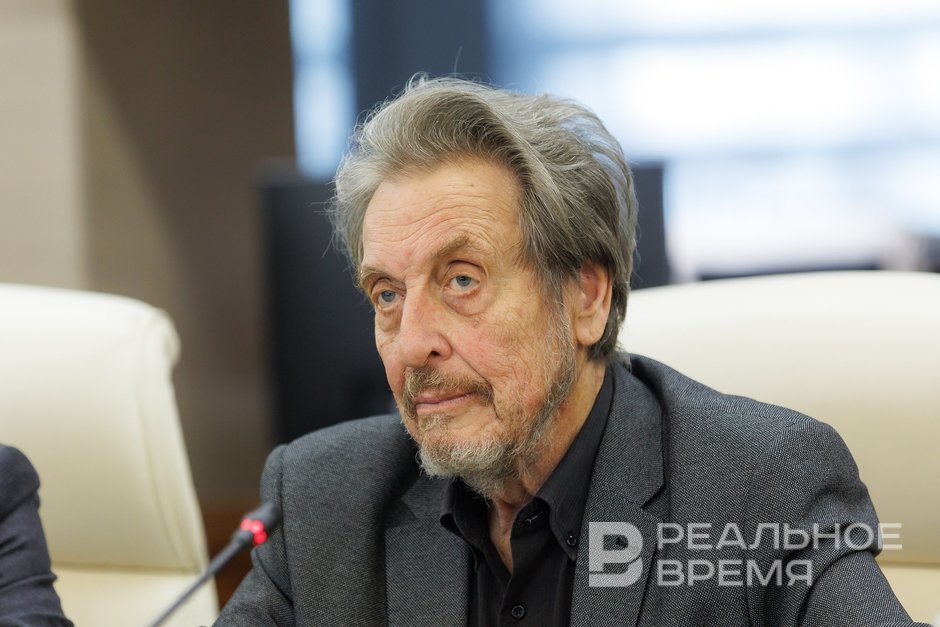
Errol Musk, father of successful American businessman, engineer, and politician Elon Musk, has visited Russia twice this year. In June, the elder Musk flew to Russia to participate in the “Forum of the Future 2050.” In October, Errol Musk visited Kazan, where he toured Innopolis, spoke with students, gave a public lecture at the IT Park, met with the leadership of the Academy of Sciences, and attended a KHL regular season match between Ak Bars Kazan and Admiral Vladivostok. In every interview, Musk spoke of the high level of technological development in Tatarstan. He was genuinely interested in the republic's technological development, education, and science. In each meeting, he invariably initiated conversations about fundamental challenges facing humanity. He spoke about the nature of great discoveries and the environment where future technologies are born to both students and top officials, and at a meeting with the leadership of one of the largest industrial groups — the TAIF Group — he shared his vision for further development and plans. Excerpts from the conversation with Errol Musk, approved by him, are published by Realnoe Vremya.
“Elon said: my father taught me everything I know about engineering”
I am an electrical engineer by education. In addition, I became a mechanical engineer to be able to work in both fields as a consulting engineer. I practiced for several years, participating in many large construction projects across most scientific disciplines. At that time, we had two boys growing up who spent all their school years with me. About 12 months ago, at the Starship launch in Texas, Elon said: “My father taught me everything I know about engineering.” I objected: no, you did it all yourself. But his words opened my eyes: as a father, I always told them — keep going, do this, look at what the Russians are doing, you need to build electric cars. To build an electric car, you need a capacitor, not a lithium battery, but a capacitor that can consume energy. Of course, in those days, we weren't thinking about lithium batteries yet. They continued thinking in that direction, and the result exceeded all expectations.
“The Soviet era pulled Russia out of the middle ages”
You know, I've always been interested in Russia. Who isn't? We constantly listen to Russian music. We all know Tchaikovsky. And “Katyusha.” But we never managed to get to know Russia.
Many years ago, when I heard friends tell stories about flying from Europe to Japan and flying over Russia, I imagined something smoky, like a concentration camp (laughs). I said, you were lucky your plane didn't crash there. During the Soviet times, we were very frightened of Russia.
They said Russians walk around naked on the ice. And that you were ruthless. That was during the Soviet era.
I'm an ordinary person, a technician, not a politician. I just listen to what others say is happening. And so we're all told that the Russians are coming — they're advancing. I think that was the plan — to scare everyone. Perhaps you were told the same thing: that someone is advancing, someone is attacking you. We were told the Russians were attacking. Now that I'm older, I have more common sense.
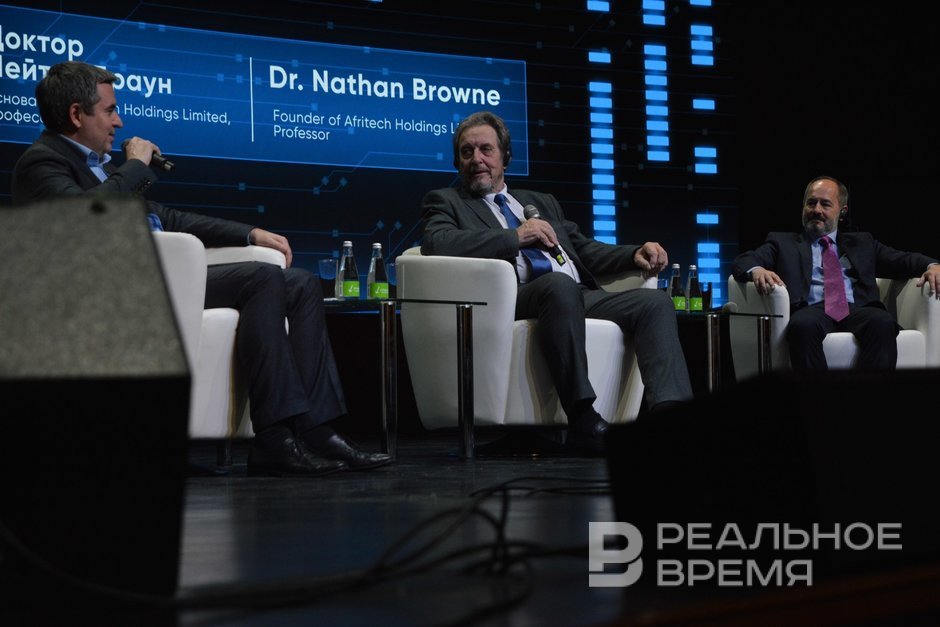
I think the Soviet era pulled Russia out of the Middle Ages. That may sound strange, but you should be proud of that time. I was actually proud to recently sit in Lenin's chair. I would say you owe a lot to Stalin. They freed the country from the most despotic, terrible regime I've ever heard of — the tsarist regime. They gave Russia the opportunity to become a world power. I remember when we first saw the friendly face of Russia — Boris Yeltsin with his broad grin in a white shirt with unbuttoned buttons on a tank driving through Moscow. He was saying: we're going to change everything and make it better, or something like that. I thought, he exudes calmness and balance — don't get rid of him, he's good. Things became easier then. By the way, I personally recently listened to a speech by Putin and was right in the hall during his address. You have a wonderful leader, really.
“Moscow is one of the best cities in the world, and I’m not trying to impress you”
When I got the opportunity to come to Russia, in June four months ago, I agreed immediately. I didn't expect to see Moscow like this. It is one of the best cities in the world, and I'm not trying to impress you. You have such beautiful people. I've had an incredible experience here. Here I had the chance to share my thoughts on the future. Here I was able to meet with Lavrov; we spoke together. He explained the situation in Ukraine to me in detail — it opened my eyes to many things. Then I did about three or four interviews. A couple were with RT. They are very balanced, by the way, unlike, for example, CNN, which is full of nonsense. Many American channels, like Fox, are also bad. The BBC also has a lot of lies. You read the BBC, NBS, CNN and think — something doesn't add up; you read RT and see good material. This is solely my personal opinion… So, RT invited me to celebrate their 20th anniversary, although I thought they were already 50, and I saw their scale. How they broadcast in different languages — for many countries in their native languages.
Kazan was the highlight among all the places I’ve visited
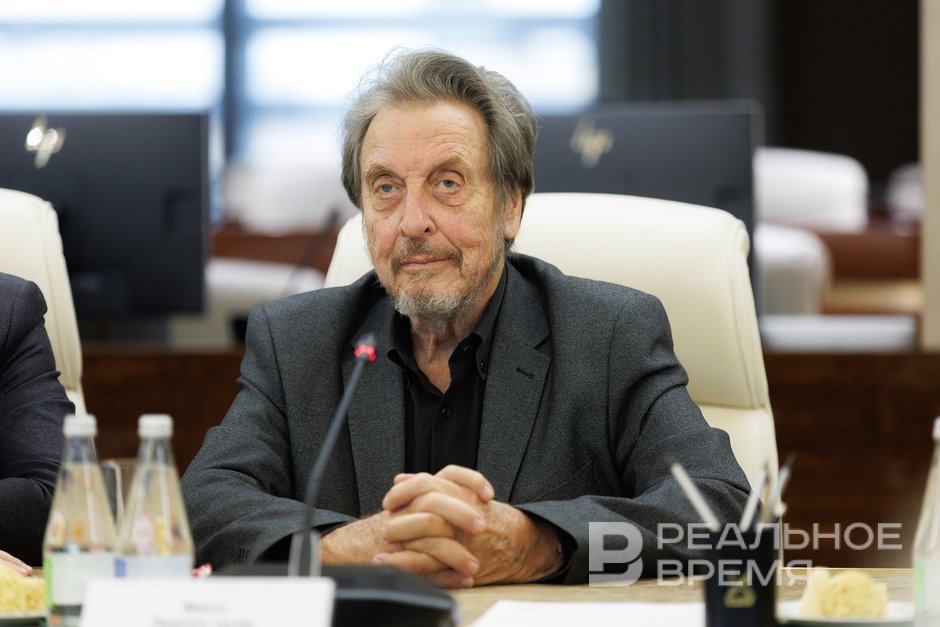
I was advised to check out Kazan. We came here, and Kazan became a sort of highlight among all the places I've visited in the last year and a half. This year, I spoke at Oxford University in May and at Stanford University in April. I also was at a major university in India, speaking to thousands of students. But this trip to Kazan was better than all the previous ones, and much more pleasant. Here we were surrounded by students eager to learn. I believe that for them, it was like connecting with Elon through me. And not just with Elon, but with people capable of doing something extraordinary.
I met with the government of Tatarstan. They told me that much attention is currently focused on artificial intelligence and asked what I thought about the goal of creating a machine that would possess cognitive abilities and consciousness. That is, they want to create a machine that would be better than us, better than any human. One that could be asked — I love this woman, why doesn't she love me? (laughs) And it would give them the answer. This is all, of course, jokes.
The future belongs to things we still know very little about. For example, 200 years ago, we knew almost nothing about electricity, medicine, and many other things. So, what do we know almost nothing about now?
“We have absolutely no idea how gravity works”
As you know, there are four fundamental forces in the Universe. We more or less know what electromagnetic force and nuclear force are. But we have absolutely no idea how gravity works, even though we think we understand something about it. In movies, they show us that we've overcome gravity and machines fly. In reality, we just accept it as a fact and have absolutely no idea how they do it. Although maybe filmmakers know; we should ask them (laughs).
Our understanding of gravity has hardly changed since I was 19. We all hope that some genius will come along, a second Einstein, Faraday, or Mendeleev, and explain it to us. Then we will finally arrive at the future we only fantasize about.
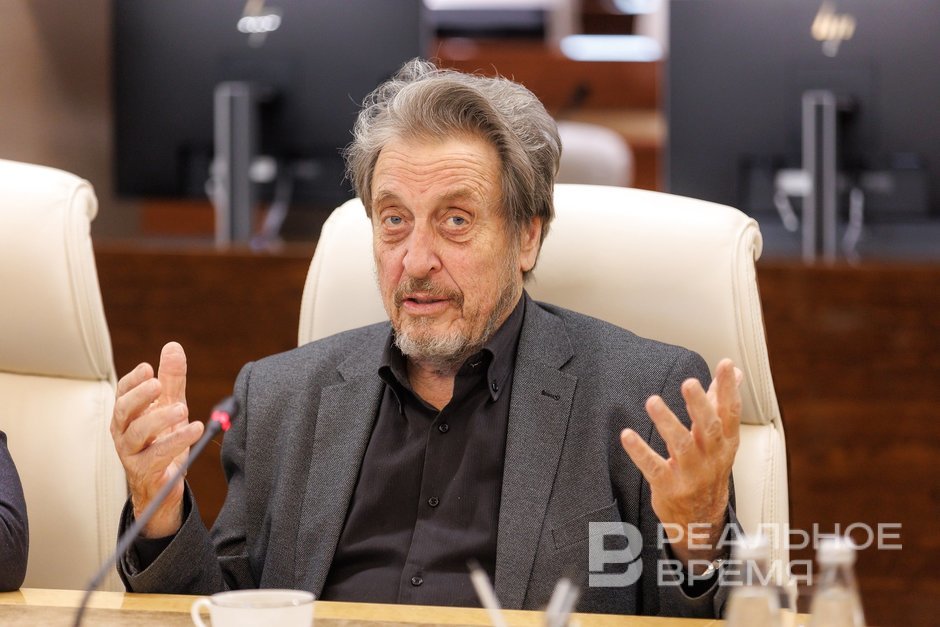
I am sure that knowledge of gravity will also provide knowledge about the fourth dimension. We believe that everything moving at the speed of light moves in the fourth dimension. And if we can move in the fourth dimension, we can move to stars and planets instantly. That is the future.
About 200 years ago, around 1825, we needed to move beyond steam engines. Now, in 2025, I say we need to think more broadly than electromagnetic force. It's time to move to the next level.
The next level is understanding the fundamental mechanics of the Universe: gravity and everything connected with it, about which we currently have only a vague notion.
The other day in Kazan, I had the opportunity to witness the acceleration of complex calculations for the merger of two black holes in space. The so-called detection and analysis of gravitational waves. Tamir and Arsen demonstrated how they were able to perform gravitational wave calculations using their new AI within a few minutes, whereas for LIGO (with support from NASA), traditional methods would take two or three months. There are people interested in this, and resources need to be allocated to them. A faculty dedicated to this is needed. That's where it all starts: the combination of minds wanting to create something new and the computing power of artificial intelligence — that will drive progress. It could lead gravitational research towards an effective breakthrough much faster than traditional methods.
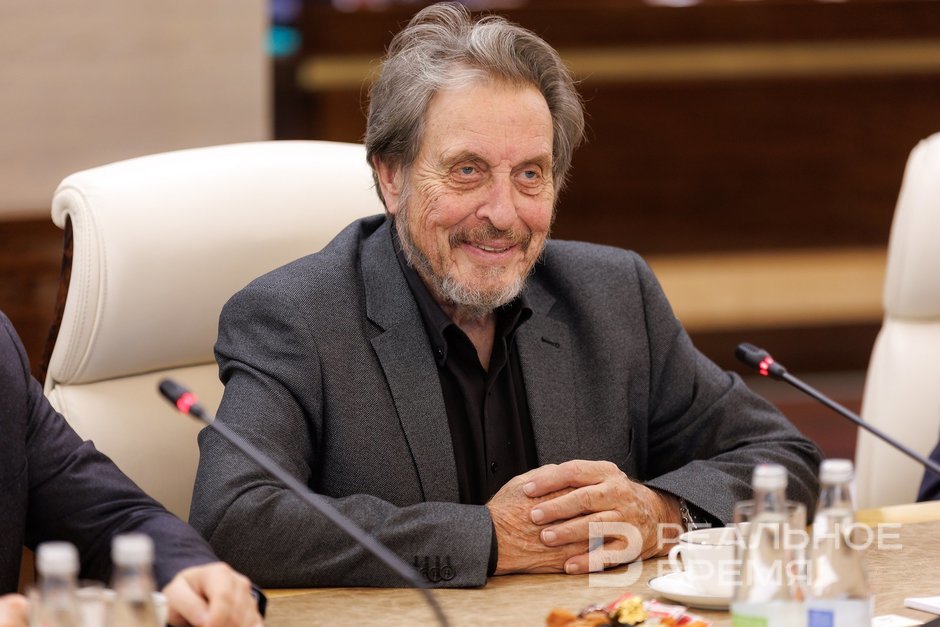
Discoveries happen by accident
In the 1840s in London, there lived a young man who had no money for education. Now his statue stands in the scientific Royal Institution, which has produced many famous minds. He used to stand by a window and write down lectures in his notebook. Seeing that he was a poor boy wanting to participate in society, they gave him living quarters in a small room and a job as a cleaner. He would go to clean in the laboratories with a group and tidy up. There, he accidentally picked up a piece of magnetic stone to put it somewhere and noticed that one of the small Galvanic instruments, a galvanometer, with a coil attached to it, reacted. The lad noticed that when he picked it up, the needle moved. He put the stone back, and it moved again. He just kept watching the needle, not taking his eyes off it. That man's name was Michael Faraday. Today, if you go into the Royal Institution, the first thing you see is a large statue of Michael Faraday. The first thing that catches your eye, right in front of the entrance. This was a man who had no money for an education.
The discovery of the electromagnetic field happened by accident. It wasn't a group of scientists sitting around idly saying, let's discover the electromagnetic field. If we start studying gravity, we might discover something else.
Another example. In 1938, six years after the discovery of the neutron in the nucleus, Otto Hahn was already retired and considered too old to teach. He was given a small wooden house on the university grounds.
When he was young, one of his mentors was Marie Curie, so he was very interested in continuing to study uranium, thanks to which Marie Curie discovered radium. As a student, together with a chemist colleague named Fritz, they manipulated this uranium. They took beryllium, which is a type of igneous rock, and it turned out that for some reason, if you irradiate beryllium with alpha particles, it emits neutrons. These neutrons were then directed at uranium. When neutrons hit uranium, unusual reactions occurred. They observed faint flashes — this was a uranium isotope. Part of the uranium contained U-235, which is radium. What they didn't realize was that if, by chance, there had been a high concentration of uranium in that piece, it would have meant the end of Berlin University, maybe even half of Berlin. If there had been concentrated uranium, but there wasn't. The concentration was 0.01%, but for a reaction, it would need to be 5%, just 5%.
And so, one day they managed to record a very large spark. And this spark equated to the release of 200 million electron volts. 200 million is a lot. They extracted this piece and measured it. It was no longer uranium. They took a spectrometer, tried to measure something. Finally, Fritz said — this is no longer uranium, it's barium. There are two new elements here; there's no more uranium. They then asked, what does this mean? And someone said — we think you split the atom. They didn't even realize what they had done.
Things like that happen when someone tries to do something. That was 1938, and six years later, the bomb was dropped on Hiroshima. I'm trying to say that such things are discovered by accident. By the way, if there had been a larger piece of uranium, it would have killed them. Many people, like Emil Nobel and others, died that way.
Now we need to move to the next level, to what might be related to discoveries in gravity. That's what awaits us.
Well, you get the idea, I could go on for a long time. Imagine you go back 150 years or so and tell someone — with this phone, I can talk to that guy over there who has that black thing. He'll call an exorcist priest.
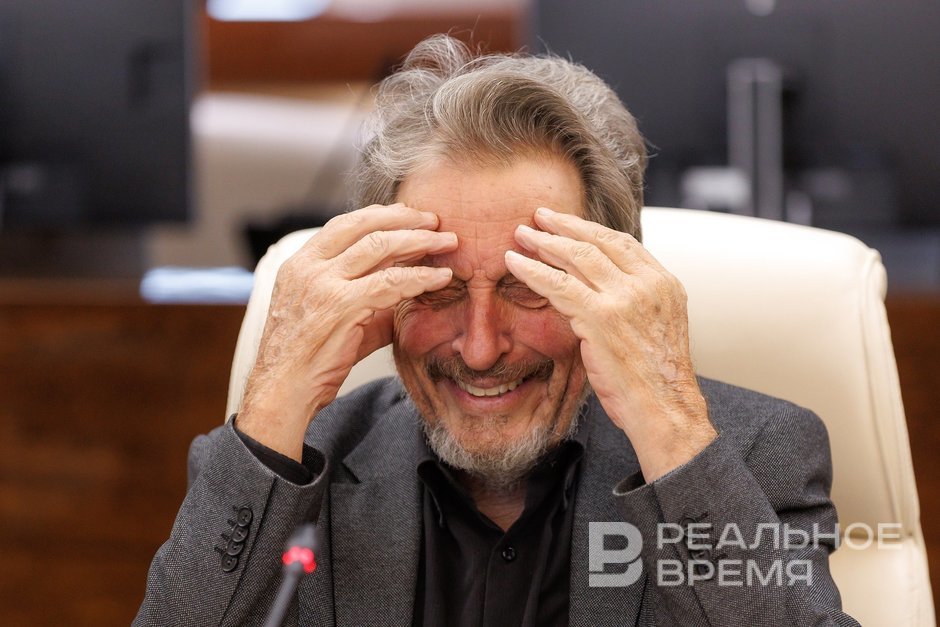
“The first nation to invent this will become the richest”
Or Napoleon, whom my son Elon literally considered an alien, told me: “Dad, Napoleon wasn't human…" If Napoleon had outlived the monarchy, we would have had the internet by 1900, and we would most likely have been to the Moon by 1900. If it weren't for the monarchy, which held back progress.
What did Napoleon do when he became First Consul? He introduced a code of laws, one of which is the Code, called the Napoleonic Code, by which we all live in the world, even today in this city, Moscow — everyone lives by the Napoleonic Code. The Napoleonic Code states that a) there must be sidewalks for pedestrians everywhere, b) there must be roads for traffic, c) there must be water supply, as well as proper sewage and waste disposal — that is the Napoleonic Code. Thus, every city in the world today lives by the Napoleonic Code. But before Napoleon, none of this existed, nothing. He introduced it. He also created the Academy of Sciences. The Academy of Sciences attracts unusual people and provides an opportunity to discuss new ideas.
So, there is one path — create places where people can discuss new ideas and earn a living — they can't do that when they're hungry and have nowhere to live. Another alternative is to do what Steve Jobs did, working in a garage. The first Tesla was assembled in a home garage, and Tesla Motorpart — in a country house garage. Another alternative is to create opportunities for people not corrupted by traditional patterns. If you ask someone with a Master of Science degree, like me, today what the maximum speed in the Universe is, they will answer — it's the speed of light.
You cannot move faster than the speed of light. That's all they'll say. The problem is, that's not what you want to hear. For example, Clark, who was a professor, in 1900 was president of the Royal Society — another scientific institution similar to the Royal Institution — he said that in 1900 there was no point in conducting any further research because we already knew everything.
Just think! In 1900, the president of the Academy of Sciences of England said we don't need to do any more research because we know everything!
Returning to the fact that when Otto Hahn split the atom, he was 67 years old or so; he went to his young colleagues and said, I don't know what this is. They told him, you split the atom; he said, that can't be. Only two months later did he finally agree: “I think I split the atom.” Because people with deeply ingrained ideas don't want to change their views.
The answers to these new questions will come from the young, who are not necessarily excellent students. The mathematician Minkowski, I think he was Russian, became famous for translating Einstein's theories into mathematical terms and came up with E=MC2. The next 20 years, he devoted to the study of space, time, and gravity. For some reason, in 1925, they stopped studying him, saying he was outdated. Space-time research simply ceased, but all his articles are available. By the way, Minkowski argued that the answer to the question of gravity lies in mathematics. If we study mathematics, we will find the answer; it will help resolve contradictions.
I think that the first nation, indeed the nation, not the first person, to invent these things will become the richest. Because this is done for everyone, for the whole world, for all humanity. Unfortunately, someone succeeds and wins, and someone loses. There are no guarantees of success; you just try to do something. But if you do nothing, then definitely nothing will happen.
If Elon excelled at anything, it was his ability to see ahead
It's tough for me and my sons, all of us, but we are fascinated by the things we're talking about today, all these scientific ideas. A vivid example: in 1994, the internet was just emerging and not yet developed. I didn't have the internet in 1994; I hadn't even heard of it. Then someone showed me that if you connect through a phone line and it hisses like that, then, my god, somehow you connect to the internet. That was in 1995.
But in 1994, my 24-year-old son, so young, went to a publishing company that printed news newspapers like the LA Times, San Francisco Chronicle, Memphis Herald, and other major publications, about 10 or 11 in total. All were published by just one company; they had these huge printing presses. Elon came and told them, this isn't working anymore, you need to go online. Already in 1994, you need to be online! They asked, what the hell is that? We don't understand what you're talking about. They had the internet, which they had used for the previous ten years — they first connected via modem to the internet around 1984. He said that if they didn't go online, they wouldn't be able to stay in business. They thought — why not, and asked how much money he needed for it. He said — $2 million, a huge amount of money for 1994. They gave $4 million. They gave two guys a check for $4 million. So they came to pick me up at the airport in an old beat-up Honda Civic, showing me this check through the window.
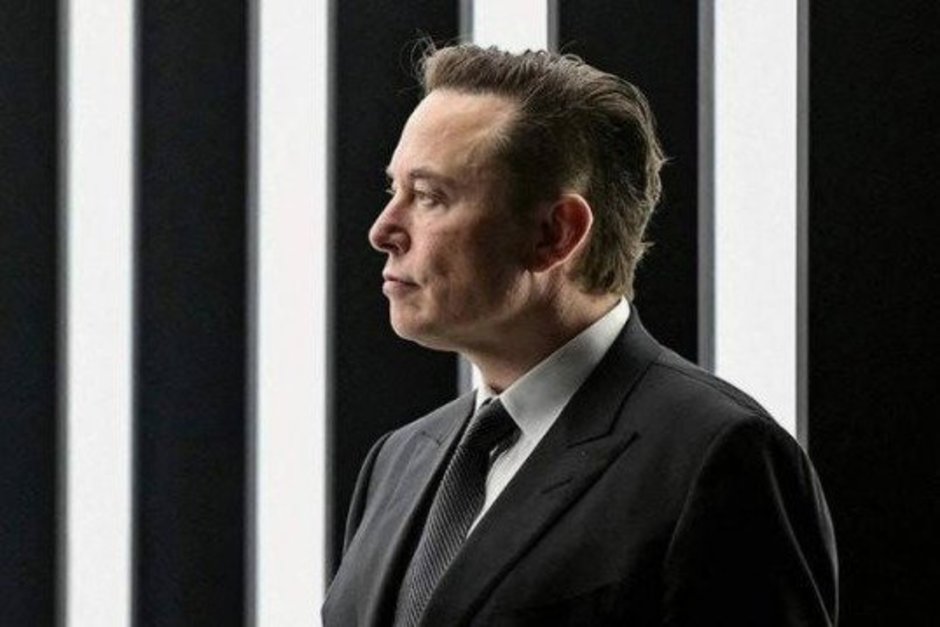
Over the next two and a half years, 75% of American newspapers were placed online. I'm trying to illustrate the ability to see ahead. If Elon excelled at anything, it was that he said, “In 10 years, you'll be on the Internet.” When most people still didn't really understand what it was.
Now most of us can only say that we need to improve artificial intelligence. This is just an example of the need to think differently, not like everyone else. Napoleon once said: if you want your nation to succeed, you must provide it with fresh water, sewage, and so on — but everyone thought he was an idiot.
Want a cognitive computer? Have a child!
Artificial intelligence is already here, but I don't agree with the idea that AI will solve all problems. Yes, it can somewhat simplify solving tasks or calculations that take a long time. During the war, the Germans developed, as we all know, a machine that was impossible to decipher. It had 130 million possibilities. It took the British nine months to crack it, and another two years to fully figure it out. That's it. So where's the effect? Obviously, you need to use everything you can, all tools, in what you do. But at the same time, it's important to set a goal and define the task. Because otherwise, you don't know what they'll be doing.
Maybe we'll even create a machine that can speak better than you, but what's the point of that?
Want a cognitive computer? Have a child! Yes, it takes twenty years, but it's a real living computer. Do you understand what I mean? I have a little child — two and a half years old. And I am amazed by his abilities. I saw the same with my other children — how quickly they learn. The human brain is just incredible. I saw it with my other children too. How quickly they learn — the human brain is simply incredible. How quickly they understand even small patterns.
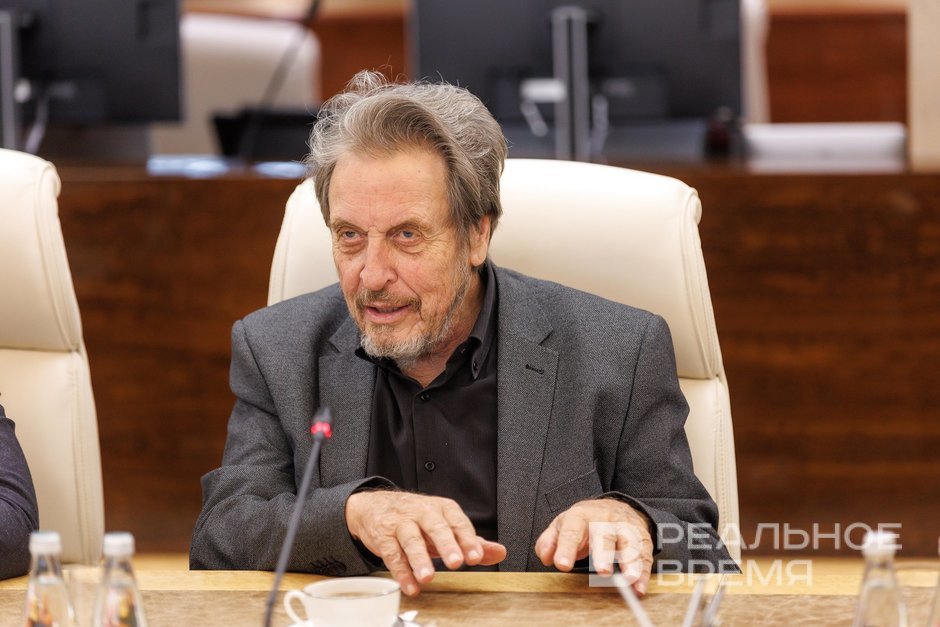
I'm not in love with the idea that AI can solve all of humanity's problems. I think it's just interesting and useful, that's all. Like all computers, it helps. But the answers we seek will come from the human mind. We need to outgrow this adolescence.
Most work for profit, but we must continue to explore
In 1940 or 1941, as you know, Einstein and several other scientists informed the US government that Germany might be able to create an atomic bomb and proposed building one themselves. Using state resources — the power of the United States — they gathered scientists from around the world. Those who could be called theoretical physicists. When they got together, they didn't know how to make an atomic bomb. No one had the slightest idea how, but they needed to figure out a way to obtain a stronger form of uranium.
The first people who started working on building the atomic bomb died within the first few months from radiation sickness. They didn't understand what they were doing. But as a result of these deaths and poisonings, they learned: radium is the answer. They needed to isolate the radium isotope U-235 from uranium because it splits much more easily. Then they discovered that some uranium atoms are slightly lighter than other uranium atoms. If you circulate a gaseous form of uranium in the central part of a centrifuge, the heavier uranium atom will move closer to the edge, while the lighter U-235 will remain in the center.
As you know, it took about four years before they achieved anything. They didn't come and say, “Okay, let's fire up our supercomputers.” They just thought, thought, thought. So now we are in the same situation. We need to gather people for this specific task. And if we talk about, say, gravity — when you bring people together, they don't have a ready answer. It's not general scientific research, no. It's all focused on achieving specific goals.
We're talking about creating an ecosystem from which discoveries will be born — a very civilized, progressive, advanced community.
This should come from business, not the state — the state only has processes, but we need results. It's not necessary to create luxurious buildings, just an environment where people gather together and write a topic on a board. From there, a culture is born, and gradually behavior focused on the essence of the topic develops. This will attract people to the idea, and it will begin to grow. The environment we saw in Kazan is a wonderful supporting infrastructure: the Data Center, artificial intelligence, the people, the city itself, housing — all this contributes to development. But the starting point is just a whiteboard.
First it seems like heresy, then it becomes common opinion
Investment organizations are obviously huge structures. But we can start with the smallest unit — an academic department or a research institute at Indiana University or at IT University. Announce that not only PhDs can come here, but anyone with ideas: we will take you, help you, give you some money to live on. Maybe after a few months or sooner, you'll say it didn't work out and decide to leave yourself. But we will attract, maybe, a hundred people from around the world who will say: “I know what needs to be done.”
If information about such a department is kept slightly secret, I guarantee you, it will quickly spread around the world. For example, that Kazan University has a unit of specially trained people to study the application of gravity for the benefit of humanity. It will be a shock. Because intelligent people, not stupid, educated people will say: “Oh, that's interesting.” That's what distinguishes those who leave nothing behind from those who will truly bring the next breakthrough. Yes, at first it will seem like heresy, and then it becomes common opinion — like the discovery of the black hole.
Let me give you an example. My son at SpaceX in 2002 told me he wanted to build a rocket. I said, we built rockets as kids — that's a good idea. That was the support we had; I always said, “Okay, sounds great.”
So, he rented a warehouse — a very cheap, old, damaged building. And he called people of various specialties, talked. He managed to reach a leading German specialist from Berlin University in satellite radio communications to get an answer to a question. Then Tom Mueller from Project Baltimore appeared. Elon offered them a stake in the business, so Tom Mueller retired about four or five years ago with $140 million. A man who had nothing more than his pantry, if he had stayed at Jet Propulsion. There were many such people. To the guys from whom Elon bought Tesla, he said: “Let me buy your company, I'll give you a stake.” Now they are multi-billionaires. The two who built the first Tesla.
I'm trying to say that most people work for profit. My point is that we need to keep exploring. Even though there is no clear plan yet, this is what needs to be done. We've been circling this idea for two and a half years, and now it's time to start implementing it. I think this is the perfect time and place.