Sergey Chistov: “It was important for us to maintain the winning attitude”
Interview with the head coach of the Kazan team “Krylya Barsa” — about the first round of the Russian Wheelchair Basketball Championship
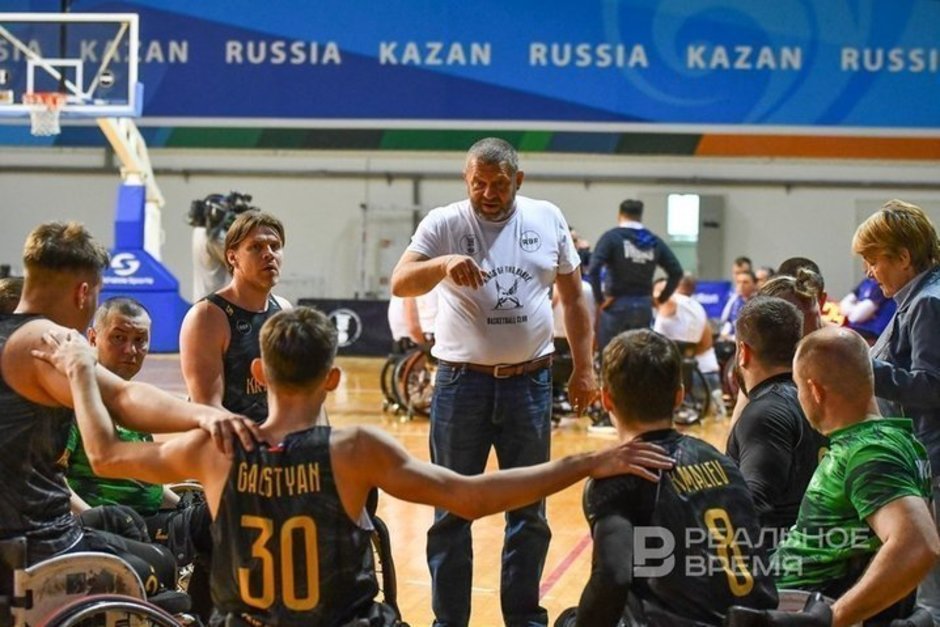
Today, June 23, the first round of the Russian Wheelchair Basketball Championship starts in Kazan at the Tulpar sports complex. Five Superleague clubs will come to visit our team “Krylya Barsa.” The head coach of the Kazan team, Sergey Chistov, told Realnoe Vremya more about this in an interview.
“The guys worked with full fighting spirit”
— Sergey Anatolyevich, your team won the National Cup for the first time but lost in the qualifying stage of the championship, which determined the top six teams of the Superleague. What is the mood in the team now?
— The guys worked with full fighting spirit and in a good mood. I mean both the work in Kazan and our training camp in Turkey, which took place from May 30 to June 7, where we worked on physical condition and tactics. There were no friendly matches there, so in terms of game practice, we are approaching the Kazan round “hungry.”
— When teams in team sports return from vacation, they often complain about a lack of game practice. “Krylya Barsa” are forced to play about 30 matches in the 5-on-5 format during the season, including official and friendly ones, plus the same number in the 3-on-3 format. Here, perhaps, one can talk about a lack of game practice.
— Here we need to say that our competition format is as close as possible to the practice of Soviet sports, when in basketball, volleyball, handball, and so on, teams gathered in one city and met each other in a tour system. There, too, there were not so many official meetings; another thing is that their shortage was compensated by numerous tournaments, for example, for the championship of a sports society, and again, international events.
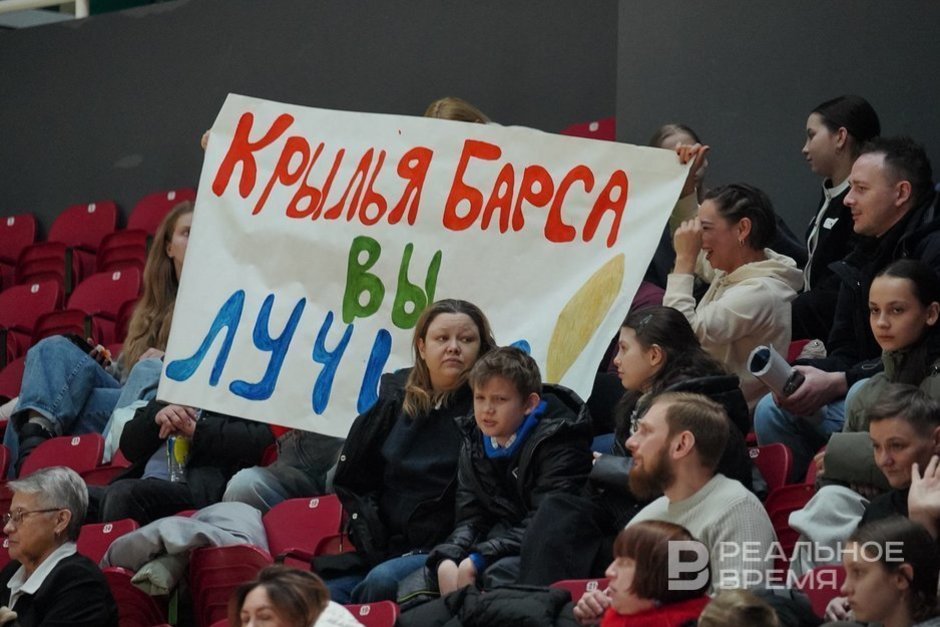
“All our opponents are ready for the championship”
— Gennady Shchetinin, who began his journey back in Leningrad Spartak and now coaches BasKI, managed to catch this system.
— Yes, now our teams play one or two matches a week, with travel. Thereby creating the illusion of constantly being in the spotlight, unlike us, who played five games in a tour and disappeared from sight for two months until the next tour.
— The start of your championship coincided with the end of the season in many team sports, and it has already been announced that the basketball club “Pari NN” from Nizhny Novgorod is ceasing to exist. The Russian futsal champion team “Ukhta” is dropping down to a lower league. It is clear that “Krylya Barsa” has a reliable partner in TAIF JSC, but among your opponents, are all teams financially ready for the season?
— Judging by the available information, all our opponents are ready for the championship and have held pre-season training camps. Everyone is preparing for the new start.
— Let us recall that in the first qualifying round we played without Vasily Kochetkov and Albert Bagamanov. Can you reveal the mystery a little — why?
— I will answer that after the situation arose, we hired a sports lawyer who had previously worked at the Russian Basketball Federation, and he fairly quickly clarified the situation. We, in turn, provided him with all existing regulations and provisions on the conduct of competitions for his work. And in pre-trial proceedings, the Russian Paralympic Committee removed all claims against us, since Kochetkov and Bagamanov play wheelchair basketball according to European regulations, which prevail over Russian ones.
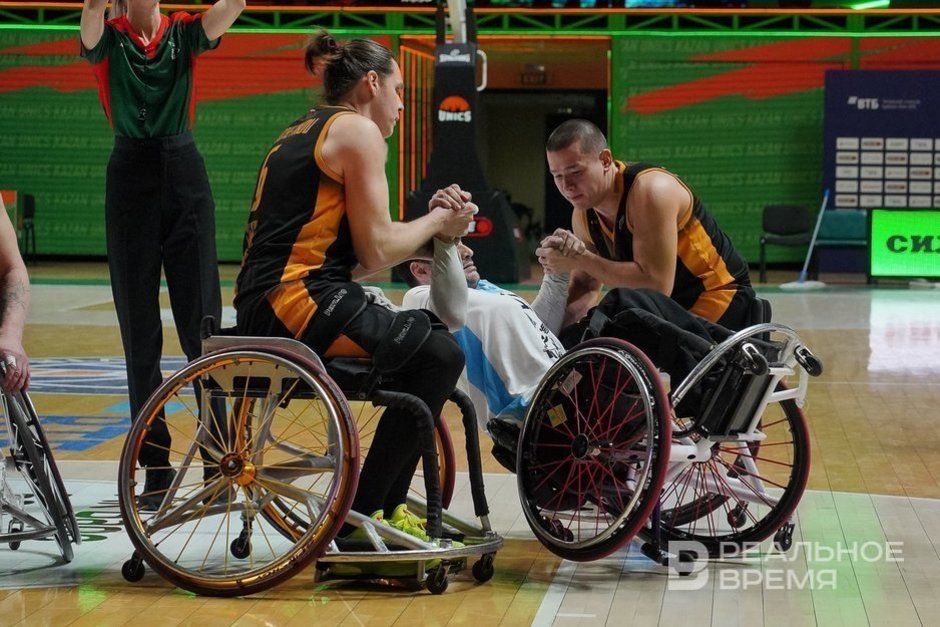
“Players in our championship cannot compete with able-bodied athletes”
— By the way, I noticed that among our opponents in international matches, I saw players from Bosnia and Turkey who moved on their feet before the game and then sat down in wheelchairs. Then I realized that POMA is a musculoskeletal disorder, not the absence of lower limbs.
— I can understand the fact that there are no more basketball players with such injuries in the Russian championship, but in European championships this is a common occurrence, since these people in any case cannot compete with able-bodied athletes. The most striking example is Belarusian Alexander Golovsky, who plays for the German national team and was recognized as the best player of the European Wheelchair Basketball Championship.
— How did you get out of the situation in the qualifiers, being deprived not only of two leading players but also of the combinations practiced with them?
— We had to play combinations that involved only one big player — Vsevolod Salin, who had a heavy load, as he was forced to play about forty minutes per match. A heavy defensive load fell on our veteran Igor Samartsev, who is over 50. In general, it was important for us to maintain the winning attitude and confidence in our readiness to play in such combinations.
It is good that this situation happened at this stage, which was qualifying and does not affect the situation in the championship, where we will start from scratch. Secondly, when we lost in the semifinal to Moscow's Falcon, it was probably more justified from a strategic point of view than if we had won, made it to the final, and could have lost big to BasKI there.
They would have said about us that “Krylya Barsa” lost, although in general we did not have two suspended players, we did not have Artur Galstyan, who is recovering from surgery, we lost Taisiya Afanasyeva, whom doctors banned from any sports activity due to problems with the heart muscle. Minus a third of the team, as a result, we were even forced to use an absolute debutant, Marcel Shigapov, who has been with our team for only six months. Otherwise, we would have had to play with only “small change.”
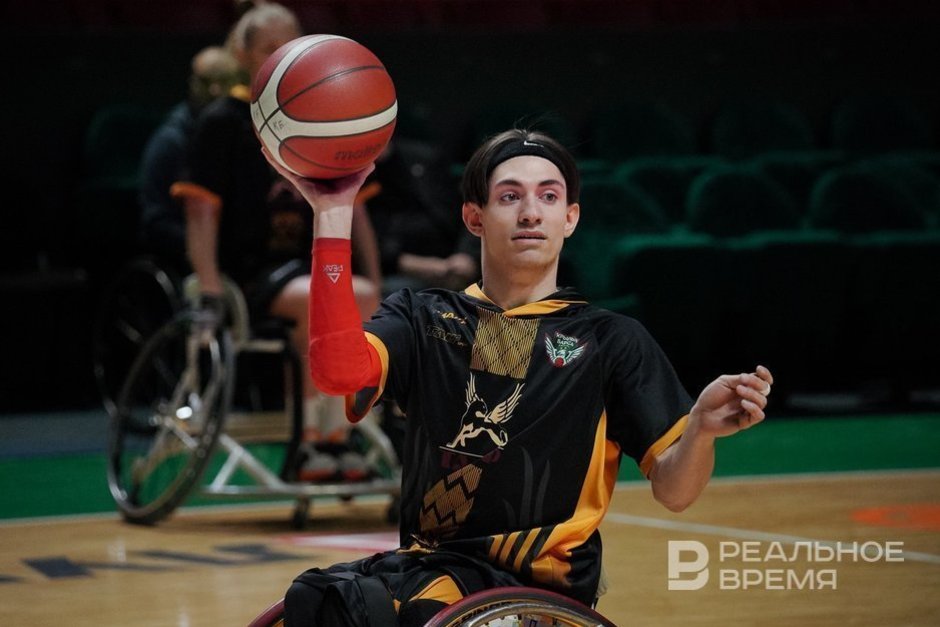
No sponsor — no team
— You mentioned the newcomer Shigapov, and this is a great rarity in Paralympic sports. Otherwise, teams here are built for decades. How do you manage to prevent fatigue in a male collective where people have been playing together for 10 years, like Kochetkov and Ivanov, for 15 years, like Kamaliev and Samartsev? In professional sports, this is easily done through player transfers and roster changes.
— In our case, we must remember the factor that brought these guys together. The loss of health and motor activity in one way or another narrowed the guys' social circle, while coming to wheelchair basketball, on the contrary, expanded it, and in a team like “Krylya Barsa," increased it many times over. Trips abroad, international matches — they got all this here, in our team.
In foreign teams, relations are structured a little differently; there, Paralympic sports are closer to professional ones. Legionnaires are allowed, which allows not to “get attached” to players, building any relationships other than professional ones, and to pursue a transfer policy. On the other hand, only there did I hear the expression: “No sponsor — no team," since with the departure of sponsors, few people think about what will happen to its players. With us, the project is largely social, and we repeat that not a single team has ceased to exist, despite the fact that not all of them fight for medals and a place on the podium.