Pavel Cherepanov: “The set-piece playbook for Rubin was devised by Berdyev”
Recollections of a coach from the former coaching staff of the Kazan football club
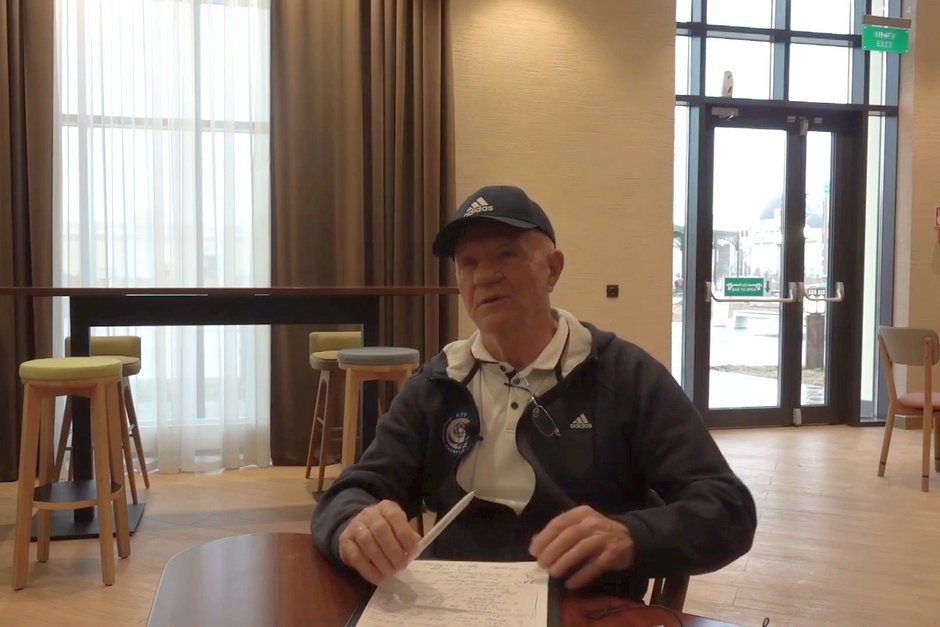
Pavel Cherepanov worked in the coaching staff of Kazan's “Rubin” for exactly 10 years — in the period from 2003 to 2013. After his playing career in the times of the USSR he coached and was the head of the “Traktor” team (1976—1981). Besides coaching and management at “Traktor” and “Rubin," he also coached Kazakhstani teams. Cherepanov told in more detail about his work in Kazan in a book dedicated to the best period of “Rubin," in 2001—2013, and created with the support of the company “TAIF.” “Real Time” publishes an exclusive interview from this edition.
“I analyzed the World Cup final, and soon Berdyev invited me to work at Rubin”
— Pavel Petrovich, how do you remember the footballer Kurban Berdyev?
— In his time as a player Berdyev always adhered to an attacking style. He himself was a creative forward, very intelligent. I was struck by Kurban Bekievich's practical conclusion from the analysis of the matches of the 2002 World Cup. For many years “Rubin's” play was distinguished by a reliable defense; the opponents had to try very hard to score at least one goal. In this story is the whole Berdyev, capable of using in practice everything that can help the team play successfully. Once he was asked whether he watches football. Kurban Bekievich answered: “I do not watch football, I study it.” His deep knowledge of football, of the psychology of footballers and the ability to organize the training process allowed “Rubin” to win in Russia and in Europe.
— Under what circumstances did your paths with Berdyev cross again?
— A curious story is connected with this, which subsequently in many ways determined the playing style of “Rubin.” In 2002 the final part of the next World Cup in football took place at the stadiums of Japan and South Korea. I watched all the matches of the tournament and analyzed them. In the final game Brazil beat Germany with a score of 2:0; two goals were scored by the legendary Ronaldo nicknamed the Phenomenon. I collected statistics of passes through an actively advantageous position in all the matches of the final stage. Its analysis showed that the Brazilian team turned out to be the best not only by result, but also by the indicator of the speed of attacking actions, by the advancement of the ball toward the opponent's goal. By mail I sent Berdyev the results and conclusions based on the results of the final tournament. And soon Kurban Bekievich called with an offer to work at “Rubin.”
Upon arriving in Kazan we had an interesting conversation, during which Berdyev asked: “Pavel Petrovich, what do you think will happen if our team is capable of closing the actively advantageous positions to the opponent, will act 'mirror-like' in relation to your theory?” I answered him that then we would take a prize place. Kurban Bekievich took this into account. We began to work.
— Indeed, in 2003, in the debut season in the Premier League, “Rubin” immediately got into the prize-winners.
— Yes, that is how it happened! In 2003 much came together. I will note the discipline and excellent functional preparation of the players, over which we constantly worked. And the roster then was decent: Calisto, Roni, Scotti, Novotny, Cizek, Boyarintsev, Konovalov, Sibaya, Chaladze… Well, and an important moment, that we closed all the zones and did not let the opponents' forwards run loose.
And in 2004 we failed, because we considered that we already knew everything. And we were quickly given a smack on the ears. There was another unsuccessful year, 2007, when we failed functionally. Then the coaching staff was renewed, and experiments began. Although the physical preparation before this had been tuned to the last detail.
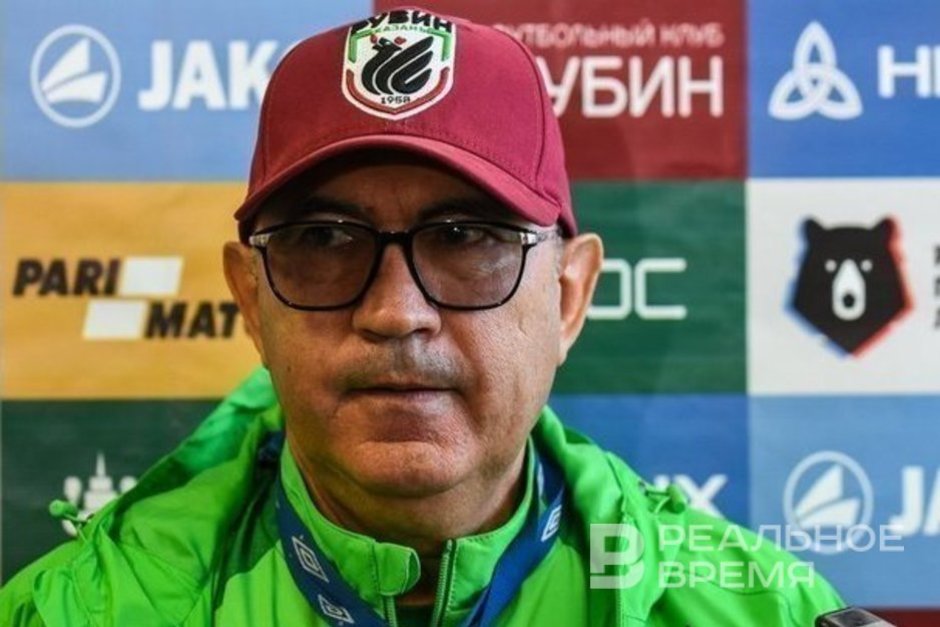
— You were the head of the comprehensive scientific group. How did it work?
— We had a computer program for counting data that no one had at that moment. Kafanov, Urazsakhatov and I after each game ourselves counted the passes, dribbles and so on, as well as passes into an actively advantageous position. We summed up the data, and the program calculated how we played, how much there was of spoilage, what was the speed of the development of the attack and so on.
For example, it was calculated that if we enter into the tackle from 90 to 100 times per game, then we do not lose. How do you think who at “Rubin” tackled best of all?
“The best of all at Rubin tackled Christian Noboa”
The best of all did this Christian Noboa. At one time we began to sag in the number of tackles. I reported this to Bekievich, he said: “What are the proposals?” I say: “Bekievich, in the times of the Soviet Union what exercise was the best? Personal marking on half the field, seven on seven, eight on eight, nine on nine.” We did it two or three times, and everything fell into place. Although the footballers whined: “what is this, what is that.” No, we train the tackle and pursue our player, and do not stand and wait for what will happen. The player must close in on the opponent, and not imitate, as if he is covering something at a distance of two or three meters.
— “Rubin” always used set pieces well and often scored after playing them. Who worked on them?
— Berdyev devised them, and Kafanov practiced them in training. On the subject of set pieces I have one interesting story. The Georgian Lasha Salukvadze came to us. In training we practice corners. Bekievich says: “Lasha, you mark the forward, do not bring him into the central zone, it must be free, do you understand?” He answers “yes.” Dominguez takes the kick, Salukvadze runs into this zone and stops. Bekievich again to him: “Lasha, you do not need to come here, we free this zone, because a player joins there, do you understand?” He again answered affirmatively, but again and again ran there. In the end it turned out that he understood Russian poorly, and agreed all the time because his agent had instructed him: “Whatever the coach says, always answer 'yes.'" Of course, later Lasha settled in and brought not a little benefit to the team, including in the championship years and in the matches on the European arena.
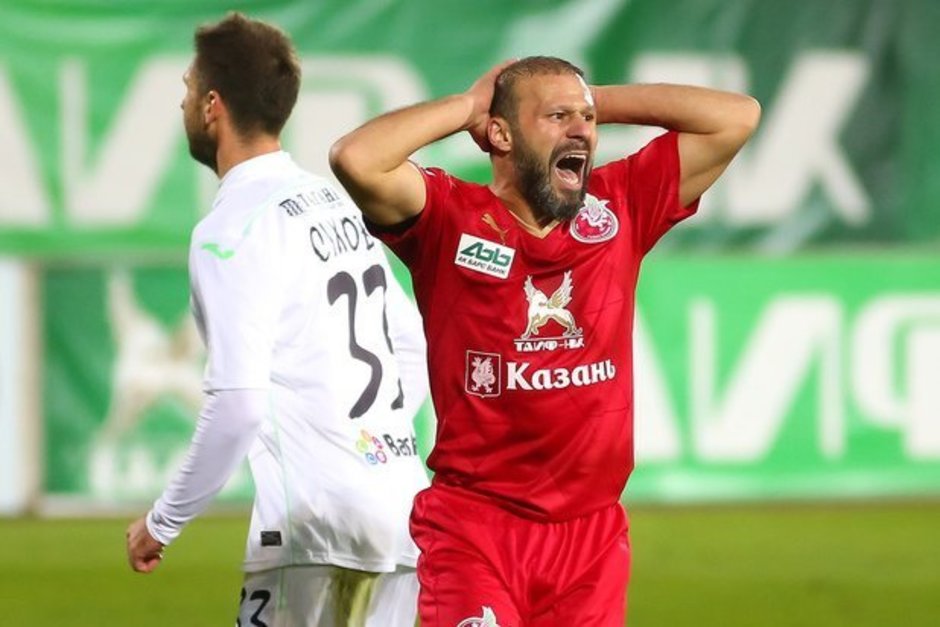
— What else was part of your duties?
— Drawing up plans of the team's work for large periods and for microcycles. Daily work connected with planning the preparation and determining the load. Then, when Alexander Matsyura came, we dealt with this together with him. We were among the first to purposefully work on strength preparation. I have a whole monograph on this subject. We developed such a style of preparation thanks to which we had few injuries.
Besides this, I worked with the injured. That is, after the players who had suffered an injury were allowed by the doctors to train, they worked with me. There was a special methodology that gave the player the opportunity to restore his condition. And when they came out onto the field, they did not have to gain their resources in the game; the footballers were already functionally ready.
I helped restore the condition of Karadeniz, Rebrov, Semak, Milosevic. All the injured players, before returning to the field, passed through me.
“We had a wonderful atmosphere in the club and directly in the team”
— So you also dealt with the physical preparation of the players?
— With its planning; this was part of my duties. We discussed everything together, and the last word in all questions was with Bekievich. But for the load I was responsible. How much is needed? Three, four, five series of exercises.
We had a wonderful atmosphere in the club and directly in the team. And a tradition established that we gathered as a coaching staff, and each proposed his own variant of the lineup. At the same time one had to not simply propose, but argue why you included this or that player in the lineup for a specific match. In this regard it was easier for me, because all the data was there. We then were the first to return to the counting of technical-tactical actions. Later specialized firms in this area already appeared. In 2003, 2004, 2005 I dictated into a voice recorder how much each player moved. We derived the coefficient of movement at maximum and submaximal speed. Of course, there were errors, but when the Israeli firm came, which placed cameras around the stadium and counted everything with the help of special equipment, they got approximately the same sum.
— Did the major defeat to CSKA in 2003 have a sobering effect?
— Yes, we were simply brought down to earth. At the training camps we played decently, but in the very first game of the championship we immediately got 0:4. We gathered, did the work on the mistakes and in the next round in Kazan won the first victory in the Premier League, beating “Torpedo-Metallurg” with a score of 1:0.
— How did the team's tactics change over the years? Why after the championship seasons did “Rubin” begin to fail at times?
— Some changes occurred in the coaching staff. We again began to experiment. Instead of the scheme 4-4-2 or 4-4-1-1 we restructured to 4-3-3. When opponents played against us by such a scheme, for example “Zenit," their wide midfielders were oriented toward attack and acted poorly in defense; we always took advantage of this. In 2010 the whole preparatory period we played 4-3-3 and received in control matches from the opponent three or four goals into our own net. And so the season begins, we sat down to discuss, Bekievich says: “Well, how will we play?” In the end we experimented some more and returned to 4-4-1-1, the system that worked in our successful years. We returned, and in 2010 again got into the prize-winners, took third place. And then in 2012 we took the Cup.
“All that Barcelona managed to achieve was to score two goals against us in one match”
— In the history of “Rubin” the legendary match against “Barcelona” stands out. How did the preparation for it go?
— We knew that they use a high press, quickly win the ball back, while behind the backs of their defenders a large space remained. Bekievich said that one must intercept the ball in the center of the field. Therefore he put Karadeniz, who played as a wide midfielder, as a forward, considering that he would fire. And so it turned out. With the first goal it is clear — a rebound off a defender — and Ryazantsev opened the score with a cannon shot. And in the case of the second goal there turned out exactly what we had prepared in advance. Noboa tackled the ball on his own half of the field, then Dominguez gave a pass to Karadeniz.
The second moment is how Messi was held. He then began the attack from the right flank. Bekievich moved Vitaly Kaleshin, who played as a right back, to the left. The task was to try to make it so that Messi did not receive the ball, and in many ways this succeeded. And when it did not succeed, Christian Ansaldi already helped there. Of course, one cannot fully close Messi, but at least he did not have such expanse as in the matches with other teams. He did not roam so freely, and this in many ways determined the outcome of the match. Yes, “Barcelona” had the initiative, they had many shots, but the match ended in our favor.
— In general, there was not one match with “Barcelona," but four whole. One victory is remembered, but there were also two draws, which are also worth a lot.
— In the home game, which ended with a score of 0:0, we could have won had Obafemi Martins converted a most advantageous moment. All that “Barcelona” managed to achieve was to score two goals against us in one match, despite the fact that it could have piled three or four goals on many in a game. Bekievich himself did the analysis; he only gave Nikolai Ryabtsev (the “Rubin” video operator — author's note) a list of minutes with the fragments that needed to be recorded. And he often showed us: here are Xavi and Iniesta, why are they always free? Bekievich calculated that Iniesta turned around thirteen times in two minutes. Looked right, left, as if he had eyes on the back of his head. It is a habit.
When I returned to Kazakhstan, I proposed a bet. A match of the local Premier League is going on. If the footballers of both teams, taken together, turn around 15 times over the whole game, look at what is happening around them, I put up champagne. And I always won, because this did not happen.
— That is, Iniesta and Xavi often turned around in order to control the space around them.
— Yes, this was the signature style of the “Barcelona” players. Besides the confrontation with it, the matches with Milan's “Inter” are remembered. First we met them in the Champions League. At home we played a draw — 1:1. The first goal was a classic, what we always practiced: a long pass, a lay-off to the third, Dominguez runs away and scores. Away, true, we lost, but “Inter” in the end became the winner of the Champions League then. In the Europa League in 2012 we met them again. In Milan we played a draw — 2:2, and at home we beat them by a large score — 3:0. There was an interesting moment there: Roman Eremenko, without looking, with one touch, with the outside of his foot gave a disguised pass to Rondon, he picked it up and scored. I included this moment in the training manual, a classic example of how to give disguised passes.
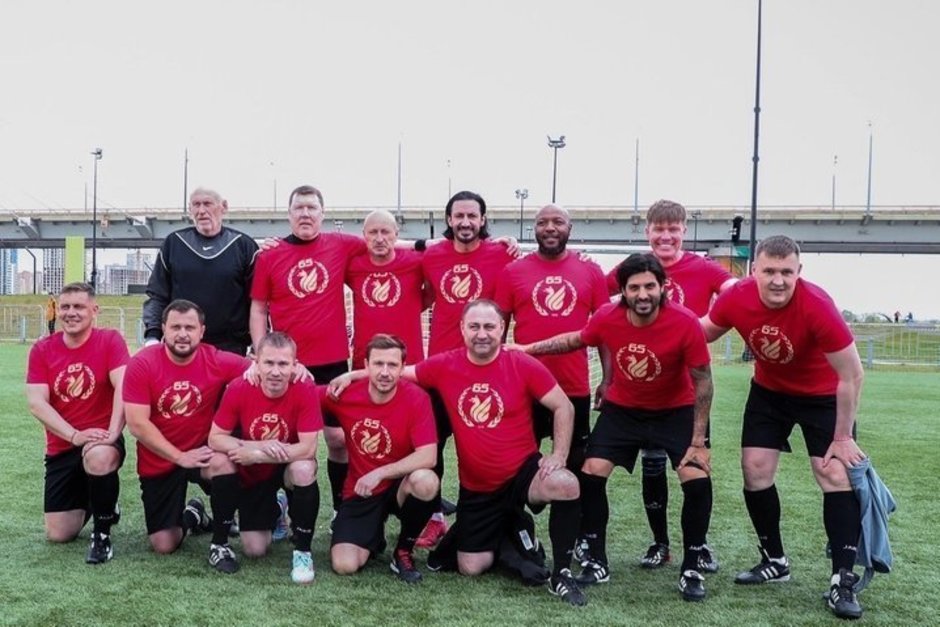
The impressions from working in Kazan remained magnificent. It was a very interesting time. I carefully keep a copy of the championship cup that we won in 2008 and 2009. It was given by Evgeny Vitalyevich Golov on the day of my 65th anniversary, which I celebrated in 2010 together with the team during the training camp in Turkey.