“Caissa!” instead of “Lord!”: how Russian literature was replaced by chess and what came of it
The writer Alexey Konakov at the presentation of his novel “Tabiya Thirty-Two” told how the mechanism of ideology became the basis of a “fantastic opera” about chess in the 2080s
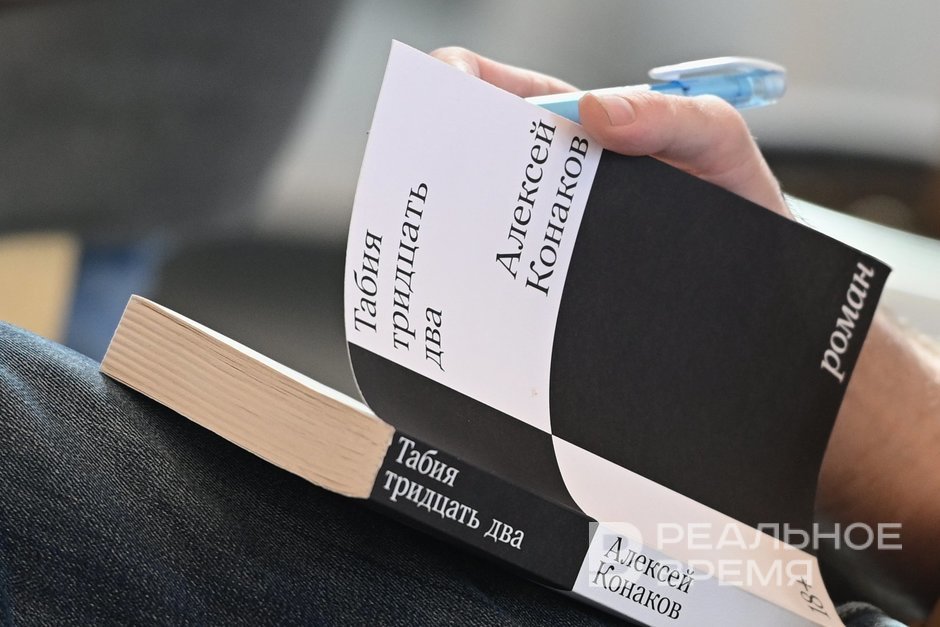
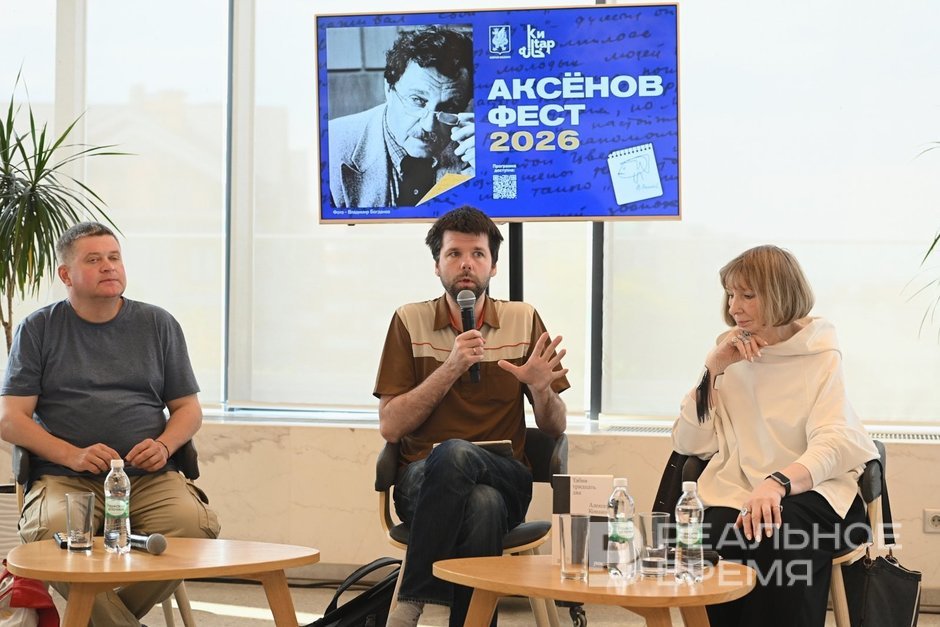
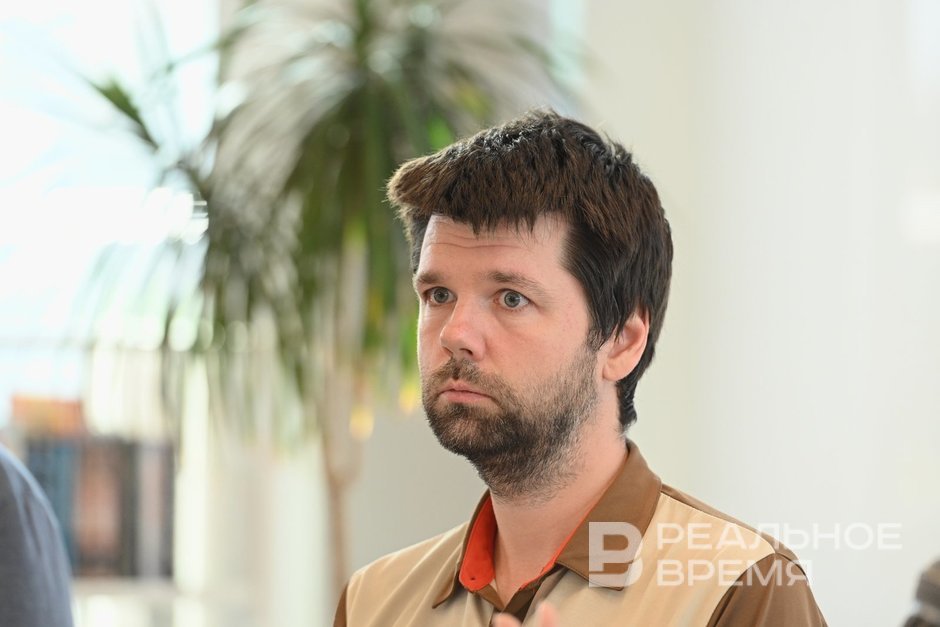
The Petersburg writer Alexey Konakov came to Kazan for “Aksenov-fest” for the first time. Here he became the winner of the “Star Ticket," gave several lectures and presented the novel “Tabiya Thirty-Two," which came out in 2024. The writer told about the idea of the book — the abolition of Russian classical literature and its replacement by chess, about how the mechanism of ideology became the basis of the novel, and also why he calls “Tabiya” a fairy tale and not a dystopia. Details — in the report of the literary reviewer of “Real Time” Ekaterina Petrova.
A fantastic opera about the end of literature
Alexey Konakov came to the presentation without a single copy of his book. The print run of “Tabiya Thirty-Two” sold out almost instantly. According to the writer, the book has remained neither at the Individuum publishing house (where it came out) nor at Alexey Konakov's home. During the day he has worked as a hydraulic engineer for twenty years, and at night he writes books and about books.
— Hydropower is my lawful wife, and literature is my mistress, Konakov paraphrased Chekhov in an interview with “Sobaka.ru.”
The title of the novel reveals nothing. Konakov wanted chess to emerge in the text “gradually, imperceptibly, little by little.” The words “defense," “gambit” and “combination” immediately reveal the theme, so he did not take them, but found the Arabic term “tabiya.” In chess that is what a settled position from the middle of a game is called, not from the opening. The author explains that few know the word, although it is a canonical chess term.
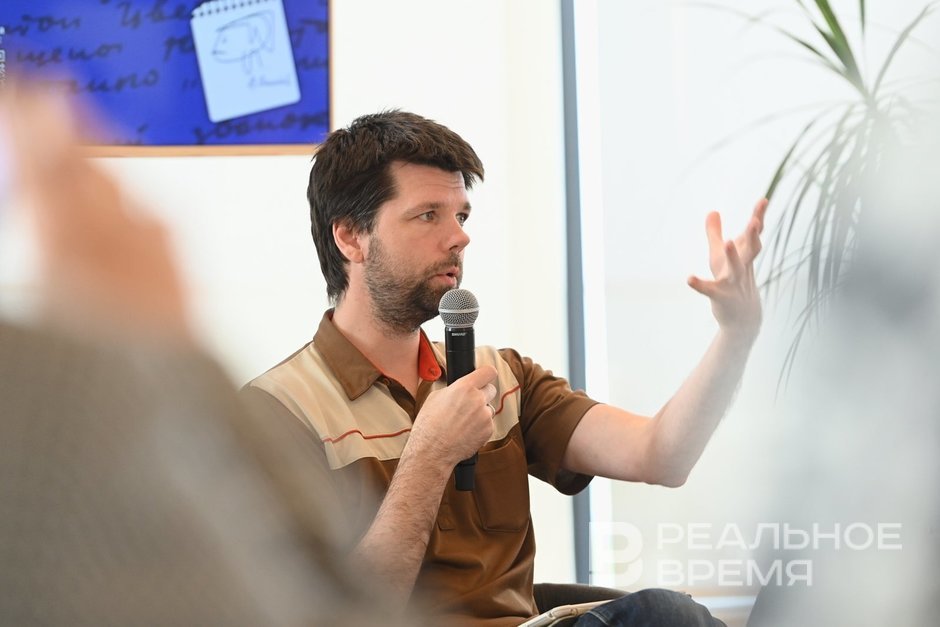
The number 32 in the title is also not accidental. “The plot revolves around a secret 32nd position, which can, to put it simply, break chess," Konakov explained. In the world where chess replaced literature, such a position threatens the stability of society. The main hero, the graduate student Kirill, studies the history of chess. He begins to search for the forbidden tabiya. “This is a plot cliché: in Umberto Eco's 'The Name of the Rose' they search for the second volume of Aristotle's 'Poetics,' and in mine a young chess neophyte steers onto a dangerous path and seeks out the 32nd tabiya," the author said.
Konakov advises reading the book as an adventure detective story. The subtitle of the novel is “A Fantastic Opera.” “I compare this to a trip to the opera: you go in the evening to enjoy the music, the singing, the scenery, the buffet among other things. If you have not read, do not be frightened by chess and questions of ideology. This is a chance to simply have a good evening," he said.
“A stool for president”: how ideology works
Two eternal Russian questions “Who is to blame?” and “What is to be done?” the novel closes almost immediately. Fyodor Dostoevsky and Leo Tolstoy are to blame: they taught Russians to be imperialists and aggressors. There is only one way out: remove all Russian literature and replace it with something. It is from this idea that Konakov starts, developing the plot of the novel. The writer wanted to show how ideology works. He read a great deal about this, from Karl Marx to Louis Althusser and Michel Foucault.
— One cannot exit ideology. Man is an ideological being, and ideology is an imaginary resolution of real contradictions, Konakov said.
Konakov takes his own experience from the 90s. “Everyone was a communist yesterday, and the next day became a capitalist. Before our eyes they changed black and white, bad and good. This experience of the arbitrariness of symbolic systems is alive in me to this day," the writer explained. The book brings this idea to the point of absurdity. Replace literature with hockey? You need ice. With ballet? You need pointe shoes. With Russian cuisine? “It seems not very rich," Konakov reflected at the book presentation, listing the options. Chess remains. “We have a good history in this sphere, an interesting game," the writer continued. Konakov recalled the words of Boris Berezovsky from the 90s: “Give me the button of Channel One for half a year, and I will get you a stool elected president.” My book is precisely about such stools, about wooden figures: about knights, rooks and queens," he said.
In the world of the novel no one says “Lord.” Instead they invoke Caissa, the goddess of chess. Schoolchildren memorize Botvinnik's games instead of Pushkin's verses, and speech changes along with the lessons. “Absurdity” there is called “Bongcloud.” That is what the most absurd opening is called in chess: on the second move White, contrary to the canons, brings out the king, and he gets in everyone's way. Instead of “We cannot meet” the heroes say: “We are like differently colored bishops," which never meet.
— It was quite curious to construct such a language, Konakov admitted.
Street names also change. In the novel Lermontovsky Prospekt becomes Botvinnikovsky. Zhukovsky Street receives the name of Nimzowitsch. Yusupovsky Garden remains Yusupovsky, but now it bears the name not of Rasputin's murderer, but of the chess player Artur Yusupov. Streets named in honor of writers bear the surnames of grandmasters, and chess jokes replace book aphorisms. “The heroes do not understand this; they take everything for granted. But we stand outside, and it looks quite funny," Konakov said. The critic and editor-in-chief of the journal “Oktyabr," Irina Barmetova, added that the riddles in the book are easily read. She called them “a light game with the reader and with the text.”
The main hero Kirill comes to Petersburg from Novosibirsk. Konakov himself came there from Ukhta. “This is a novel about young people. I played chess at 15—17, and the book became an occasion to return to those happy times. Soon you will be an old man, and you return to the time when you were very, very young," the author said. He considers such a story typical for Russia. There are few centers of university culture in the country: Moscow, Petersburg, Kazan, Nizhny Novgorod, Tomsk. “Every autumn tens of thousands of young people go to these cities and communicate with gray-haired professors. They are neophytes, everything is interesting to them," the writer noted.
Dystopia, opera or fairy tale
Although the subtitle of the novel contains the word “opera," readers and critics classified the book as the genre of dystopia. Dystopia, according to Alexey Konakov, is merely “a genre symptom of late capitalism.” Opera is built on deliberate absurdity. Cardboard scenery, a girl dying of consumption who sings an aria for fifteen minutes, a young page weighing twelve poods. “We love opera not for this, but for the subtleties of the interaction of voice and music," the author said in one interview. “Tabiya Thirty-Two” is also not about verisimilitude. It is about the interaction of the literary and chess traditions.
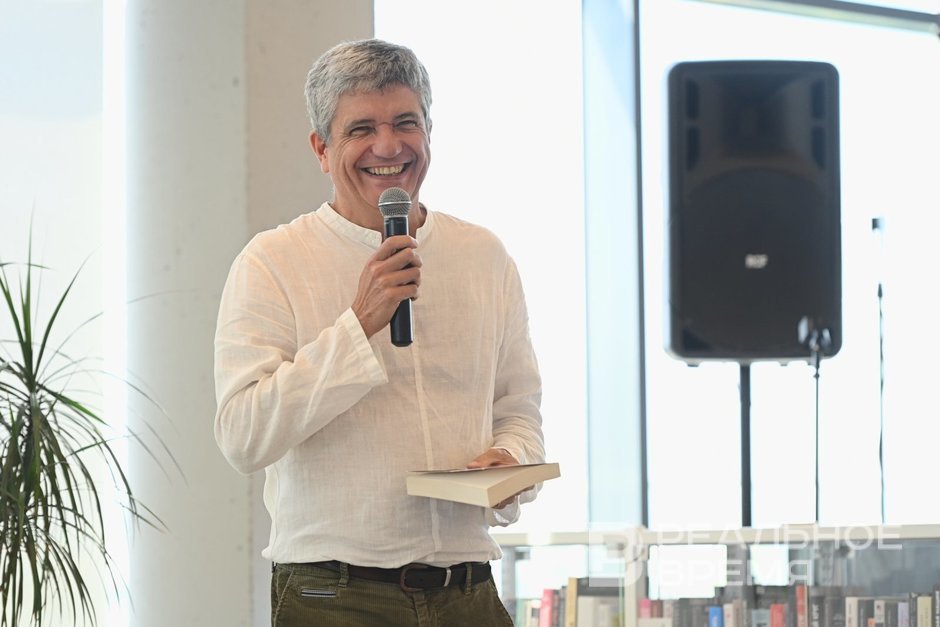
The French writer Yves Gauthier also did not agree with the label of dystopia. “I fundamentally do not like dystopias," he admitted. “Their philosophy is 'tomorrow will be worse than today.' And then the author is proud and says: 'I warned you.'" He approached the book with caution. The first page added anxiety: conventional narration and a “bed scene.” “I tensed up. But I turned the page — and someone's tenacious hand pulled me into the book and never let me go," Gauthier said. He called the novel strong, intelligent and at the same time “popular.” The first association with fellow classics for Gauthier was Umberto Eco, then the Strugatskys. Yves Gauthier called Alexey Konakov an “iconoclast.”
The writer Denis Osokin altogether rejected the label of dystopia. “This is not a dystopia. This is a bright, deeply individual voice of a writer who speaks about the main thing. There is no didactics. There is a feeling of freedom: by reading, we become freer and better," he said. Konakov altogether classified his novel as a fairy tale:
— After all, we love scary fairy tales: the witch in the gingerbread house wants to eat the children, Baba Yaga, the leshy, Shurale. There something strange happens and by its own laws. Somewhere it is like the truth, somewhere like miracles. Apparently, a clinamen occurred, a deviation of atoms, and what happened came about.
And then Yves Gauthier found a contradiction in the book. “Your book exposes Russian literary-centrism, but does it by purely literary devices. It breathes love for literature. It is itself literary-centric," the French writer said. “This is a subtle remark, in a certain sense exposing the author," Konakov agreed. He wanted to “play on all the boards at once.” The book was supposed to become a “chervonets that pleases everyone.” To those who hate the classics and were tormented by them at school, it shows a world where the classics have been abolished. For those who love the classics, it affirms literature by the very fact of the written text. To chess lovers it gives a lot of chess. To non-lovers it shows that chess in the end “made everything only worse.”
True, in this paradigm Alexey Konakov named one obligatory condition: “One must at least love Petersburg a little. If you cannot stand Petersburg at all, the book will most likely not please you.”
Ekaterina Petrova — literary reviewer of the online newspaper “Real Time," host of the Telegram channel «Булочки с маком».