Yonville: how a Norman village turned into a museum of a non-existent place
Book of the week — Gustave Flaubert's novel “Madame Bovary”

One hundred and seventy years ago, on October 1, 1856, the first part of “Madame Bovary” appeared in the “Revue de Paris.” The novel had not yet come out in full, and its author, Gustave Flaubert, already had to fight off attempts by readers to recognize real people in his characters. Five and a half months after the start of publication he denied such searches: “Not a single person posed before me. Madame Bovary is a pure invention. All the characters of this book are completely invented, and Yonville-l'Abbaye is itself a locality that does not exist, as are Ry and so on. This does not prevent the fact that here, in Normandy, in my novel they wanted to discover many allusions.” The literary reviewer of “Real Time” Ekaterina Petrova sorts out how a small French village and its inhabitants were made into the prototypes of Flaubert's novel “Madame Bovary.”
Delphine Delamare: the prototype of Emma or a literary legend?
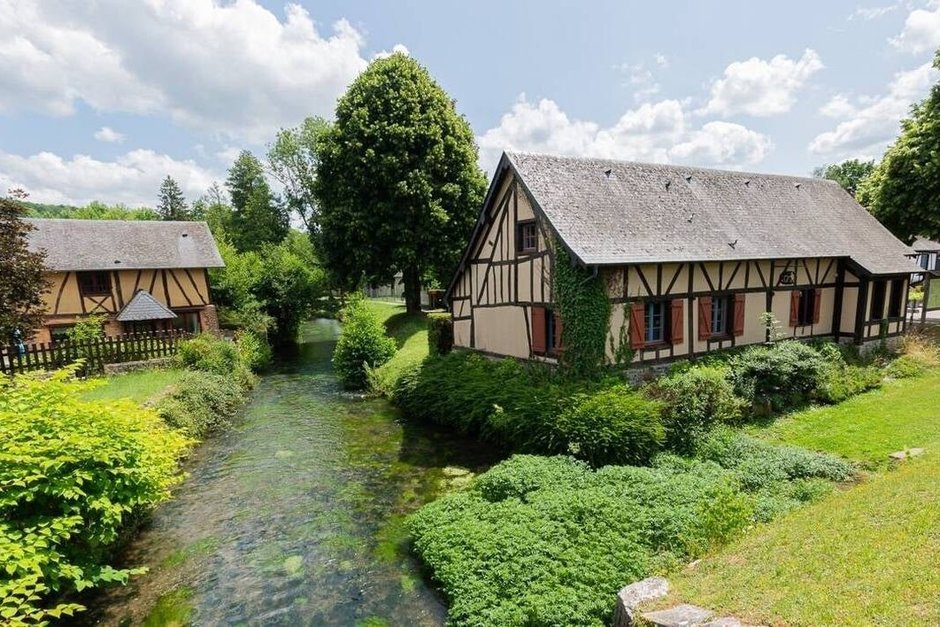
Despite the fact that Gustave Flaubert disowned all intersections with a real geographical place and even more so with people, the inhabitants of the small Norman village of Ry still associate themselves with the novel. Today they call their locality the village of Madame Bovary. Here the Bovary Gallery operates, where one can see scenes from the novel, and a tourist route passes through the places that local tradition connects with its characters.
Behind the supposed prototype of Emma most often stands Delphine Couturier, the wife of Eugène Delamare, a country doctor from Normandy. Delphine married Delamare in Blainville-Crevon on August 6, 1839. Some sources give August 7. She died in Ry on March 6, 1848. Eugène Delamare survived her not for long and died on December 8, 1849. These dates are confirmed by the genealogy provided by Lucy Lefebvre, a granddaughter.
But already here an important caveat arises. The French historian and writer René Herval drew attention to an entry in the marriage act: at the moment of the marriage Eugène Delamare was already living in Ry. Therefore the first chapters of the novel cannot be directly connected with his biography. Such a detail does not cancel the possible similarity of individual circumstances, but it limits attempts to build a direct biographical scheme.
In “Madame Bovary” Emma lives by sentimental novels, which she became enamored of back in the convent boarding school. From her reader's illusions grows what Jules de Gaultier in 1892 called “bovarysme”: the habit of imagining oneself as someone other than who one is. The American writer Mary McCarthy discovered that after Delphine's death an unpaid bill from a Rouen reading room remained. At the same time McCarthy in her article does not name the primary source of this information, therefore its origin cannot be established. Indirectly the connection of Delphine with reading rooms is confirmed by local tradition: the carter Thérin brought books from reading rooms to Madame Delamare.
Another detail already relates to local legend. According to this legend, a certain Rey kept a shop in Ry and refused to extend Delphine's promissory notes, at the same time threatening an inventory of property. This story is connected with the circumstances of her suicide and they try to compare Rey with Lheureux from the novel. According to the stories of locals, the Delamares' furniture was sold at auction to settle with creditors. Approximately as in the novel, where the denouement is built on Emma's debts to the merchant Lheureux, on the inventory of property and on the heroine's despair. It is precisely around such coincidences that the legend of Delphine as Emma Bovary gradually arose.
Ry: the village that became Yonville
Today Ry sells to tourists the story of “Madame Bovary” as part of local identity. On the wall of the local church hangs a memorial plaque that effectively identifies Delphine Delamare and Emma Bovary. This plaque was installed in 1990 on the initiative of the National Federation of Writers of France. On the main street there are also other plaques that remind of the novel's characters. For example, here the supposed pharmacy of Homais and the notary's office are marked.
Local residents began to earn from this connection long before the appearance of the fashionable trend for literary routes. Back in 1977 the watchmaker Michel Burgaud together with his son arranged an exhibition of mechanical scenes based on Flaubert's novel. Later in Ry appeared the “Bovary Gallery," the shop “At Emma's” and the “Bovary Hotel.” An association of local farmers' wives created a tourist route through the book about 60 kilometers long. It connects places connected with the novel and its supposed prototypes.
In local establishments the name of Emma is played up in every way: the restaurant “Bovary Melody” and the shops “Emma's Market” and “Emma.” Forming their identity, the village residents effectively erase the boundaries between the Ry created and the place it was in the 19th century, as well as what Flaubert invented. The American writer Adam Gopnik mocked the Cadogan guidebook precisely for this: it placed the novel and real buildings on one level.
Even the story of Delphine's grave turned into a separate riddle. In 1957 a traveler saw near the church a stone with the name of Delphine Delamare and took it for her tombstone. But researchers of the “Friends of Flaubert” society established otherwise. This triangular stone belonged to Louise Mutel, the first wife of Eugène Delamare, who died in Ry in 1837. The real tombstone of Delphine did indeed exist. A photograph of the stone was shown at an exhibition for the centenary of “Madame Bovary” in Rouen in 1956—1957. Then the stone disappeared. According to one version, it was broken during the clearing of the cemetery. Another version asserts that in 1896 a road worker stole it in order to sell it to an American. Yet another version speaks of admirers of Flaubert who broke the stone into souvenirs. Although this version is usually considered a legend.
But when did Ry actually become Yonville? The first “proofs” appeared back in the 19th century. In October 1878 a basket of pears was brought to the intern students of the Rouen Hôtel-Dieu. One of them, Henri Dumaux, declared that these were pears from a tree “planted by Bovary.” Even later Dr. R. Brunon recorded this story and connected it with a family that lived in Ry. According to Dumaux, supposedly in the village there were preserved the house where Madame Bovary poisoned herself, as well as the pharmacy, the hotel, the market. All this, in Dumaux's opinion, was described in Flaubert's novel. In 1890 the literary reviewer Georges Dubosc published in the “Journal de Rouen” the article “The Real Madame Bovary.” In it he asserted that Flaubert knew the story of Delphine Couturier. The details of this tragedy were communicated to the novelist by a local pharmacist during the writer's stay in Ry.
But in 1957 René Herval refuted this version. He wrote an article with the categorical title “Yonville-l'Abbaye is not Ry.” Herval proposed looking for the model of the novel in another Norman town — Forges-les-Eaux. He built his argument relying on the description of the locality in Flaubert. The writer in the novel noted that Yonville is located between the roads to Abbeville and Beauvais. Nearby flows the small river Rieule, which empties into the Andelle. Herval suggested that the landscape around Forges corresponds to this description more than Ry. The historian also found coincidences in the names and professions of local residents. Among his finds were the pharmacist Mallard, the surname Lheureux in a will and the lawyer Senard among the shareholders of the resort. Besides, Herval pointed out that Flaubert also visited Forges; this happened in 1848.
The literary scholar Gérard Venzac was not ready to accept Herval's version. He answered his colleague with the phrase: “Ry or nothing.” And the Sorbonne professor Jean Pommier tried to reduce the dispute to nothing and proposed in principle to abandon the choice of place:
— Let us not say: Ry or Forges? Better let us say: Ry and Forges.
The researcher Claudine Gothot-Mersch in 1966 studied the drafts of the novel in detail. As a result of her research she came to the conclusion that Flaubert created the description of Yonville gradually. He moved from draft to draft, following the requirements of the plot, and not an exact description of a real place. Therefore the modern version prefers to consider Yonville as a kind of composite image, where Ry could have given Flaubert only part of the material.
People whom the novel turned into characters
After the publication of “Madame Bovary” literary critics began to look among the residents of Ry for prototypes of the heroes. Some village residents readily told local stories, others quickly tired of the questioning and refused to communicate with curious journalists, and still others altogether preferred to remain silent.
Félicité from the novel researchers connected with Augustine Ménage. McCarthy wrote that in 1905 the 79-year-old Félicité, whose real name was Augustine, gave literary critics interviews about her former mistress. In Ry at that time they showed the hotel as the prototype of the “Golden Lion” inn, Rodolphe's castle and the wooden bridges across the meadows, along which Emma, or Delphine, supposedly rode on dates. But René Herval later cast doubt on this identification. Augustine Ménage served the Delamare spouses for only six months and knew nothing about the supposed drama. Herval also points to another circumstance: the grave of the widow Ménage can be seen in the cemetery of Saint-Germain-des-Essourts.
Almost the same thing happened with the carter Thérin. He was called the prototype of Hivert, who drove the heroes of the novel on the “Hirondelle” to Neufchâtel. But the curious quickly bored the old man with their questioning, and Thérin fell silent. Meanwhile the journalist Georges Dubosc had already managed to create biographies of the supposed lovers of Emma. He identified Rodolphe with Louis Campion, and Léon — with the notary Stanislas Bottet. According to Dubosc's version, the first after the death of Madame Bovary returned to Ry, then left for America and later killed himself on a Paris boulevard. McCarthy retells this story already as a fact.
How confidently Ry appropriated the novel is shown by a letter of the playwright Ludovic de Francmesnil of September 3, 1906. Having visited not far from the village, he wrote that here there still lived old people who remembered “the beautiful Emma.” Francmesnil asserted that almost all the characters existed in reality. He called Emma Madame Delamare, Rodolphe — Monsieur de Villiers, and the notary's clerk — Campion. He even assured that in Ry there was preserved the pharmacy that Flaubert supposedly described with photographic precision.
But the legend affected not only those whom Ry declared to be characters of the novel. It reached the family of Delphine Delamare herself. Her daughter Alice-Delphine, born in 1842 and who died in 1903, married the pharmacist Lefebvre. Delphine's granddaughter, Lucy (1861—1941), all her life encountered the “fame” of her grandmother. She tearfully asked journalists not to publish any materials about the family during her lifetime. Ry continued to gather around “Madame Bovary” real names, graves, houses and family stories. But the more the local residents tried to prove that the novel tells precisely about their fellow countrymen, the more strongly the boundary between reality and invention was erased.
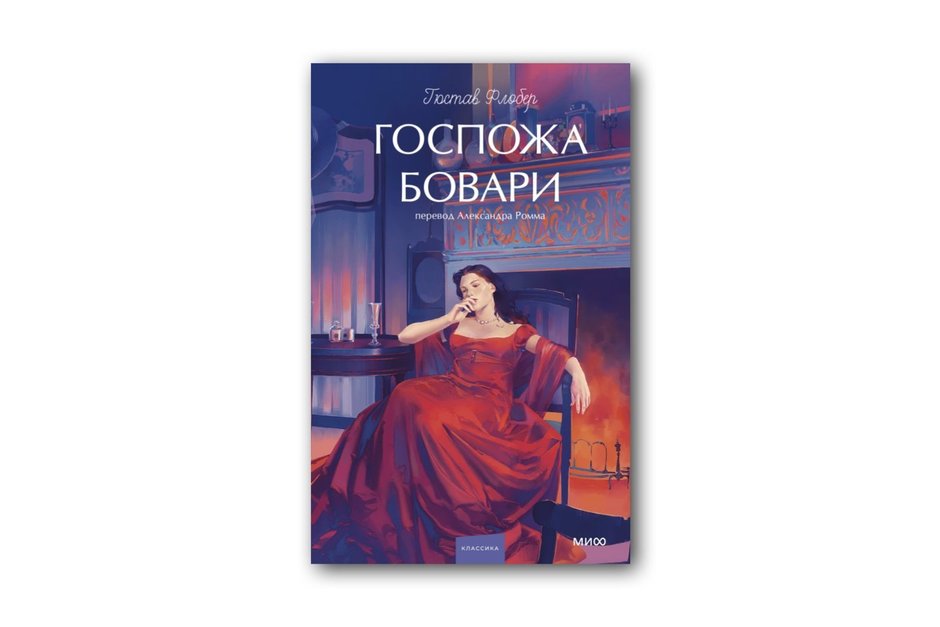
Publisher: MIF
Translation from French: Alexander Romm
Number of pages: 416
Year: 2025
Age restriction: 16+
Ekaterina Petrova — literary reviewer of the online newspaper “Real Time," host of the Telegram channel «Булочки с маком».