What to read: from 18th-century England and sea voyages to a Norwegian farmstead and 1950s Istanbul
Realnoe Vremya has selected three new book releases from August

Realnoe Vremya's literary critic Ekaterina Petrova has selected three standout new releases from July — novels by Guillermo Arriaga, Tore Renberg, and Tezer Özlü. The selection includes historical fiction about science and the search for normality, an intimate thriller about family secrets, and an autofictional story about freedom, psychiatry, and growing up.
Guillermo Arriaga. “Anomalies," NoAge (translated from Spanish by Fatima Tautieva, 528 pp., 18+)

The idea for “Anomalies” came to Guillermo Arriaga more than 10 years ago. Initially, the author wanted to tell a story about “anomalies” — creatures that appear once every 200–300 years. Then science entered the plot. Arriaga decided to find the most scientific explanation for them. The novel begins in England in 1781. Young aristocrat William Burton is preparing to become heir to the family fortune. During a ride through the estate, he sees a man kept on a chain in a pen with animals. William learns that several more such people live on the estate. The family considers them incapable of reasoning and communicating, and religious beliefs influence their fate. The incident changes William's plans. He joins a group of “rationalists” who discuss knowledge and science. At 18, William chooses medicine. His father disinherits and exiles him from the family. Then follows a sea voyage. Among the new stories appears the case of conjoined twins Greta and Daniela: they want to be separated, and the operation could cost one of them her life.
Arriaga builds the novel around knowledge and the recognition of the Other. “Anomalies” combine medicine, religion, social norms, and ethics. The author asks who defines normality and what society does with those who do not fit it. William chooses empathy and tries to understand those whom others are used to hiding. Science helps him reconsider his own beliefs. Arriaga used words that appeared before 1790 to convey the rhythm of 18th-century prose. And the novel's more than 500 pages go without the usual division into chapters, with long paragraphs and rare periods. Due to the absence of periods, one can become engrossed in reading until three in the morning without stopping.
Guillermo Arriaga was born in Mexico City in 1958 and works in literature and film. He wrote screenplays for “Amores Perros," “21 Grams," and “Babel," received an Oscar nomination and the Cannes Film Festival prize for the screenplay “The Three Burials of Melquiades Estrada.” In 2020, Arriaga received the Alfaguara Prize for his novel “Save the Fire.”
Tore Renberg. “Tollak the One Who Belongs to Ingeborg," Corpus (translated from Norwegian by Olga Drobot, 224 pp., 18+)
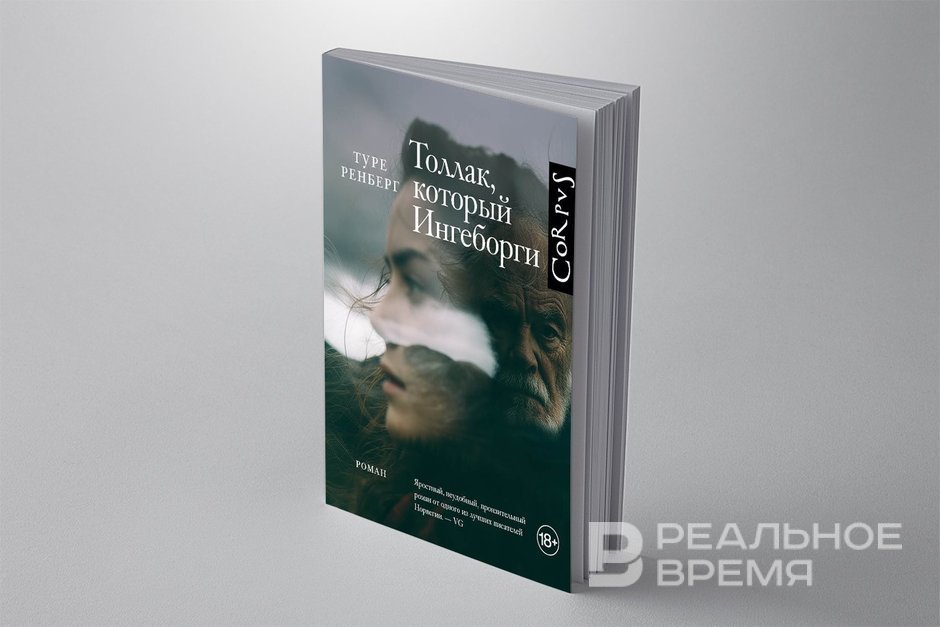
Norwegian writer Tore Renberg's novel “Tollak the One Who Belongs to Ingeborg” tells of the last days of an old sawmill owner. Tollak lives on a farmstead, awaits death, and prepares for a conversation with his two adult children. His son Jan Vidar sometimes visits him. His daughter Hillevi left for the capital long ago. With Tollak remains Oddo, whom he took in as a child after the mother abandoned him. The main secret is tied to Tollak's wife, Ingeborg. Tollak loved her and still grieves over her disappearance. She vanished many years ago; her coffin stood empty at the funeral. Now Tollak wants to tell his children what he has kept to himself all these years.
The author shows Tollak through his own thoughts. He is angry at people and at “modern times," rejects what others call progress, and refuses to change his habits. He can care for his loved ones, show tenderness, and then become stubborn and harsh. Tollak justifies his own drinking and judges others sharply. He lives by the rules of the past and cannot find his place in the new world. At the same time, the novel speaks of family and love. Tollak remembers Ingeborg and tries to understand his own life. His relationship with Oddo shows another side of his character. Oddo barely communicates with others, but Tollak understands him and knows how to interact with him. For the village, Oddo remains a “simpleton”; for Tollak, he is family.
Tore Renberg writes in short sentences and simple phrases. He often repeats Tollak's words and thoughts. The repetitions set the rhythm and gradually build tension. This form fits the hero: Tollak speaks little but constantly returns to the same thoughts. The reader gradually learns new details about his past and approaches the mystery of Ingeborg. For this novel, Renberg received the Norwegian Booksellers' Prize, the Nynorsk Litteraturpris, and the Book Blogger Prize. Later, “Tollak” received the Ordknappen award for a book that helps different readers perceive the text more easily. Tore Renberg writes for adults and children, is involved in music, and composes song lyrics. In one band, he performed together with Karl Ove Knausgard.
Tezer Özlü. “Cold Nights of Childhood," Ad Marginem (translated from Turkish by Apollinaria Avrutina, 96 pp., 18+)
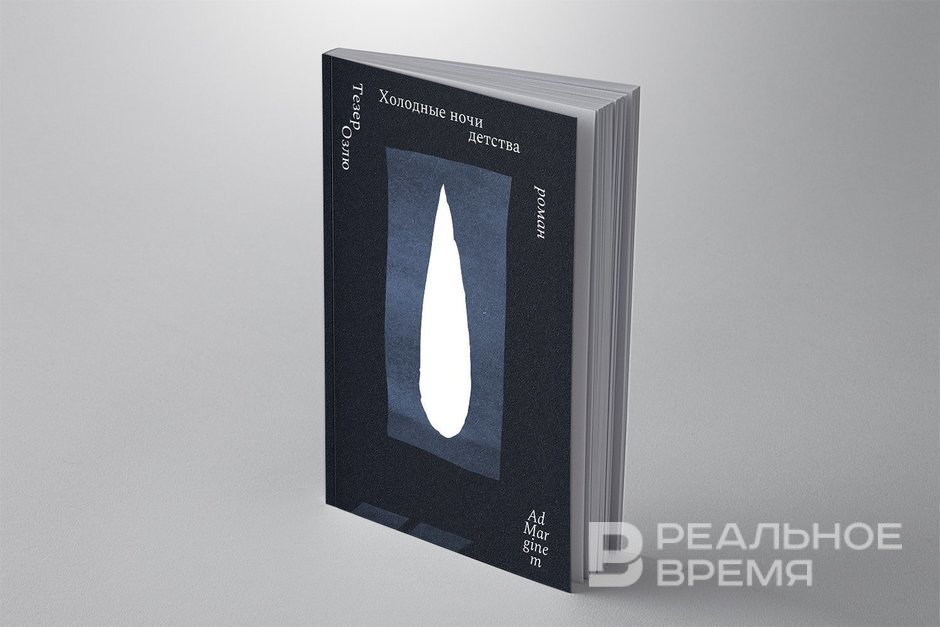
“Cold Nights of Childhood” was published in 1980 and became the first novel by Turkish writer Tezer Özlü. She grew up in 1950s Istanbul and studied at a German school. In her youth, Özlü left for Europe, married, and later spent several years in psychiatric clinics in Istanbul and Ankara. These facts formed the basis of the novel. Özlü called the book “the novel of my life.” The heroine of the book is not given a name. She recalls her childhood, youth, and early adult years, constantly moving between Istanbul, Ankara, Paris, and Berlin. Time flows freely. Childhood memories alternate with episodes from hospitals, travels, relationships, and periods of emotional highs.
Childhood establishes the main conflict. Her father rules the house almost like an army. Her parents live nearby but show no warmth. Family rules, school, and talk of duty and success pressure the heroine. She begins seeking freedom early and questioning the life offered to her. The psychiatric clinics are a separate part of this story. The heroine undergoes drugs and electroshock therapy. In the hospital, the very feeling of time changes. After procedures, she reassembles her memories and tries to understand who she is. Later, the heroine returns to the city, meets people, reads, travels, and seeks her own way of living. Özlü connects her personal crisis with Turkish society in the 1950s–1970s. Army discipline and political upheavals appear in the text.
Özlü writes in fragments. She uses short phrases, internal monologue, and sharp transitions between times. The writer often removes explanations and gives the reader individual scenes. Her style accurately conveys the heroine's unstable state and the movement between despair and interest in life. By the way, this year another autofictional work by the writer was published — “Journey to the Edge of Life.” The stylistics of these two books differ radically. Which of the two works is closest to Özlü's original style can only be judged by those who know Turkish.
Ekaterina Petrova — literary critic for the online newspaper Realnoe Vremya, host of the Telegram channel «Булочки с маком».