Anatoly Chernov: “The most valuable things we have now are time and health”
Sports doctor of the hockey club Norilsk — on the difficulties of working with amateur athletes
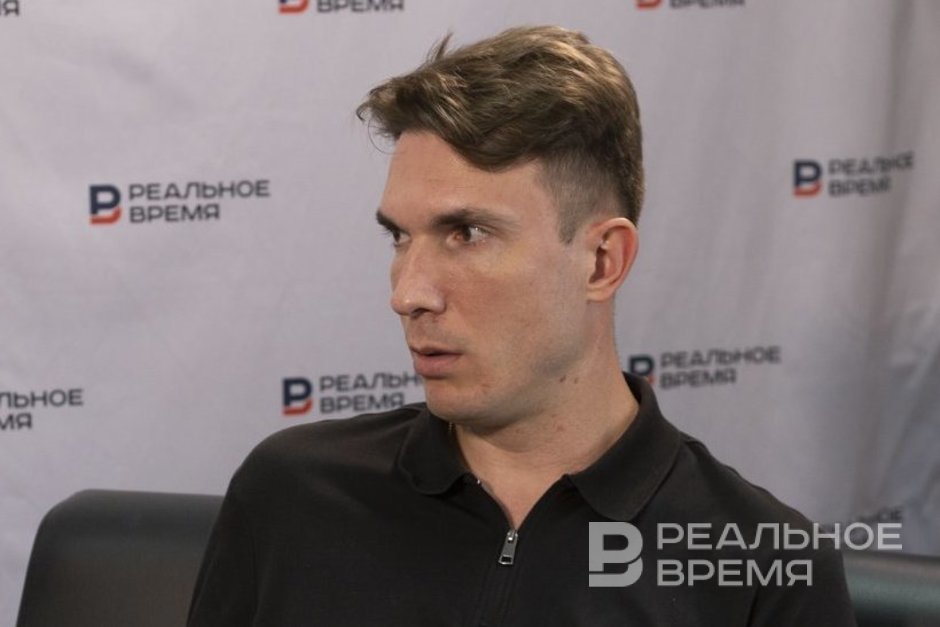
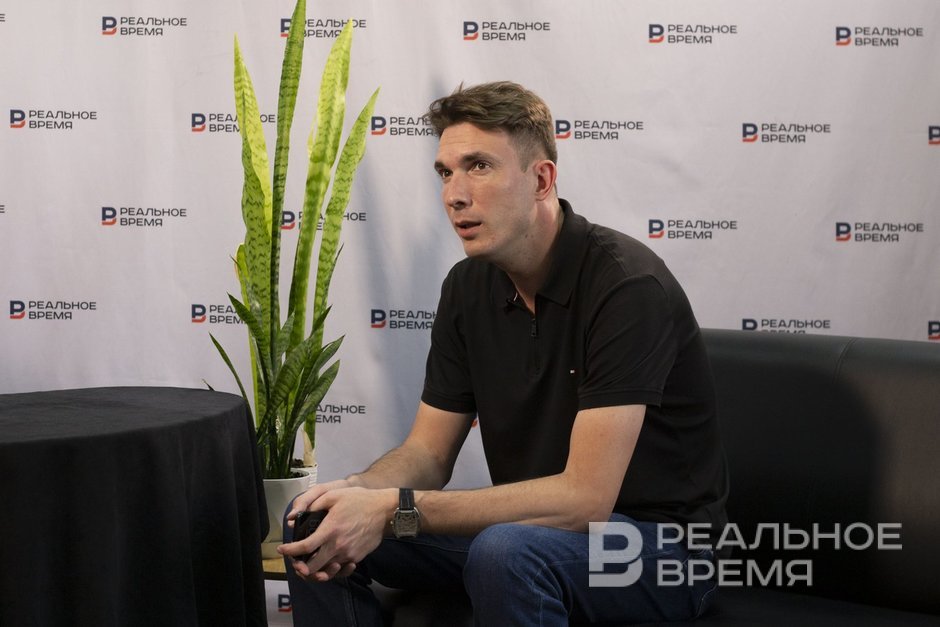
“There is a trend that every year more and more people are actively taking up running. How many people run a marathon every year on average in Kazan? The numbers there are close to 30 thousand. And I want to work with this category of people so that they succeed in their endeavors," said Anatoly Chernov, a sports doctor for the VHL hockey club Norilsk, who has previously worked with Kazan's Ak Bars. In an interview with Realnoe Vremya, he spoke about the difficulties of training.
Sports doctor of the VHL hockey club Norilsk, Anatoly Chernov, gave an interview to Realnoe Vremya. In it, he spoke about his project, which he has been actively developing recently — the website and app SportMedClub. What it is and why this startup is very important for amateur athletes — in the material below.
“It is no coincidence that Ak Bars is traditionally cited as an example in the KHL for its level of medical management”
— Anatoly, tell us about your path in sports medicine.
— I probably had no other path — I come from a family of doctors. My mother is an honored doctor, an excellent healthcare worker. Watching her, I understood from childhood: medicine is not just a profession, it is a way of life and a special responsibility to people. The question “What to be?” never stood before me.
Another question was in which direction. And here, the fact that I myself always loved sports played a role. I saw how athletes, having been injured, found themselves confused — between a surgeon and a coach, without a clear understanding of what to do next. I wanted to be exactly that person who is nearby, knows sports from the inside, and can speak to an athlete in the same language. That's how I chose sports medicine.
I graduated from Kazan State Medical University in General Medicine, after which I completed an internship in therapy and a residency in sports medicine. I started my career at Rubin Kazan — first as a doctor at the academy, then grew to the head of the medical center. It was an excellent foundation: working with young athletes who are just building their careers teaches you to think ahead, to work on prevention, not just treatment.
The next big chapter was Ak Bars — from 2013 to 2023. A significant period in time and, of course, an incomparable experience. A high-class organization, wonderful specialists. The management of Ak Bars never spared money on equipment — everything necessary for doctors was purchased without problems. And the team was wonderful — both as specialists and as people. It is no coincidence that Ak Bars is traditionally cited as an example in the KHL for its level of medical management.

After that, I was invited to the position of chief physician of HC Amur — and at that time I was the youngest chief physician in KHL history. It was both an honor and a serious challenge. Now I work at HC Norilsk in the VHL. When I was going there, I admit, I thought that the equipment might be poor. I arrived — and everything necessary for fruitful work is there. Norilsk is a club with ambitions: every season the organization raises its standards, creates the best conditions for both athletes and staff. The management is competent and responsive — it is pleasant to work there.
To summarize — my entire professional life has been connected with sports medicine.
“Some people involved in sports, professionally or at an amateur level, simply do not know what recovery measures are”
— I know that one of the projects you have been working on in recent years is the SportMedClub website. Tell us more about it.
— The website involves selecting medical support for athletes. For example, runners, cyclists, triathletes. We are currently developing the concept of a mobile application that will be connected to the website. The main focus, of course, is on athlete supervision. That is, conventionally, a person has a request to prepare for competitions in a week or a month. And he does not know how to prepare, how to recover properly, what is better to eat, and what he should limit himself to. And our activity is aimed precisely at helping him avoid mistakes in preparing for competitions.
I already mentioned the application. Its task will be to make it convenient for the athlete to track their progress. Through it, the athlete will be able to maintain all necessary communication with their supervising doctor.
— Why do you think this is necessary for both professional and amateur athletes?
— You see, the thing is that some people involved in sports, professionally or at an amateur level, simply do not know what recovery measures are. They think like this: sleep or don't load yourself during rest, and that's recovery. But it doesn't work that way. Recovery is a big set of responsibilities. It includes so-called sports nutrition, and procedures with warming ointments for problem areas of the body. If we are talking about pre-start preparation, the complex also includes an individual warm-up.
— Your website certainly helps to understand all these difficulties. Sports nutrition is a real minefield for beginners...
— Absolutely. People think: “So, since I am an athlete, I need sports nutrition.” They are recommended certain supplements, but there is now a huge selection. An inexperienced person buys and pours all the sports nutrition they bought into themselves at once. There is no systematic approach. And in this case, systematicity plays a crucial role. Any sports nutrition is taken for a purpose. Each supplement is taken for a purpose, performs a specific job. Very often in practice, we encounter people who consume sports nutrition thoughtlessly. They listen to some “professional” and think — now I'll eat all this too and become like that. But when to take sports nutrition, in what proportions? What is the frequency of intake? Take breaks or not?
We want to convey to the athlete the correct way of working with their body. So that there is a balanced chain, so that they can work and train without harming their health.
— So the application will be a kind of manual reminder containing all the necessary information for the athlete?
— Yes, it will be supported by a pulse monitoring system, or by sensors that athletes attach to themselves. They are different for everyone, some use smartwatches. All devices will be uploaded to the application. We are currently finalizing the technical side of the issue. So that everything works properly and does not cause concern for the athlete.
— Tell us how you came up with the idea to implement such a startup. Were you inspired by someone during the development process?
— A good question, thank you. I think the main factor was observing amateur athletes. They are not always able to fully control the state of their body, especially, for example, against the background of micro-injuries. It is wave-like. That is, a surge of energy, then none. They feel good, then bad.
In professional sports — it's clear. Each team has doctors who help them solve problem situations. But amateur athletes do not have this option. They sometimes simply do not know who to turn to for help. And we thought, why not fill this gap. It's not even about financial gain, but about a sincere desire to help athletes minimize injuries and deterioration of health. When the body is under constant monitoring, doctors always have tests on hand; in case of minor deviations in biochemistry, they can immediately make corrections and thus quickly return to the training process.
“The goal of our project is to organize a successful tandem in working with the athlete”
— Your website is focused on quite popular sports among amateur athletes. These are running and cycling. Tell us what injuries people involved in these sports mainly face?
— These are mainly micro-tears of fibers, muscle strains, inflammatory processes in the hip joints due to overload. Requests with problems in the lumbar region often arise. Muscle imbalance is also a fairly common problem.
The goal is to organize a successful tandem in working with the athlete. The ideal picture is if the coach, the doctor, and the physical training coach had complete information about the athlete's condition. At least the doctor definitely must keep his body in good physical shape so that he can cope with any peak, threshold loads. Thus, a certain margin of safety is formed for the athlete.
— What difficulties did you encounter when you moved directly to the implementation of the site and your project?
— You know, when we developed our website and then started working on the application, we did not have the goal of just showing off to someone. To create a project for the sake of the project. We clearly understood with the team that the most important thing is functionality. So that our project would be useful, people would have a visual effect from it and good feedback on their health.
Of course, difficulties in developing such startups are inevitable. We want to bring everything to perfection, we are interested in how the athlete himself wants it all to look. It's not enough to beautifully describe — here we have such a cool application with such opportunities. How will it actually look? How will it be adapted for the athlete? These questions are fundamental. And we are just now working on solving them. We have a large staff working on the project.
— I suppose you consulted with many colleagues in the field when developing the project?
— Of course. I am always interested in an outside perspective, some comments from colleagues in medical support. This is important to understand whether we are moving in the right direction.
— What were the main reviews?
— All the colleagues I asked said it was a cool, great idea. But they also understood that it would not be easy to implement everything in a short time. Such projects require sufficient time.
“There is a trend that every year more and more people are actively taking up running”
— It is interesting to know why you decided to start working with runners first within your project?
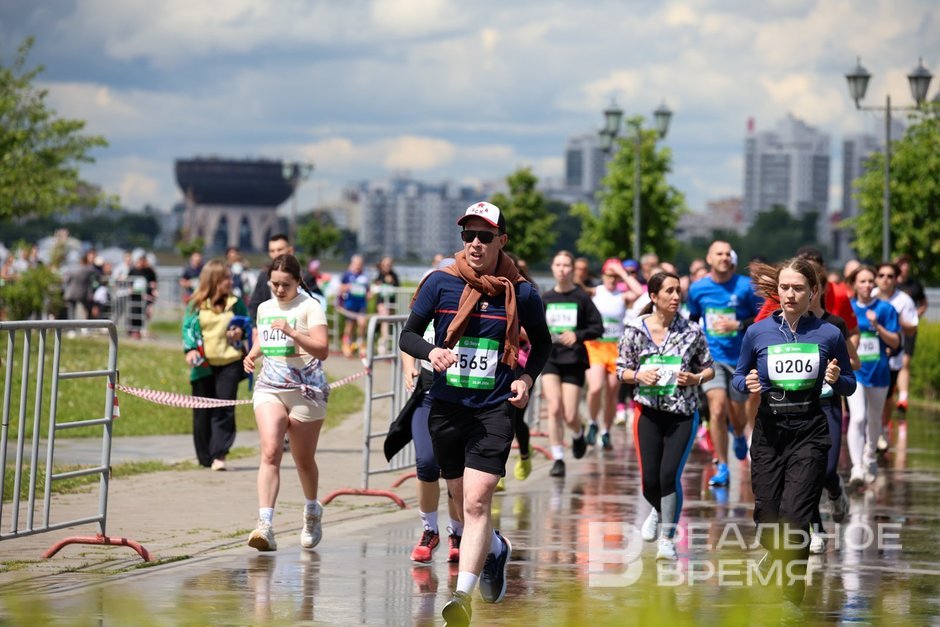
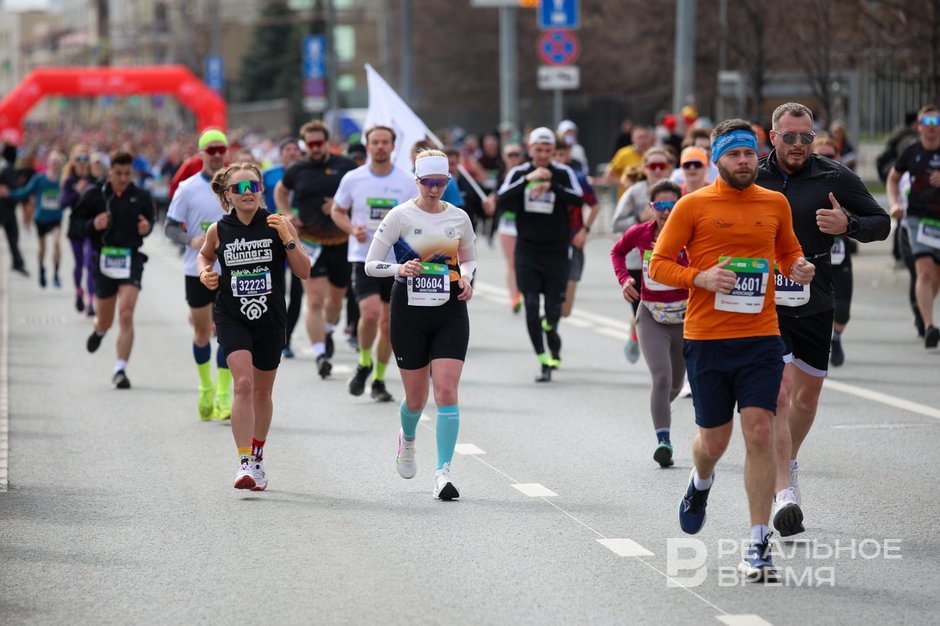
— There is a trend that every year more and more people are actively taking up running. How many people run a marathon every year on average in Kazan? The numbers there are close to 30 thousand. And I want to work with this category of people so that they succeed in their endeavors. I want to build good, competent, correct logistics with them in preparing for marathons. So that there is good feedback between the athletes and our application, which will help them improve their health. If injuries or pathologies occur — so that these people do not frantically look for some doctors on the side, but send a request to their supervising doctor in the application, and he further helps them in providing all necessary assistance.
— Systematicity and discipline are the key factors for a successful training process?
— How else. It happens that people plan their training three times a week and cannot cope with the volume due to overload and fatigue. They start breaking the systematicity. They go on Monday, skip Wednesday, promise themselves they will go on Thursday. As a result, they give up sports activity due to the lack of a clear system of training and regularity.
Everything must be done wisely and with regularity. We already talked about what will happen to discipline if you regularly miss training days. But we also have cases where people miss two training days a week and try to compensate for everything in one day. Roughly speaking, on Saturday they perform the volume that was planned for Wednesday and Friday. They give a very large load to an untrained body. What happens in the end? They wake up on Sunday — their whole body aches and hurts. They think to themselves: “What was I doing? Where was I even? Was I kicked, beaten, or just rolled around in a bag on the roads?” To avoid these unpleasant moments, without harming their health, it is necessary to properly organize their training process. Because otherwise, it's not sport, it's just some kind of violence against the body. Especially if you also train with an injury. The most valuable things we have now are time and health. Repairing the body now is not cheap.
It is very important for us to know what condition the athlete is in. If there are any deviations, we immediately correct them. If there are no deviations, we maintain the functional state throughout the entire training process or competition period.