Rifkat Minnikhanov on the UAV League: ‘Here development approaches are freer than in the STC’
A UAV Systems League of Tatarstan has been established in Kazan, which will become a single centre for organising drone races and digital tournaments for young people
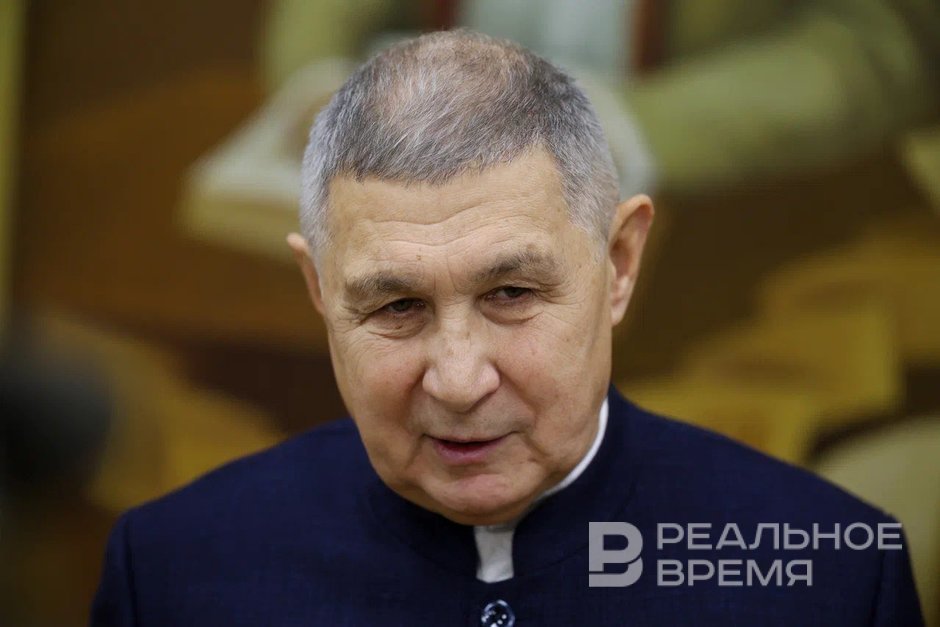
“When they proposed creating a UAV Systems League, I associated it with an administrative structure. But in existing scientific and technical centres (STCs), relationships are often regulated by strict rules. The League, however, opens up more diverse directions,” explained the president of the Academy of Sciences of Tatarstan, Rifkat Minnikhanov, when presenting the idea of establishing the UAV League of Tatarstan at the founding meeting in Kazan. Those planning to join include the Russian Drone Racing Federation in Tatarstan, the Artificial Intelligence Combat Federation, Quasar from the Alabuga SEZ, ENICS, and all those who train young people for professional tournaments. Rasul Minnikhanov, elected head of the League, has been tasked with making drone races as spectacular as Formula 1.
“If you team up with Abzalilova, you are destined for success”
The initiative to create a UAV League in Tatarstan was put forward by the Academy of Sciences of the Republic. The Academy’s Vice-President for Natural Sciences, Leysan Abzalilova, told the founding meeting that unmanned technologies are rapidly transforming many sectors of the economy, creating a new environment. According to her, the republic has made significant progress in this field, having built up a strong foundation:
“There are plenty of enterprises producing aerial and ground UAVs. There are universities training specialists in this field. A considerable number of innovative and start-up companies operate here, including youth-led initiatives.”

“Of course, we have testing grounds and special sites where new technology is trialled,” she noted. Many ideas in the development of unmanned technologies receive support from the leadership of the Academy of Sciences of Tatarstan. The aviation, aerial and automotive sectors remain priorities for the scientific community.
“If you team up with Abzalilova, you are destined for success,” joked the president of the Academy of Sciences of Tatarstan, Rifkat Minnikhanov, as he took the floor. He then moved on to a detailed discussion, summing up initial results of scientific and technological development in 2025.
“We work closely with the NTI (National Technological Initiative) fund and within the Priority-2030 programme. But, to be honest, our universities underperformed a bit this year," he said.
The president of the Academy did not elaborate but indicated that the decline was caused by fragmentation. According to him, where universities are focused on collaborative teamwork, results follow.
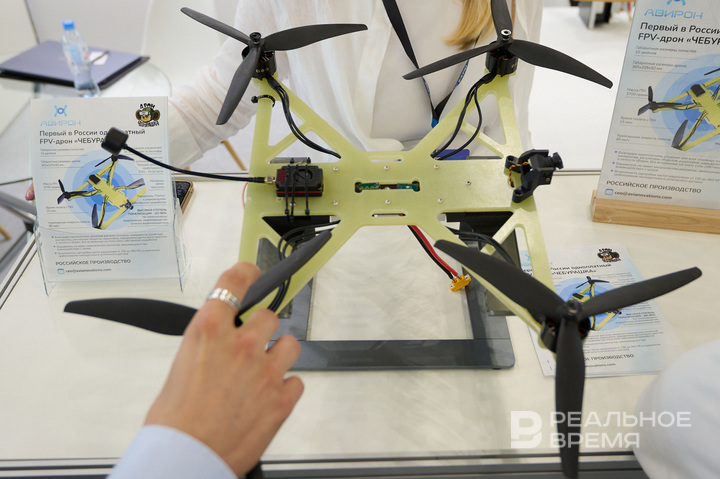
To illustrate this, he cited the results of the NTI competition for a UAV grant. Participants from Tatarstan originally submitted developments for ground autonomous vehicles but later shifted towards unmanned aerial systems.
“At one stage of the final, dedicated to upgrading drones with underground artefact detection functions, Tatarstan was not even mentioned. Yet it was in this category that we won by a substantial margin. Integration between science, industry and archaeologists played a decisive role," he said.
The team from Tatarstan took first place and received a grant of 25 million roubles. “Where we become more active, we achieve results,” Minnikhanov concluded.
New venues for e-sports and sponsors: what is expected from the UAV League
Bringing together organisers of UAV tournaments and youth digital sports will yield far greater results than each working alone — something that is happening today, participants noted. Quasar from the Alabuga SEZ runs competitions independently, ENICS launches drones at its own site, and the Russian Drone Racing Federation in Tatarstan holds races separately. Everything is done manually, speakers said at the meeting. Meanwhile, young people are passionate about these technologies everywhere — in cities and remote villages.
“The League’s main mission is to become a platform for enthusiasts from beginners to professional athletes, where they can compete and exchange knowledge," said Georgy Dikopolsky, director of the Tatarstan Drone Racing Federation.
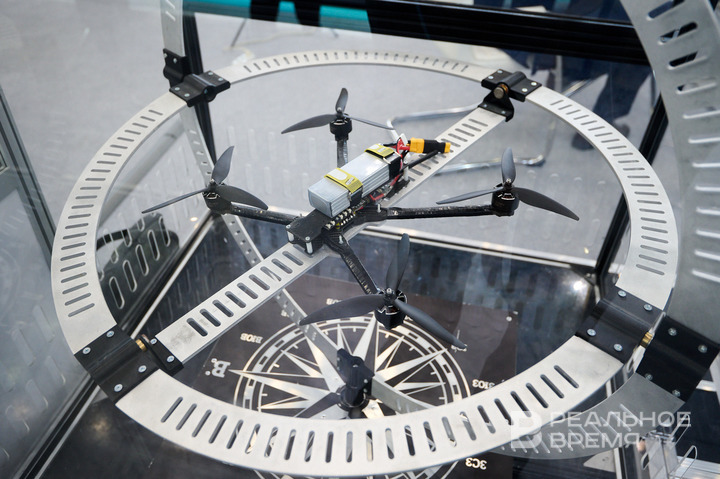
Firstly, events are built from scratch each time, with no continuity. Talented children are identified and then forgotten until the next tournament. Secondly, conditions must be created for the growth of mentors. Thirdly, the regulatory framework is underdeveloped. And most importantly — and organisers do not hide this — new e-sports venues and sponsorship are needed so that the scale of competitions does not depend on the financial capacity of individual organisers.
“Gaming, in terms of popularity among young people, surpasses sport, music and film combined. Today there are 3 billion gamers worldwide. This is an enormous audience," they noted at the meeting.

“With this Roblox — which Roskomnadzor blocked a few days ago. Elena Mizulina wrote to the national leadership that she received 60,000 messages from children within days, asking to lift the ban. They wrote that if this continues, they would not want to live in this country. With ill-considered decisions and fear of new things, we are creating tension among young people,” said Tatarstan State Council deputy Marat Bariev.
Minnikhanov supports freer approaches
“When they proposed creating a UAV Systems League, I associated it with an administrative structure. But in existing scientific and technical centres, relationships are often regulated by strict rules. The League, however, opens up more diverse directions,” Minnikhanov reiterated.

He then drew an involuntary analogy with the Association for Digital Development Support.
— It is no secret that it was created to protect the domestic market. We presented projects to the head of the republic to demonstrate our potential. But today attitudes have changed. If earlier we defended our own developers, now we proceed from the idea that federal solutions can and should be used, — he said.
But when it comes to UAV development, freer structures are necessary, he believes.
Rasul Minnikhanov elected president of the League
Rasul Minnikhanov was unanimously elected president of the UAV Systems League of Tatarstan. He heads the regional physical-culture and sports organisation “Drone Racing Federation of the Republic of Tatarstan”.

“Our League will allow us to unite fragmented teams into a single whole, establish effective dialogue among participants and give a powerful impulse to the development of the sport," he said. “Our athletes achieve outstanding results and win top places at federal and international levels.”
According to him, the League will focus on six areas: unmanned aerial vehicles, unmanned ground platforms, unmanned watercraft, e-sports and artificial intelligence sport. Marat Bariev was elected coordinator. The League is being created as a public association and will be financed through contributions and sponsorship.
“Obviously, he is not just a namesake — he is my son," Rifkat Minnikhanov clarified. “I once knew nothing about UAVs, but they brought in developers. So when the project was proposed, I asked how it would work. There are no financial ties, no corruption component.”
The newly elected head of the League has been tasked with making drone racing as spectacular as Formula 1. “We have to try,” Rasul Minnikhanov responded. For now, the League will build on what already exists.
“He brings ideas and formats, and thanks to his input they start to take shape and develop. And he is a very selfless person, 100 percent. You see, he is at the heart of everything," colleagues said of him.