Bulat Sungatullin: «After ending their sports career, gymnasts go to work for Cirque du Soleil»
Interview with a football player and four-time Russian champion in rhythmic gymnastics
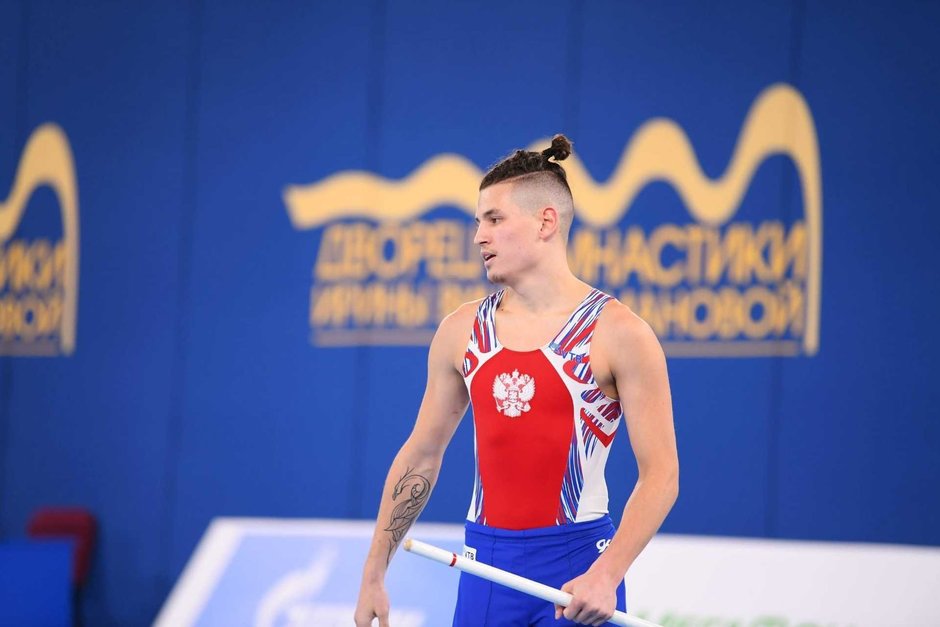
The Kazan native Bulat Sungatullin retired from professional sports after becoming a four-time national champion and the first absolute champion. We are talking about men's rhythmic gymnastics. Previously, «Real Time» spoke with Bulat as an amateur football player. And today is the conclusion of the interview, fully dedicated to men's rhythmic gymnastics.
«In 2015, I got a call from the gymnastics school asking if I wanted to resume training»
— Bulat, in what year and at what age did you start doing men's rhythmic gymnastics?
— In 2006, the development of men's rhythmic gymnastics resumed in Russia, and a year later I joined the first group of boys, in part because my mom worked at the «Privolzhanka» gymnastics school and she enrolled me in sports for general physical development. There were very few such groups in the country at that time, so we performed frequently at various events, such as Alina Kabaeva's festivals in Moscow. But by 2013, the development of men's rhythmic gymnastics slowed down, which coincided with the youthful indecision of my teammates. As a result, people either switched to other sports, such as football or rowing, or quit sports altogether. A group of 20 people fell apart overnight.
As for me, I played football until 2015, when I received a call from the «Privolzhanka» gymnastics school asking if I wanted to resume rhythmic gymnastics training, which was experiencing a revival. I refused. Then I was contacted by the school of Olympic champion Yulia Barsukova, who was working at the Gymnastics Center, and it was decided to develop men's rhythmic gymnastics there. I have to call it that, although we have another name for it — rhythmic gymnastics. But due to difficulties in creating a separate federation, our sport was initially attached to rhythmic gymnastics, since many attributes — the mat, the athletes' uniforms, individual apparatus — were similar.
— By the way, a question about the apparatus. Girls have five of them, although medals are awarded for four apparatus at competitions each year. And one has to wait for its turn, so to speak. How is it with you?
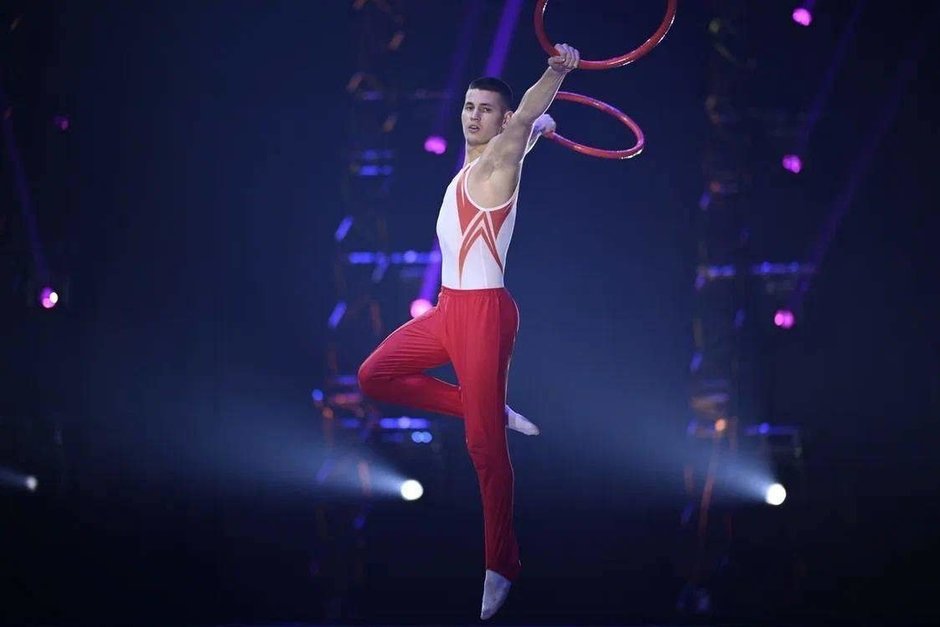
— We have four apparatus, and compared to rhythmic gymnastics, we don't have exercises with a ball or ribbon. We have a jump rope and clubs, although they are not the same as the girls'. Our clubs are shorter and heavier. They resemble the circus clubs used by equilibrists in the ring, juggling them, for example, while riding a horse. Plus, we have a gymnastic stick, and in this regard, exercises with it are similar to martial arts. And we also have small gymnastic rings, which are more massive than the hoops used by girls — they have nothing in common with those used in classical rhythmic gymnastics. In our competitions, it's allowed to perform with three apparatus.
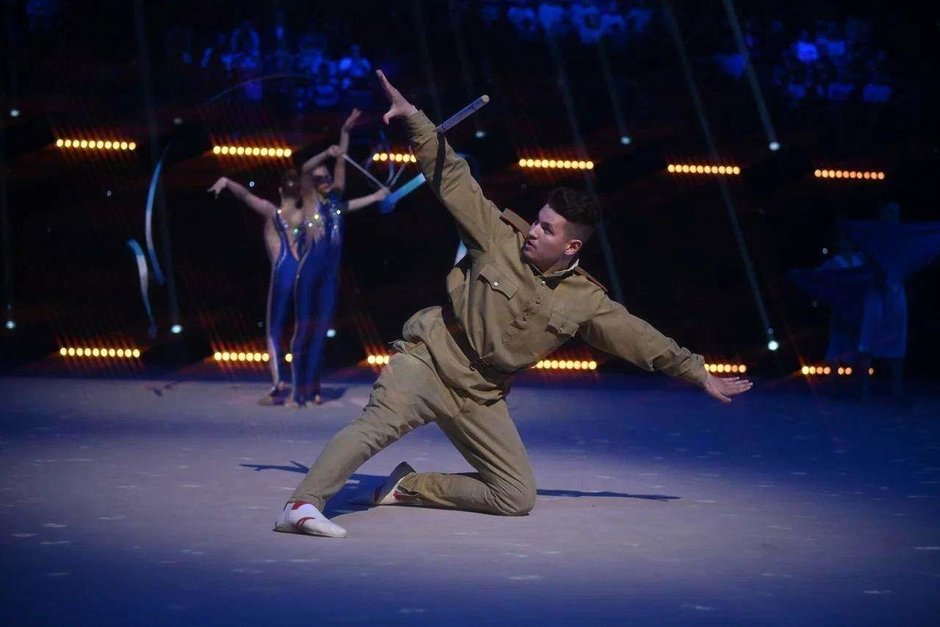
I had all the conditions for development, namely, a training process literally at any time.
— Returning to the resumption of my career. I was promised all the conditions for development, namely, training at virtually any time. At my discretion, from the opening of the Gymnastics Center at 9 am until its closing at 9 pm. Plus, there were opportunities for trips. To avoid prejudices, men's rhythmic gymnastics is called «rhythmic» in our country, although officially this sport is registered as a branch of the All-Russian Rhythmic Gymnastics Federation.
I witnessed the period when the history and specifics of men's rhythmic gymnastics were being studied. There are two directions in men's rhythmic gymnastics: Japanese and Spanish. Neither of them is currently included in the Olympic program. The Japanese direction has its own rules, exercises, and style. The Spanish direction, which emerged in the 2000s, is more similar to women's rhythmic gymnastics. In Russia, the Japanese direction is being developed because it has reached the highest level of development.
Initially, all the coaches and choreographers were women who came from rhythmic gymnastics. And only with my generation did men who had already gone through their sports journey enter our sport, and they can set the right development course. It's beautiful, challenging, and мужественное (masculine): there's no female plasticity, but there is male aesthetics and movements similar to elements from martial arts. Whatever one may say, a female coach from classical rhythmic gymnastics can never provide the acrobatics needed for a successful performance in our sport, since we take it from artistic gymnastics: all those somersaults, blanjs, twists. In essence, men's rhythmic gymnastics is an analogue of artistic gymnastics supplemented with apparatus. That's why in the initial stage of program development, we had duets — a coach from artistic gymnastics who was responsible for acrobatics and a rhythmic gymnastics coach who handled work with the apparatus. Now, people are entering the coaching ranks who can combine this training and provide pure, distilled men's rhythmic gymnastics.
— In artistic gymnastics, floor exercises are performed to musical accompaniment. There have been no scandals about copyright issues yet, but in figure skating, Russian athletes have already faced such issues when they were denied the right to use music in their programs. How is it with you?
— I haven't heard about any scandals yet, but I can tell you how the full program cycle works, including the accompanying music. Each time we prepare for competitions, we compile a package of necessary documents, one of which is a music form. This music form specifies the label of the track being used.
“Tatarstan has always competed with Petrozavodsk”.
— Which regions successfully develop men's rhythmic gymnastics along with Tatarstan? We have you, Timur Gizatullin, and Danil Tsvetkov in the republic.
— Tatarstan has always competed with Petrozavodsk. They have a strong school there, with leader Gleb Galkovsky, who was my constant rival. After sustaining injuries, he experienced a decline that prevented him from fully revealing his potential.
But as a school, we were among the leaders. Probably thanks to the favorable conditions for the development of our sport. I mean that as an active athlete, I had no needs during my sports career. Now the situation has changed. You have to pay for the mat and the opportunity to train on it. This happened with the change of leadership at the Gymnastics Center. As a result, Yulia Barsukova's school, which brought results at the federal level, both in the men's and women's sections, was closed.
— Do you maintain relations with women's rhythmic gymnastics?
— Of course, for example, at the recent Russian Cup final in Kazan, I was involved as the person who sets the music for the athletes' routines on the mat. Simply put, the sound engineer.

— In the near future, Russian women will have to return to international competitions. Since rhythmic gymnastics is a subjective sport, only professionals can assess whether our girls will remain competitive in this sport?
— I believe that we don't currently have leaders like the Averina sisters, who were in the team when we were banned from international sports. Accordingly, the line of star gymnasts who previously ensured Russia's hegemony in the international arena has been interrupted, starting with Evgenia Kanaeva, whom I personally saw on the mat and remember well. In the current lineup, I can't name a specific gymnast who can represent Russia at the same high level. What we see at the level of Russian championships and Cups is great, but when you start comparing it to the level of world and European championships, which we haven't participated in, we shouldn't expect high results at first.
— How is the recruitment of children into men's rhythmic gymnastics going?
— Now we are focusing on young children, inviting them to developmental gymnastics, so that we can then focus on those who want to stay and grow in the sport.
— Surely, you can interest them at the initial stage with low competition, which leads to quick inclusion in various national teams and trips to other cities and countries.
— Exactly. To be honest, the situation is the same at the adult level, where you can quickly rise to the level of national championships, which is more difficult to do in popular sports with high competition. In our sport, the Japanese demonstrate the highest level of skill on the international level, but I haven't had the chance to see it firsthand. I didn't get to debut at the World Championship that took place in Japan, although our country's national team coach Alexander Buklov was quite successful at World Championships, being a three-time world champion. I can only visually assess that our guys look more powerful and heavier than the Japanese, and I think our level of work with the apparatus is higher. But at the same time, the Japanese have such acrobatic combinations that take your breath away. Behind them are representatives of Southeast Asia, such as China and Korea. Then they go to the USA to work for Cirque du Soleil after ending their sports career.