Bulat Galiev: ‘People’s attitude to hemp should change’
A businessman from Arsk — on Russia’s first technical hemp processing line, the development of the industry, and the national code
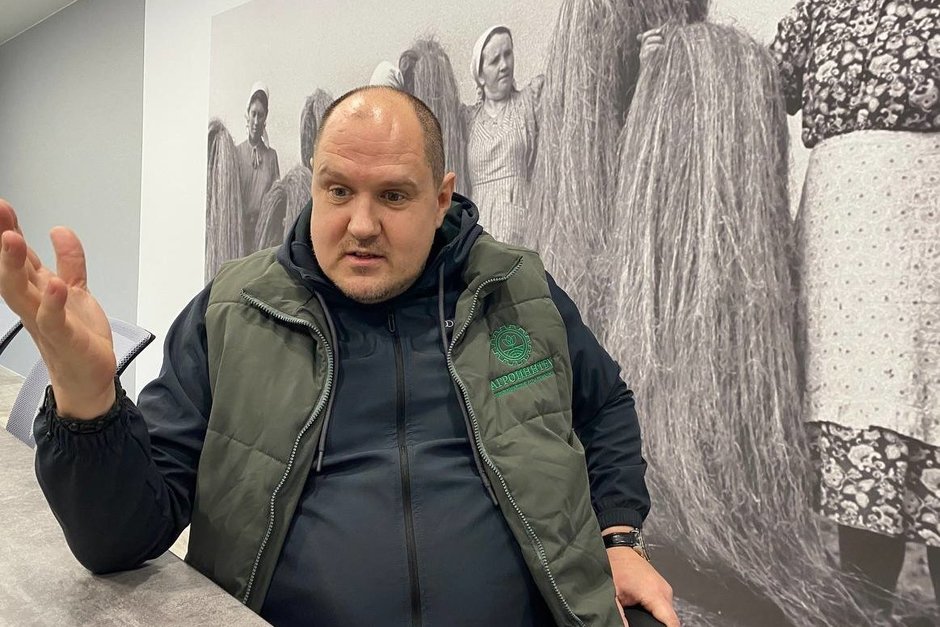
In Tatarstan, the first fully domestic line for processing technical hemp into hemp fibre, designed for small farming enterprises, has been created. In recent days, commissioning work has been completed and the experimental unit has been launched. The facility is located in the Arsk district, but in the future another nine such units will open in the republic, and in the Muslyumovo district a plant worth 100 million roubles will be built. How the republic set out not only to expand the acreage of this crop, but also to create a full processing cycle, as well as what prospects this opens — all this was explained in an interview with Realnoe Vremya by one of the processors, the director of the company Agroinntekh, Bulat Galiev.
Bulat Maratovich, tell us when you began working in the field of hemp cultivation and, in particular, the processing of industrial hemp.
This happened about three years ago. Our team and I began studying issues related to the cultivation and processing of industrial hemp and travelled across the entire country for this. In fact, hemp growing in Russia has a long history. In the Soviet era this sector saw extremely broad development: in 1928, Russia ranked first in the world by hemp cultivation area — 966,000 hectares. Incidentally, the Volga region was also among the USSR’s main hemp-sowing areas.
In 1961, the UN adopted the Single Convention on Narcotic Drugs, which prohibited, among other things, the cultivation of hemp in any form. It was lobbied by American industrialists engaged in the production of synthetic fabrics (nylon, lavsan, etc.) and paper made from wood. Hemp was competition in that sector as well, since one hectare of the plant yields four times more cellulose. Moreover, hemp can be sown and grown every year, whereas it takes half a century for a forest to regenerate — the logic here is obvious.
Thus hemp ended up banned, and it began to be destroyed worldwide, even though in our latitudes, under natural conditions, the psychoactive component in agricultural hemp is minimal, unlike in hot Asian climates. Today, however, hemp growing is being revived across the globe. Many countries have long understood the value of this crop. The process has begun in Russia too.
Why did you focus not on the cultivation of industrial hemp itself, but on its primary processing?
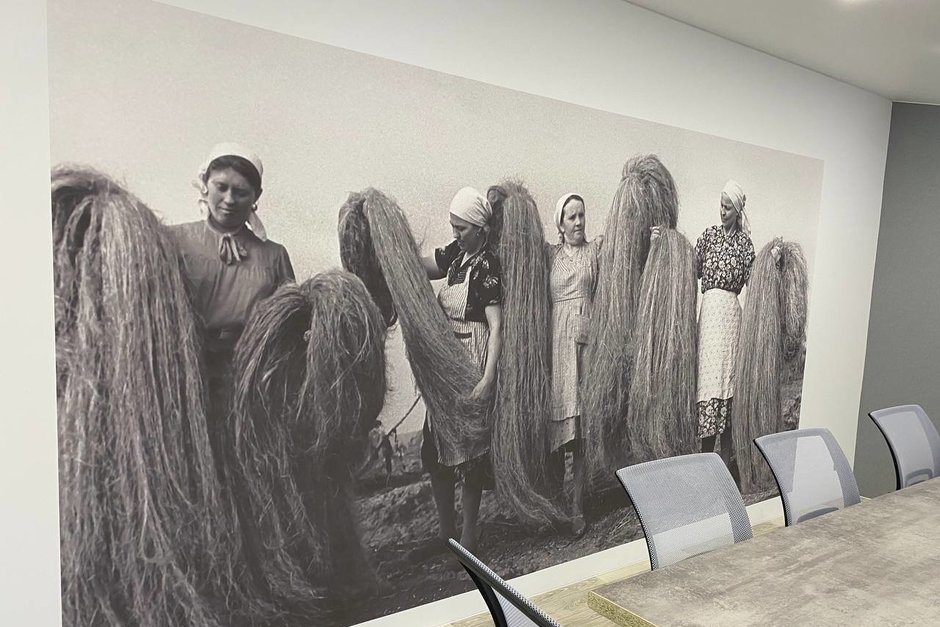
In recent years the cultivation area for industrial hemp has been steadily growing. Farmers obtain seeds and sell them; the price is quite high — 100–150 roubles per kilogram. But the main problem for farmers, both before and now, is what to do with the hemp stalks — the retted material. Previously it was used to make fibre, rope and textiles. This issue had not been resolved, which discouraged farmers from sowing even larger areas with hemp. With processing, both the “tops and roots” could be put to use.
Some, of course, tried to establish primary processing using a “hodgepodge” of Belgian and French machines from the 1960s–80s, but there was no domestic production suitable for small farms. Existing factories producing equipment for bast crops make bulky and energy-intensive machinery designed for large enterprises with significant budgets. Others simply copy Chinese models. We chose a different path.
You decided to create a processing line made entirely from domestic equipment?
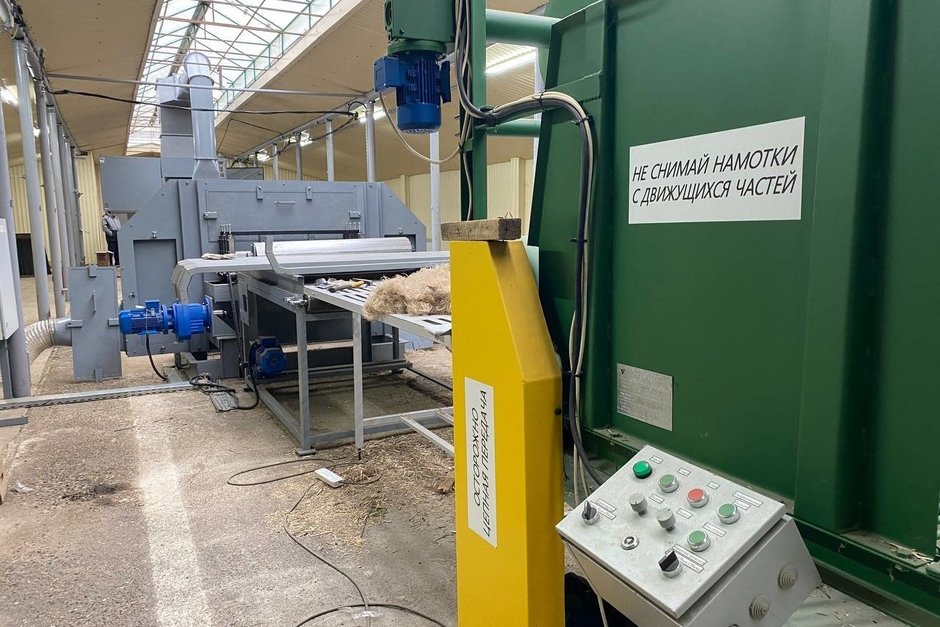
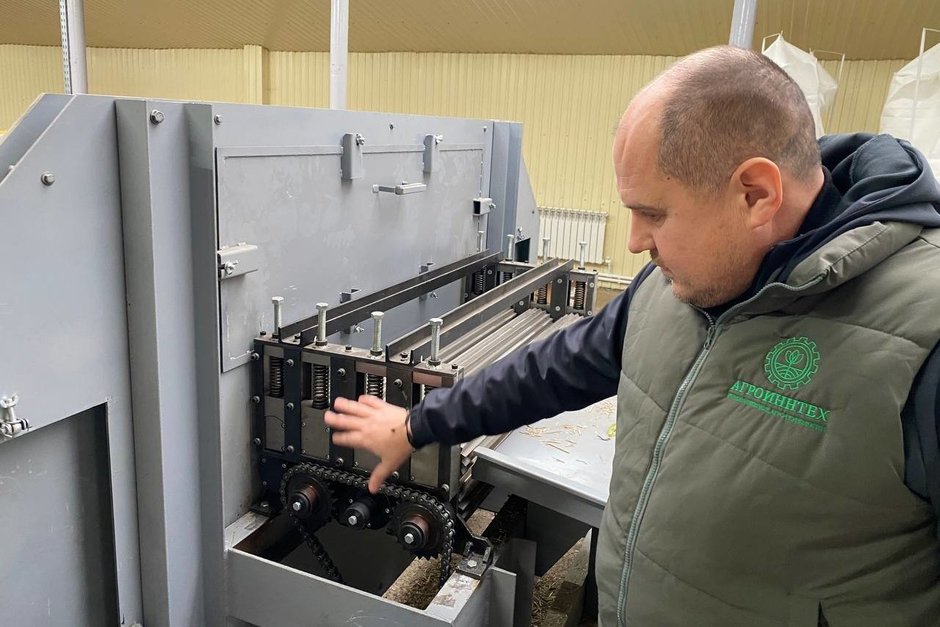
Correct, but it is not just about manufacturing our own machines. This is a full cycle of import substitution. Our aim was to create a line starting from the development of unique domestic engineering documentation to machine-building production and implementation in farms to support farmers.
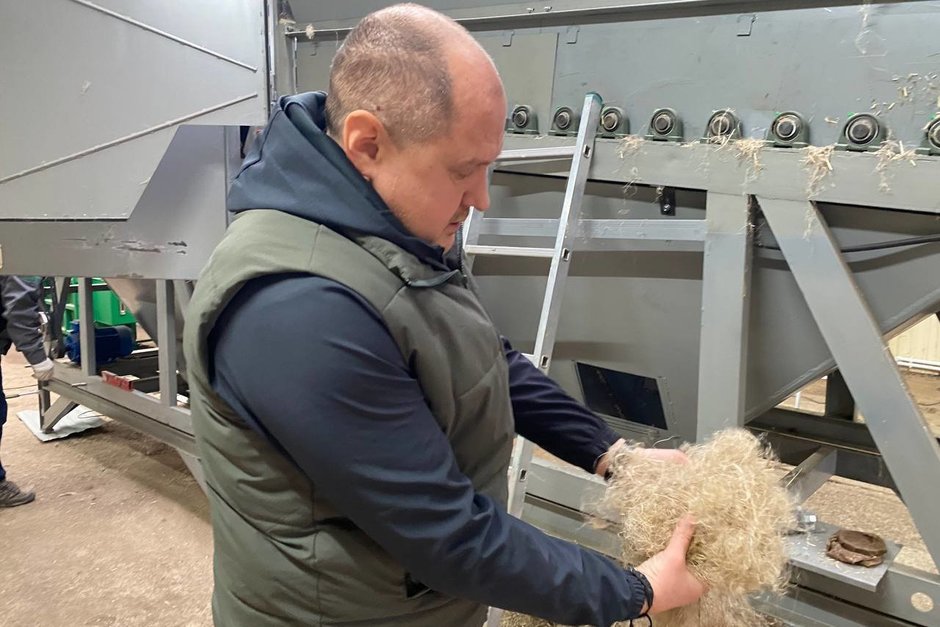
The process turned out to be difficult. At first we tried to find old production facilities for such lines — there used to be many of them — and we visited old factories, but found only scrap metal. So we decided to build everything from scratch, relying on the almost lost expertise of the Soviet era and applying modern technology. The work was carried out jointly with the Federal Research Centre for Bast Fibre Crops and a number of scientific specialists and technologists. Tests were conducted in laboratory conditions at the Centre. Only after that did we begin designing the experimental line. Some components for the first line were made in Tatarstan, others in the Ulyanovsk region, but all parts were domestic. After launching serial production, the list can be expanded with other factories in the republic and in Russia as a whole.
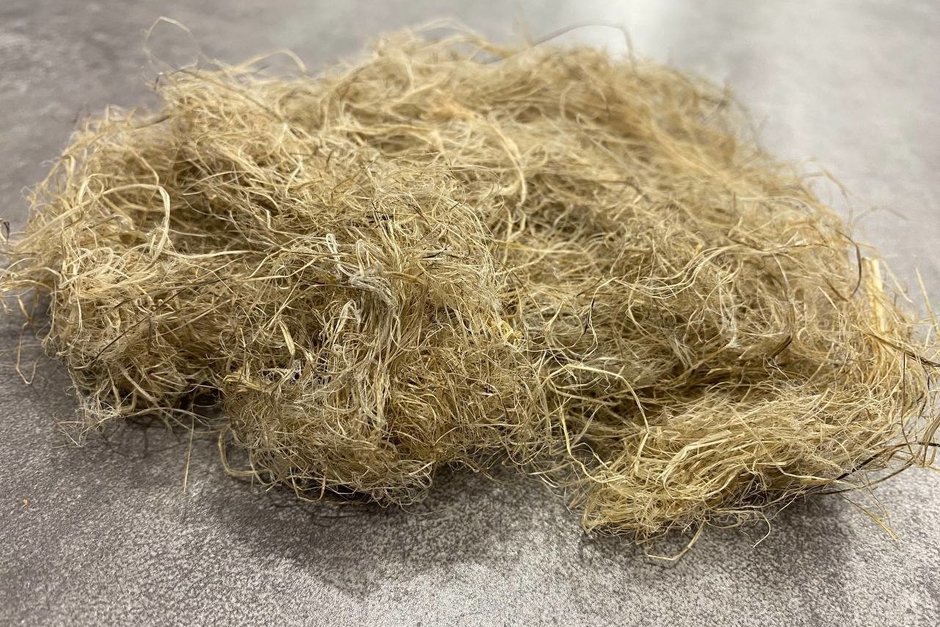
Initial tests showed even higher productivity than we expected, and moreover we do not have to be embarrassed about the resulting product. The shive content on the short line is 5–15%, productivity is up to half a tonne of raw material per hour, and the share of finished fibre is about 30% (depending on the input material).
What investments were required to implement this project?
We presented the project for the first time at the 18th Russian Venture Forum of the Eurasian Innovation Centre and received approval from the Rais of Tatarstan, Rustam Minnikhanov. The idea began to take shape jointly with Tatneftekhiminvest-Holding, with the support of its Director General, Rafinat Yarullin. The investment is very significant: the project to create the line cost tens of millions of roubles. This includes engineering documentation, construction of the line and commissioning — from idea to final product. As for the line itself, its price is several times lower than existing foreign analogues. For comparison, Chinese and Turkish lines cost from 100 million roubles.
The line that has now been created is only the first stage. Next, we plan to design a long line for larger agricultural holdings and different growing zones. The technical documentation for all its units is almost ready. It will be more productive — a 45-metre-long line capable of processing raw materials not from 500 hectares like the short one, but from 1,000 hectares — twice as much.
The third stage is the creation of a deeper-processing line that will produce fibre prepared and cleaned for cottonisation. The input for this stage will be the fibre obtained during the primary processing on our first line.
In parallel, together with the Federal Research Centre for Bast Fibre Crops, we plan to establish a training centre on the basis of the processing workshop so that farmers can learn how to work with this equipment. Options for cooperation with the Kazan State Agrarian University are being considered.
The enterprise where we installed the first experimental line will also operate at full capacity. For testing the line, we brought raw material from the Bugulma district. The fact is that there are no industrial hemp crops in the Arsk district — it is not grown here yet. We would like to become the founders of cultivating this crop in this locality. Around the workshop we plan to sow 30 hectares of land, already leased for this purpose, with industrial hemp. For this we purchased high-quality region-specific seeds from Krasnodar, suitable for our climate. In a year we will obtain new seeds and will be able to sow 1,000 hectares together with local farmers.
What problems do farmers who have already decided to grow industrial hemp encounter?
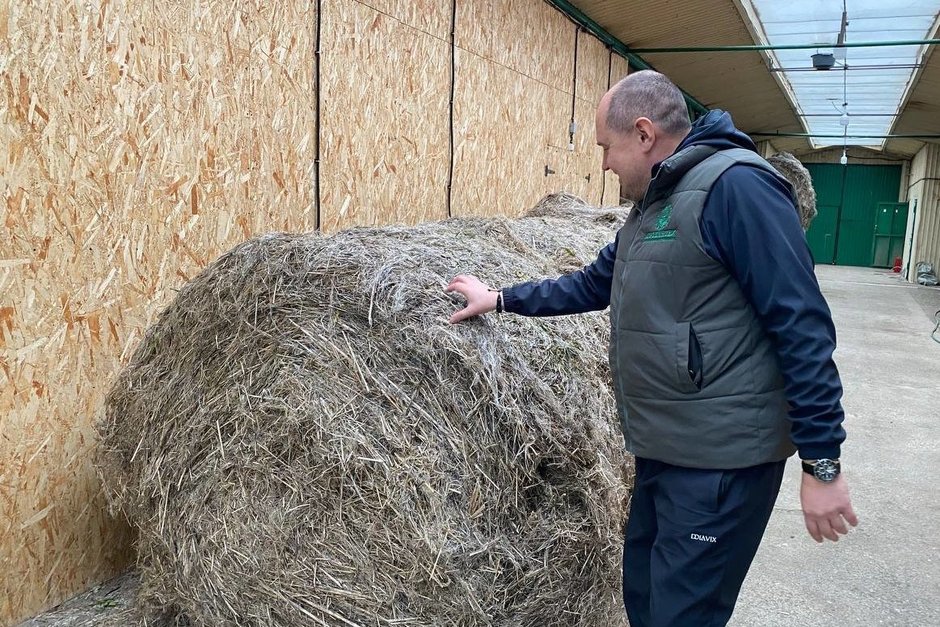
Initially, about three years ago, there were a lot of issues with hemp — there was not even any threshing. Farmers did not know how or with what to thresh it for seeds, meaning how to harvest it. It is impossible to collect hemp seed with a standard grain harvester. Hemp is a very tough crop — the combine simply stops, clogged with wrapped stalks. This problem began to be solved after the creation of a hemp harvester header. One of the first was produced by the Penzmash plant. Rostselmash also released hemp harvesters, but I have not yet heard any feedback about them, whereas many have tested the Penzmash header. There are nuances here too — on some farms even the Penzmash header did not work everywhere because hemp also varies. These problems persisted this year but are gradually being resolved, and the header is adapting. Some farms that can afford it use foreign machinery — but this requires major financial investment. For an ordinary farmer, it is easier to buy a domestic threshing header costing about 5 million roubles. It still collects the seeds, though with slightly higher losses. There are no problems at all with harvesting hemp stalks — this is straightforward. Hemp retting remains in the field until spring; certain processes occur over winter, and afterwards it is collected into bales like ordinary straw.
Hemp is such a universal crop that even if a farmer manages to harvest only the seeds, they already turn a profit. And if processing is also set up, revenues increase many times over.
What are the business prospects?
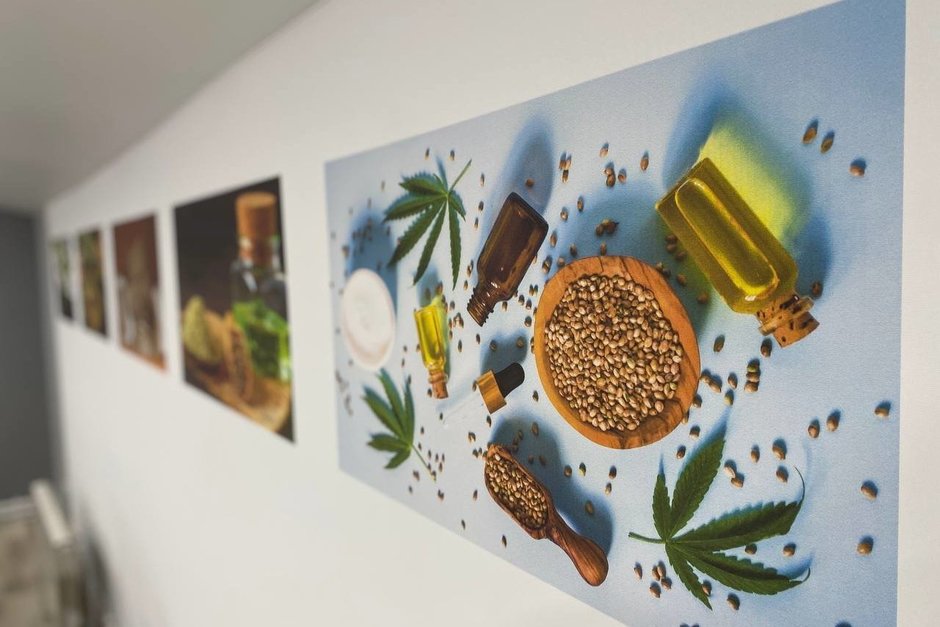
If we undertake both primary and deep processing, we will obtain a product in demand worldwide. Cotton is becoming scarcer, and hemp is a substitute. The future belongs to hemp. Today, together with scientists from the Federal Research Centre and KNITU, we are working on a programme for deep processing of hemp. It will not take long before we have every reason to move to the next stage, meaning the republic will be able to produce goods with higher added value. I think we should focus on cellulose and on cottonising the fibre for the textile industry. Clothing made from hemp fabric may be more expensive, but it is more durable and, very importantly, environmentally friendly. Industrial hemp is a highly promising crop. It is the only one that can be processed completely — from roots to inflorescences. Our main goal is the domestic market. It needs to be developed.
What should farmers do now, while the domestic market is still not very developed?
It must be admitted that today the raw material will mostly go for export. Primarily to China, which is ready to buy endless amounts of fibre. Abroad they are willing to buy shive as well for significant sums, and it makes up almost 70% of the output after processing. But there is a caveat: large volumes are needed for export, and we currently lack them. One railcar is of no interest to China.
As for domestic manufacturers, in Tatarstan we have large furniture producers, for example. They make wood products and are willing to consider hemp — but again only if there are sufficient volumes.
How can the required volumes be achieved?
We are now encouraging farmers to cooperate. Today everyone is focused solely on their own enterprise or farm, but what is needed is a system similar to the Soviet procurement offices. When we can unite, say, 100 farmers growing hemp and process the retted stalks into fibre, then exports can also be considered.
We have every opportunity to launch this process. State support and concrete programmes are needed here. Farmers need guarantees. I believe this is another way to “revive the countryside”. When farmers establish production on their farms, their children will also want to stay. If you can earn good money in a rural area, why move to the city? Farmers need profitable production. And if state support is added, the foundation for the future is ensured. Industrial hemp is doubled income for a farmer.
We see that the republic is interested in the development of hemp growing, and this is very encouraging. People need to change their attitude towards hemp in general, to “grow up”. Hemp carries a national code — it is a return to our roots.
Shive refers to the woody parts of the stems of bast crops (flax, hemp, etc.) that are separated from the fibres during primary processing. Shive content refers to the presence of this material in the final fibre.