Between the rate and the tax bill: what is happening to depositors’ income
How the tax on interest is changing the financial behaviour of Russians
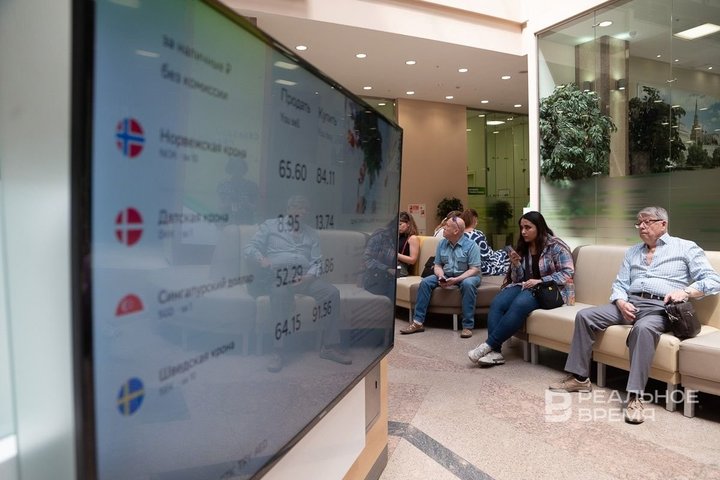
The sharp increase in the fiscal burden on income from bank deposits has become a new challenge for millions of depositors in Russia and Tatarstan. How this circumstance is changing citizens’ everyday financial decisions and shaping new economic trends is analysed in his article for Realnoe Vremya by digital economist Ravil Akhtyamov.
The mechanism of behavioural shift
In 2025, residents of Tatarstan will pay about 7.5 billion roubles in tax on income from deposits, which is 2.6 times higher than last year’s figures. Across Russia, collections are expected to reach 305 billion roubles. These numbers are direct evidence of profound changes in how the population manages its savings.
The main reason behind the record growth of the tax was the unique combination of conditions in 2024. The Bank of Russia’s key rate rose to 21% during the year, which significantly increased deposit profitability. According to Article 214.2 of the Tax Code, the non-taxable limit is calculated based on the maximum key rate that was in force during the entire tax period (a year). In 2024, this was indeed 21%. That is why the limit increased to 210,000 rubles (1 million * 21%).

The tax increase is linked to the fact that high rates simultaneously raised both depositor income and the non-taxable limit, but for large deposits the rise in income outpaced that of the limit. This experience has become a financial lesson for many, demonstrating that passive income can turn into a tangible fiscal obligation.
Tax on income from bank deposits (2025, payable for 2024)
| ||||||||||||
Specific changes in behavioural models
The behavioural response manifests itself in three aspects. First, there is a shift from passive storage to active management. The strategy of “find a bank with a high rate and forget about it” stops working. Instead, depositors begin to calculate effective post-tax returns, which forces them to compare bank deposits with other instruments. This stimulates demand for financial literacy — knowledge about individual investment accounts, bonds and the principles of diversification becomes a practical necessity.
Second, the structure of savings is changing. Financial institutions, responding to client demand, are increasingly offering combined products that mix elements of deposits, insurance and investment. This points to a structural shift in market supply. Third, these changes are taking place against the backdrop of rising investment in the real sector of the economy, indicating an overall activation of capital.

Fixed capital investment in Tatarstan
| ||||||||||||
Global context and capital flow directions
International practice confirms that taxation of capital income is a powerful tool for shaping long-term investment behaviour. In different countries it has directed citizens’ savings into targeted sectors: into the stock market in the USA through preferential pension accounts, and into long-term insurance products in Europe.
In Russia, where the tax currently has a mainly fiscal character, it nevertheless triggers similar processes. A cautious but growing interest in alternatives is observed. At the same time, there is no mass outflow of funds from banks, which indicates the preservation of basic confidence in the system.
Volume of household bank deposits in Tatarstan (as of 01.10.2025)
| ||||||||
The main destinations for capital redistribution are bonds (thanks to the opportunity to lock in returns and the benefits of individual investment accounts) and the stock market, particularly ETFs. Real estate and gold, due to their specifics, remain tools for diversification rather than mass reallocation.

From spontaneous reaction to systemic solutions
The spontaneous change in financial behaviour creates demand for systemic measures from the state. For private savings to turn into “long money” for the economy, clear incentives are required. Such incentives could include the development of long-term individual investment accounts with tiered benefits depending on the holding period, the introduction of special tax regimes for bonds financing infrastructure projects, as well as the creation of accessible trust infrastructure — from regional consultation centres to stronger protection of investor rights.
Thus, the tax on interest has become a catalyst marking the end of an era of exclusively passive savings. It has initiated a complex but necessary transition to a more active, conscious and long-term model of financial behaviour. For Tatarstan, a region with a high level of savings, this transition opens opportunities to turn accumulated funds into investments working for the future of the economy. The question now is how quickly the institutional environment will be able to create conditions for realising this potential.