Will gadget prices rise as soon as next year? New technology levy could be passed on to consumers
At first it will affect laptops, smartphones, lighting products and others
“All legal retailers are already on the brink of survival!” the Association of E-Commerce Companies protested against the new initiative of the Ministry of Finance. According to the authorities, the new technology levy will support the localisation of electronics production inside the country, but experts from Realnoe Vremya believe that all this will lead to another price increase, with only sellers on the “grey” market standing to gain. Read more details in the report.
Compensation for the tax paid will be provided to Russian manufacturers through state support mechanisms
Barely had Russians adjusted to the new car recycling fee rules when the authorities approved a technology levy — a charge for foreign and domestic electronics manufacturers alike. If the amendments are adopted, it will begin to be collected from 1 September 2026, Vedomosti reported, citing its sources.
The technology levy is an initiative of the Ministry of Industry and Trade and the Ministry of Finance, which essentially represents a new tax. At the same time, Russian manufacturers are expected to receive compensation for the tax paid through state support mechanisms.

The levy rate will be determined separately for each product unit and will depend, among other factors, on its cost. The maximum amount will not exceed 5,000 roubles. The funds collected will go into a specially created state fund for supporting the electronic and radio-electronic industry. This will help the localisation of production inside the country.
“The levy should not significantly affect the cost of devices”
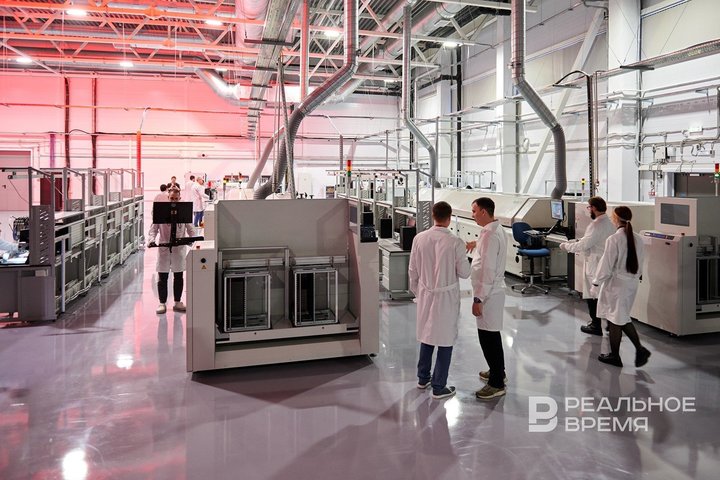
The Association of Retail Companies (AKORT) told Realnoe Vremya that the levy is aimed at developing Russian electronics. In their view, it will not result in a significant price increase for consumers.

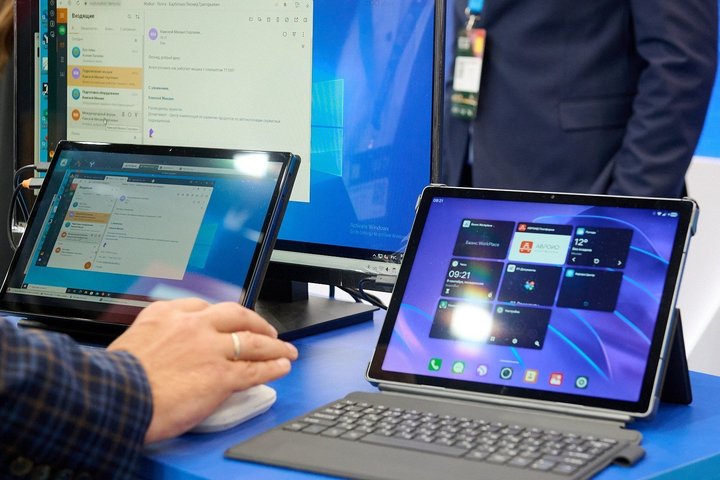
At first, according to the Ministry of Industry and Trade, the technology levy will apply to laptops, smartphones, lighting products and others. Later it will be extended to components and modules for equipment. Before the second stage is introduced, testing and consultations with businesses will be carried out to prevent double taxation (on both components and finished products) and to develop a correct mechanism. A phased introduction of the levy will allow the sector to adapt, while the state will have time to fine-tune the system, the ministry believes.
Realnoe Vremya contacted representatives of the “grey” electronics market to find out to what extent they might really benefit from the new levy.
“The situation on our market, despite all the external changes of recent years, remains stable — at least for us. The latest models are being sold just as always, without any significant problems. After 2022, the market effectively became the main one for certain categories of foreign electronics. So yes, sales are going their usual way. Logistics is well established, demand exists, and we successfully meet it. As for the new levy, to be honest, we expect it will strengthen the position of alternative sales channels rather than harm them. Over the past three years, the situation has changed dramatically: consumers really do rarely buy from ‘official dealers’. Prices in our shops have always been and remain significantly more favourable,” an Apple electronics seller told Realnoe Vremya anonymously.
It is noted that the average rate was calculated in line with the principle of minimising the financial burden on manufacturers and importers. This means that, against the backdrop of already high prices for electronics, the price increase is unlikely to be the most critical one — but it will still be noticeable.
The levy will apply only to those goods where the share of domestic manufacturers’ products remains low.
Neither the EU nor Asian countries have anything similar
In the European Union there is no such practice of a technology levy; instead, the WEEE (Waste Electrical and Electronic Equipment) directive regulates the recycling of electronic equipment. In Russia, since 2015, a recycling fee has also been charged to manufacturers and importers. Its impact on prices is minor: a smartphone may become 300–600 roubles more expensive, a laptop up to 2,500 roubles, and a television up to 3,000.
The introduction of the levy in the EU led to an average price increase of 1–3% for electronics, which is generally passed on to consumers. A separate “recycling fee” line usually does not appear — its cost is included in the price.
A similar system exists in China, where manufacturers and importers also pay a fee. Japan has a Recycling Fee, paid by manufacturers and importers and ultimately by consumers (through the price). Examples of rates for 2024–2025: a refrigerator — 3,000–5,000 yen (~$20–35), a television — 2,700–4,000 yen (~$18–27). In Taiwan, fees range from 10 to 600 Taiwanese dollars (~$0.30–20), depending on the type of device.
In CIS countries such as Kazakhstan and Belarus, a recycling fee is also in place, but there is no technology levy.