Kazan prepares for the expansion of federal coffee chains
The coffee market in major cities is growing by 8–10% annually, even though large chains are pushing out local players, while Kazan leads the country in coffee prices
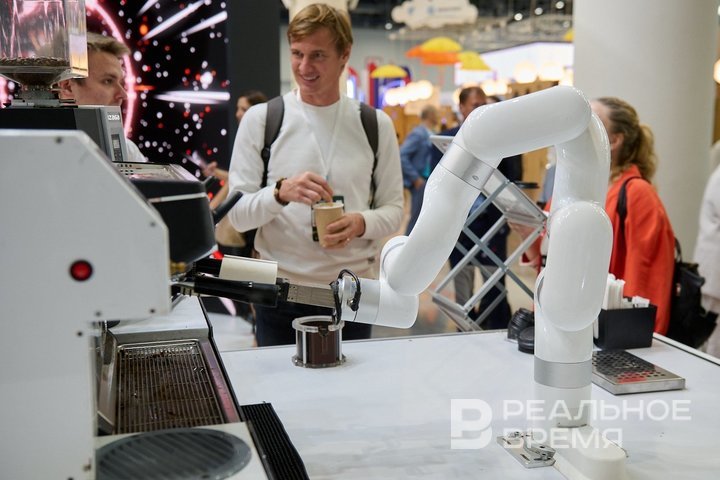
The coffee shop market in major cities — including Yekaterinburg, Novosibirsk, and Kazan — is expected to grow in the medium term by 8–10% until 2028. At the same time, regional players are confident that despite high competition, it is too early to say that the market will soon be fully taken over by federal chains. All this is happening against the backdrop of declining purchasing power amid rising prices. Moreover, Kazan has become the Russian city with the most expensive cup of coffee. Read more details in Realnoe Vremya’s report.
Number of coffee shops in residential areas is set to grow
By 2028, the coffee shop market in major cities, including Kazan, Yekaterinburg and Novosibirsk, is expected to grow by 8–10% annually. This forecast was shared by Mikhail Grebenyuk, founder of the consulting agency RESULTING. The growth, however, will not be driven by regional players but rather by the expansion of major federal chains into the regions.
Research conducted by Platforma OFD, which processes data from every third cash register in the country, also highlights the potential for the development and expansion of coffee shops. Experts note a strong potential for growth in the number of outlets opening in residential areas, where they are still relatively scarce.
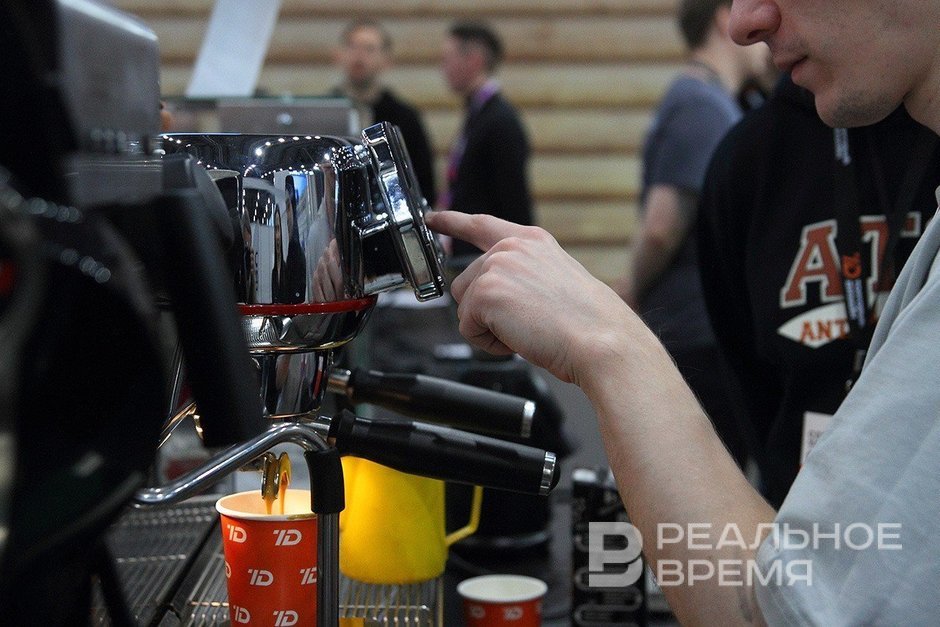
Notably, by the end of 2025, the first Drinkit coffee shop will open in Kazan’s ArtCentre, located in the residential part of the Sovetsky district. Its key feature is that customers can place orders via a mobile app or a tablet in the shop itself. The barista’s role will be limited to preparing the coffee rather than taking orders.
Kazan is a major million-plus city, and it is clear why chains are heading there
In an interview with Realnoe Vremya, Drinkit’s operations director for Kazan, Anastasia Chernykh, observed that the penetration of federal chains into the regions is becoming increasingly active, largely due to the current economic realities. Such players hold significant advantages thanks to accumulated capital, brand recognition, and substantial financial resources.
“If we talk about franchise development, it also carries fewer risks for entrepreneurs, plus the chains can scale up more quickly. It is cheaper to make bulk purchases for an entire chain rather than for a single local coffee shop. As for the entry of large chains into Kazan, it makes perfect sense. Our city is one of Russia’s key million-plus cities, and the networks already present in our market are performing well. They are opening new locations and not standing still,” Chernykh noted.
At the same time, she identified rising rental rates as one of the major drawbacks for the development of local coffee shops, significantly dampening the desire to enter this niche.
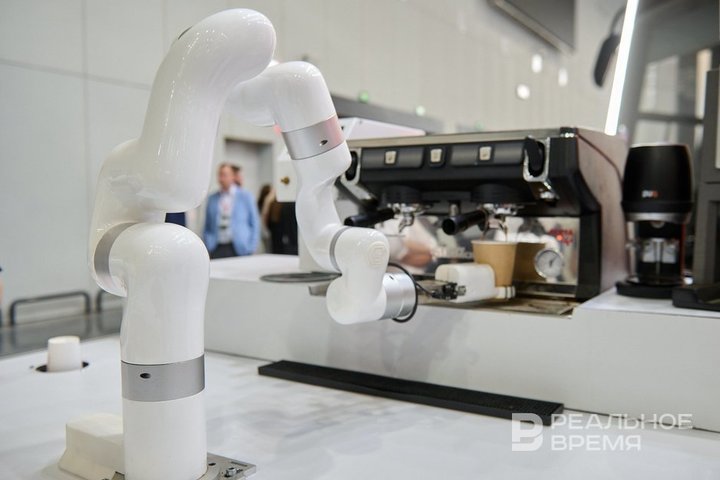
“As for AI, it is not only a trend in the coffee market but in all sectors in general. It helps simplify and speed up processes, and in some cases, reduce costs — which is excellent. The growing interest in this, in my view, is also linked to staffing issues. We are living through a turbulent time for the workforce. Competition in the market is high; you constantly have to surprise customers and deliver better service. The use of such technologies enables us to do that. Business must move with the times,” she added.
AI will not replace knowledge of the local mentality
In a conversation with Realnoe Vremya, Eegor Barinov, Q-grader and marketing specialist for the coffee chain Neft, said that while federal chains are expanding in the regions, it cannot be said that they will completely take over the market anytime soon. Despite strong competition, rising raw material costs, and high operating expenses, local players still hold several advantages.
“In a large city like Kazan, you have to work every day on developing your own approach and local product, talking about it, creating something new that is hard to replicate. That’s exactly what we do at Neft — we create collaborations, promote our local product — local coffee roasting, drinks that reflect our vision. Overall, our service, built around the needs of our regional audience, allows us to compete and grow. It is very difficult for federal chains to create unique products for each region, and this is where the real strength of local brands lies,” Barinov said.
Discussing the trend of integrating artificial intelligence into coffee shop operations, Barinov noted that AI can indeed assist managers or baristas, but it is unlikely that even a well-trained robot will start making drinks anytime soon.
“This is more of a specific concept — you could create a venue where AI or a robot makes and serves drinks. For now, this is more of a novelty than a long-term trend. We use AI as an assistant in certain marketing tools or for handling day-to-day tasks, but nothing more. In the future, AI could indeed help take on important tasks, improve efficiency, and even assist customers — for example, allowing them to create their own drinks via social media or in person, which could then become a hit. They could assemble their drink from available ingredients and generate it through a bot, while the barista would prepare it,” Barinov suggested.
A cup of coffee in Kazan is more expensive than in other regions of the country
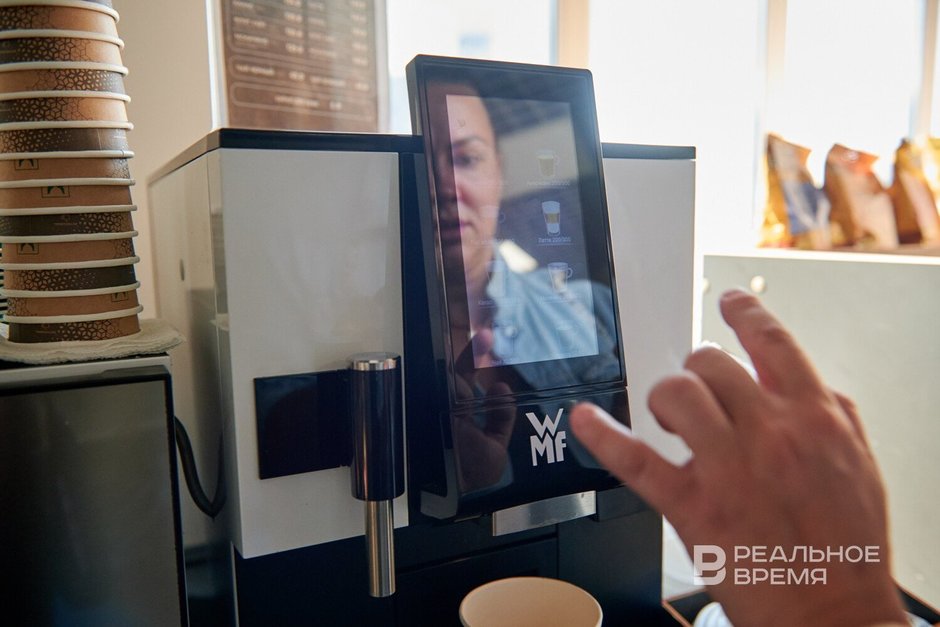
According to data from Platforma OFD, Russians consume 10.3 million litres of coffee in coffee shops alone. The average price of a cup across Russia stands at 213 roubles — 15% higher than last year.
In Kazan, this figure reaches 221 roubles per cup, which is also higher — by 12% year on year.
Coffee in Russia:
- Total national consumption — around 696,000 cups of ready-made coffee per day.
- Per capita consumption — 0.45 cups per month per adult urban resident, a low figure indicating significant market growth potential.
- “White cup” beverages (cappuccino, latte, etc.) dominate sales — 80.1%, with an average price of 147 roubles, 13% higher than last year.
- “Black cup” beverages (espresso, americano, etc.) account for 19.9% of all cups sold, with an average price of 229 roubles, 17% higher than last year.
Former owner of the Metallomania x Coffee showroom-café Amir Valeev told Realnoe Vremya that the overall economic situation and declining purchasing power “are having their effect” — people are opting for simpler choices, and even strong players have to reconsider their formats.
“As for the market in general — the coffee segment in Kazan is now oversaturated. Coffee is available on every corner, and choice is often based not on quality but on price, speed, and habit. At the same time, costs for owners — rent, raw materials, staff, taxes — are constantly rising, while margins are falling,” the entrepreneur said.

It should be noted that in the first nine months of 2025, catering establishments in Tatarstan earned 70.4 billion roubles, nearing the full-year figures of 2024. Experts in the HoReCa market told Realnoe Vremya that growth is driven by the increasing number of venues regularly appearing on Kazan’s gastronomic map. However, over the summer and September alone, around two dozen establishments — many of them well-known — either closed or went up for auction. For instance, restaurants U.Love and Uryuk ceased operations, while the Beanharts Coffee chain closed three locations in Kazan, citing low foot traffic in shopping centres.
Reference
A Q-grader is a certified professional who evaluates coffee quality according to international standards set by the Coffee Quality Institute (CQI) and the Specialty Coffee Association (SCA).