Tatarstan farmers reduce grain cultivation areas
Agricultural producers admit that this business is becoming less profitable every year

Farmers in Tatarstan are trying to solve the issue of selling their grain harvest without incurring losses. The problem lies in low purchase prices: at present, a kilogram of fourth-class wheat fetches around 12 roubles. In total, 4.7 million tonnes of these crops have been harvested in the republic. In addition, heads of large farms complain about the increase in export duties. As of late October, the duty rate on wheat exports from Russia will amount to 167.7 roubles per tonne, compared with 99.1 roubles a week earlier. Thus, it will rise 1.7 times. How agricultural producers are trying to address the emerging difficulties — read in the report by Realnoe Vremya.
“We reduce grain cultivation areas every year”
According to official data, wheat production brings farmers about 1,800 roubles in losses per hectare. Hence the emerging trend — farmers are reducing the areas sown with grain and giving preference to crops that are more profitable for sale. As noted by the Ministry of Agriculture of Tatarstan, over the past 17 years grain sowing areas have decreased by more than 30%, and only in the past year they fell to 1.3 million hectares.
This is a discouraging trend, says well-known farmer from the Agryz district, Ilnur Saetov. In his opinion, grain prices used to allow farmers to live and work comfortably — providing some guarantees and confidence in the future, enabling them to develop and purchase new machinery. Now, restrictive measures and raw material costs have become serious obstacles.
“Farmers are rather conservative people; they take time to change course. Even after prices fell and duties were introduced, many continued to plant grain crops out of inertia, often operating at a loss in the hope that the situation would improve the following year. But that safety margin has now almost been exhausted. Every year we reduce the areas allocated for grain, and our attitude towards it has changed. At the same time, we are being pushed from behind by rising diesel fuel and fertiliser prices, and so on.”
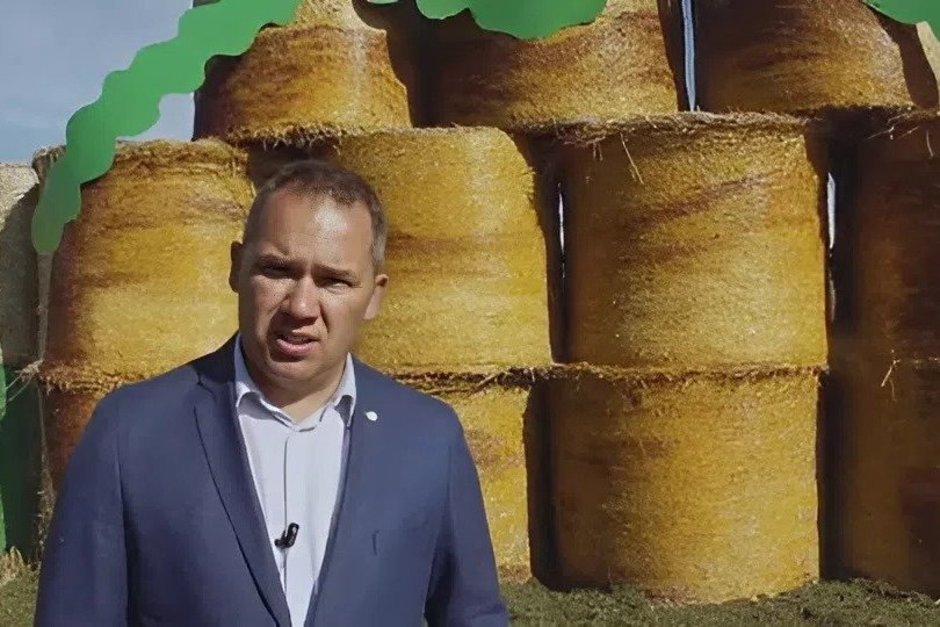
The human factor, he says, has also become much more expensive: wages have risen significantly over the past two to three years, meaning costs continue to grow. “To stop this trend and make farmers believe in grain again, it will take serious effort. But so far, no such effort is visible. As for export difficulties, they make us feel like we’re trapped in a tin can,” the farmer lamented.
“Low prices lead to a whole chain of problems”
Almaz Faskhutdinov, chairman of the PSHK “Yembulatovo” in the Buinsky district, said that his farm has followed the same strategy for several years — storing the harvested grain in barns while waiting for a better price.
“This year’s harvest is higher than in previous years. On average, we collected 52 quintals per hectare, with a total yield of about 7,000 tonnes. We’ve stored the grain and plan to wait until next year when prices might rise, though we understand this is always a risk. There are no guarantees whether prices will go up or not. For example, last year those who sold their harvest immediately profited, while those who held onto it lost out," he said.
The farmer does not see a shortage of buyers, as there are many traders — but, he notes, prices are often disappointing. Almost all of his wheat is of the third class, with a high gluten content — quality bread-making grain used for flour production. Its price is about 2 roubles higher than that of fourth— and fifth-class wheat, but still incomparable to the costs of cultivation, Faskhutdinov believes. Currently, a kilogram sells for 12–13 roubles; after New Year, the price might rise to 15–16 roubles.

“Low prices create a whole chain of problems. If a farm isn’t profitable, it simply cannot develop — it cannot renew equipment, build facilities, or expand, which in turn negatively affects those who sell machinery, spare parts, and construction materials," he said.
He also noted that rising export duties have a strong impact on the industry. Farmers cannot export their products, even though there is demand for Russian grain. “The solution could be domestic deep processing. It’s encouraging that a grain processing plant capable of handling 500,000 tonnes of third— and fourth-class wheat is planned in the republic. But we would also like to see the issue of export duties resolved,” he added.
“We don’t want to play the lottery”
Farit Rakhimov, head of the “Agroaktiv” farm in the Apastovo district, believes that instead of focusing on export duties, farmers should learn to work efficiently. He manages 3,000 hectares of land, of which 1,500 hectares are allocated for grain.
“It’s possible to be profitable even under current conditions. You just need to ensure efficiency of costs and good yields. For example, we always aim for high yields, regardless of weather — be it drought or rain. High technology, quality seeds and effective fertilisers help with that. As for duties, the state introduces them to prevent sharp price fluctuations. But it only works one way: everything is done to stop prices from rising too much. And if they fall sharply, you’re left to face that problem alone," Rakhimov explained.
This year his farm experimented by planting lentils — only 20 hectares so far, but next year the area will increase to 100 hectares. “It’s a risk, of course, because those who tried to sell lentils this year faced difficulties due to export duties. It’s hard to sell, even though this crop has good export potential, particularly in Turkic-speaking countries,” he said.
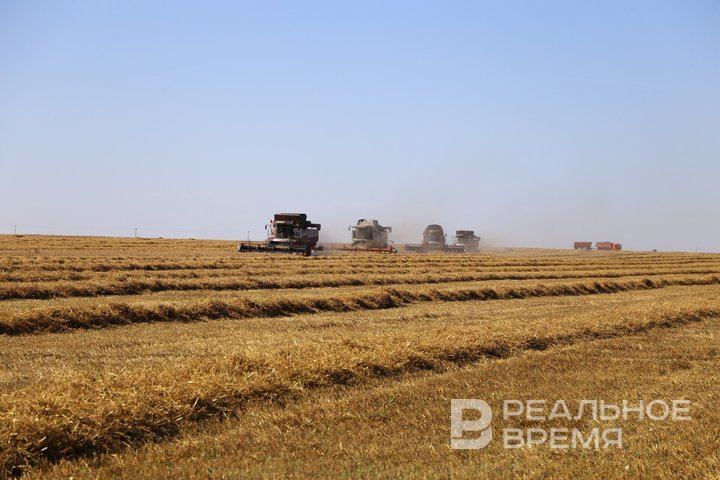
His farm produced a good harvest of fourth-class wheat, which was sold immediately. The total yield exceeded 10,000 tonnes of grain, with 7,000 tonnes of wheat sold. “It’s a versatile type of wheat, used both for baking and for fodder. We sold all our grain to a holding company that built a large elevator complex. We’re very satisfied — no fraud, fair reception, and the price was decent considering market conditions — 12.5 roubles,” he said.
By selling the harvest immediately, the farm even benefited, he added: “Many decided to hold their grain, but they ended up at a loss. Maybe by spring the price will rise, who knows. But we decided not to wait for the ‘perfect’ price. Our goal is to rationalise expenses — even if we sell at a relatively low price, we remain profitable. We don’t want to play this lottery; we choose another path.” Overall, Rakhimov believes there is now serious demotivation in grain cultivation, which will not lead to anything good.
“If farms abandon grain because of low prices, it will be difficult to bring it back later. There is a certain cycle. Every farm prepares its own seed material. If you skip one year, you’ll have to buy seeds the next. And if others also give up grain, demand will surge and prices will skyrocket," he explained.
He recalled that a similar situation once occurred with rye, leading to today’s shortage of quality rye for baking bread, which is now becoming increasingly popular. “It’s hard to find good rye and make quality flour, because few still grow it,” he said. “The reason is simple — it was devalued year after year, became the cheapest crop. Once, rye was grown almost everywhere. We stopped about six years ago and don’t plan to return — it’s just not profitable.”
“Mistakes must be corrected”
The problem affects not only large agricultural firms but also small farms. Out of 4.7 million tonnes of grain, 1.8 million were produced by small family farms, said Kamiyar Baytemirov, president of the Association of Farmers, Peasant Households and Agricultural Cooperatives of Tatarstan.

“To grow grain, farmers receive subsidies from the state, and the sums are not small, Baytemirov reminded. “At first, we are encouraged to grow more, and then we are told to do what we like with it. But should it really be this way? There must be planning — how the grain will be sold, how much will go to export, to domestic consumption, or processing. These mistakes must be corrected. We are ready to grow quality grain in large quantities, but we need the opportunity to sell it at a fair price,” he emphasised.
He also noted a continuing trend of shrinking grain areas:
“Farmers are planting more rapeseed and sunflower. But as these crops flood the market, their prices fall, and demand decreases. At the same time, paradoxically, the price of the end product — vegetable oil — in shops does not fall. Once prices went up, they stayed there. The problem remains unresolved.”
Meanwhile, rural people keep working, not expecting big profits, and accept the low price of grain philosophically.
Fanis Akhmetkhanov from the village of Kurayvan in the Arsky district runs his family farm, cultivating 350 hectares of land and growing fifth-class feed wheat, barley and peas. This year, the average yield per hectare was 30 quintals. The farmer sells his produce to smallholders and villagers feeding livestock in private households. So far, about 400 tonnes have been sold at prices ranging from 10 to 12 roubles per kilogram.
“No matter how much you complain, it won’t change the situation. We’re grateful for what we have. People say the price is low, but even if it rises, there will still be those who think it’s not enough. Overall, we are content with what we have and don’t plan to introduce new crops. We’ll keep working in our usual rhythm," he said.