Timur Khalitov: ‘The focus is on cooperation between science and mature business, not on supporting startups’
The head of the Tatarstan Science and Technology Fund — on the priorities in the technological development of the republic

In September this year, the Tatarstan Science and Technology Fund for the first time organized a grant competition for the financing of applied scientific and technical (technological) projects. Thirty-five out of thirty-nine applications submitted by participants of the World-Class Research and Education Centre of the Republic of Tatarstan received support. Thus began the establishment of a new framework for the commercialization of R&D aimed at ensuring the region’s technological leadership. Two years ago, Tatarstan did not make it to the list of winners in the competition for creating a federally recognized research and education centre in the republic. Therefore, in January 2025, following the instruction of the rais of Tatarstan, a decision was made to recapitalize the Fund by 750 million rubles from regional funds. In an interview with Realnoe Vremya,the head of the Tatarstan Science and Technology Fund, Timur Khalitov, spoke about the results of the first selection round, where the “weak link” lies in the “science — universities — business” chain, and whether the Fund will claim intellectual property rights.
“The focus is on SMEs — it is in this environment that innovations are born”
Mr Khalitov, recently there has been talk about the emergence of a new wave of technological companies that appeared after the withdrawal of Western players from the country. At SPIEF 2025, the management of the Moscow Innovation Cluster presented a study showing that the largest number of fast-growing technology companies emerged in the fields of software development and industrial engineering. Does this mean that innovations are born most often in the business environment rather than within university walls?
Our role is precisely to carry out monitoring and analysis of technological competencies in universities, to consolidate the real sector’s demand for scientific research, and then to ensure effective communication. In this work, our focus is primarily directed towards small and medium-sized enterprises. It is in this environment that innovations are born. Large industrial companies are generally concentrated on solving their core production tasks, preferring to outsource service functions such as logistics, storage, consulting, and others to external organizations.
Scientific and technical tasks are no exception here and are often considered secondary. Moreover, for a production company, it is more advantageous to purchase a finished product or technology — most often foreign — than to invest in scientific research with an uncertain commercial outcome. Our task is to overcome this trend.
As for innovations within universities, they certainly exist. At the same time, the general situation across the country is such that an entrepreneurial culture within the academic environment has not yet developed. The system of state management of scientific and technological development needs fine-tuning, as well as the creation of new instruments not for support, but for motivation of qualified customers — for example, regarding procurement procedures for R&D carried out by Russian universities and research institutes.
In addition, universities need broader opportunities to manage extra-budgetary funds, invest in their own startups and technological projects. And, of course, direct grant support is indispensable. Grants make it possible, at least in part, to reduce enterprise costs and increase the competitiveness of our science in the race for technological leadership. I hope that with the support of the Tatarstan Science and Technology Fund, innovations will soon step out from university walls and enter the business sphere.
Tell us about the Fund’s programme of activities. What are its priorities, resources, and instruments?
The Tatarstan Science and Technology Fund operates in accordance with the medium— and long-term programme for supporting scientific, scientific-technical, and innovative activities, approved by the Supervisory Board of the World-Class Research and Education Centre under the chairmanship of the Rais of Tatarstan. The programme covers such fields and industries as chemistry, petrochemistry and new materials; mechanical engineering and instrument-making; innovative medicine; agri-biotechnology; IT and telecommunications. In addition, by decision of the Tatarstan Academy of Sciences, the Fund provides support for fundamental research, primarily in the social and humanitarian sciences.
In 2025, we launched two grant programmes — to support fundamental research and scientific-technical projects.

“We act as a regional development institute, not a venture investor”
In supporting applied research, we focus on projects with a high level of technological readiness, and we place the main emphasis on cooperation between science and mature business, rather than on supporting startups — that is, we act as a regional development institute, not a venture investor.
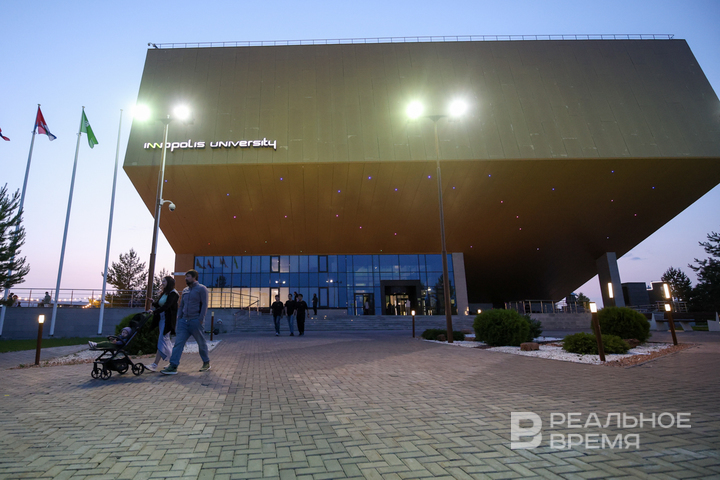
We do not limit ourselves to financial support alone, but actively use non-financial instruments to assist universities and technological companies. For instance, together with the Tatarstan Academy of Sciences and Innopolis University, we are implementing an educational programme for participants of the Tatarstan Research and Education Centre aimed at developing competencies in the field of artificial intelligence. We also actively represent our enterprises and universities at federal and international forums and conferences.
A significant area of our work is the support of scientific and educational associations. For example, at the beginning of this year, with the Fund’s participation, a petrochemical consortium was established, including three universities and eleven enterprises producing oilfield chemicals. The main goal of the consortium is to create a range of new import-substituting products for the domestic market and to promote Tatarstan companies and universities in foreign markets. The “feature” of the project lies in the use by consortium members of various digital tools, including AI and chemoinformatics. This allows development and implementation timelines to be reduced from one and a half to two years to just several months.
By the way, similar goals are already being addressed in 15 world-class research and education centres operating in Russian regions. Tatarstan has applied twice for the creation of such a centre but, for some reason, did not make it among the winners.
Indeed, the Tatarstan Research and Education Centre did not receive federal support or status, and the region’s application remained unconsidered due to the completion of the national project Science and Universities. Nevertheless, the functioning model of the Centre at the republican level has proven viable and effective. Today, the Centre, which in itself represents a kind of scientific and industrial association, includes 74 participants, among them such flagships of Tatarstan’s economy as Tatneft, TAIF, SIBUR, and KAMAZ, as well as small technological companies and 11 leading universities of Tatarstan.
The Centre is, above all, a platform for communication and information exchange, while the Fund serves as the front office or, if you like, the “innovation sales office” for our partners.
“Every ruble invested by the republic must work efficiently”
How will the Centre’s participants be able to conduct applied scientific research?
By order of the Rais of Tatarstan, Rustam Minnikhanov, the republic’s government in January of this year recapitalized the Tatarstan Science and Technology Fund. The authorized capital was increased by 750 million rubles. Each year we will be able to provide grants totaling at least 250 million rubles.
The founder of the Fund is the Tatarstan Academy of Sciences. At the same time, our work is not limited to addressing the Academy’s own issues. Thanks to the support and principled position of the President of the Academy, Rifkat Minnikhanov, we adhere to the principle of equal distance from all participants of the region’s scientific and technological development.

This approach helps maintain healthy competition among universities and research institutions, in line with the priorities of the regional state programme for scientific and technological development. The main criteria for project selection are scientific novelty and economic effect. Every ruble invested by the republic must work efficiently — it is necessary not only to create technologies but also to generate jobs and ensure productivity growth.
In September, the Tatarstan Science and Technology Fund held its first grant competition for the financing of applied scientific and technical (technological) projects. How do you assess the results?
Thirty-five projects were declared winners, submitted by 28 companies and universities. The total budget of the allocated grants amounted to 236.1 million rubles. Under the competition’s conditions, participants are obliged to provide project co-financing, create new jobs, and implement at least one new technology within the project. The selection process has been completed, and we can already say that the extra-budgetary contribution from the winners will exceed 542 million rubles.

The scientific and technical expertise of the projects was carried out by the Idea innovation and production technopark. The results of the winners’ work will be summarized by the end of the year, and we will provide a detailed report on each project.
It is interesting — who holds the intellectual property rights when FNT grants are involved?
This issue is determined by an agreement between the university and the industrial partner. The Fund does not claim the results of intellectual activity. For us, what matters is achieving socio-economic effects significant for Tatarstan.
A pilot for testing scientific and industrial associations is being prepared
Has a competition for conducting fundamental research been announced?
Yes, the application period has ended. Applicant activity is high — 331 applications were registered, with about 10 projects competing per grant. These cover not only technical issues but also the sociocultural challenges of society. Possibly for this reason, competition for fundamental research grants is several times higher than for applied research grants. The total budget is around 100 million rubles.
Expert evaluation is currently underway, and we expect results in November. I can say that we are preparing to support 30–40 applications.
One of the main selection criteria is the relevance of the research and its significance for Tatarstan. The grants are provided on a non-repayable basis. Upon completion, the recipient must submit a scientific report, publish monographs, and actively participate in professional conferences.
The Fund’s budgetary resources are planned for three years. What do you see as the future prospects for the participants of the Centre?
With the completion of the Science and Universities national project for selecting research and education centres, the history of scientific and industrial cooperation does not end. By order of the President of Russia, a pilot experiment is being prepared to test scientific and industrial associations (SIAs). Such alliances of business, science, and government will be able to apply for federal grants and subsidies. Tatarstan is preparing to take its revenge.
University scientific schools are often criticized for being detached from real industry. Industrialists complain about graduates’ weak practical skills, while tech businesses point to a lack of fundamental knowledge. Yet your competition shows a high level of participation among scientists.
Cooperation between enterprises of the real sector (qualified customers) and scientific and educational organizations is hindered by the absence of guaranteed R&D results in the short term, whereas production companies are often focused on obtaining quick implementation outcomes and profit. At the same time, joint projects with universities and research institutes require significant investment and time for the development and implementation of new technologies, which does not always align with short-term business goals.
In addition, universities are limited to conducting R&D that does not always result in a final product of interest to business, and they often lack the resources to scale the product into series production. Grant programmes such as those implemented in Tatarstan through the Science and Technology Fund create the conditions for making cooperation between science and business attractive, and the outcomes achieved are significant both for the state and, ultimately, for our citizens.