Metal of the era: Why gold once again rules the worlds of finance and fashion
Even the Ministry of Finance advises Russians to keep their long-term savings in the yellow metal
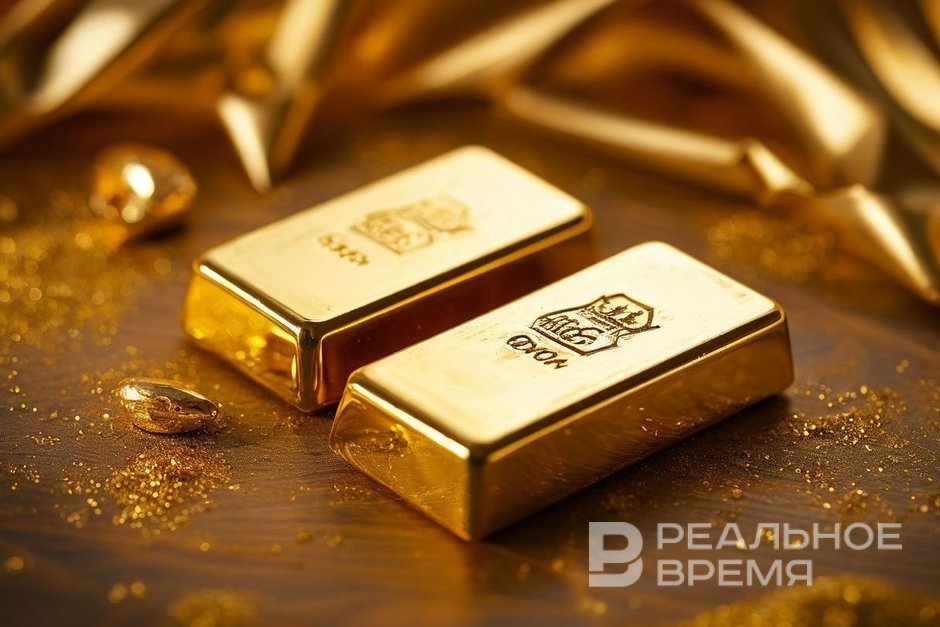
In October 2025, gold is demonstrating a unique phenomenon — simultaneously breaking historical records on financial markets and setting new standards of luxury in the art of jewellery. The metal’s price has reached $4,390 per ounce, showing an annual growth of more than 50%, making it one of the most successful assets of the decade. More on this form of investment — in an opinion column by digital economist Ravil Akhtyamov.
Financial triumph: analysis of key growth drivers
The current dynamics of gold are driven by a combination of powerful factors. The market has entered a unique phase where traditional growth drivers are reinforced by new technological trends.
Structural growth factors
Aspect | Key Factors and Dynamics | Forecasts from Leading Institutions |
Price and Dynamics | The price has reached $4,390 per ounce (a historical high). Annual growth exceeds 50%. RSI in overbought zone. | By the end of 2025: $4,300 (Freedom Finance). Average Q4 price: $3,675 (J.P. Morgan). |
Demand Drivers | Investors: record inflows into gold ETFs (+645 tonnes since the start of the year). Central banks: active purchases (244 tonnes in Q1). Fed policy: probability of rate cuts — 97%. | For 2026: $4,000 (J.P. Morgan), $4,200 (UBS), $5,000 (Bank of America). |
External Factors | Geopolitics: rising tensions and Trump administration policies. Weak dollar: DXY index declining. Market risks: volatility and recession fears. |
Digital transformation of the market
In parallel with the classical investment boom, a revolution is taking place in the sphere of digital financial assets (DFAs). The Russian DFA market has shown explosive growth — from 700 million to over 500 billion rubles in three years (total accumulated volume exceeding 1 trillion rubles). Of particular interest are hybrid DFAs linked to gold, which allow investors to choose whether to receive cash or physical metal upon redemption.
Systemic risks and alternatives:
- Volatility in commodity markets (e.g., copper fell 5% in a single day)
- Bitcoin as “digital gold”
- Skeptical perspectives: gold at current levels seen as “speculation” (economist Mark Skousen)

Russian сontext: strategic advantages. For Russia, the current market conditions have proven strategically beneficial. Sanctions pressure in recent years has prompted the Bank of Russia to build up its gold reserves, which now exceed $200 billion. The share of gold in international reserves has reached 39.6% — the highest level in 25 years.
Infrastructure development. Goznak and the St. Petersburg Exchange have agreed to organize trading in physical gold, with Goznak acting as the responsible custodian. This creates a foundation for developing hybrid DFAs backed by physical metal.
Private investors can consider three main ways to participate in the market:
- Physical gold — bars and investment coins
- Gold mutual funds — affordable entry with small sums
- Mining stocks — Polyus, Polymetal, Seligdar
Jewellery revolution: new rules of luxury
Alongside its financial success, gold is undergoing a transformation in the jewellery industry. Modern designers are creating a new paradigm where adornment becomes a tool of self-expression. While financiers follow charts, the world of jewellery fashion is witnessing no less significant change — a radical shift in the concept of luxury. Demand for opulence is returning: from a quiet whisper to a bold statement, from mass production to absolute uniqueness.
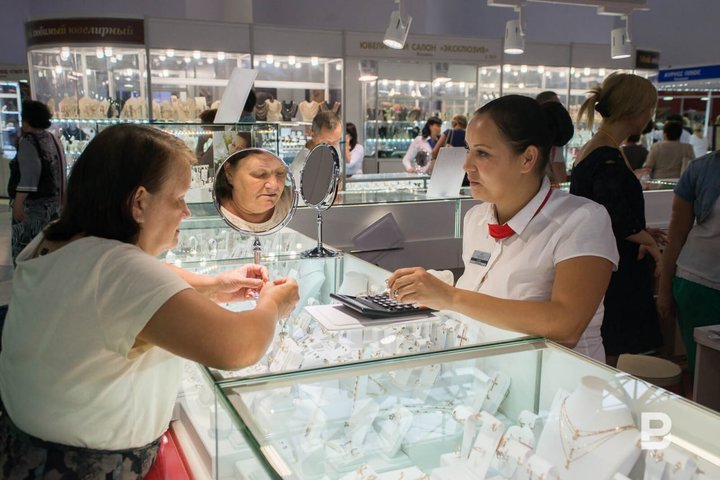
The following table illustrates how trends have evolved over recent years.
Evolution of jewellery trends (2023–2025)
Aspect | Previous Seasons (Focus) | 2025 (Dominant Trends) |
Shapes and Sizes | Delicate, miniature jewellery | Maximalism and sculptural forms: bold earrings, wide bracelets, large rings as central art objects. |
Metals | Strict division: either gold or silver | Bold combinations: mixing yellow and white gold, silver with patina. Breaking old rules. |
Design | Perfect symmetry and smooth surfaces | Architectural geometry and uneven lines: asymmetry, textured surfaces, baroque pearls, nature-inspired motifs. |
Stones and Decoration | Classic diamonds, restraint | Bright coloured gemstones (emerald, ruby, sapphire) and textures (enamel, ceramics) to create emotion and a wow effect. |
Key Principle | Following trends | Personalization and symbolism: engravings, personal codes, astrological and animal motifs. Jewellery as a personal story. |
Source: compiled by the author based on jewellery trend analysis
Vintage and individuality
One of the strongest trends is the return of brooches — universal accents that can be worn not only on a jacket lapel but also on a sweater, dress, or even a headpiece. Another noticeable trend is long chains and pendant necklaces that visually elongate the silhouette and allow for stylistic experimentation.
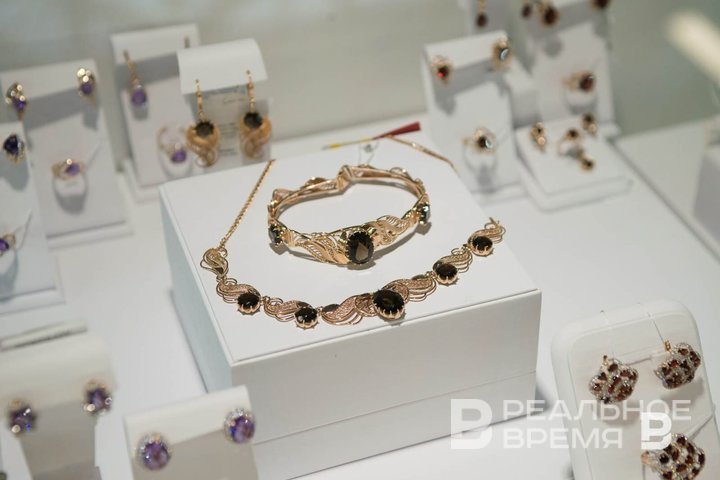
The modern interpretation of vintage is far from simple replication. It is a dialogue with heritage, where classical forms — such as floral motifs (for example, the “Cassiopea Rose”) — gain new meaning through innovative technologies and bold creative decisions.
Strategic Insights for Investors and Consumers:
- Diversified Approaches. A successful strategy involves combining physical metal, ETFs, mining stocks, and digital assets. The volatility of copper serves as a reminder of the importance of a balanced portfolio.
- Digital Transformation. The gold market is rapidly digitalizing — from CAD modelling in jewellery design to the issuance of DFAs. Technology enables the creation of complex designs and new investment products.
- Sustainability as the New Standard. Manufacturers are introducing recycling systems, using reclaimed metals, and adopting eco-friendly packaging.
Timeless value in a new dimension
Gold in 2025 demonstrates a remarkable ability to remain relevant in diametrically opposite realms. In finance, it represents stability and protection against uncertainty, while in fashion, it has become a symbol of bold self-expression.
Key Trends of the Era:
- Searching for stability in an age of uncertainty
- Transformation of the concept of luxury
- The value of materiality in the digital age
- Convergence of physical and digital assets

Forecasts from leading financial institutions point to the continuation of an upward trend, with targets around $5,000 by 2026. The development of the DFA market and hybrid products is creating new investment opportunities, making gold an even more accessible and liquid asset.
This confirms that gold is not merely experiencing a temporary surge, but is fundamentally strengthening its position as a universal medium of value and beauty — successfully adapting to the demands of the digital era.
Reference
This material is for informational purposes only and does not constitute investment advice.