‘Investors do not want to ‘show’ their money’: Problems and trends in the venture capital market of Tatarstan and Russia
Experts are convinced: there are more investors and capital than high-quality startups
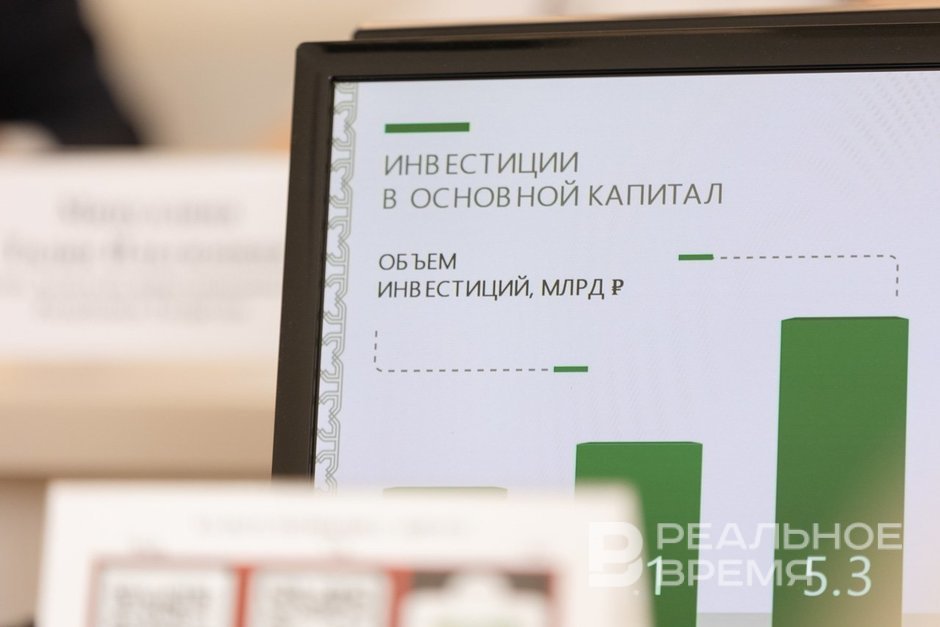
Many projects are themselves ready to relocate to Tatarstan and implement their ideas here, said Damir Galiev, the director of the Investment and Venture Fund of the Republic of Tatarstan. However, the market is witnessing a paradoxical situation: there are more investors and capital than high-quality startups. According to data for the first half of the year, investors concluded only 62 deals with a total value of $83 million, while interest in later-stage projects (B, C+) is becoming increasingly popular: the volume of investments grew by 90%, and the number of deals — by 44%. What is happening in the markets of Tatarstan and Russia, and what to expect in the future — in the publication’s report.
Some deals are made “under the table”
The Russian venture capital market has been recovering for the second consecutive year after a tenfold decline in 2023. The volume of investments has increased by 81%, while the number of deals has simultaneously fallen by 16%. This is due to the redistribution of capital in favour of more mature projects, as discussed at the Moscow Startup Summit.
According to data from the Moscow Innovation Cluster Fund, the Russian capital remains the leader in the venture capital market. Companies there concluded 46 deals worth a total of $42.9 million — 74% of all deals made in Russia. Tatarstan did not even make it into the top three.
However, Alexey Taranov, Managing Partner of the venture syndicate “INVEST HUB”, explained why such statistics should not be trusted blindly.
The venture capital market can be described as “grey”, with the ratio of “white” to “black” investors standing at roughly 60/40 percent. He attributed this to the fact that experienced startups tend to avoid publicity, while private investments are difficult to track.
“Firstly, startups that already have experience in attracting investments, when creating a new product, do not go public and do not participate in pitching sessions. They refine the product, test hypotheses, and, once convinced of its potential, contact well-known investors or funds directly. Such deals, as a rule, are not publicised. Secondly, there are many private investments coming from Family Offices, top managers, or simply private individuals who enter a startup as individuals. This data is difficult to track even for tax authorities, since it is not always clear whether it is an investment or merely financial support,” Taranov explained, adding that “much more interesting things happen behind the scenes.”
“Tatarstan is not exactly in the driving seat”
Based on the results of the first half of the year, Tatarstan did not make it into the top three regions of Russia in terms of venture investment volume. The top three were formed by Saint Petersburg (43%), the Arkhangelsk Region (2%), and the Voronezh Region (0.7%). When it comes to the IT sector, however, Taranov believes that Tatarstan could claim a spot in the top five.
“As for Tatarstan, I think that in terms of the number of deals, we are definitely among the top five regions of Russia. Of course, Moscow is beyond competition. There are also interesting projects in Siberia, but it is important to understand what we are looking at: the IT sector or the market as a whole? This affects the deal amounts. In any case, I cannot say that Tatarstan is exactly in the driving seat — I don’t think we will enter the top three,” the expert said.
At the Moscow Startup Summit, Damir Galiev, the director of the Investment and Venture Fund of Tatarstan, reported that in the first half of the year, 1.1 billion rubles were allocated for the development of 18 projects in the republic. The amount of funding exceeded the same period in 2024 by 270 million rubles. Work in this area is being carried out in partnership with development institutions, including the Academy of Sciences of Tatarstan.
“We are deliberately focusing on science-intensive and technological startups. It is also important to understand that today IT is not only about software and programmes, but also about integration with other industries. We are seeing a powerful synergistic effect when IT solutions become the foundation for breakthroughs in medicine, instrumentation, and industry. It is precisely such cross-sectoral, science-intensive projects that we are placing our main emphasis on,” the press service of the Investment and Venture Fund of Tatarstan told Realnoe Vremya.
The portfolio composition for the first half of the year is as follows:
- 1. Medicine — 37.5%;
- 2. Instrumentation — 25%;
- 3. Information and communication technologies — 12.5%;
- 4. Industry — 12.5%;
- Energy and automotive engineering — 6.25% each.
“The dynamics of the development of Tatarstan’s startup ecosystem are positive, with a clear focus not only on quantitative but also on qualitative growth. Several factors point to this. Firstly, the growth of investment activity. Secondly, the strengthening of the “university” component. Together with the University Startup Studio and the Lobachevsky Fund, we have already financed 13 student and research startups for a total of 55.9 million rubles. Another factor is the strengthening of infrastructure,” representatives of the Fund said.
At the summit in Moscow, the Director of the Investment and Venture Fund of Tatarstan explained that the republic has not only support measures for venture projects but also natural advantages related to logistics and access to raw materials, which may be more attractive for some companies than financial incentives.
Many projects are themselves ready to relocate. Our main sources of raw materials are Nizhnekamsk and Mendeleevsk, and for projects it is economically advantageous to move there. In some cases, savings on logistics can even exceed the benefits of support measures and tax incentives.

The investment market is not so clear-cut
The number of deals in the first half of 2025 turned out to be even lower than in 2024 and 2023 — 62 compared to 74 and 69 respectively. In the first half of 2025, the volume of investments in later stages increased from $33 million to $63 million. The number of such deals rose to 13 (+44%). This dynamic is associated with investors’ focus on reducing risks and supporting scalable, already proven business models.
“When a startup looks at the investment market, it seems to them that there are many startups and few investors. However, when I switched to the investor side and started looking for startups, my opinion changed radically. It is the opposite: there are far more investors and available capital than good startups. Competition in Russia is lower both among businesses and among startups. An attractive startup is one that has at least some proven business model generating revenue not just once, but systematically. Even if it is just an MVP, it must generate income. In most cases, startups overestimate their capabilities and prospects without backing them up with real results. Their revenue either does not grow, stagnates, or is unstable. This does not make them investment-attractive, and investors are not ready to put money into them. They say: “Grow a little more, and we will give you money,” Taranov said.
The speaker noted that syndicated investments, also known as “co-investing,” have recently been gaining popularity. He explained that this is a situation where several investors invest in a single startup simultaneously. This is advantageous because it allows funds to diversify their risks, as it is better to share an investment among several investors than for one to take the entire risk. This is precisely what makes such deals very popular.
The speaker added that, in his view, the largest number of deals concluded this year were exactly syndicated, and there is an explanation for this. He mentioned that the legislation includes a mechanism called the equity investment partnership (EIP), which was only regulated last year and is now gaining momentum.
“Why invest in a company assembling these agents in Tatarstan?”
Taranov shared the main trends that have become noticeable in the investment market this year:
- Investors are currently shifting away from classic IT products. Previously, a developer would create a program solving a particular problem, write the code, launch it, and generate revenue. Now interest in this has declined, because no one wants to invest in something that can be easily created with AI. Why invest in software that is so easy to replicate?
- Investors are waiting because AI-based startups often represent just a “feature” — adding an algorithm to an existing platform. For example, marketplaces for AI agents. But why invest in a company assembling these agents in Tatarstan if next month OpenAI will launch its own marketplace where ready-made solutions can simply be purchased and integrated?
- Investments are possible if you have a technologically complex product using advanced data processing algorithms, but it is necessary to understand what the final product will be. There is a shift towards DeepTech: anything related to science, proven technologies, and hardware — robots, drones, etc. This is a long and expensive process, but it attracts investment.
- Another trend is corporate innovation. Companies recognize the need to stay in trend and understand that competitive advantage is achieved through internal innovation or acquisition. For example, startup studios were previously viewed with scepticism, but now they are tools that investors can approach with lower risk. Investing in a startup from a well-known startup studio is safer than investing in a “street” startup because the creation process is clear and there is a notion of reputation. In Tatarstan, there is the University Startup Studio (USS) and the university venture fund “Lobachevsky,” which are part of the Republic of Tatarstan’s venture fund. They have strong teams, and new investments can be expected by the end of the year.
It should be recalled that the government is cancelling the zero VAT rate on the purchase of Russian software from the domestic software registry and is raising insurance contributions for the IT sector from 7.6% to 15%.