Low trade turnover and business unawareness: how to launch trade flows between Russia and India
Taliya Minullina has urged Russian regions to wake up and “carry their own suitcase”
The trade turnover between Russia and India is currently “at an extremely low level,” said Taliya Minullina, head of the Investment Development Agency (IDA) of Tatarstan. The situation must be addressed, and one way to foster cooperation could be the creation of joint technology parks — especially since the republic already has such experience. Russia’s trade representative in India, Andrey Sobolev, also agreed that the current volume of trade does not correspond to the potential. Read more in Realnoe Vremya’s report.
Why establishing trade may take time
At present, around 14 projects from India are being implemented in Russia, it was announced today during the event “Partnership in Action: Investment Opportunities for Russia and India.” The most active cooperation is developing in regions such as Khabarovsk and Krasnodar territories, Moscow, the Moscow, Murmansk and partly Kaliningrad regions. The first business forum “Time: Russia — India. Mutual Efficiency” is taking place in Kazan, although there are “not so many projects” operating in Tatarstan. The moderator asked why this particular city had been chosen.
“That’s exactly why we’re holding it! The answer is in the question,” said Taliya Minullina. “If we don’t hold [such events], they simply won’t appear out of nowhere. For investments to emerge, people need to get acquainted. People never invest in places they don’t know or understand. They need to have warm contacts, good relationships, trade operations — and only after that move on to the issue of investments. And right now, we are at the first stage of trade turnover, and even that, frankly speaking, is at an extremely low level.”
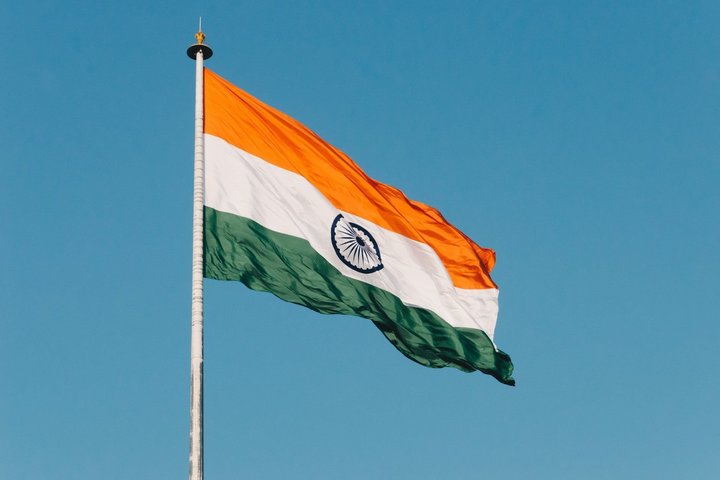
Paying tribute to India’s rapid development — as one of the world’s top five economies — the head of the IDA lamented that Russian entrepreneurs understand its market rather poorly. The new forum, which is planned to become an annual event, is expected to help build connections and promote trade.
“I’m sure that’s exactly what will happen. It just may take time,” Minullina emphasised. “In fact, that’s the name of this forum — Time.”
“Everyone must carry their own suitcase, rather than constantly rely on certain establishments”
According to her, the current infrastructure and functional environment are not yet ready to generate investment flows. By the end of 2024, India had invested $760 million in Russia, while Russia had invested four times less. Joint projects are mainly observed in the oil and gas sector, and “a little” in pharmaceuticals. “That is, extremely few,” stated the head of the IDA.
Where to go from here? Taliya Minullina suggested several options. For instance, mutual establishment of insurance departments, the introduction of tax deductions following China’s example to encourage reinvestment of profits, and the creation of joint technology parks — fortunately, Tatarstan already has such experience.

“Our trade representative, Andrey Olegovich [Sobolev], is doing a great job. We work a lot, and hold videoconferences constantly. But we have a huge country, and the resources of the trade mission are limited. We — all the regions of Russia — must wake up, somehow come to our senses, and take an active position ourselves. Without waiting for anything, we need to develop trade and investment projects where we would like to attract funds or invest ourselves. Everyone must carry their own suitcase, rather than constantly rely on certain structures, the Chamber of Commerce, or the trade mission,” the head of the Investment Development Agency urged in conclusion.
Trade turnover does not match the potential, but water wears away stone
As the Russian trade representative in India himself noted, joining via video link, the countries’ trade turnover reached $70 billion according to Indian statistics, and $63 billion according to Russian figures.
“But the important fact is that even this trade turnover does not correspond to the potential. There are many factors behind this, but still, water wears away stone. Our systematic work, privileged strategic guarantees of relations, mutual trust, as well as the infrastructure that exists for building and expanding trade and investment relations, all play their part,” Sobolev said.

In the first half of 2025, the volume of goods flows between the two countries declined due to falling energy prices, he noted. However, trade in industrial products grew by 30%.
As Annapurna Shankar, senior investment specialist at Invest India, explained, some of the most promising areas for investment in the Indian market include AI services, market operations, supply systems, IT, and R&D design (research and development design).
No obstacles for Tatarstan
Speaking of Tatarstan, last year investment from India amounted to around $100,000, while trade turnover reached $360 million. There are currently no barriers to expanding cooperation, assured Manprit Singh, president and chairman of the trustee council of the International Chamber of Investment and Business (ICIB).

“Yes, in the past there were obstacles, for example with payments or labor, but today such barriers do not exist. There are no problems with logistics. We were able to resolve everything,” he said.
According to him, the difficulty lies more in distributing Russian goods to a wide audience. European countries, which are aware of the potential and opportunities of the Indian market, spent a lot of time establishing themselves there, the speaker emphasised.