Why Russia’s IT sector losing tax benefits
What changes await the industry from 2026
At the beginning of 2022, when Western companies began hastily leaving the Russian market, the government introduced unprecedented benefits for the IT industry. The sector was tasked with a large-scale mission — to rapidly replace all departing market players and services through import substitution, ensuring technological independence for the country. However, from 2026, some benefits for IT specialists will be withdrawn — insurance contributions will rise from 7.6% to 15%, and the VAT requirement on registered software will be reinstated. Some experts have already called these decisions a catastrophe for the industry, primarily because the main expenses of IT companies go towards employee salaries. Others, however, considered it a rather expected measure. How the IT business will develop now, whether the withdrawal of benefits will lead to higher software prices and staff reductions, is explored in the analysis by the Realnoe Vremya analytical service.
The government is abolishing the zero VAT rate on the purchase of Russian software from the domestic software registry and raising insurance contributions for the IT sector from 7.6% to 15%. The information was confirmed by the Minister of Digital Development, Maksut Shadaev.
“Yes, given the current budget constraints, I can confirm that there are agreed plans to increase insurance contribution rates for IT companies from 7.6% to 15% <…> and to remove the VAT benefit on purchases of software from the registry,” he said.
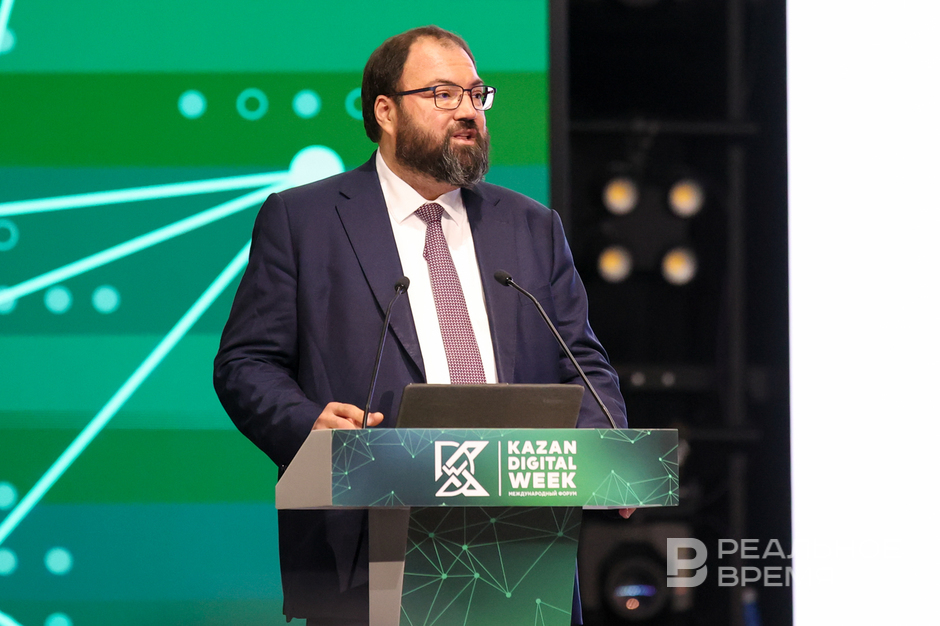
Shadaev is confident that businesses will continue to buy Russian software. He also acknowledged that the withdrawal of some benefits came as a surprise to companies and urged them to adapt. According to him, the sector has strengthened in recent years and will be able to continue developing even with reduced government support.
“The preferential regime … has fulfilled its purpose,” explained Finance Minister Anton Siluanov in an interview, adding that the sector shows “high financial results, and wage levels are already 2.5–3 times above the Russian average.”
IT industry under pressure
The market reacted negatively to news of an increased fiscal burden on the sector. Higher taxes could raise costs for companies such as Positiva, Astra, Softline, and Diasoft, according to Dmitry Bulgakov, an analyst at BCS World of Investments.
The Moscow Exchange IT Index (MOEXIT) has lost more than 17% over the past year, making it the worst performer among 10 sectoral indicators. Monthly losses reached 11%, slightly better than the real estate and transport indices, for which September proved particularly difficult.
MOEXIT comprises nine companies, four of which are software developers, one specialises in cybersecurity, and four operate their own internet services. Shares of IVA Technologies are not included in the index, Finam experts note.
It appears that investors no longer believe in the sector’s key growth driver — import substitution. The high revenue growth shown by software developers in 2022–2023 has slowed amid tight monetary policy. The Central Bank’s high interest rate has forced businesses to revise their budgets, including cutting IT spending, which has immediately affected the sales dynamics of the IT sector.
IT industry will have to adapt
Senior analyst at MRG, Eldar Murtazin, suggests not to overstate the situation, noting that the IT sector is an integral part of the wider economy.
The IT industry will have to adapt: “Of course, there is a lot of negativity. If you look at any business, there is an enormous amount of negativity right now. There is practically no difference between IT and, say, wood or metal processing. The negative impact is spread evenly across all businesses.”

“People like to call certain situations a catastrophe, but as life experience and practice show, companies survive, reconfigure, and find new niches and activities. Even looking at the experience of neighbouring countries — Belarus and Ukraine, where the situation is much worse than in Russia now — no global catastrophe has occurred. There are companies that continue to operate. There is a market — smaller, diminished, but still a market,” the analyst noted.
The IT industry is expected to decline next year. “But the market was heavily inflated, partly due to benefits and import substitution. Now there will be a downward correction. This is a completely normal process that many were expecting,” Murtazin believes.
There will be some layoffs, and this process is already underway: companies will try to get into good shape and eliminate excesses and ineffective employees. The expert predicts: “In any crisis, however harsh that may sound, ballast is shed. So this process is happening now. It’s good that companies have functions they can cut.”
Unemployment today, on one hand, is at a minimal level, but on the other, the economy is inflated in terms of the number of jobs needed. “But this does not mean that labour supply and demand are balanced. There are many job offers, but they are generally low-paid. People want better. And the crisis will actually help balance this, bringing people back to reality,” he concluded.
The role of AI will increase
Moreover, looking ahead, businesses expect AI to handle increasingly complex tasks, which could accelerate its adoption out of fear of falling behind competitors, he adds. “The most popular and well-known solutions right now are American — Anthropic, Cursor AI, GitHub — but there are also Russian ones, developed both by large ecosystems and startups.”
“For the development of a sovereign IT sector, it is important that domestic solutions are implemented, and developers will not want to miss the market, so we can expect marketing for Russian AI solutions to intensify,” the analyst believes. Finally, IT companies may try to attract additional financial resources on the stock market, which could accelerate IPOs for those technically ready but waiting for the most favourable moment.
Profits could fall two to three times

He does not plan staff cuts: “We haven’t made a decision yet, but we are already quite lean, so it’s unlikely to happen.”

According to him, Technocracy is increasingly shifting its focus to other markets and countries that offer new and interesting business opportunities.